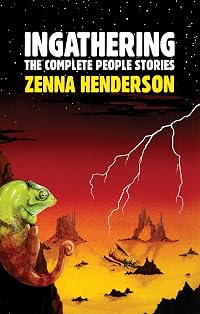
Ingathering: The Complete People Stories of Zenna Henderson
by Zenna Henderson
The People (Collection 1-17)
On This Page
Description
A collection of Zenna Henderson's The People stories, a race of humanoids who knew levitation and telepathy, and who settled in 19th Century America after their planet was destroyed. The stories describe their adaptation to the human world.Tags
Recommendations
















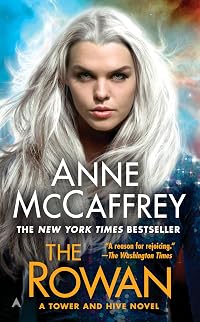




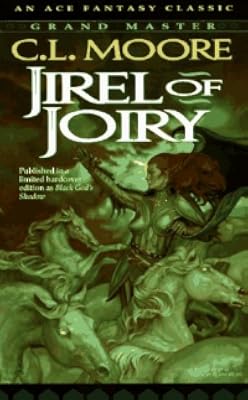

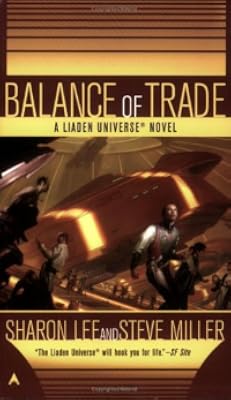



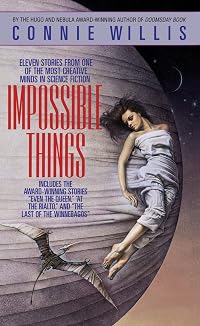


Member Recommendations


Member Reviews
Henderson was active in SF for about 30 years, beginning in the early 1950s. The People stories make up about half of her work, and most of them were collected in two books, published in 1961 and 1967, each with new bridging material to link the stories into something halfway between a story collection and a novel. The stories and bridging material from those books are gathered here, along with a few stories originally published after the 1967 collection.
The People are from another planet, but they are physically indistinguishable from Earth humans; the two groups can even interbreed. When their homeworld ("The Home") is destroyed, they are forced to flee, and some of them crash land on Earth. We follow one group, living in a remote show more Arizona canyon. They have been somewhat scattered, and the "ingathering" of the book's title is the process by which those in the canyon gradually find and collect the other People living in the area. The stories are set between the very end of the 19th century, when the People arrive, and the 1970s.
The central conflict of the series is rooted in the special abilities of the People, telepathy and flight among them. They quickly realize that most Earth humans, or "Outsiders," will not understand these abilities, and that they must keep them hidden. Henderson's earliest stories, those in the 1961 collection, generally present this theme via stories about children and their teachers.
I discovered Henderson when I found her books in my public library. I must have been 10 or 11 when I stumbled across the first People collection. Here was a whole book of stories about kids learning that they have to keep their differences -- significant, but ultimately harmless -- hidden from the world for fear of violent reaction. You can only imagine how strongly those stories resonated with a small town gay kid just starting to understand his sexuality.
Does Henderson hold up 50 years later? Well, somewhat. Her prose is graceful and easy to read, and the best of her stories land with emotional power. In "Pottage," the Canyon dwellers discover another small village of People who have responded very differently to the fear of being discovered. "Captivity," Henderson's only award-nominated story, focuses on one isolated member of the People whose artistic abilities give him the strength to cope with being stranded outside his community.
But at book length, especially gathering more than two normal books' worth into one volume, the sameness of her themes does become more obvious than it would be if you were reading a new story every year or two as it hit the magazines. And the later stories, which are more likely to be written from the perspective of Earth humans who stumble across the People, rather than of the People themselves, don't work as well. "Katie-Mary's Trip" is the low point; it's Henderson's attempt to write a hippie character, and as so many writers did in the late 60s and early 70s, she embarrasses herself in attempting to adopt the tone and voice of a character she clearly doesn't understand.
If you like the rural themes of Clifford Simak, you're going to love Henderson, who is so bucolic as to make Simak look like Public Enemy. Her stories are also strongly infused with her characters' spirituality, an odd mix of the beliefs they've brought from the Home and Earthly Christianity, that doesn't quite ring true. Their adoption of Christian ideas seems to happen very quickly, and I wondered when they had time to discover, read, and convert to Biblical beliefs; surely their early decades on a new world would have been devoted mostly to figuring out how to survive and how not to be seen.
I can understand how and why Henderson has largely been forgotten, but I think this volume's attempt to revive her work was justified. Is that just me remembering her powerfully those stories hit me when I found them at exactly the right moment? Perhaps. But I am happy to know that the same press has also issued a complete collection of her non-People stories, and I look forward to reading that one, too. show less
The People are from another planet, but they are physically indistinguishable from Earth humans; the two groups can even interbreed. When their homeworld ("The Home") is destroyed, they are forced to flee, and some of them crash land on Earth. We follow one group, living in a remote show more Arizona canyon. They have been somewhat scattered, and the "ingathering" of the book's title is the process by which those in the canyon gradually find and collect the other People living in the area. The stories are set between the very end of the 19th century, when the People arrive, and the 1970s.
The central conflict of the series is rooted in the special abilities of the People, telepathy and flight among them. They quickly realize that most Earth humans, or "Outsiders," will not understand these abilities, and that they must keep them hidden. Henderson's earliest stories, those in the 1961 collection, generally present this theme via stories about children and their teachers.
I discovered Henderson when I found her books in my public library. I must have been 10 or 11 when I stumbled across the first People collection. Here was a whole book of stories about kids learning that they have to keep their differences -- significant, but ultimately harmless -- hidden from the world for fear of violent reaction. You can only imagine how strongly those stories resonated with a small town gay kid just starting to understand his sexuality.
Does Henderson hold up 50 years later? Well, somewhat. Her prose is graceful and easy to read, and the best of her stories land with emotional power. In "Pottage," the Canyon dwellers discover another small village of People who have responded very differently to the fear of being discovered. "Captivity," Henderson's only award-nominated story, focuses on one isolated member of the People whose artistic abilities give him the strength to cope with being stranded outside his community.
But at book length, especially gathering more than two normal books' worth into one volume, the sameness of her themes does become more obvious than it would be if you were reading a new story every year or two as it hit the magazines. And the later stories, which are more likely to be written from the perspective of Earth humans who stumble across the People, rather than of the People themselves, don't work as well. "Katie-Mary's Trip" is the low point; it's Henderson's attempt to write a hippie character, and as so many writers did in the late 60s and early 70s, she embarrasses herself in attempting to adopt the tone and voice of a character she clearly doesn't understand.
If you like the rural themes of Clifford Simak, you're going to love Henderson, who is so bucolic as to make Simak look like Public Enemy. Her stories are also strongly infused with her characters' spirituality, an odd mix of the beliefs they've brought from the Home and Earthly Christianity, that doesn't quite ring true. Their adoption of Christian ideas seems to happen very quickly, and I wondered when they had time to discover, read, and convert to Biblical beliefs; surely their early decades on a new world would have been devoted mostly to figuring out how to survive and how not to be seen.
I can understand how and why Henderson has largely been forgotten, but I think this volume's attempt to revive her work was justified. Is that just me remembering her powerfully those stories hit me when I found them at exactly the right moment? Perhaps. But I am happy to know that the same press has also issued a complete collection of her non-People stories, and I look forward to reading that one, too. show less
I first read these stories years ago, in junior high, or perhaps earlier. I didn't completely understand everything, but loved the idea of the People, a group of superhuman alien refugees here on planet Earth. Reading these stories again as an adult, I appreciate the net positivity of the stories, the spiritual underlayment (although I am not religious myself) because the People walk their talk, and many of the stories deal with Outsiders (usually so-called Christians) who hate and fear the People for their differences. Many of the stories feature teachers and children. The author was herself a teacher, and these stories ring with authenticity. Some are a bit slow by today's standards, and a bit dated, but I still really like them. The show more prose is lovely without pulling attention from the narrative, and the nuances of character are on the page, and now as a writer myself I can appreciate the craft that went into these tales. show less
Years ago (or, to be truthful, decades ago), science fiction was my favorite summer vacation reading genre, a delightful escape from high school textbooks. One summer, I bought a couple of paperbacks from our local bookstore and found myself enthralled by Zenna Henderson's stories of the People, humans who had evolved on another world and who had developed different skills than had humans on Earth. Driven into space by the cosmic destruction of their planet, known only as The Home, some found their way to Earth in the 19th Century, though disaster caused the survivors to be widely scattered and lost amidst Earthlings who seldom reacted well to the Gifts and Persuasions of the People.
Henderson's People stories are not those of Bradbury, show more Heinlein, Asimov, or Clarke. Space travel is not a focus of the stories (except perhaps for a burial on the Moon and the rescue of a dying Russian cosmonaut), nor is the reader treated to pitched battles, unearthly creatures, or even robots. Henderson's stories are gentle. Yes, the reader will encounter angst, pain, despair, fear, anger, desolation, isolation, and worry in the stories, but, by the conclusion of each, there is also hope, comfort, inclusion, succor, and relief. Henderson's stories are, by and large, uplifting and, in the long run, reassuring.
Having long ago tasted a bit of Henderson's philosophy and having enjoyed the way it was couched in her stories, I was delighted to discover that her tales of the People had been collected into a single volume, Ingathering: The Complete People Stories. Understand that the 565 pages of stories do not comprise a coherent novel from beginning to end. While some of the stories do read sequentially and can well be envisioned as chapters of a longer work, others are quite stand-alone in their nature and are independent of preceding and succeeding recitations. Ingathering is, therefore more accurately envisioned as an anthology of short stories, all having a related theme but each also standing alone and complete in and of itself.
Henderson's writing does occasionally lend itself to a bit of religiosity. In fact, the People seem to have had their very own Council of Nicaea with its own Nicene Creed, or at least it appears so by their own brand of Trinitarianism, for they occasionally speak of “the Presence, the Name and the Power,” an obvious parallel to Judeo-Christianity's “Father, Son and Holy Ghost.” They typically begin group meetings by reciting the phrase “We are gathered in Thy Name.” They also are known on occasion to trace a Sign in the air. These descriptions are not intrusive, and I do not mean to infer that Henderson is preachy for she most assuredly is not. At most, these references caused me to wonder a bit about how the author's personal religious persuasion informed her writing. If C. S. Lewis' religious influence does not perturb one when reading the Chronicles of Narnia, Henderson's religious references will not appear intrusive when reading about the People.
One of my rules of thumb for deciding that any fiction writing is “good” or “inferior” is whether or not the author enables the reader to lay aside disbelief and accept the fiction as real for the purpose of enjoyment and of gleaning whatever valid underlying theme the author wishes to communicate. At this, Henderson is highly successful and has written good fiction. Another rule of thumb for any book, fiction or nonfiction, is whether it is worth the hours from the reader's finite lifespan that were dedicated to the reading of it. I am quite satisfied that the time I gave to Ingathering has been time very enjoyably spent. show less
Henderson's People stories are not those of Bradbury, show more Heinlein, Asimov, or Clarke. Space travel is not a focus of the stories (except perhaps for a burial on the Moon and the rescue of a dying Russian cosmonaut), nor is the reader treated to pitched battles, unearthly creatures, or even robots. Henderson's stories are gentle. Yes, the reader will encounter angst, pain, despair, fear, anger, desolation, isolation, and worry in the stories, but, by the conclusion of each, there is also hope, comfort, inclusion, succor, and relief. Henderson's stories are, by and large, uplifting and, in the long run, reassuring.
Having long ago tasted a bit of Henderson's philosophy and having enjoyed the way it was couched in her stories, I was delighted to discover that her tales of the People had been collected into a single volume, Ingathering: The Complete People Stories. Understand that the 565 pages of stories do not comprise a coherent novel from beginning to end. While some of the stories do read sequentially and can well be envisioned as chapters of a longer work, others are quite stand-alone in their nature and are independent of preceding and succeeding recitations. Ingathering is, therefore more accurately envisioned as an anthology of short stories, all having a related theme but each also standing alone and complete in and of itself.
Henderson's writing does occasionally lend itself to a bit of religiosity. In fact, the People seem to have had their very own Council of Nicaea with its own Nicene Creed, or at least it appears so by their own brand of Trinitarianism, for they occasionally speak of “the Presence, the Name and the Power,” an obvious parallel to Judeo-Christianity's “Father, Son and Holy Ghost.” They typically begin group meetings by reciting the phrase “We are gathered in Thy Name.” They also are known on occasion to trace a Sign in the air. These descriptions are not intrusive, and I do not mean to infer that Henderson is preachy for she most assuredly is not. At most, these references caused me to wonder a bit about how the author's personal religious persuasion informed her writing. If C. S. Lewis' religious influence does not perturb one when reading the Chronicles of Narnia, Henderson's religious references will not appear intrusive when reading about the People.
One of my rules of thumb for deciding that any fiction writing is “good” or “inferior” is whether or not the author enables the reader to lay aside disbelief and accept the fiction as real for the purpose of enjoyment and of gleaning whatever valid underlying theme the author wishes to communicate. At this, Henderson is highly successful and has written good fiction. Another rule of thumb for any book, fiction or nonfiction, is whether it is worth the hours from the reader's finite lifespan that were dedicated to the reading of it. I am quite satisfied that the time I gave to Ingathering has been time very enjoyably spent. show less
Extraordinary. I read and re-read Henderson's People books as a young girl and as an alienated teen. No, that's not fair- I didn't read them, I clung to them as a lifeline and dared to hope that there would be a place for me somewhere, someday. I'm pleased to report that, first of all, I've found a lovely place for me, and secondly, Henderson's stories hold up over time.
I have carried the Francher kid in my heart all these years, and it was glorious to meet him again. And Karen, of course. And the heartbreaking Eva-Lee. And Lytha. And Melodye, whose spelling I briefly aped. Henderson's characters are alive- gloriously, realistically, maddeningly alive.
It surprised me how much of these books I have by heart- the phrases entire, intact. show more The stories too, of course. I am heartily sorry that Zenna Henderson is not more well-known. She was a hell of a writer. Many of her stories center around the rural teacher and her charges. Re-reading these stories made me remember, among other things, that I always believed, growing up, that I'd be one of those teachers. 'Course, I always half-believed I was one of her lost People, and I waited a long, long time before I gave up on Jemmy & Valancy coming to fetch me Home.
Henderson examines the fault lines around religion without ever losing a deep and sobering recognition of The Sacred. Her People's relationship with The Presence makes me so terribly sorry I can't enter into it- but somehow gives me hope that somewhere, somehow, humanity can be healed. If you follow my reviews, you know I'm not a believer in any sort of higher power, but, oh, how Henderson makes me want to be. That's how good her writing is.
If you have the slightest tolerance for sci-fi, you should be reading her stuff. show less
I have carried the Francher kid in my heart all these years, and it was glorious to meet him again. And Karen, of course. And the heartbreaking Eva-Lee. And Lytha. And Melodye, whose spelling I briefly aped. Henderson's characters are alive- gloriously, realistically, maddeningly alive.
It surprised me how much of these books I have by heart- the phrases entire, intact. show more The stories too, of course. I am heartily sorry that Zenna Henderson is not more well-known. She was a hell of a writer. Many of her stories center around the rural teacher and her charges. Re-reading these stories made me remember, among other things, that I always believed, growing up, that I'd be one of those teachers. 'Course, I always half-believed I was one of her lost People, and I waited a long, long time before I gave up on Jemmy & Valancy coming to fetch me Home.
Henderson examines the fault lines around religion without ever losing a deep and sobering recognition of The Sacred. Her People's relationship with The Presence makes me so terribly sorry I can't enter into it- but somehow gives me hope that somewhere, somehow, humanity can be healed. If you follow my reviews, you know I'm not a believer in any sort of higher power, but, oh, how Henderson makes me want to be. That's how good her writing is.
If you have the slightest tolerance for sci-fi, you should be reading her stuff. show less
I discovered Zenna Henderson many years ago and I have a fondness for her stories. I had all of her books (all four of them) in paper back which I have misplaced during one of my many moves. I decided it was time to reread them and found this volume in the used book market on line.
Firstly this is a pre-feminist book, though many of the tales are told by women and are about woman. Despite this they hold traditional jobs. The other thing is that how much I had forgotten about how much religion there is in the book. Even the people, who are the aliens, have a religion very similar to Christianity,
Definitely not hard science fiction; however, stories are compelling and interesting. Though originally written for an adult crowd, I think that show more they would find a fairly large YA audience. show less
Firstly this is a pre-feminist book, though many of the tales are told by women and are about woman. Despite this they hold traditional jobs. The other thing is that how much I had forgotten about how much religion there is in the book. Even the people, who are the aliens, have a religion very similar to Christianity,
Definitely not hard science fiction; however, stories are compelling and interesting. Though originally written for an adult crowd, I think that show more they would find a fairly large YA audience. show less
This is a charming and engaging SF collection about a group of aliens called "The People" who end up as refugees in Colorado in the early 20th, and it's lovely to read stories about people being kind to each other and taking care of each other. Apropos given our current political situation - these "illegal aliens," who are literally from outer space, are often feared or hated by the US citizens they encounter, but when they are welcomed (and often even after they've been mistreated) the aliens are consistently caring and generous with their gifts, and help however they can. The stories could have used more diversity, but I give them a pass given that they were written between the 50s & the 70s.
When read all together, there is some show more repetition of themes and of encounters, but to be honest, I didn't mind. show less
When read all together, there is some show more repetition of themes and of encounters, but to be honest, I didn't mind. show less
I’d love to tell you why this series of inter-connected stories about a band of alien refugees (the People) settled in the American southwest at the beginning of the 20th century captured my imagination when I was growing up, but aside from the obvious appeal to any kid who felt alienated and alone (didn’t we all?), I can’t quite explain it. Arizonan elementary school teacher Henderson wrote a spare, sometimes merciless prose. She tackled tough issues—mental illness, the challenge of being an individual in a conformist society, the very real danger that can come with being considered an “outsider”. And she pulled no punches when it came to depicting the harshness and beauty of the world she knew so well. For years, I kept show more the paperback copies of her books held together by rubber bands. In 1995, NESFA Press finally re-issued her stories of the People in a single volume. Books come and books go but this one stays forever. show less
Members
- Recently Added By
Lists

Favorite Science Fiction by Women Authors
737 works; 202 members

Best Science Fiction Novels
816 works; 426 members

Favorite Short Fiction
228 works; 99 members

Unexplained!
7 works; 4 members

Fiction With Familiar Settings
280 works; 93 members
Author Information

70+ Works 3,251 Members
All Editions
Some Editions
Series

Belongs to Publisher Series
NESFA's Choice (4)
Work Relationships
Contains
Common Knowledge
- Canonical title
- Ingathering: The Complete People Stories of Zenna Henderson
- Original publication date
- 1995
- People/Characters
- The People
- Related movies
- The People (1972 | IMDb)
- Dedication
- The editors dedicate this book to Anthony R. Lewis, F.N., Ph.D., F.B.I.S. who created NESFA in his own image and George Flynn Fan and Master Proofreader who for years has sought to keep us--both fannishly and typographically-... (show all)-on the straight and narrow. Thank you.
- Publisher's editor
- Olson, Mark and Priscilla
Classifications
Statistics
- Members
- 594
- Popularity
- 49,183
- Reviews
- 13
- Rating
- (4.27)
- Languages
- English
- Media
- Paper, Ebook
- ISBNs
- 2
- ASINs
- 1