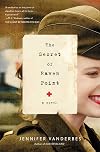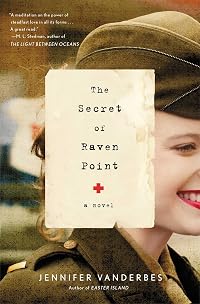
The Secret of Raven Point
by Jennifer Vanderbes
On This Page
Description
"1943: When seventeen-year-old Juliet Dufresne receives a cryptic letter from her enlisted brother and then discovers that he's been reported missing in action, she lies about her age and travels to the front lines as an army nurse, determined to find him. Shy and awkward, Juliet is thrust into the bloody chaos of a field hospital, a sprawling encampment north of Rome where she forges new friendships and is increasingly consumed by the plight of her patients. One in particular, Christopher show more Barnaby, a deserter awaiting court-martial, may hold the answer to her brother's whereabouts--but the trauma of war has left him catatonic. Racing against the clock, Juliet works with an enigmatic young psychiatrist, Dr. Henry Willard, to break Barnaby's silence before the authorities take him away. Plunged into the horrifying depths of one man's memories of combat, Juliet and Willard are forced to plumb the moral nuances of a so-called just war and to face the dangers of their own deepening emotional connection. show lessTags
Recommendations





















Member Reviews
The Short of It:
The Secret of Raven Point is a novel that effortlessly captures the pain and heartbreak of a world at war.
The Rest of It:
When Juliet receives a letter from her brother Tuck, pleading for help and then he goes missing while fighting overseas, Juliet lies about her age so she can volunteer as a nurse. Her hope is to be stationed by him so that she can find him, or at least find out what happened to him. While stationed just north of Rome, she comes in contact with a patient named Christopher Barnaby. Barnaby is awaiting trial for desertion and is suffering from self-inflicted injuries which has rendered him unconscious, but while undergoing a procedure, he briefly mentions Tuck which gives Juliet hope that her brother is show more still alive.
It’s a horrible thing to admit, but I do not like books about war. I often find them to be depressing and over-worked. But, I loved Strangers at the Feast, which was my first experience reading Vanderbes. That book had nothing to do with war, but I was so impressed with the writing that I couldn’t pass up another opportunity to read her work.
After just a few chapters, I realized that this was not your typical tale of lost love. This story centers around a brother and sister and although there are a few romantic encounters with people that Juliet meets, the book isn’t about them and instead, focuses on the love Juliet has for her brother. This was refreshing to me and not what I expected. Plus, Juliet is quite level-headed for such a young girl. She’s willful and determined and a little stubborn but essentially driven by her need to find Tuck.
As a nurse, she sees the horrors of war first hand. There are numerous amputees and men that are so damaged mentally, that they will never be able to return to the life they once knew. She befriends doctors and nurses and learns from them, but at the same time, becomes worn down from the routine of it all. Desperate to find her brother, she spends much of her time with Christopher Barnaby, the patient who seems to hold the clues to her brother’s whereabouts.
I read to escape, and this book took me to another time and place. The depictions of war are shown through the evidence of its aftermath. You see war, through Juliet’s eyes and it’s heartbreaking to see so many young men lose their lives fighting for a war that they don’t even fully understand. This experience changes Juliet forever and the realization of that, of youth lost, of the memories that she will never be able to shake, is what makes this such a tragic tale. However, the story remains hopeful even to the end.
My one criticism, is that I was taken out of the narrative once or twice during the procedures that Barnaby underwent. I don’t know what went on in those medical tents during the war but I had trouble believing that such a procedure was even possible. That part seemed a little too convenient and I worried about how the story would end, but once I got to those final pages, I was happy to discover a realistic conclusion.
If you haven’t read Vanderbes before, I suggest you give her a try. She has a way of putting the reader right at the heart of the story and although I am sure it takes much skill to do this, she appears to do it effortlessly which makes me admire her all the more.
For more reviews, visit my blog: Book Chatter. show less
The Secret of Raven Point is a novel that effortlessly captures the pain and heartbreak of a world at war.
The Rest of It:
When Juliet receives a letter from her brother Tuck, pleading for help and then he goes missing while fighting overseas, Juliet lies about her age so she can volunteer as a nurse. Her hope is to be stationed by him so that she can find him, or at least find out what happened to him. While stationed just north of Rome, she comes in contact with a patient named Christopher Barnaby. Barnaby is awaiting trial for desertion and is suffering from self-inflicted injuries which has rendered him unconscious, but while undergoing a procedure, he briefly mentions Tuck which gives Juliet hope that her brother is show more still alive.
It’s a horrible thing to admit, but I do not like books about war. I often find them to be depressing and over-worked. But, I loved Strangers at the Feast, which was my first experience reading Vanderbes. That book had nothing to do with war, but I was so impressed with the writing that I couldn’t pass up another opportunity to read her work.
After just a few chapters, I realized that this was not your typical tale of lost love. This story centers around a brother and sister and although there are a few romantic encounters with people that Juliet meets, the book isn’t about them and instead, focuses on the love Juliet has for her brother. This was refreshing to me and not what I expected. Plus, Juliet is quite level-headed for such a young girl. She’s willful and determined and a little stubborn but essentially driven by her need to find Tuck.
As a nurse, she sees the horrors of war first hand. There are numerous amputees and men that are so damaged mentally, that they will never be able to return to the life they once knew. She befriends doctors and nurses and learns from them, but at the same time, becomes worn down from the routine of it all. Desperate to find her brother, she spends much of her time with Christopher Barnaby, the patient who seems to hold the clues to her brother’s whereabouts.
I read to escape, and this book took me to another time and place. The depictions of war are shown through the evidence of its aftermath. You see war, through Juliet’s eyes and it’s heartbreaking to see so many young men lose their lives fighting for a war that they don’t even fully understand. This experience changes Juliet forever and the realization of that, of youth lost, of the memories that she will never be able to shake, is what makes this such a tragic tale. However, the story remains hopeful even to the end.
My one criticism, is that I was taken out of the narrative once or twice during the procedures that Barnaby underwent. I don’t know what went on in those medical tents during the war but I had trouble believing that such a procedure was even possible. That part seemed a little too convenient and I worried about how the story would end, but once I got to those final pages, I was happy to discover a realistic conclusion.
If you haven’t read Vanderbes before, I suggest you give her a try. She has a way of putting the reader right at the heart of the story and although I am sure it takes much skill to do this, she appears to do it effortlessly which makes me admire her all the more.
For more reviews, visit my blog: Book Chatter. show less
I carried this book around like it was my lifeline – without it I felt I would tumble into the abyss right along with Juliet’s patients. For the first time, I didn’t listen in at lunch conversations at work, I read. I read with fervor and passion, anxious to find out if Juliet found out what happened to her brother. In the end, though, it didn’t matter – and that was the most glorious part of the story.
Generally, I’m not a huge fan of books that either jump extended amounts of time or cover great swaths of time in a short period in what I can only describe as a diagonal approach. However, in The Secret of Raven Point, doing so enhances the story telling – while being a nurse during World War II was certainly eventful, I show more have a feeling that most days, the activities were fairly similar – there are only so ways a bullet or mine can decimate a human being and only so many limbs that can be removed. As such, Jennifer Vanderbes skips to times that are relevant to the plot line she is developing, almost like giving a few select cross-sections of the narrative.
While Juliet’s initial and final goal is to learn the truth about what happened to her brother, it is not prevalent on each and every page. The notion is not drilled into the reader to the point where one shouts, “I get it, enough already!” Juliet has a life, she does other things, has a little fun, and does not spend every waking minute focused solely on her goal. The things we care about can consume us, but they do not need to define us.
It is rarely the case where I read a book that I end every page thinking “There’s no way I could have written that sentence,” or “How did she do that?” Words are words, they only gain meaning when we arrange them in particular ways. Typically, I won’t read a book that has any type of gore at night as I am susceptible to nightmares (Night by Elie Wiesel and Forgotten Fire by Adam Bagdasarian particularly so) but the way Jennifer Vanderbes wrote about the horrors of World War II was both powerful and palatable. But words cannot accurately describe the sensation of being pulled headfirst into Juliet’s world on the front lines of the forgotten front of World War II, the heart of Italy. show less
Generally, I’m not a huge fan of books that either jump extended amounts of time or cover great swaths of time in a short period in what I can only describe as a diagonal approach. However, in The Secret of Raven Point, doing so enhances the story telling – while being a nurse during World War II was certainly eventful, I show more have a feeling that most days, the activities were fairly similar – there are only so ways a bullet or mine can decimate a human being and only so many limbs that can be removed. As such, Jennifer Vanderbes skips to times that are relevant to the plot line she is developing, almost like giving a few select cross-sections of the narrative.
While Juliet’s initial and final goal is to learn the truth about what happened to her brother, it is not prevalent on each and every page. The notion is not drilled into the reader to the point where one shouts, “I get it, enough already!” Juliet has a life, she does other things, has a little fun, and does not spend every waking minute focused solely on her goal. The things we care about can consume us, but they do not need to define us.
It is rarely the case where I read a book that I end every page thinking “There’s no way I could have written that sentence,” or “How did she do that?” Words are words, they only gain meaning when we arrange them in particular ways. Typically, I won’t read a book that has any type of gore at night as I am susceptible to nightmares (Night by Elie Wiesel and Forgotten Fire by Adam Bagdasarian particularly so) but the way Jennifer Vanderbes wrote about the horrors of World War II was both powerful and palatable. But words cannot accurately describe the sensation of being pulled headfirst into Juliet’s world on the front lines of the forgotten front of World War II, the heart of Italy. show less
The secret of Raven Point is set in World War II. Its central character, Juliet, volunteers as a nurse at the Italian front after her beloved older brother goes missing in action there. Though the novel focuses on Juliet’s journey, we see other journeys as well. The journey of a broken soldier who may have known Juliet’s brother and who’s survived a suicide attempt only to be brought up on court martial. The journey of a military psychiatrist treating this soldier and fighting to keep some sense of hope and purpose in the midst of war. The journey of a military chaplain who must weigh the competing spiritual and physical needs of the soldiers he serves. The journeys of other soldiers living within and sometimes—but not not show more nearly often enough—surviving the war.
In the hands of a less effective writer, these different journeys might flatten out, be bulldozed into clichéd experiences of stereotypical individuals, but Vanderbes prevents that from happening. While not utterly brutal, her novel doesn’t pander by giving us unlikely happy endings. It doesn’t degenerate into a romance novel.
When you’re ready for compelling fiction that will make you both feel and think, pick up The Secret of Raven Point. show less
In the hands of a less effective writer, these different journeys might flatten out, be bulldozed into clichéd experiences of stereotypical individuals, but Vanderbes prevents that from happening. While not utterly brutal, her novel doesn’t pander by giving us unlikely happy endings. It doesn’t degenerate into a romance novel.
When you’re ready for compelling fiction that will make you both feel and think, pick up The Secret of Raven Point. show less
In general, I hate depressing, dark, and gory books. This book was definitely all three! Unlike in Somewhere in France, there is no glossing over the gruesome bits of war nurse’s job. At least half of the characters we’re introduced to are seriously injured or dead by the end of the book. I had a hard time giving this book four stars, because I didn’t finish with feeling happy about the book. I finished feeling depressed by the horrors of war. So the question is, what made this book so good anyway?
I think the answer is this: the story felt real. In so many books and movies, a character is introduced who you just know you’re being made to like so that you’ll be sad when they’re killed off. It’s frustrating to me because the show more author could have written anything they wanted and they chose to mess with my emotions by writing something sad. In The Secret of Raven Point, I felt as though we were getting a glimpse of real events. It was never obvious which characters weren’t going to make it. The author didn’t oversell the grief and violence either. They happen and Juliet moves on because she has to, taking the reader with her. As a result, I felt that the author did a great job portraying the unfairness and unpredictability of war. The unpredictability also meant there was always hope, just as in real life. And that is what I loved about this book. It was poignant, heartbreaking, and gritty, but most of all it felt very real.
This review first published on Doing Dewey. show less
I think the answer is this: the story felt real. In so many books and movies, a character is introduced who you just know you’re being made to like so that you’ll be sad when they’re killed off. It’s frustrating to me because the show more author could have written anything they wanted and they chose to mess with my emotions by writing something sad. In The Secret of Raven Point, I felt as though we were getting a glimpse of real events. It was never obvious which characters weren’t going to make it. The author didn’t oversell the grief and violence either. They happen and Juliet moves on because she has to, taking the reader with her. As a result, I felt that the author did a great job portraying the unfairness and unpredictability of war. The unpredictability also meant there was always hope, just as in real life. And that is what I loved about this book. It was poignant, heartbreaking, and gritty, but most of all it felt very real.
This review first published on Doing Dewey. show less
This is a powerful book, hands down. It’s an emotional journey through loss, the horrors of war, and a young woman growing up in very trying circumstances.
I liked that the author wasn’t afraid to explore the truly gruesome and gory of war. The reader gets plunked down right in the middle of the action and experiences the same pain and loss that Juliet and the others do. The emotions this book brings up are incredible. I was alternately angry at the hopeless situation faced by some, tearful at the tragedy of so many young people lost so quickly, and peacefully cheerful at the quiet moments the characters found now and then.
I liked the characters, too, especially Juliet. She grows throughout the book in a very realistic way, from show more internally focused teenager to a world-weary adult. I grew to like her as an individual and as a vehicle through which the story is told. I liked all the secondary characters, as well, even Brilling. They’re all realistically portrayed and feel three-dimensional, like they’d step right off the page.
I’ve never read a fictionalized account of the American nurses, their co-workers, and their patients during WWII. It gives me new respect for all involved, seeing and at least in this author’s hands, experiencing, all the horrors and tragedies in evidence. I also was very interested in seeing battle fatigue explored in a WWII context. I’ve only ever read it in a WWI context. It was fascinating to see how it was dealt with thirty years after that first Great War and to see how many of the same misconceptions were still in use.
The one issue I have is a minor one. One aspect of the book, Tuck’s last letter, was never fully explored. It’s mentioned multiple times throughout the book, moving the story forward and keeping the letter’s existence in the forefront of reader’s minds. Yet, it’s never fully, explicitly explained why Tuck wrote what he did. Given the material covered in the book, I can make an educated guess, which I guess isn’t that horrible. But a bit more explanation directly would have been nice.
At the end of the day, though, that’s a very inconsequential quibble. The characters are vivid, the story was intriguing, and the author’s not afraid to go where few have before in the emotions and horrific material portrayed. I was kept spellbound by this book and definitely would recommend it to anyone looking for a different perspective on WWII. show less
I liked that the author wasn’t afraid to explore the truly gruesome and gory of war. The reader gets plunked down right in the middle of the action and experiences the same pain and loss that Juliet and the others do. The emotions this book brings up are incredible. I was alternately angry at the hopeless situation faced by some, tearful at the tragedy of so many young people lost so quickly, and peacefully cheerful at the quiet moments the characters found now and then.
I liked the characters, too, especially Juliet. She grows throughout the book in a very realistic way, from show more internally focused teenager to a world-weary adult. I grew to like her as an individual and as a vehicle through which the story is told. I liked all the secondary characters, as well, even Brilling. They’re all realistically portrayed and feel three-dimensional, like they’d step right off the page.
I’ve never read a fictionalized account of the American nurses, their co-workers, and their patients during WWII. It gives me new respect for all involved, seeing and at least in this author’s hands, experiencing, all the horrors and tragedies in evidence. I also was very interested in seeing battle fatigue explored in a WWII context. I’ve only ever read it in a WWI context. It was fascinating to see how it was dealt with thirty years after that first Great War and to see how many of the same misconceptions were still in use.
The one issue I have is a minor one. One aspect of the book, Tuck’s last letter, was never fully explored. It’s mentioned multiple times throughout the book, moving the story forward and keeping the letter’s existence in the forefront of reader’s minds. Yet, it’s never fully, explicitly explained why Tuck wrote what he did. Given the material covered in the book, I can make an educated guess, which I guess isn’t that horrible. But a bit more explanation directly would have been nice.
At the end of the day, though, that’s a very inconsequential quibble. The characters are vivid, the story was intriguing, and the author’s not afraid to go where few have before in the emotions and horrific material portrayed. I was kept spellbound by this book and definitely would recommend it to anyone looking for a different perspective on WWII. show less
The book essentially begins in 1941. The Japanese have just bombed Pearl Harbor and a wave of nationalism sweeps the United States. In a place called Charlesport, South Carolina, like in other cities, large and small, families gather round their radios listening to the news. Eligible men and women begin to come to the defense of their country, enlisting in the armed forces.
Close friends and siblings, Juliette and Tucker Dufresne are in High School. She is shy, ashamed of a birthmark on her face. He is older, a high school senior and a football star. Tucker confides in his sister that he wishes to enlist and serve his country. This family is rather proud of his intentions, as others all over the country are proud of their sons and show more daughters, fathers and brothers, sisters and aunts. They have not yet witnessed the horrors to come and only experience the passion of their patriotism.
Jules and Tuck have a special secret code that they use when they need brotherly/sisterly aid or protection, like simply making up an excuse to their parents for the unexplained absence, of one of them, etc. The sibling in need sends a note saying they are with the fictional Mrs. Fan, as a signal.
When Tuck turns 18, and enlists. Jules writes everyday. Soon his letters home begin to dwindle. Finally, the family receives a letter stating that he is missing in action. They hold out hope that he will be found but are all too aware, by now, of the possibility that he will not return. Although Tuck had written Jules a letter a month before he went missing, it did not arrive until after they were notified. In his letter, he wrote that he was with Mrs. Fan, so she knew he needed help, but she had no idea how to find him, and wasn’t even sure if he was still alive.
When Jules graduated from nursing school in 1944, she was not yet 18, but because of the letter from her brother, she decided to alter her birth certificate and enlist. She wanted to try and find him; she hoped he was still alive. She went through the training and was shipped out to Europe. She requested the front so she could search for Tuck or at least find someone who knew what had happened to him. Young and immature, unprepared for what faced her, she was buoyed by her idealism.
This is a wonderful story about a brother and sister's devotion, about family loyalty, about nationalism and also about the tribulations of war which makes all the glory pale in the face of its unexpected tragic consequences. War does not bring out the best in anyone. The author has captured, equally well, both the allure and the devastation of war. She has entered the minds of the injured soldier, the frightened in the foxholes who never envisioned what it meant to be shot at, to step on a mine, or to shoot the enemy. She shines a bright light on the bravery of the medical staff, selfless in their efforts to save their own. She has drawn a clear picture of the cruelty shown to soldiers who were “different”, in a time when homophobia was not a dirty word. She has really drawn a reasoned picture of the cruelty and futility of war coupled with its tragic, useless cost of life and limb.
I listened to this audio book using a new library app, called Hoopla. Unfortunately, there was no way to adjust the speed of the reader and that was often very distracting. It was the equivalent of watching water boil, and it took quite some time to get used to her pace. show less
Close friends and siblings, Juliette and Tucker Dufresne are in High School. She is shy, ashamed of a birthmark on her face. He is older, a high school senior and a football star. Tucker confides in his sister that he wishes to enlist and serve his country. This family is rather proud of his intentions, as others all over the country are proud of their sons and show more daughters, fathers and brothers, sisters and aunts. They have not yet witnessed the horrors to come and only experience the passion of their patriotism.
Jules and Tuck have a special secret code that they use when they need brotherly/sisterly aid or protection, like simply making up an excuse to their parents for the unexplained absence, of one of them, etc. The sibling in need sends a note saying they are with the fictional Mrs. Fan, as a signal.
When Tuck turns 18, and enlists. Jules writes everyday. Soon his letters home begin to dwindle. Finally, the family receives a letter stating that he is missing in action. They hold out hope that he will be found but are all too aware, by now, of the possibility that he will not return. Although Tuck had written Jules a letter a month before he went missing, it did not arrive until after they were notified. In his letter, he wrote that he was with Mrs. Fan, so she knew he needed help, but she had no idea how to find him, and wasn’t even sure if he was still alive.
When Jules graduated from nursing school in 1944, she was not yet 18, but because of the letter from her brother, she decided to alter her birth certificate and enlist. She wanted to try and find him; she hoped he was still alive. She went through the training and was shipped out to Europe. She requested the front so she could search for Tuck or at least find someone who knew what had happened to him. Young and immature, unprepared for what faced her, she was buoyed by her idealism.
This is a wonderful story about a brother and sister's devotion, about family loyalty, about nationalism and also about the tribulations of war which makes all the glory pale in the face of its unexpected tragic consequences. War does not bring out the best in anyone. The author has captured, equally well, both the allure and the devastation of war. She has entered the minds of the injured soldier, the frightened in the foxholes who never envisioned what it meant to be shot at, to step on a mine, or to shoot the enemy. She shines a bright light on the bravery of the medical staff, selfless in their efforts to save their own. She has drawn a clear picture of the cruelty shown to soldiers who were “different”, in a time when homophobia was not a dirty word. She has really drawn a reasoned picture of the cruelty and futility of war coupled with its tragic, useless cost of life and limb.
I listened to this audio book using a new library app, called Hoopla. Unfortunately, there was no way to adjust the speed of the reader and that was often very distracting. It was the equivalent of watching water boil, and it took quite some time to get used to her pace. show less
This book will break your heart because although it takes place during World War II, it doesn't matter. Everything, today, is still the same, but in many ways much worse, in the way the countries of the world try and solve their problems---this was from the point of view about how terribly and unforgivably sad it is to try and heal the war wounded, only to send them right back in again. I loved the characters. The descriptions of the wounded were way beyond painful to read/listen to. I was listening to the audio and Susie Berneis as the reader was terrific.
Members
- Recently Added By
Lists

Simon & Schuster
136 works; 4 members
Author Information

8+ Works 1,059 Members
Jennifer Vanderbes was a James McCreight Fellow in Fiction at the University of Wisconsin, and most recently was the Fellow in Creative Writing at Colgate University.
Awards and Honors
Distinctions
Common Knowledge
- Canonical title
- The Secret of Raven Point
- Original publication date
- 2014-02
- People/Characters
- Juliet Dufresne; Tucker Dufresne
- Important places
- Charlesport, South Carolina; Italy
- Important events
- World War II (1941-1944)
- Epigraph
- A hospital alone shows what war is.
—Erich Maria Remarque, All Quiet on the Western Front - Dedication
- For Ellery
- First words
- The German puts his hands behind his head, biting at his lower lip, and gets down on his knees.
- Quotations
- the division is like a city, made up of maybe ten thousand soldiers, the company is your neighborhood, the platoon is your block, and your squad, well, that's your family. Those are the nine guys you count on to drag you back... (show all) to safety if you get hit—those are the guys you talk into the night with, pitch tents with, dig trenches with, pray with.
The globe seemed divided into Charlesport and everywhere else, and while the latter had always lurked at the fringes of Juliet's mind, it had seemed a far-off and forbidden place, fortified and gated. But the gate had now swu... (show all)ng open, and what lay beyond enticed her.
But Juliet was growing increasingly certain of her intent to leave Charlesport; she did not want to be as Tuck had once described her—a girl who curiously opened every door but never walked through one.
We like in holes, dirt creeping into every sock and collar. Bombs all night. It sounds like the drummer in the marching band went mad.
One by one they eased the tent stakes from the ground and watched their homes billow and flatten. All across the encampment, as the sun rose, the same was happening, and soon the hospital looked to Juliet like the remains of ... (show all)a massacred giant—canvas skin strewn across the grass, a skeleton of wooden poles.
The convoy departed at night without headlights, as the sky above roared and growled like a monster. Somewhere ahead, German planes banged, buzzed, coughed, belched; bursts of gunfire tore through the air, dashes of silver ag... (show all)ainst the velvet blackness.
Mother Hen instructed Juliet to number foreheads: lipstick 1s, 2s, 3s, 4s, and 5s indicated who most needed surgery.
For days the sun had vanished behind screens of gray vapor, but the moisture never managed to gather into rain. There was a hot, jellied stillness to the air.
"The human mind," said Dr. Willard, "is more unknowable than the entire ocean, or all the space between the stars."
They all sat awkwardly for a minute, listening to the cacophony pulse of crickets and tree frogs, that primal bleating of insect and amphibian sounding out over the night long before there were wars or humans to fight in them... (show all).
Tears came briefly to Juliet's eyes; he had said something she'd always wanted to hear but hadn't known it. Someone thought she was pretty. She'd always thought she was too smart to want such things. Yet it moved her now. May... (show all)be he was lying, maybe he was tired, but it made her happy, and she leaned against his shoulder. She wanted to lose herself in the bulk of him.
The stars clustered thickly overhead like coins in a wishing pond.
The sky had turned gray, and in the distance the thunder rumbled, the serrated edge of a storm.
Where she had once believed the task of nursing was knowing exactly what to do, here she found, again and again, that the challenge was understanding what she could not do.
Here and there, bloated corpses bobbed with the current, the smell of rot congealing the night air. Lone helmets slid like turtles.
She imagined Tuck welcoming Beau, and for a moment she felt so cracked by sadness that only gravity held her together.
In the cold, they all turned in on themselves: they pulled blankets tightly around their shoulders; they clutched coffee cups as though in prayer and let the steam bathe their faces. At the back of the hall, a modest fire bla... (show all)zed in the fireplace, and those who had finished eating drew close, hugging their knees, staring at their bare toes. The stone ledge of the hearth was carpeted with socks.
It was the thing they never wrote about in their letters, the thing they never could write about, and it was everything; in between the details of food and weather and camaraderie, they never said, Dear Mom and Pop, I've beco... (show all)me a killer.
She looked around at her friends. She cared for these men but she did not think she would be willing to die for them. She was not like Tuck. She saw it sharply; she was kind and caring, but if the horrid moment ever came, she... (show all) would save herself. It was cowardice, the most natural and primal cowardice, and she could speak of it to no one. Self-preservation was the loneliest of instincts.
Here they were, the creatures of yet another brutal epoch. Even if they survived all of this, she knew history would swallow them, silently, as it did everyone.
What meaning was there in his survival—or in hers, for that matter? Was there an obligation that came with living? With each adversity you suffered, with each disappointment, did you have to recognize that someone else hadn... (show all)'t even had the chance?
She will tuck it deep in the pocket of her soul like a shiny penny snatched from the ground. - Last words
- (Click to show. Warning: May contain spoilers.)He turns and clasps her hand between his. "The best."
- Original language
- English
Classifications
Statistics
- Members
- 197
- Popularity
- 166,589
- Reviews
- 14
- Rating
- (3.70)
- Languages
- English
- Media
- Paper, Audiobook, Ebook
- ISBNs
- 8
- ASINs
- 4