
April Smith (1)
Author of North of Montana
For other authors named April Smith, see the disambiguation page.
About the Author
Image credit: Jonathan Exley
Series
Works by April Smith
Umney's Last Case [2006 Nightmares & Dreamscapes: From the Stories of Stephen King TV Episode] (2006) — Writer — 3 copies
Autopsy Room Four [2006 Nightmares & Dreamscapes: From the Stories of Stephen King TV Episode] (2006) — Writer — 1 copy
Associated Works
Tagged
Common Knowledge
There is no Common Knowledge data for this author yet. You can help.
Members
Reviews
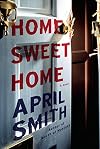
April Smith has taken real-life events, relocated them to the state of South Dakota, and created an excellent historical account of the Red Scare, McCarthyism, and what hate and fear can do to a nation and even more personally, a community. I could not help but think of our 2016 campaign for President.
It begins with a break-in and murder in Rapid City, SD in 1985. The Kuseks - Lance, Wendy, and their son Willie - are savagely beaten and Wendy dies. Lance and their son are rushed to the show more hospital where their lives are in question. Lance’s sister Jo arrives from her home in Portland, OR and the story moves backwards in time.
In 1941 Betsy Ferguson and Cal Kusek meet and fall in love in NYC. He is a young and promising liberal lawyer and she a Gimbels’ clerk and fledgling member of the Communist Party. They marry, tire of the pace on the East Coast and move to Rapid City, SD where Cal’s Army buddy, Scotty, has roots. Through hard work, help from Scotty and his parents, and sheer determination, Betsy and Cal start a new life, have and raise Jo and Lance and enjoy success on their ranch. Cal thrives in local politics and is convinced to run for U.S. Senate. At this time, the FBI investigates Betsy for her past ties to the Communist Party, and the Kuseks’ storybook existence begins to fall apart.
While the majority of the novel follows Cal and Betsy’ life in 1950’s and 60’s Rapid City, we are occasionally brought back to “current” events in the Rapid City Hospital where Lance and Willie fight for life and Jo tries to piece together what has happened to what’s left of her family and if it’s related to the past.
I found this book to be very informative (I forgot to mention the Minuteman Program) while never losing its personal feel. A strong reminder of how quickly fear can turn friends against friends and even destroys families. show less
It begins with a break-in and murder in Rapid City, SD in 1985. The Kuseks - Lance, Wendy, and their son Willie - are savagely beaten and Wendy dies. Lance and their son are rushed to the show more hospital where their lives are in question. Lance’s sister Jo arrives from her home in Portland, OR and the story moves backwards in time.
In 1941 Betsy Ferguson and Cal Kusek meet and fall in love in NYC. He is a young and promising liberal lawyer and she a Gimbels’ clerk and fledgling member of the Communist Party. They marry, tire of the pace on the East Coast and move to Rapid City, SD where Cal’s Army buddy, Scotty, has roots. Through hard work, help from Scotty and his parents, and sheer determination, Betsy and Cal start a new life, have and raise Jo and Lance and enjoy success on their ranch. Cal thrives in local politics and is convinced to run for U.S. Senate. At this time, the FBI investigates Betsy for her past ties to the Communist Party, and the Kuseks’ storybook existence begins to fall apart.
While the majority of the novel follows Cal and Betsy’ life in 1950’s and 60’s Rapid City, we are occasionally brought back to “current” events in the Rapid City Hospital where Lance and Willie fight for life and Jo tries to piece together what has happened to what’s left of her family and if it’s related to the past.
I found this book to be very informative (I forgot to mention the Minuteman Program) while never losing its personal feel. A strong reminder of how quickly fear can turn friends against friends and even destroys families. show less

Started it, then stayed up until 3:30 in the morning to finish it. So this is definitely a page-turner. As a baseball fan, I enjoyed the descriptions of a scouting meeting and of spring training. The author obviously works hard at producing well-crafted prose; once in a while she reaches too far and produces an unintentional oxymoron. Example: when someone is massaging Cassidy's shoulders, they are like granite; she's been working under the kind of pressure that would liquefy stone. As other show more reviewers have mentioned, there are a couple of loose ends in the narrative (can anyone tell me how Nora knew where to find her father?). Back to Cassidy: if you don't like a heroine with an attitude, who is so driven that she habitually operates way out of bounds, and who has a drinking problem, then you won't like an April Smith book; both Cassidy and Ana, the heroine of North of Montana, April Smith's previous book, fit the description. Plus they are NOT into housekeeping and have pretty bad luck at relationships. Having said that, I'll confess that Cassidy kept coming in and out of focus for me. She seemed to be less sharply drawn than Ana. But even in those patches where Cassidy seems like a shadow, the plot kept me riveted. Do you like baseball? Like thrillers? Read it. [originally posted on Amazon.com] show less
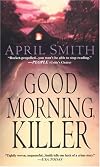
A renegade FBI agent. Sounds like a contradiction in terms, and in fact to me it suggested that agent Ana Grey should not be in that organization.
There are many fictional detectives who become obsessed with learning the truth, and will cross any number of barriers to get there. I don't' find that admirable or endearing. There are also many detectives who can't open up, are unable to trust. I do understand and can usually relate to this trait. In Ana we have both.
While searching for the man show more who abducted, viciously beat, and raped a fifteen-year-old girl, Ana crosses lines that may weaken the investigation, an investigation that she shares with Malibu detective Andrew Berringer. Ana and Andrew are having an affair. Ana tells herself that she is just in it for the sex yet she talks to Andrew about moving in together.
There are contradictions in Ana's character that I couldn't resolve in my head. She cares for Andrew but when he says he prefers to keep the house that holds so many family memories for him, she dismisses his concern because she prefers her own apartment. She is a level-headed investigator but goes off the rails when her thoughts lead her to accusations of infidelity against Andrew. She behaves in a dangerous, absurd manner that threatens the safety of others.
Yet inside she is caring about little Juliana, the rape victim. I couldn't put it together, particularly because the caring moments are so few. Instead of taking us inside a deep conversation with Juliana, Smith glosses over it and later says Ana had many conversations, without letting us into any of them. I suspected that Smith really did not know how to express that caring.
She did know how to express how a special nurse talks to a rape victim, and I appreciated the time she took with that (the acknowledgments indicate that she explored this topic with others).
Overall, I found Ana vindictive, reckless, and thoughtless, and I don't feel the need to read any more in this series. show less
There are many fictional detectives who become obsessed with learning the truth, and will cross any number of barriers to get there. I don't' find that admirable or endearing. There are also many detectives who can't open up, are unable to trust. I do understand and can usually relate to this trait. In Ana we have both.
While searching for the man show more who abducted, viciously beat, and raped a fifteen-year-old girl, Ana crosses lines that may weaken the investigation, an investigation that she shares with Malibu detective Andrew Berringer. Ana and Andrew are having an affair. Ana tells herself that she is just in it for the sex yet she talks to Andrew about moving in together.
There are contradictions in Ana's character that I couldn't resolve in my head. She cares for Andrew but when he says he prefers to keep the house that holds so many family memories for him, she dismisses his concern because she prefers her own apartment. She is a level-headed investigator but goes off the rails when her thoughts lead her to accusations of infidelity against Andrew. She behaves in a dangerous, absurd manner that threatens the safety of others.
Yet inside she is caring about little Juliana, the rape victim. I couldn't put it together, particularly because the caring moments are so few. Instead of taking us inside a deep conversation with Juliana, Smith glosses over it and later says Ana had many conversations, without letting us into any of them. I suspected that Smith really did not know how to express that caring.
She did know how to express how a special nurse talks to a rape victim, and I appreciated the time she took with that (the acknowledgments indicate that she explored this topic with others).
Overall, I found Ana vindictive, reckless, and thoughtless, and I don't feel the need to read any more in this series. show less
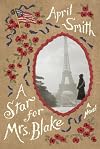
This book offers an unique way of exploring the tragedy of World War I, based on an actual government program during the 1930s that sent mothers of dead soldiers to Europe, so they could visit their sons’ graves.
The author creates five fictional mothers, all of whom travel together to visit the graveyard and battlefields near Verdun, where their sons died. Escorted by a recent West Point grad and a young army nurse, these women come from different classes and ethnic backgrounds. They are show more thrust together for a three-week journey that is part holiday and part deep personal obligation.
There are frictions around their differences but also intense bonding around the shared tragedy of losing a child. At times they display frustration with one another and, at other times, find themselves fiercely defending one another. And by the end of their trip, they become sufficiently unified to demand explanations when the competency of army personnel is questioned.
I found Smith construct very inventive because it also allowed me to explore some less obvious aspects of this conflict. Like,
• The questionable value of fighting a 20th century war with 19th century tactics.
• Experimental plastic surgery techniques used to help survivors deal with severe facial injures.
• Ways in which racial discrimination played out in the military, through institutionalized double standards.
• Which values get rewarded in the military, even when they have little or nothing to do with honesty or honor.
The narrative is well written and the relationships ring true. The book as a whole turns out to offer quite a thoughtful look at war, sacrifice, survival, and the nature of collateral damage. show less
The author creates five fictional mothers, all of whom travel together to visit the graveyard and battlefields near Verdun, where their sons died. Escorted by a recent West Point grad and a young army nurse, these women come from different classes and ethnic backgrounds. They are show more thrust together for a three-week journey that is part holiday and part deep personal obligation.
There are frictions around their differences but also intense bonding around the shared tragedy of losing a child. At times they display frustration with one another and, at other times, find themselves fiercely defending one another. And by the end of their trip, they become sufficiently unified to demand explanations when the competency of army personnel is questioned.
I found Smith construct very inventive because it also allowed me to explore some less obvious aspects of this conflict. Like,
• The questionable value of fighting a 20th century war with 19th century tactics.
• Experimental plastic surgery techniques used to help survivors deal with severe facial injures.
• Ways in which racial discrimination played out in the military, through institutionalized double standards.
• Which values get rewarded in the military, even when they have little or nothing to do with honesty or honor.
The narrative is well written and the relationships ring true. The book as a whole turns out to offer quite a thoughtful look at war, sacrifice, survival, and the nature of collateral damage. show less
Lists
Library TBR (1)
Awards

You May Also Like


Associated Authors
Statistics
- Works
- 12
- Also by
- 1
- Members
- 1,290
- Popularity
- #19,887
- Rating
- 3.4
- Reviews
- 49
- ISBNs
- 77
- Languages
- 7