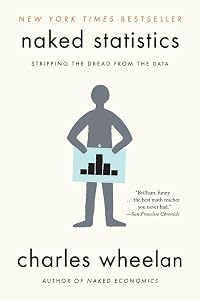
Naked Statistics: Stripping the Dread from the Data
by Charles Wheelan
On This Page
Description
Demystifies the study of statistics by stripping away the technical details to examine the underlying intuition essential for understanding statistical concepts.Tags
Recommendations
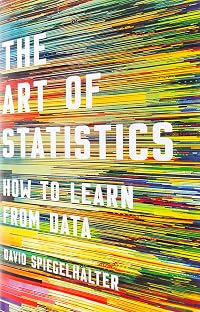
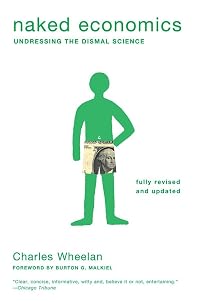
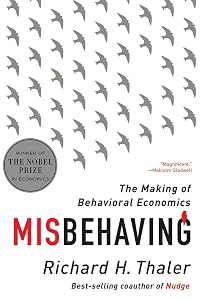
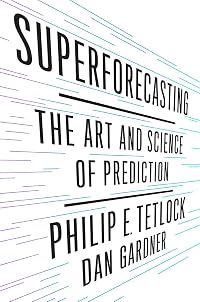



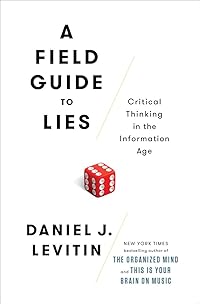
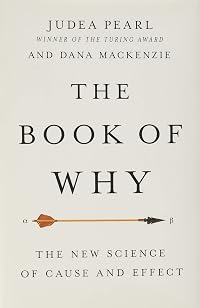
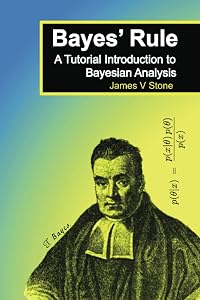
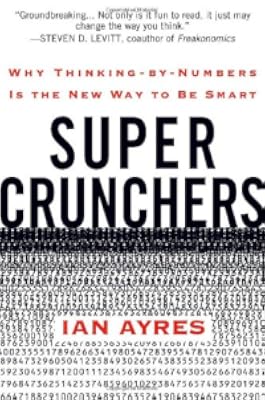

Member Recommendations
PuddinTame Daniel J. Levitan particularly recommended this book in his own.
Member Reviews
This is a readable, enjoyable and accessible book that will teach you the fundamentals behind Statistics. And if you are at all interested in the new world of analytics or data science (or at least have to work with those that do) you need to have a grounding in this subject matter. Charles Wheelan does an excellent job of taking you by the hand and explaining terms like descriptive statistics, predictive analytics, the basics of probability and polling. Doesn’t sound all that fun? Well, you haven’t read Wheelan’s examples yet. As a former editor for many How-To books and technical series I give this the “Damn. Wish I had Published This” Award.
This is a very lucidly written book that covers the basics of the branch of math known as statistics. It shows the uses and misuses of statistics and some of the essential math behind the applications. Readers will find a discussion of the familiar normal distribution; an explication of the Central Limit Theorem; the formula for calculating the standard error; and a fairly detailed introduction to probability theory.
The subject matter never becomes dull in Wheelan’s treatment because of his light sense of humor. For example, when discussing the limits of the validity of regression analysis, he writes:
“Here is one of the most important things to remember when doing research that involves regression analysis. Try not to kill show more anyone.”
He then goes on to explain how a mathematically consistent analysis of a large data set by the Harvard Medical School and the Harvard School of Public Health led to the belief that estrogen supplements were beneficial to women over 50 years old. Subsequently, millions of women were prescribed estrogen supplements. But later actual clinical trials involving double blind experiments showed that women taking estrogen had a higher incidence of heart disease, stroke, blood clots, breast cancer and other adverse health outcomes!
But having warned the reader not to confuse correlation with causation and that statistical analysis yields probabilistic outcomes rather than certainty, he shows how valuable such analysis can be. He concludes with the admonition to “[g]o forth and use data wisely and well.”
Even if you have had a college level course or two in statistics, you will find this book enjoyable and enlightening.
(JAB) show less
The subject matter never becomes dull in Wheelan’s treatment because of his light sense of humor. For example, when discussing the limits of the validity of regression analysis, he writes:
“Here is one of the most important things to remember when doing research that involves regression analysis. Try not to kill show more anyone.”
He then goes on to explain how a mathematically consistent analysis of a large data set by the Harvard Medical School and the Harvard School of Public Health led to the belief that estrogen supplements were beneficial to women over 50 years old. Subsequently, millions of women were prescribed estrogen supplements. But later actual clinical trials involving double blind experiments showed that women taking estrogen had a higher incidence of heart disease, stroke, blood clots, breast cancer and other adverse health outcomes!
But having warned the reader not to confuse correlation with causation and that statistical analysis yields probabilistic outcomes rather than certainty, he shows how valuable such analysis can be. He concludes with the admonition to “[g]o forth and use data wisely and well.”
Even if you have had a college level course or two in statistics, you will find this book enjoyable and enlightening.
(JAB) show less
It’s probably obvious, but Naked Statistics is a book about statistics. Like the title suggests, it strips back the concepts to basics in easy to understand examples. I’ve studied statistics at both undergrad and postgrad level but never really gotten into the depths of analysis. I know about the normal distribution and t- tests and p values but it’s only recently where I’ve had to rely on my knowledge to actually decipher whether studies are useful underneath the analysis. Rather than turn to a textbook, I decided to give this book a go after seeing it in a bookshop.
Naked Statistics is definitely more fun than a textbook. It starts with the very basic concepts (mean, median and mode) and works its way up to regression analysis. show more It builds on the concepts learned and applies them to both realistic and fantastic situations (such as bus hunting for terrorists on the hunt for food. Luckily, it just happens to be the International Festival of Sausage, which calms them down nicely). The equations and letters x, y and n are few and far between (but are included in appendices if you want to revisit them).
My favourite part of the book is the examples. Sometimes they are funny (like the International Festival of Sausage), sometimes the examples are ripped straight from the headlines. It shows the science behind the spin of predicting presidential candidates to whether going to a famous college like Harvard means you will earn more (you won’t). If you already question the media when it comes to polls, the chapter on them will be fascinating. It shows how information can be skewed using statistics to get the result you want. A lot of this relies on the samples taken – ‘garbage in, garbage out’ (i.e. if you choose a biased sample, such as supporters at a Trump rally, of course you will get a high percentage voting for him. This sample is not reflective of the entire American population).
The language that Wheelan uses to describe the concepts is easy to read and easy to understand. I had flashbacks of remembering the dry statistics from uni and it was refreshing to read them described in a different way (which was also way more interesting). I didn’t find it patronising, even the mean/median/mode section (when we had this as a 2 hour postgrad lecture, my friends and I spent the time wandering in and out, buying chips and lollies and writing notes to each other because we deemed ourselves above this). I really wish my lecturers had read this book!
However, you don’t need previous knowledge of statistics to enjoy this book. You will find that you’ve been exposed to a lot of these methods in the world around you. I enjoyed this book so much that I’m going to read Wheelan’s Naked Economics, a subject I know less about (but again, need to learn about for work reasons). I’m sure he’s going to make any subject he turns to interesting.
http://samstillreading.wordpress.com show less
Naked Statistics is definitely more fun than a textbook. It starts with the very basic concepts (mean, median and mode) and works its way up to regression analysis. show more It builds on the concepts learned and applies them to both realistic and fantastic situations (such as bus hunting for terrorists on the hunt for food. Luckily, it just happens to be the International Festival of Sausage, which calms them down nicely). The equations and letters x, y and n are few and far between (but are included in appendices if you want to revisit them).
My favourite part of the book is the examples. Sometimes they are funny (like the International Festival of Sausage), sometimes the examples are ripped straight from the headlines. It shows the science behind the spin of predicting presidential candidates to whether going to a famous college like Harvard means you will earn more (you won’t). If you already question the media when it comes to polls, the chapter on them will be fascinating. It shows how information can be skewed using statistics to get the result you want. A lot of this relies on the samples taken – ‘garbage in, garbage out’ (i.e. if you choose a biased sample, such as supporters at a Trump rally, of course you will get a high percentage voting for him. This sample is not reflective of the entire American population).
The language that Wheelan uses to describe the concepts is easy to read and easy to understand. I had flashbacks of remembering the dry statistics from uni and it was refreshing to read them described in a different way (which was also way more interesting). I didn’t find it patronising, even the mean/median/mode section (when we had this as a 2 hour postgrad lecture, my friends and I spent the time wandering in and out, buying chips and lollies and writing notes to each other because we deemed ourselves above this). I really wish my lecturers had read this book!
However, you don’t need previous knowledge of statistics to enjoy this book. You will find that you’ve been exposed to a lot of these methods in the world around you. I enjoyed this book so much that I’m going to read Wheelan’s Naked Economics, a subject I know less about (but again, need to learn about for work reasons). I’m sure he’s going to make any subject he turns to interesting.
http://samstillreading.wordpress.com show less
A pretty solid surface-level introduction to statistics. Not overly dry—actually funny in parts—and from my layman's perspective, doesn't seem to be oversimplifying many things. (I like, actually, that he at least lets you know when he's really simplifying a concept, so you don't think you have the whole picture when you don't.) Honestly, it was a bit too basic for me, but not by much. I found it pretty engaging & learned a few things. Would definitely recommend it for anyone who has never really thought about things like sampling methodologies, or the qualitative difference between median & mean, etc. If you have thought about those things, this might be too simple for you as well. Sadly, I can't recommend a better book that would show more be at the next level. If anyone can, though, I'd love to hear suggestions. show less
I love collecting data about myself, and I thought this book would enable me to put it to good use. Besides, we live in the age of big data, and what use is data if we can't do some magic with it.
So these are the two reasons why I decided to read this book. That would have been good in itself, but I got so much more than that! :)
It delved into research methodologies as well. As a result, I can say that I'm slightly better equipped to evaluate a given research which I'd have otherwise accepted blindly.
On to some of the concepts that truly blew my mind:
1. Positive publication bias: according to which, positive findings are more likely to be published than negative findings.
2. Reverse causality: A statistical association between A and B does not prove that A causes B. In fact, it’s entirely plausible that B is causing A.
3. Central limit theorem: which is described as "the LeBron James of statistics—if LeBron were also a supermodel, a Harvard professor, and the winner of the Nobel Peace Prize." Its basic premise being: a large, properly drawn sample will resemble the population from which it is drawn.
Some other stuff I found to be interesting:
● It was interesting to read how statistics have the power to influence human behaviour by providing incentives, intentional or otherwise.
Especially the part where he tells about the time heart doctors had a "scorecard" that evaluated the mortality rates for the patients of cardiologists performing coronary angioplasty.
● Loved the part where he explained why it doesn't make sense to screen the entire population for a rare disease.
● The part where credit card companies can ascertain to a reasonable degree whether you'll default on your next payment by simply looking at your past purchases.
As much as I want to give it a perfect 5, I can't. As a work of literature, I'd say this book has a large room for improvement, but I'd forgive it considering that it made a "boring" subject, such as statistics, fun to read!
PS: I DID THE MATH!
True to my word, I immediately set about to tweaking a sample of my Japanese learning data collected over a period of hundred days:
Lo and behold! The ubiquitous normal distribution in all its glory (well almost!).
The unusual bump on the left can be explained by the fact that on many days I would just revise, without learning any new words. show less
So these are the two reasons why I decided to read this book. That would have been good in itself, but I got so much more than that! :)
It delved into research methodologies as well. As a result, I can say that I'm slightly better equipped to evaluate a given research which I'd have otherwise accepted blindly.
On to some of the concepts that truly blew my mind:
1. Positive publication bias: according to which, positive findings are more likely to be published than negative findings.
one important recurring idea in statistics is that unusualshow more
things happen every once in a while, just as a matter of chance. If you conduct 100 studies, one of them is likely to turn up results that are pure nonsense—like a statistical association between playing video games and a lower incidence of colon cancer. Here is the problem: The 99 studies that find no link between video games and colon cancer will not get published, because they are not very interesting. The one study that does find a statistical link will make it into print and get loads of follow-on attention.
2. Reverse causality: A statistical association between A and B does not prove that A causes B. In fact, it’s entirely plausible that B is causing A.
3. Central limit theorem: which is described as "the LeBron James of statistics—if LeBron were also a supermodel, a Harvard professor, and the winner of the Nobel Peace Prize." Its basic premise being: a large, properly drawn sample will resemble the population from which it is drawn.
Some other stuff I found to be interesting:
● It was interesting to read how statistics have the power to influence human behaviour by providing incentives, intentional or otherwise.
Especially the part where he tells about the time heart doctors had a "scorecard" that evaluated the mortality rates for the patients of cardiologists performing coronary angioplasty.
the scorecard, which ostensibly serves patients, can also work to their detriment: 83 percent of the cardiologists surveyed said that, because of the public mortality statistics, some patients who might benefit from angioplasty might not receive the procedure; 79 percent of the doctors said that some of their personal medical decisions had been influenced by the knowledge that mortality data are collected and made public. The sad paradox of this seemingly helpful descriptive statistic is that cardiologists responded rationally by withholding care from the patients who needed it most.
● Loved the part where he explained why it doesn't make sense to screen the entire population for a rare disease.
Suppose we can test for some rare disease with a high degree of accuracy. For the sake of example, let’s assume the disease affects 1 of every 100,000 adults and the test is 99.9999 percent accurate. The test never generates a false negative (meaning that it never misses someone who has the disease); however, roughly 1 in 10,000 tests conducted on a healthy person will generate a false positive, meaning that the person tests positive but does not actually have the disease. The striking outcome here is that despite the impressive accuracy of the test, most of the people who test positive will not have the disease.
● The part where credit card companies can ascertain to a reasonable degree whether you'll default on your next payment by simply looking at your past purchases.
“People who bought cheap, generic automotive oil were much more likely to miss a credit-card payment than someone who got the expensive, name-brand stuff. People who bought carbon-monoxide monitors for their homes or those little felt pads that stop chair legs from scratching the floor almost never missed payments. Anyone who purchased a chrome-skull car accessory or a ‘Mega Thruster Exhaust System’ was pretty likely to miss paying his bill eventually.”
As much as I want to give it a perfect 5, I can't. As a work of literature, I'd say this book has a large room for improvement, but I'd forgive it considering that it made a "boring" subject, such as statistics, fun to read!
PS: I DID THE MATH!
True to my word, I immediately set about to tweaking a sample of my Japanese learning data collected over a period of hundred days:
Lo and behold! The ubiquitous normal distribution in all its glory (well almost!).
The unusual bump on the left can be explained by the fact that on many days I would just revise, without learning any new words. show less
I started out strong in this book and then got bogged down toward the end. Part of the problem could have been that I was trying to read quickly to meet a library deadline, instead of taking the time to read this one chapter at a time and ensure I'd fully absorbed the concepts before moving on. It is well written, with clear explanations and plenty of relevant, real-life (and a few occasionally absurd) examples to illustrate how the various formulae and calculations work. Recommended if you've always wondered about the science behind such things as opinion polls, medical studies or Netflix algorithms.
Very good introduction to statistics. The author avoids including formulas and math and explains the subject in a light and engaging way, however he makes sure we understand the challenges statistics are trying to address in each situation. We are guided from simplest concepts like average and median to probability and regression analysis. Complex statistics concepts are explained without the real difficult math behind it. Full of examples and stories I enjoyed the reading this book very much.
Members
- Recently Added By
Lists

Phi Beta Kappa reading list
260 works; 8 members
Author Information

12 Works 3,461 Members
Charles Wheelan is the author of the best-selling Naked Statistics and Naked Economics and is a former correspondent for the Economist. He teaches public policy at Dartmouth College and lives in Hanover, New Hampshire, with his family.
Some Editions
Awards and Honors
Awards
Notable Lists
Common Knowledge
- Original publication date
- 2013
Classifications
Statistics
- Members
- 1,153
- Popularity
- 21,863
- Reviews
- 25
- Rating
- (3.84)
- Languages
- 5 — Chinese, English, Estonian, Portuguese, Turkish
- Media
- Paper, Audiobook, Ebook
- ISBNs
- 12
- UPCs
- 1
- ASINs
- 8