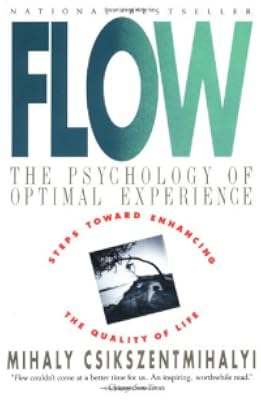
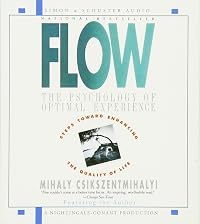
Flow: The Psychology of Optimal Experience
by Mihály Csíkszentmihályi
On This Page
Description
Psychologist Mihaly CSIkszentmihalyi's famous investigations of "optimal experience" have revealed that what makes an experience genuinely satisfying is a state of consciousness called flow. During flow, people typically experience deep enjoyment, creativity, and a total involvement with life. In this new edition of his groundbreaking classic work, CSIkszentmihalyi demonstrates the ways this positive state can be controlled, not just left to chance. Flow: The Psychology of Optimal Experience show more teaches how, by ordering the information that enters our consciousness, we can discover true happiness and greatly improve the quality of our lives. show lessTags
Recommendations
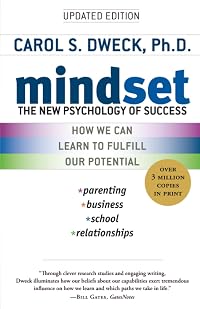
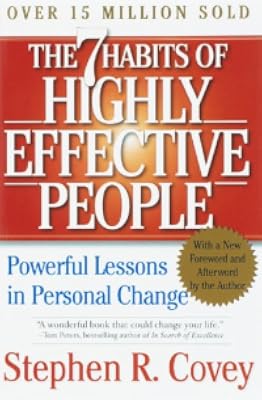
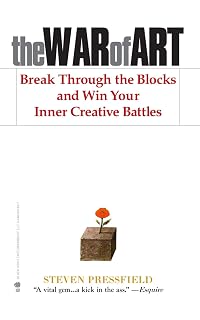
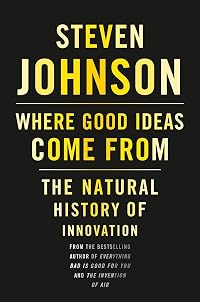


Member Recommendations
Member Reviews
I read this expecting a serious book of psychological research into human happiness. Silly me! What I got was a self help book which might be renamed the Book of Platitudes based on a rehashing of popular philosophy with case studies attached.
A lot of it was common sense and might be useful to someone troubled who has not had an extensive education in the humanities but the unremittingly conservative ideology, geared to keeping people functioning within a broken system was wearing to say the least.
This is the type of book that has grown into a torrent since its publication in 1990 - consultants to the corporate sector trying to find a way to keep the wheels of the economic system whirring when so many people within it are struggling to show more find meaning in what can have no meaning.
The whole ethos is exemplified in the praise for a poor sap who gets flow out of being a cog on an assembly line - no doubt, by now, automated out of that small pleasure because his flow was no longer profitable to the people who hire consultants to tell them how to encourage flow.
Much of the advice is not bad, albeit from the Institute of the Bleeding Obvious, but it is buttressed by claims from the humanities and social science that often prove to be no more than dubious received wisdom designed to prove the basic thesis.
And what does that thesis come down to - that hoary old chestnut that we construct our happiness from within and that we can find happiness through a cod merging of ancient wisdoms and recent psychological research. Yeah, right! Not impressed ... show less
A lot of it was common sense and might be useful to someone troubled who has not had an extensive education in the humanities but the unremittingly conservative ideology, geared to keeping people functioning within a broken system was wearing to say the least.
This is the type of book that has grown into a torrent since its publication in 1990 - consultants to the corporate sector trying to find a way to keep the wheels of the economic system whirring when so many people within it are struggling to show more find meaning in what can have no meaning.
The whole ethos is exemplified in the praise for a poor sap who gets flow out of being a cog on an assembly line - no doubt, by now, automated out of that small pleasure because his flow was no longer profitable to the people who hire consultants to tell them how to encourage flow.
Much of the advice is not bad, albeit from the Institute of the Bleeding Obvious, but it is buttressed by claims from the humanities and social science that often prove to be no more than dubious received wisdom designed to prove the basic thesis.
And what does that thesis come down to - that hoary old chestnut that we construct our happiness from within and that we can find happiness through a cod merging of ancient wisdoms and recent psychological research. Yeah, right! Not impressed ... show less
Today was a Saturday. I spent most of the day worrying about what to make for dinner, watching my toddler, and doing miscellaneous stuff. But I determined, in the late afternoon, to replace the flush valve in the bathroom. Even though I had put it off for a week, and wasn't looking forward to getting that up close and personal with my toilet, it was the quickest, most enjoyable hour of my day. What happened? Flow.
I've heard Csikszentmihalyi's work summarized multiple times(he's a big thing in the business world)*, but that doesn't mean that I heard it all. In fact, the summarization of his definition of "Flow" is just the beginning of what ends up being a powerful argument for meaning, accountability, and growth.
I, being me, would show more love a Chicago style of notes but the notes are definitely there in my non-preferred style. His chapters on others were really interesting. He would be an interesting soul to chat with.
*Simon Sinek has a lovely pronunciation guide of his name in one of his books. :) show less
I've heard Csikszentmihalyi's work summarized multiple times(he's a big thing in the business world)*, but that doesn't mean that I heard it all. In fact, the summarization of his definition of "Flow" is just the beginning of what ends up being a powerful argument for meaning, accountability, and growth.
I, being me, would show more love a Chicago style of notes but the notes are definitely there in my non-preferred style. His chapters on others were really interesting. He would be an interesting soul to chat with.
*Simon Sinek has a lovely pronunciation guide of his name in one of his books. :) show less
"Flow," as the author of this book defines it, is what happens when we experience the right kind of challenge in the right frame of mind so that our whole being focuses on what we're doing, and worry, distraction, self-consciousness, even our perception of time all disappear. He believes that it is this flow state that constitutes real and substantial happiness, the "optimal experience" of the subtitle.
This "flow" experience is a familiar one to me, but also mysterious and fascinating and very much worth investigating. But while most of what the author has to say about it here seems sensible enough, I think this is a rather flawed exploration of the subject. For one thing, he sometimes seems to define the concept of "flow" so broadly show more that its meaning becomes blurred. For another, I'm highly dubious about the idea of anything, however broadly defined, being presented as the one and only key to happiness. But the biggest problem, I think, is that the book doesn't really seem to know whether it wants to be a scientifically-based explanation of a particular aspect of psychology, or a philosophical consideration of what it is to live a meaningful life, or a sort of self-help volume meant to encourage readers to live more satisfying lives of their own. As a result, it's not terribly successful at being any of them, and far too much of it is taken up by somewhat repetitious examples of various areas in which people can find fulfilling challenges. I have a few other quibbles with it, as well, including a dislike for some of the terminology he uses, but those are comparatively minor.
So, kind of a disappointing read. And yet, it was still a fairly thought-provoking one, as I frequently found myself, especially in the earlier parts of the book, wanting to argue certain points, or coming up with my own examples of things, or pondering how our relationship to "flow" has changed in the 22 years since this book was published. (For instance, what does it mean that we're increasingly living in a world where not only are interruptions and intrusions increasingly unavoidable, but where failing to concentrate completely on any one thing (aka "multitasking") is regarded as a sort of virtue?) That's a good thing, at least, but it just makes me think that this could have been a lot better than it was. show less
This "flow" experience is a familiar one to me, but also mysterious and fascinating and very much worth investigating. But while most of what the author has to say about it here seems sensible enough, I think this is a rather flawed exploration of the subject. For one thing, he sometimes seems to define the concept of "flow" so broadly show more that its meaning becomes blurred. For another, I'm highly dubious about the idea of anything, however broadly defined, being presented as the one and only key to happiness. But the biggest problem, I think, is that the book doesn't really seem to know whether it wants to be a scientifically-based explanation of a particular aspect of psychology, or a philosophical consideration of what it is to live a meaningful life, or a sort of self-help volume meant to encourage readers to live more satisfying lives of their own. As a result, it's not terribly successful at being any of them, and far too much of it is taken up by somewhat repetitious examples of various areas in which people can find fulfilling challenges. I have a few other quibbles with it, as well, including a dislike for some of the terminology he uses, but those are comparatively minor.
So, kind of a disappointing read. And yet, it was still a fairly thought-provoking one, as I frequently found myself, especially in the earlier parts of the book, wanting to argue certain points, or coming up with my own examples of things, or pondering how our relationship to "flow" has changed in the 22 years since this book was published. (For instance, what does it mean that we're increasingly living in a world where not only are interruptions and intrusions increasingly unavoidable, but where failing to concentrate completely on any one thing (aka "multitasking") is regarded as a sort of virtue?) That's a good thing, at least, but it just makes me think that this could have been a lot better than it was. show less
I finally got around to reading this book that has been recommended to me so often. Thanks to a book club at work concerning leadership and self-development.
I can easily see how this book, written in the 1990s, has come to change the world of business and especially any "Experience" field such as CX, UX, etc. Flow is about reaching a super productive and happy mental state, simply called flow. While anyone involved in positive psychology would tell you they have heard it before, no one did when this book was written. This was the spark that ignited a few flames.
The other side of this coin is that there is some doom and gloom moralizing that 90s kids will be all too familiar with. Every single time the author drags out drugs and show more pre-marital sex being disastrous I just laughed. Wait a few decades, we have some surprises for you.
If you can get past how dated this book is, there's the root of so many ideas that are now current in design, software architecture, management, productivity, etc. It takes a few "Ok Boomer" moments but don't let those distract you from the underlying point.
The underlying argument that flow is achieved between a range of difficulty strikes me as something Western Esotercists and those who study Philosophy and Myth may already be accustomed to. From Aristotle's Nicomachean Ethics, to the idea of Thumos, and even esoteric implication of Will and the myths of blessings also being a curse, we have the same issue of finding balance.
It's fascinating both how esoteric impulses predate the hottest trends (looking at you _X career professionals), but are still ridiculed. Simply apply a secular paint job and viola! You too can lifehack productivity levels while increasing employee satisfaction and customer engagement! Magical, isn't it? show less
I can easily see how this book, written in the 1990s, has come to change the world of business and especially any "Experience" field such as CX, UX, etc. Flow is about reaching a super productive and happy mental state, simply called flow. While anyone involved in positive psychology would tell you they have heard it before, no one did when this book was written. This was the spark that ignited a few flames.
The other side of this coin is that there is some doom and gloom moralizing that 90s kids will be all too familiar with. Every single time the author drags out drugs and show more pre-marital sex being disastrous I just laughed. Wait a few decades, we have some surprises for you.
If you can get past how dated this book is, there's the root of so many ideas that are now current in design, software architecture, management, productivity, etc. It takes a few "Ok Boomer" moments but don't let those distract you from the underlying point.
The underlying argument that flow is achieved between a range of difficulty strikes me as something Western Esotercists and those who study Philosophy and Myth may already be accustomed to. From Aristotle's Nicomachean Ethics, to the idea of Thumos, and even esoteric implication of Will and the myths of blessings also being a curse, we have the same issue of finding balance.
It's fascinating both how esoteric impulses predate the hottest trends (looking at you _X career professionals), but are still ridiculed. Simply apply a secular paint job and viola! You too can lifehack productivity levels while increasing employee satisfaction and customer engagement! Magical, isn't it? show less
This book came out quite a few years ago (1990) and I've been meaning to read it for some time. The topic? How to achieve Flow, that state of enjoyable concentration, of focus, of absorption in an activity that engrosses you.
This book covers a fascinating topic, but reaches only a certain depth. It mainly tells you what it feels like to be in "Flow", what the difference is between pleasure and the "optimal experience", so that you can recognize it and enhance those moments. The book talks about extending that type of experience into worklife, homelife, choosing hobbies that create greater complexity of being (such as playing an instrument or tinkering with machines) rather than less complexity of being (such as passively watching show more television).
Of course, a lot of this I know already. I have never been sick of learning and I feel boredom is one of the great evils of the universe. I enjoy rich and complex hobbies, that in fact challenge me more than anything else in my life. But it was good to be reminded of what it feels like. Not just what it feels like to be doing alright, but what it feels like when you are completely "in the zone", when details sharpen, when you are engraving memories. At this time in my life I mostly feel this when I perform music. I become unified with the creation of something greater while at the same time I have a heightened awareness of the details, of how the conductor's expressions convey the emotion we are trying to achieve, of the way the violin bows rise and fall in unison, of how the volume of sounds rocks and shakes my body from within. Csikszentmihalyi's thesis is that this can be achieved in many aspects of one's life, that this state of being is precisely what gives meaning to life.
Although much of the book is devoted to anecdotes of individual's experiences, it also provides some advice. This includes creating goals, finding a way of getting immediate feedback, motivating towards progress, and controlling attitudes towards crisis. He speaks a lot about control for a book called "Flow". I think for myself Flow is not just a matter of internal control, but also of being aware of the current of life. I certainly wouldn't want to change plans at every change of current, but there is also something to be said for being flexible and ready to change when circumstances provide new and different opportunities. Csikszentmihalyi does mention this as well, but it is not his focus. It's all very well to say "pick appropriate goals and pursue them and you will be happy" but the hard part is choosing what goals to pursue, understanding one's own nature well enough to pick goals that are (a) achievable given your skills and potential and (b) produce the best end result for you. I could say "I want to do a triathlon" and be pretty satisfied with my achievement, but it provides no where near the joy and sense of completeness that performing a symphony does.
It was not in the purview of this book, but I do want to explore the topic of Flow in the sense of the Eastern religions as well. Flow for me is when I am moving along the Right Path. When I veer away from that path, as my life's center of mass moves away from the balance point, I introduce instability and doubt. What I need to explore is the concept of Flow not just in terms of single activities, but in terms of my life. This is not the sort of thing one gets out of one book or learns in a year. It will be a lifelong process. But I don't want to give up on progressing with self-knowledge, wisdom, and spiritual centeredness just because it's a difficult topic to nail down. I need to keep coming back to it.
The main boon of this book was that it made me think about the topic of Flow for a little time each day for the two weeks I was reading it. The book itself suffers from Best Seller Syndrome: it has a 50 page topic that is stretched into 150 pages for publishing purposes. But it still has some interesting points and is worth a read for anyone interested in such things. show less
This book covers a fascinating topic, but reaches only a certain depth. It mainly tells you what it feels like to be in "Flow", what the difference is between pleasure and the "optimal experience", so that you can recognize it and enhance those moments. The book talks about extending that type of experience into worklife, homelife, choosing hobbies that create greater complexity of being (such as playing an instrument or tinkering with machines) rather than less complexity of being (such as passively watching show more television).
Of course, a lot of this I know already. I have never been sick of learning and I feel boredom is one of the great evils of the universe. I enjoy rich and complex hobbies, that in fact challenge me more than anything else in my life. But it was good to be reminded of what it feels like. Not just what it feels like to be doing alright, but what it feels like when you are completely "in the zone", when details sharpen, when you are engraving memories. At this time in my life I mostly feel this when I perform music. I become unified with the creation of something greater while at the same time I have a heightened awareness of the details, of how the conductor's expressions convey the emotion we are trying to achieve, of the way the violin bows rise and fall in unison, of how the volume of sounds rocks and shakes my body from within. Csikszentmihalyi's thesis is that this can be achieved in many aspects of one's life, that this state of being is precisely what gives meaning to life.
Although much of the book is devoted to anecdotes of individual's experiences, it also provides some advice. This includes creating goals, finding a way of getting immediate feedback, motivating towards progress, and controlling attitudes towards crisis. He speaks a lot about control for a book called "Flow". I think for myself Flow is not just a matter of internal control, but also of being aware of the current of life. I certainly wouldn't want to change plans at every change of current, but there is also something to be said for being flexible and ready to change when circumstances provide new and different opportunities. Csikszentmihalyi does mention this as well, but it is not his focus. It's all very well to say "pick appropriate goals and pursue them and you will be happy" but the hard part is choosing what goals to pursue, understanding one's own nature well enough to pick goals that are (a) achievable given your skills and potential and (b) produce the best end result for you. I could say "I want to do a triathlon" and be pretty satisfied with my achievement, but it provides no where near the joy and sense of completeness that performing a symphony does.
It was not in the purview of this book, but I do want to explore the topic of Flow in the sense of the Eastern religions as well. Flow for me is when I am moving along the Right Path. When I veer away from that path, as my life's center of mass moves away from the balance point, I introduce instability and doubt. What I need to explore is the concept of Flow not just in terms of single activities, but in terms of my life. This is not the sort of thing one gets out of one book or learns in a year. It will be a lifelong process. But I don't want to give up on progressing with self-knowledge, wisdom, and spiritual centeredness just because it's a difficult topic to nail down. I need to keep coming back to it.
The main boon of this book was that it made me think about the topic of Flow for a little time each day for the two weeks I was reading it. The book itself suffers from Best Seller Syndrome: it has a 50 page topic that is stretched into 150 pages for publishing purposes. But it still has some interesting points and is worth a read for anyone interested in such things. show less
Written in 1990, "Flow" is one of the many many books which explicitly warned us of the danger to society when power is seized by "unscrupulous and demented people". [231] Not one word of this academic work could be described as "political diatribe" -- this is simply the explanation of various ebbs and flows in the processes of life and enlivenment. The book summarizes joy, creativity, and the "process" of life he calls flow. Nature not only abhors a vacuum, but dictators as well.
Mikaly Csikszentmihalyi (born 1934, Croatia) is a Psychologist who taught at Chicago and Claremont Graduate University, and has studied happiness and creativity. Here he presents numerous studies, many of which are his own, of the highly-focused optimal mental show more state when the fiction of "self" is lost to consciousness itself.
FLOW is an example of positive psychology, applied and expressed as what he calls an autotelic virtue--intrinsic motivation. He shares principles derived from the research, along with concrete examples. This is a guide to living a Meaningful life. The data itself is fascinating, and well-stated. For example:
"We do not understand what happiness is any better than Aristotle did, and as for learning how to attain that blessed condition, once could argue that we have made no progress at all." [1]
"What I discovered is that happiness is not something that happens....It is not depend on outside events, but rather, on how we interpret them...People who learn to control inner experience will be able to determine the quality of their lives, which is as close as any of us can come to being happy." [2] He cites Victor Frankl, "Man's Search for Meaning", and concurs with the conclusion that happiness is an unintended side-effect of personal dedication to a course "greater than oneself". This work also ties in closely to Process Theology -- the idea that our lives are moving targets.
"Chaos is one of the oldest concepts in myth and religion." [9] "Traditionally, the problem of existence has been most directly confronted through religion...but religions are only temporarily successful attempts to cope with the lack of meaning in life; they are not permanent answers." [14] He reminds us that a "vital new religion may one day arise again", and concludes the work with criteria for one: "The most promising faith for the future might be based on the realization that the entire universe is a system related by common laws and that it makes no sense to impose our dreams and desires on nature without taking them into account. Recognizing the limitations of human will, accepting a cooperative rather than a ruling role in the universe", we could finally journey home, where the "problem of meaning will then be resolved as the individual's purpose merges with the universal flow". [240]
Csikszentmihalyi provides a fascinating account of the process of learning differentiation which produced Science. And he shows that our task is now to learn Interpretation--to reunite without losing uniqueness. [239-40] show less
Mikaly Csikszentmihalyi (born 1934, Croatia) is a Psychologist who taught at Chicago and Claremont Graduate University, and has studied happiness and creativity. Here he presents numerous studies, many of which are his own, of the highly-focused optimal mental show more state when the fiction of "self" is lost to consciousness itself.
FLOW is an example of positive psychology, applied and expressed as what he calls an autotelic virtue--intrinsic motivation. He shares principles derived from the research, along with concrete examples. This is a guide to living a Meaningful life. The data itself is fascinating, and well-stated. For example:
"We do not understand what happiness is any better than Aristotle did, and as for learning how to attain that blessed condition, once could argue that we have made no progress at all." [1]
"What I discovered is that happiness is not something that happens....It is not depend on outside events, but rather, on how we interpret them...People who learn to control inner experience will be able to determine the quality of their lives, which is as close as any of us can come to being happy." [2] He cites Victor Frankl, "Man's Search for Meaning", and concurs with the conclusion that happiness is an unintended side-effect of personal dedication to a course "greater than oneself". This work also ties in closely to Process Theology -- the idea that our lives are moving targets.
"Chaos is one of the oldest concepts in myth and religion." [9] "Traditionally, the problem of existence has been most directly confronted through religion...but religions are only temporarily successful attempts to cope with the lack of meaning in life; they are not permanent answers." [14] He reminds us that a "vital new religion may one day arise again", and concludes the work with criteria for one: "The most promising faith for the future might be based on the realization that the entire universe is a system related by common laws and that it makes no sense to impose our dreams and desires on nature without taking them into account. Recognizing the limitations of human will, accepting a cooperative rather than a ruling role in the universe", we could finally journey home, where the "problem of meaning will then be resolved as the individual's purpose merges with the universal flow". [240]
Csikszentmihalyi provides a fascinating account of the process of learning differentiation which produced Science. And he shows that our task is now to learn Interpretation--to reunite without losing uniqueness. [239-40] show less
There a lot of internal contradictions in this book that annoyed me. I wrote a lot of marginal comments. C. talks mostly about flow in extraordinary situations and seems to derive his description of it from the extraordinary. Then he suggests we cultivate the same level of challenge and intense concentration in everything we do. He once cited dishwashing as an example. He calls flow an optimal experience but found that sometimes when people are technically (by his definition) in flow at work that they would rather be doing something else. In other words, flow is not providing them with the enjoyment it's supposed to. Does C. examine this to see if there is some element he is leaving out of the equation? Only to essentially blame it on show more the people reporting, saying that they simply have an overriding negative association with work. He denigrates mere pleasure (which is less intense) and can't understand why maybe people need periods of flowless rest.
While I applaud C. for looking into positive experiences as a subject of study, I certainly don't think he has discovered enough to live up to the NY Times Book Review's comment on the cover: "illuminates the way to happiness." show less
While I applaud C. for looking into positive experiences as a subject of study, I certainly don't think he has discovered enough to live up to the NY Times Book Review's comment on the cover: "illuminates the way to happiness." show less
Members
- Recently Added By
Lists

Best Self Help Books
87 works; 18 members

why the internet makes us dumb
7 works; 1 member

Alan Kay's Reading List
103 works; 3 members

The Enlightened Economist
107 works; 1 member

Psicología - Clásicos
165 works; 2 members

Big Data
52 works; 2 members

Books To Get From The Library
115 works; 5 members

current
52 works; 1 member

Books in the Bibliography of The Alchemy of Us by Ainissa Ramirez
181 works; 1 member

spirituality and self growth
84 works; 1 member

Psychology: Abuse, Grief, Self-Help
189 works; 1 member

The Venus Project Recommended Books - Contemporary sources
53 works; 2 members

Reading Glasses Podcast
410 works; 3 members

Books & Films Referenced by Cal Newport's Deep Work
43 works; 1 member

psychology
12 works; 1 member

Art & Spirituality Books
22 works; 1 member

My List
302 works; 1 member

Blue Pyramid 1,276 Best Books of All Time
1,248 works; 32 members

Shaykh Hamza's Book Recommendations
439 works; 3 members

Mind Expanding Books by hackerkid
581 works; 8 members

Tom's Bookstore
346 works; 2 members

Education
16 works; 1 member
Author Information

49+ Works 10,091 Members
Mihaly Csikszentmihalyi (pronounced "ME-high CHICK-sent-me-high-ee) is a professor and former chairman of the Department of English at the University of Chicago. His writings have focused on models of enjoyment and how various people access their creative potential. The idea of creative potential, which Csikszentmihalyi terms "flow" has become show more increasingly popular in the public sector. His 1993 book, Flow, inspired Jimmy Johnson then coach of the World Champion Dallas Cowboys, and was the subject of a feature story during that year's Super Bowl television broadcast. His ideas have also been touted by President Clinton, who called Csikszentmihalyi one of his favorite authors, Newt Gingrich, who put his work on the reading list for a political planning committee, and corporations and cultural institutions, such as Volvo in Sweden and the Chicago Park District. He has published articles in a variety of magazines, including Psychology Today, The New York Times, Omni, and Wired and has made appearances on television in the U.S. and Europe. Csikszentmihalyi currently serves on boards and commissions for the U.S. Departments of Labor and Education, and the Social Science Research Council. He has held visiting professorships at universities in the United States, Canada, Brazil, Italy, and Finland. He received the1990 NRPA National Research (Roosevelt) Award, in addition to two Senior Fulbright Fellowships. Besides Flow, he has also written Beyond Boredom and Anxiety and Creativity: Flow and the Psychology of Discovery and Invention, in which he applies his "flow" theory to various inventors, scientists, and artists to determine how and why they achieve "flow." (Bowker Author Biography) show less
Series
Belongs to Publisher Series
Work Relationships
Is abridged in
Inspired
Has as a student's study guide
Common Knowledge
- Canonical title
- Flow: The Psychology of Optimal Experience
- Original title
- La corrente della vita
- Alternate titles
- Flow: The Psychology of Happiness; Flow: The Classic Work on How to Achieve Happiness
- Original publication date
- 1990
- People/Characters
- Viktor Frankl; John Stuart Mill; Edward Palmer Thompson; Dante Alighieri, 1265-1321
- Important places
- University of Chicago, Chicago, Illinois, USA
- Dedication
- For Isabella, and Mark and Christopher
- First words
- Twenty-three hundred years ago Aristotle concluded that, more than anything else, men and women seek happiness.
- Quotations
- Weber claimed, after this science [of capitalism] was perfected, it developed its own goals, based on the logic of production and consumption and not that of human happiness. At that point economic behavior ceases to be ratio... (show all)nal, because it is no longer guided by the goal that originally justified it....Weber himself complained that capitalism which originated as a religious vocation, had in time become a mere "sport" for entrepreneurs--and an "iron cage" for everyone else. [275-276 notes]
When a person's psychic energy coalesces into a life theme, consciousness achieves harmony. [230]
[In Dante's Divina Commedia -- used in seminar on the pitfalls of midlife--ambition, lust, and greed, or in Wolfe's Bonfire of the Vanities, the desire for power, sex and money] Virgil tries to reassure Dante--the good news i... (show all)s that there is a way out of the dark forest. The bad news is that the way leads through hell." [235]
The Inferno is informed by a deep religious ethic, and it is very clear to anyone who reads it that Dante's Christianity is not an accepted but a discovered belief. The religious life he created was made up of insights he com... (show all)bined from Christianity, with the best of Greek philosophy and Islamic wisdom.
To extract meaning from a system of beliefs a person must first compare the information contained in it with his or her concrete experience, retain what makes sense, and then reject the rest. [238]
If a new faith is to capture our imagination, it must be one that will account rationally for the things we know, the things we feel, the things we hope for, and the ones we dread. It must be a system of beliefs that will mar... (show all)shal our psychic energy toward meaningful goals, a system that provides rules for a way of life that can provide flow. [238] - Last words
- (Click to show. Warning: May contain spoilers.)The most promising faith for the future might be based on the realization that the entire universe is a system related by common laws and that it makes no sense to impose our dreams and desires on nature without taking them into account. Recognizing the limitations of human will, accepting a cooperative rather than a ruling role in the universe, we should feel the relief of the exile who is finally returning home. The problem of meaning will then be resolved as the individual's purpose merges with the universal flow.
- Original language
- English
Classifications
Statistics
- Members
- 5,608
- Popularity
- 2,375
- Reviews
- 73
- Rating
- (3.96)
- Languages
- 19 — Chinese, Danish, Dutch, English, Estonian, Finnish, French, German, Hungarian, Italian, Korean, Polish, Portuguese, Romanian, Russian, Serbian, Croatian, Spanish, Swedish
- Media
- Paper, Audiobook, Ebook
- ISBNs
- 66
- UPCs
- 1
- ASINs
- 27