On This Page
Description
Only magic will set Nora Fischer free in an alternate fairy tale world that offers anything but 'happily ever after.' Illiterate women roam this world gone wrong, and men's spells hold the world in submission. When a mysterious magician teaches Nora the magic she needs to survive, a sudden doorway back to her world suddenly looks like one she may not want to go through.Tags
Recommendations
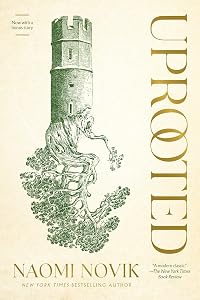
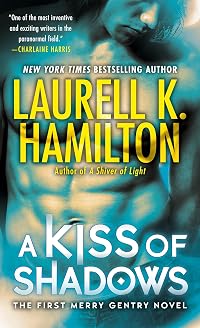
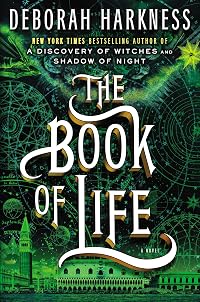
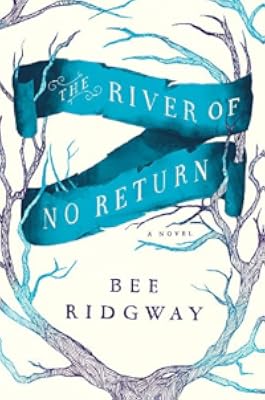
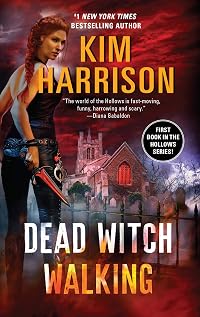
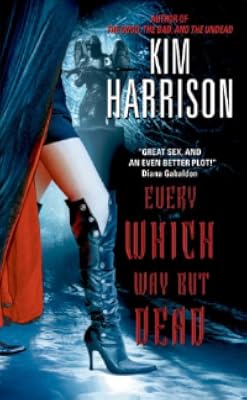
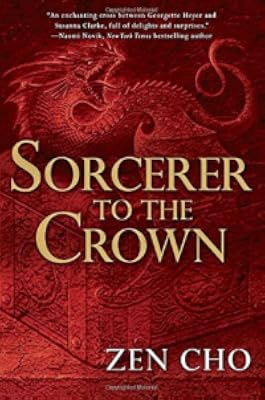
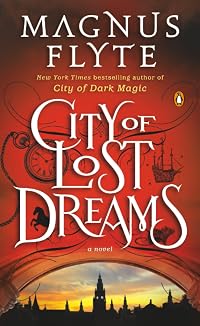


Member Recommendations

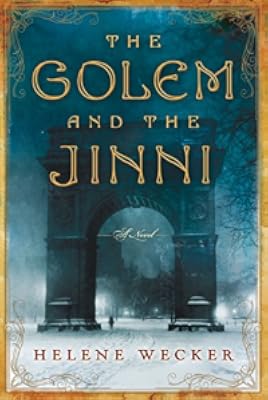
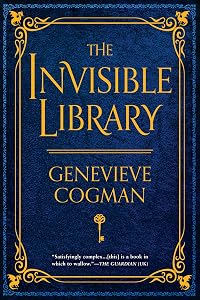
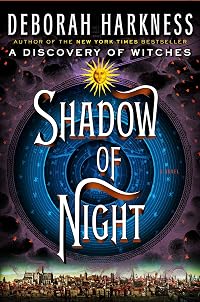
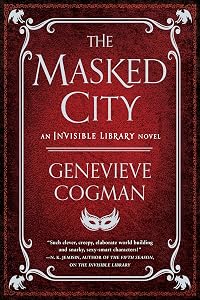
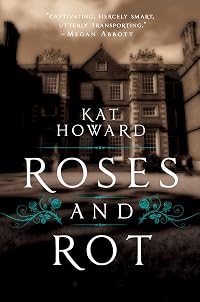
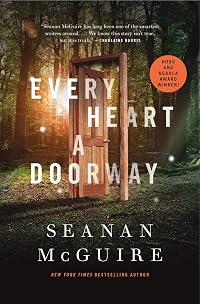
Marissa_Doyle Both are stories of female protagonists dropped into alien worlds where they discover unexpected talents for magic.
LongDogMom Both involve a world parallel to our world filled with dangerous beings who are maniuplative and scheming, with strong social classes and rules, and people who manage to slip from one world to the other.
by Runa
Member Reviews
I am about to reveal a secret that is really not that secret, if you know me. I love fantasy stories, elves, fairies, heroes, dragons, and wizards. A few of my favorite books and movies include The Princess Bride, The Last Unicorn, The Hobbit and Lord of the Rings. My husband introduced me to the Dragon Lance books, and I read those too. I go to the Renaissance Festival every year, and I every time I contemplate wearing elf ears. I even have my own "One" ring. Then I found this book. The title alone spoke to me - I mean, I am a thinking woman, and I would love a guide to magic.
This book is of course not a "guide" to magic, but a wonderful magical story. We meet Nora Fischer at a pretty low point in her life. She is a grad student who is show more just scraping by, and her boyfriend has recently left her. After he let her cat out to be run over by a car, of course. If it were me, I wouldn't even want him after that, but Nora does. She is invited to a wedding of a friend, where she runs into the dreaded ex, and as a result, feels pretty sorry for herself. She gets up the morning of the wedding, and takes a walk - and ends up into another world. One filled with magic and spells and wizards and fairy princes. But not all that glitters is gold, as the adage says, and the glamorous new world that Nora is living a fabulous life in, becomes a dark and twisted nightmare.
Enter Arundiel. A grumpy but powerful wizard, Arundiel takes Nora in, pretty begrudgingly. The truth of her situation begins to dawn on Nora, and she realizes she must take control of her life in some way. Her former academic life has not prepared her for life in a rural medieval village, and Nora must make her own place in this world. Nora's curiosity and thirst for knowledge of all sorts though is not quenched by her new position as a servant, and begs Arundiel to teach her magic. I don't blame her, I would want to learn too! Although he is a bit of a grouch and curmudgeon, Nora develops a wee crush on him. (Again, I probably would too)
And then the book ended, and made me yell nooooo right out loud. This couldn't be the end, right? There must be more to the story, even after reading 563 pages, and reading those pages within a span of two days. Feeling desperate, I googled the author to see if there was a sequel in the works, and breathed a sigh of relief to know that it is coming. In like a year, I am sure, but it is still going to exist. Thank God, because I was not happy with the ending. I see the need for it, but I am not willing to accept it for all time.
I think if you are a fantasy nerd like me, you will love this book. If you like the All Souls series by Harkness, or even the Outlander books (well, like Outlander if you twist reality just a little bit more..) then you will definitely like this one. I encourage you to read it, unless you are strictly into realistic fiction. Then you may hate this book. But if you don't mind a little magic in your books, than read this book, fall in love and come back and tell me how much you loved it. You will be enchanted, I promise. show less
This book is of course not a "guide" to magic, but a wonderful magical story. We meet Nora Fischer at a pretty low point in her life. She is a grad student who is show more just scraping by, and her boyfriend has recently left her. After he let her cat out to be run over by a car, of course. If it were me, I wouldn't even want him after that, but Nora does. She is invited to a wedding of a friend, where she runs into the dreaded ex, and as a result, feels pretty sorry for herself. She gets up the morning of the wedding, and takes a walk - and ends up into another world. One filled with magic and spells and wizards and fairy princes. But not all that glitters is gold, as the adage says, and the glamorous new world that Nora is living a fabulous life in, becomes a dark and twisted nightmare.
Enter Arundiel. A grumpy but powerful wizard, Arundiel takes Nora in, pretty begrudgingly. The truth of her situation begins to dawn on Nora, and she realizes she must take control of her life in some way. Her former academic life has not prepared her for life in a rural medieval village, and Nora must make her own place in this world. Nora's curiosity and thirst for knowledge of all sorts though is not quenched by her new position as a servant, and begs Arundiel to teach her magic. I don't blame her, I would want to learn too! Although he is a bit of a grouch and curmudgeon, Nora develops a wee crush on him. (Again, I probably would too)
And then the book ended, and made me yell nooooo right out loud. This couldn't be the end, right? There must be more to the story, even after reading 563 pages, and reading those pages within a span of two days. Feeling desperate, I googled the author to see if there was a sequel in the works, and breathed a sigh of relief to know that it is coming. In like a year, I am sure, but it is still going to exist. Thank God, because I was not happy with the ending. I see the need for it, but I am not willing to accept it for all time.
I think if you are a fantasy nerd like me, you will love this book. If you like the All Souls series by Harkness, or even the Outlander books (well, like Outlander if you twist reality just a little bit more..) then you will definitely like this one. I encourage you to read it, unless you are strictly into realistic fiction. Then you may hate this book. But if you don't mind a little magic in your books, than read this book, fall in love and come back and tell me how much you loved it. You will be enchanted, I promise. show less
SO CONFLICTED ABOUT THIS BOOK.
I shy from reading fantasy novels marketed as women's fiction because I assume, rightly or wrongly, that their fantasy elements will be derivative. But after a slow opening and some deliciously dark rising action, I was absolutely charmed by the cozy, engrossing middle of this book.
Part domestic fantasy, part mannerpunk, we follow Nora, a hapless grad student who's fallen into a fantasy world, and her benefactor/teacher/crush, the sardonic wizard Aruendiel. The narrative is slow-paced and a bit episodic, but guaranteed to appeal to fans of Victorian literature and its bastard child, the cozy historical romance. Nora learns to run a medieval household, explores life in the village and at court, learns show more magic, and has a lot of really interesting conversations.
Barker's worldbuilding is top-notch and explores small details from language to fashion without ever indulging in an unnecessary infodump. And at the book's heart is the growing emotional closeness between the insecure Nora and reserved Aruendiel, which is understated and very human.
Yet I found the last act of the novel pretty unsatisfying. Barker seems to have a sequel in mind (RIGHT??) and doesn't try to address most the novel's major conflicts in her climax. The last several chapters seem to come out of left field rather than arise organically from the story. There are several last minute plot twists that feel forced and don't have the proper emotional weight. And the final resolution feels shallow compared to everything that's come before. I feel strongly that even books in series have to stand alone as good novels, but this novel feels like it lacks a complete plot arc.
This novel was marred by another element that I really didn't care for. It's time for Miss Becky to have a Frank and Serious Discussion about partner violence in fiction! Spoilers ahead.
Early on in this book, Aruendiel is rumored to have murdered his unfaithful wife. I thought I recognized that favorite trope of romance writers, the misunderstanding that keeps our lovers apart. I was okay with reading about an unlikable antihero but nevertheless assumed that Aruendiel's past conduct would be explained away somehow.
I actually still suspect that there's going to be an explanation in future volumes, but as it stands, Aruendiel really did kill his wife because he was feeling shocked and betrayed. Yet by the end of the novel, Nora has somehow forgotten that she finds this part of his history super creepy and has decided to return to him, possibly so that they can be in a relationship.
There are two problems here. First, Nora's character is simply not consistent. Nora has a deep emotional attachment to Aruendiel, but in she's extremely critical of his bad behavior and previously has held him to contemporary standards of behavior. By the end, she's totally alienated me by her change in behavior, but I don't get the sense that I'm supposed to be alienated.
Second, the Aruendiel in this novel is similarly a romantic fantasy, not a realistic character. He's been through a lot since that whole wife-murdering episode, but a tendency toward partner violence does not generally mellow into a slight case of curmudgeonry.
I enjoy fiction that's dark, but Nora and Aruendiel's relationship is not portrayed as dark. Instead it's depicted as enticingly forbidden. Reading it we don't feel the ambivalence we might feel toward a Brontëan antihero*—instead, we're invited to fall in love with Aruendiel ourselves, with explicit comparisons to Mr. Darcy.
It doesn't matter if in the second book we find out that flying unicorns killed Aruendiel's wife—we're still being asked to romanticize an alleged perpetrator of domestic violence. And that's NEVER okay. In doing so we conjure the same fairy tale explanations of human behavior that domestic abusers use to perpetuate their abuses and victims use to justify staying in those relationships.
Which is really unfortunate in what was shaping up to be a nuanced and emotionally honest romance.
*If you think Heathcliff or Mr. Rochester are uncomplicatedly romantic and sexy, you are misreading those novels.
I shy from reading fantasy novels marketed as women's fiction because I assume, rightly or wrongly, that their fantasy elements will be derivative. But after a slow opening and some deliciously dark rising action, I was absolutely charmed by the cozy, engrossing middle of this book.
Part domestic fantasy, part mannerpunk, we follow Nora, a hapless grad student who's fallen into a fantasy world, and her benefactor/teacher/crush, the sardonic wizard Aruendiel. The narrative is slow-paced and a bit episodic, but guaranteed to appeal to fans of Victorian literature and its bastard child, the cozy historical romance. Nora learns to run a medieval household, explores life in the village and at court, learns show more magic, and has a lot of really interesting conversations.
Barker's worldbuilding is top-notch and explores small details from language to fashion without ever indulging in an unnecessary infodump. And at the book's heart is the growing emotional closeness between the insecure Nora and reserved Aruendiel, which is understated and very human.
Yet I found the last act of the novel pretty unsatisfying. Barker seems to have a sequel in mind (RIGHT??) and doesn't try to address most the novel's major conflicts in her climax. The last several chapters seem to come out of left field rather than arise organically from the story. There are several last minute plot twists that feel forced and don't have the proper emotional weight. And the final resolution feels shallow compared to everything that's come before. I feel strongly that even books in series have to stand alone as good novels, but this novel feels like it lacks a complete plot arc.
This novel was marred by another element that I really didn't care for. It's time for Miss Becky to have a Frank and Serious Discussion about partner violence in fiction! Spoilers ahead.
Early on in this book, Aruendiel is rumored to have murdered his unfaithful wife. I thought I recognized that favorite trope of romance writers, the misunderstanding that keeps our lovers apart. I was okay with reading about an unlikable antihero but nevertheless assumed that Aruendiel's past conduct would be explained away somehow.
I actually still suspect that there's going to be an explanation in future volumes, but as it stands, Aruendiel really did kill his wife because he was feeling shocked and betrayed. Yet by the end of the novel, Nora has somehow forgotten that she finds this part of his history super creepy and has decided to return to him, possibly so that they can be in a relationship.
There are two problems here. First, Nora's character is simply not consistent. Nora has a deep emotional attachment to Aruendiel, but in she's extremely critical of his bad behavior and previously has held him to contemporary standards of behavior. By the end, she's totally alienated me by her change in behavior, but I don't get the sense that I'm supposed to be alienated.
Second, the Aruendiel in this novel is similarly a romantic fantasy, not a realistic character. He's been through a lot since that whole wife-murdering episode, but a tendency toward partner violence does not generally mellow into a slight case of curmudgeonry.
I enjoy fiction that's dark, but Nora and Aruendiel's relationship is not portrayed as dark. Instead it's depicted as enticingly forbidden. Reading it we don't feel the ambivalence we might feel toward a Brontëan antihero*—instead, we're invited to fall in love with Aruendiel ourselves, with explicit comparisons to Mr. Darcy.
It doesn't matter if in the second book we find out that flying unicorns killed Aruendiel's wife—we're still being asked to romanticize an alleged perpetrator of domestic violence. And that's NEVER okay. In doing so we conjure the same fairy tale explanations of human behavior that domestic abusers use to perpetuate their abuses and victims use to justify staying in those relationships.
Which is really unfortunate in what was shaping up to be a nuanced and emotionally honest romance.
*If you think Heathcliff or Mr. Rochester are uncomplicatedly romantic and sexy, you are misreading those novels.
I am always skeptical about books that send modern day women into MagicLand.
(I am maybe the only soul on Earth not smitten with the Outlander series. The TV show is fascinating, but the books? No. And don't even get me started on "A Discovery of Witches." I found it overblown and the characters rather wooden. It was generally tedious and tiresome to the point that I groaned in despair that it would not mercifully end, but leave us dangling for the sequel. Which I have heard are not any better. Pass.)
So Witchy romance novels are sketchy for me at best. But I decided to check this out from the library, and I am glad I did. It is almost never clichéd, with interesting twists and turns of the plot that are not telegraphed miles away, the show more relationships are less obvious than other romantic fare, and I genuinely liked all the characters.
It's a fun story, well-told, and not predictable. It has plenty of detail to take you into a very believable Otherworld, yet, unlike "Discovery," they don't take over the narrative.
Even though it was well over 550 pages, I was surprised to find myself in that rare and delectable place of not wanting it to end.
Thankfully, THIS sequel is one I can hardly wait for! show less
(I am maybe the only soul on Earth not smitten with the Outlander series. The TV show is fascinating, but the books? No. And don't even get me started on "A Discovery of Witches." I found it overblown and the characters rather wooden. It was generally tedious and tiresome to the point that I groaned in despair that it would not mercifully end, but leave us dangling for the sequel. Which I have heard are not any better. Pass.)
So Witchy romance novels are sketchy for me at best. But I decided to check this out from the library, and I am glad I did. It is almost never clichéd, with interesting twists and turns of the plot that are not telegraphed miles away, the show more relationships are less obvious than other romantic fare, and I genuinely liked all the characters.
It's a fun story, well-told, and not predictable. It has plenty of detail to take you into a very believable Otherworld, yet, unlike "Discovery," they don't take over the narrative.
Even though it was well over 550 pages, I was surprised to find myself in that rare and delectable place of not wanting it to end.
Thankfully, THIS sequel is one I can hardly wait for! show less
I've read a lot of books in my life, but I've never been so confused about my feelings for a book. It's been a day since I finished it and I still don't know whether or not I liked it. The best way is to describe this book is like a train about to derail, it's awful but you can't tear your eyes away from it.
This book is relatively long, it's about 563 pages. In the first 78 or so pages, the main character Nora is: yelled at by her thesis adviser, goes to a wedding where she runs into her ex-boyfriend who is marrying another woman, transported to another world, goes to lavish parties every night, gets engaged, gets married, gets pregnant and then gets attacked by her husband and loses the baby. This all occurs in the first 13% of the show more book! Then, the story meanders for another 350 to 400 pages before the "climax" occurs. I literally read about 30 pages about Nora repairing plates with magic to buy herself a pair of boots. It also has some large digressions in it. This book needs some serious editing. Since this isn't a plot driven book, I was hoping it would be character driven. NOPE!
There was pretty much no character development by Nora, or the male lead Aruendiel. Oh sure, they both fell in love with each other, but both were too bone-headed to admit it or do anything about it. The rest of the characters were so static and bland there was really no point to having them around. For such a "thinking woman", it sure took Nora a long time to piece Aruendiel's feelings for her together. Actually, a true thinking woman probably would have avoided him altogether since he killed his former wife after she cheated on him.
It might seem that I hated this book, but I didn't. Every day, I found myself really eager to continue reading, and perhaps it's because I'm secretly a romantic and I actually liked the interactions between Nora and Aruendiel even though both of them are horrible communicators. Also, apart from how tedious it was, it wasn't badly written. However, to compare this book in any way to Pride and Prejudice is just reprehensible. This does not capture the spirit of Elizabeth and Mr. Darcy at all.
This book was perplexing, I don't know if I'll read the second. I probably will though since the ending was such a cliffhanger and I want to know what happens next. Unfortunately, I think I'm invested in this series even though I don't want to be. show less
This book is relatively long, it's about 563 pages. In the first 78 or so pages, the main character Nora is: yelled at by her thesis adviser, goes to a wedding where she runs into her ex-boyfriend who is marrying another woman, transported to another world, goes to lavish parties every night, gets engaged, gets married, gets pregnant and then gets attacked by her husband and loses the baby. This all occurs in the first 13% of the show more book! Then, the story meanders for another 350 to 400 pages before the "climax" occurs. I literally read about 30 pages about Nora repairing plates with magic to buy herself a pair of boots. It also has some large digressions in it. This book needs some serious editing. Since this isn't a plot driven book, I was hoping it would be character driven. NOPE!
There was pretty much no character development by Nora, or the male lead Aruendiel. Oh sure, they both fell in love with each other, but both were too bone-headed to admit it or do anything about it. The rest of the characters were so static and bland there was really no point to having them around. For such a "thinking woman", it sure took Nora a long time to piece Aruendiel's feelings for her together. Actually, a true thinking woman probably would have avoided him altogether since he killed his former wife after she cheated on him.
It might seem that I hated this book, but I didn't. Every day, I found myself really eager to continue reading, and perhaps it's because I'm secretly a romantic and I actually liked the interactions between Nora and Aruendiel even though both of them are horrible communicators. Also, apart from how tedious it was, it wasn't badly written. However, to compare this book in any way to Pride and Prejudice is just reprehensible. This does not capture the spirit of Elizabeth and Mr. Darcy at all.
This book was perplexing, I don't know if I'll read the second. I probably will though since the ending was such a cliffhanger and I want to know what happens next. Unfortunately, I think I'm invested in this series even though I don't want to be. show less
30-year-old Nora Fisher is doing okay, but not great in her PhD program. And her okay long-distance boyfriend broke up with her. And then she goes to a wedding in the country and gets lost in the woods and stumbles upon the house party of a rich eccentric woman, like a female Jay Gatsby. Several boozy, magical, hazy weeks (and dozens of parties) later, Nora finds herself married to Ms. Jay Gatsby's handsome but illusory son, and pregnant. She's rescued from what turns out to be a horribly abusive cheating husband and a possibly demonic fetus by a magician from another world, who takes her into his home since there's very little chance of her ever getting back to her own world.
And then pretty much nothing happens for 450 pages. This is show more definitely a first novel - the themes are numerous and inconsistent (Nora's dead brother, romance, feminism, independence, Pride & Prejudice, magic, poetry, etc). I would be much more forgiving of the relatively minor flaws if the book wasn't so darn long - 563 pages, and if the ending wasn't so very lackluster. The door is left open for a sequel but once I finished I thought to myself, "Really? That's it??" There is little-to-no character growth - the Nora we end up with is just as passive and inconsistent as the one with which we began, despite her journey. show less
And then pretty much nothing happens for 450 pages. This is show more definitely a first novel - the themes are numerous and inconsistent (Nora's dead brother, romance, feminism, independence, Pride & Prejudice, magic, poetry, etc). I would be much more forgiving of the relatively minor flaws if the book wasn't so darn long - 563 pages, and if the ending wasn't so very lackluster. The door is left open for a sequel but once I finished I thought to myself, "Really? That's it??" There is little-to-no character growth - the Nora we end up with is just as passive and inconsistent as the one with which we began, despite her journey. show less
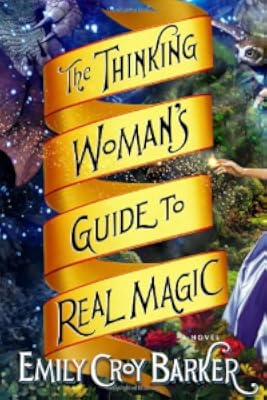
I haven't read a lot of fantasy in the past, but every once in a while, one catches my eye. Such was the case with Emily Croy Barker's debut novel, The Thinking Woman's Guide to Real Magic. I quite liked the cover and the title intrigued me
Nora Fischer has been dumped by her boyfriend and warned by her advisor that they need to seriously talk about her dissertation. The last thing she wants to do is go to another friend's wedding. But, she does. To get away from everyone for a bit, she takes a walk through a forest.......and gets lost. (First fairy tale element!) She stumbles on to the grounds of an absolutely gorgeous estate. And the owner Illisa and her friends are so much fun. And Illisa's son Raclin is gorgeous. And they'd love for show more Nora to stay just a bit longer with them........
She does - until she realizes that the glamorous veneer of Illisa's world hides something much darker. And there's no way back to her own world.
I'm not going to go any further than that. Suffice to say there's magic, wizards, magicians, fairies, demons, creatures and oh, so much more. Barker has created a richly detailed alternate world that I could easily picture.
Nora is an interesting protagonist. She seems determined to not see what is in front of her numerous times - from the beginning chapters at Illisa's estate to her first days at the Magician Aruendiel's castle. I admit to not being completely taken with her in the beginning. However, she grows and grew on me as the book progressed. By the end, I quite liked her. She shares the protagonist role with the magician Aruendiel. Him, I liked right from the get go.
Barker has incorporated all the elements of an epic adventure into her book. Good and evil, friendship, honour, love, treachery, wars to be fought, damsels to be rescued, heroics, Royalty, peasants and more. (Yes, all the elements of a fairy tale!)
Although I enjoyed all the world building and especially the magic discussions, the book probably could have been trimmed by at least 75 -100 pages. (It weighs in at a lengthy 563 pages.) But Barker is a good writer - her prose did flow easily and her imagination is impressive.
There are many allusions to Pride and Prejudice throughout the book. Nora is an English major and this is the one 'foreign language book' she finds in the alternate world, but I grew tired of the references and comparisons. For this reader, they didn't add to the book.
Did I enjoy the book. Absolutely! It was good to step outside of my normal tastes of . Does the story end with "And They Lived Happily Ever After?' Well, the ending wasn't what I had hoped for, but I'm thinking Barker has plans for a second adventure for Nora. I'd like to see what happens next!
The Thinking Woman's Guide to Real Magic is an enchanting tale for anyone who ever wished they could step into the pages of their favourite fairy tale. show less
Nora Fischer has been dumped by her boyfriend and warned by her advisor that they need to seriously talk about her dissertation. The last thing she wants to do is go to another friend's wedding. But, she does. To get away from everyone for a bit, she takes a walk through a forest.......and gets lost. (First fairy tale element!) She stumbles on to the grounds of an absolutely gorgeous estate. And the owner Illisa and her friends are so much fun. And Illisa's son Raclin is gorgeous. And they'd love for show more Nora to stay just a bit longer with them........
She does - until she realizes that the glamorous veneer of Illisa's world hides something much darker. And there's no way back to her own world.
I'm not going to go any further than that. Suffice to say there's magic, wizards, magicians, fairies, demons, creatures and oh, so much more. Barker has created a richly detailed alternate world that I could easily picture.
Nora is an interesting protagonist. She seems determined to not see what is in front of her numerous times - from the beginning chapters at Illisa's estate to her first days at the Magician Aruendiel's castle. I admit to not being completely taken with her in the beginning. However, she grows and grew on me as the book progressed. By the end, I quite liked her. She shares the protagonist role with the magician Aruendiel. Him, I liked right from the get go.
Barker has incorporated all the elements of an epic adventure into her book. Good and evil, friendship, honour, love, treachery, wars to be fought, damsels to be rescued, heroics, Royalty, peasants and more. (Yes, all the elements of a fairy tale!)
Although I enjoyed all the world building and especially the magic discussions, the book probably could have been trimmed by at least 75 -100 pages. (It weighs in at a lengthy 563 pages.) But Barker is a good writer - her prose did flow easily and her imagination is impressive.
There are many allusions to Pride and Prejudice throughout the book. Nora is an English major and this is the one 'foreign language book' she finds in the alternate world, but I grew tired of the references and comparisons. For this reader, they didn't add to the book.
Did I enjoy the book. Absolutely! It was good to step outside of my normal tastes of . Does the story end with "And They Lived Happily Ever After?' Well, the ending wasn't what I had hoped for, but I'm thinking Barker has plans for a second adventure for Nora. I'd like to see what happens next!
The Thinking Woman's Guide to Real Magic is an enchanting tale for anyone who ever wished they could step into the pages of their favourite fairy tale. show less
Outstanding new discovery. A floundering grad student accidentally passes over into another world full of magic, where she initially she gets caught up with fairies who spin an illusion of beauty and glamour, but are in reality cruel, monstrous and misshapen. She is rescued by the other central character in the book, an ancient sorcerer called Arundiel, deeply flawed but always striving to do the right thing. She and Arundiel come to care very deeply for each other, but after many misadventures she decides to seize the opportunity to return to this world. The book ends with her decision to try to get back to Arundiel’s world. Enjoyed this enormously, rings so true, hugely recommended.
Members
- Recently Added By
Published Reviews
ThingScore 50
The Thinking Woman's Guide to Real Magic embraces many of the things that make portal stories so perennial, with just enough twists that it seems to be in conversation with some of its forebears (let's admit it, it's nice to have a lead character in a fantasy epic who's unrelated to any remarkably-publicized prophecy), and offers a world of minutiae that suggest deeper issues of power and show more gender waiting to be explored; for those, there's always the sequel. show less
added by ablachly
Lists

Female Protagonist
1,056 works; 57 members

Books Read in 2014
2,343 works; 89 members

Dishonourable Mentions of 2014
80 works; 23 members

First Novels
373 works; 17 members

KayStJ's to-read list
1,616 works; 11 members
Author Information

Some Editions
Awards and Honors
Awards
Series

Common Knowledge
- Original publication date
- 2013-08-21
- People/Characters
- Nora Fischer; Ilissa; Raclin; Vulpin; Aruendiel; Mrs. Toristel (show all 11); Hirizjahkinis; Dorneng Hul; Perin Pirekenies; Nansis abora; the Kavareen
- Dedication
- To my father, the best of magicians
- First words
- Much later, Nora would learn magic for dissolving glue or killing vermin swiftly and painlessly or barring mice from the house altogether, but that morning--the last normal morning, she later thought of it--as she padded into... (show all) the kitchen in search of coffee, she was horribly at a loss when she saw the small brown mouse wriggling on the glue trap in front of the sink.
- Last words
- (Click to show. Warning: May contain spoilers.)At least, she thought, now I know where I'm going.
Classifications
Statistics
- Members
- 1,057
- Popularity
- 24,356
- Reviews
- 70
- Rating
- (3.46)
- Languages
- English
- Media
- Paper, Audiobook, Ebook
- ISBNs
- 10
- ASINs
- 7