On This Page
Description
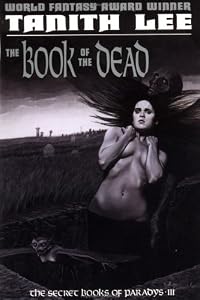
A macabre dark fantasy of enchantment, misfortune, corruption, and death The unnerving third volume of the Secret Books of Paradys begins with a fable of two doomed weddings. In The Weasel Bride, a white weasel transforms into a fair maiden under the light of a full moon. A local trapper releases the animal from its curse by marrying it, but on their wedding day, the weasel inflicts the groom with a fatal wound. This tale flows into the story of a bride who is brutally strangled in the show more nuptial bed after giving her husband a small nibble on the hand. Decades later, his motive comes to light when the woman's unearthed tomb reveals a ghastly truth. In the second narrative, The Nightmare's Tale, Jean de St. Jean is an orphan of the Revolution who grows up with a deep yearning for revenge. Determined to kill the man responsible for his parents' death, he sets off for the colonial island of Black Haissa. But he arrives on distant shores only to find that his adversary is already dead and that the isle is a country of wild nightmares, supernatural possession, and petrifying beasts. And in Beautiful Lady, small, shabby Julie d'Is lives in a tiny apartment near Temple Church that no one ever visits. Some refer to Julie as Bella Donna, but she has other nicknames-for wherever she goes, the Grim Reaper follows close behind. Five additional fantasies entrance the reader with the gothic and tortured plights of the citizens of Paradys-a mythic city where vampire owls, occult conjurors, and femmes fatales abound. show lessTags
Recommendations

















Member Reviews
I will argue that, at her best, Tanith Lee is in the same league of Gothic writing as [a:Angela Carter|27500|Angela Carter|https://d.gr-assets.com/authors/1397683766p2/27500.jpg]; multilayered fictions about sexuality and possession and identity, built of startling imagery and metaphor. Unfortunately, The Book of the Dead, the third quarter of the Paradys cycle, is a long, long way from her best.
There are many problems with this book. Paradys, that shadow Paris where vampires and shapeshifters and magic roil beneath the surface, a main character throughout the previous stories, is barely present. Most of the tales here are barely connected to it and, even in those that are, it is the flimsiest of painted backdrops. The stories show more themselves are generally weak, feeling throwaway and somehow unready, and not even saved by forming together into any sort of thread as had the tales in the previous volumes. The protagonists seem to be involved for no good reason - these are not tragedies where a character brings doom upon themselves by their own greed or recklessness or malice or hubris, more they feel like failed attempts to try for a kind of Lovecraftian random universe - and often the stakes are so low and the motivations so pointless that it is to no effect.
For example, in the story Morcara’s Room we start with an interesting set up. A young woman grows up unusually strong and sure of herself for the time period, self-assured and dominant and, being an only child, inherits the estate. She dresses how she chooses and selects her lovers with impunity. Her downfall occurs the first time a man spurns her, although we are simply told this, not shown it, and in such passing detail that her reaction - to shut herself in a tower chamber and commit suicide - is so melodramatically over the top as to be absurd, even in context of a gothic tale. To compound matters, this is merely the backstory; in the present a traveller comes to the estate to find an elderly brother and sister living in the house, who tell him this story - of their ancestor, her death, that there was a warning on the door “all who enter will die” and the servant who broke down the door fell down the stairs and broke his neck. The cursed tower has been sealed for many years (after a subsequent death for which the siblings bear some guilt) and the denouement is this rather arrogant interloper stating that this was not a curse but a simple statement of fact: all who enter the tower room will die, because everyone dies in the end. The whole thing reads like some very early gothic story you’d study in a literature class and you’d have to give a pass because the once-original ideas had become cliche.
Indeed, each of the stories feels as though Lee is trying her hand at a different era of horror writing, without really committing to it. The segment Lost in the World finds a man obsessed with obscure travel writings of a previous century journeying to Africa to try and locate the hidden valley they mention, finding it, being trapped, and (spoiler) being killed by one of the pterosaurs that inhabit it - although the final image here of his aerial view of what he had taken as a huge, ruined temple is a nice idea, the story as a whole is disjointed and messy, and reads like bad Lovecraft, complete with period casual racism.
Definitely a highly disappointing effort, and I’d probably have chucked this part way through had it not been multiple tales. I hope the final part of the Secret Book of Paradys, [b:The Book of the Mad|974189|The Book of the Mad (Secret Books of Paradys, #4)|Tanith Lee|https://d.gr-assets.com/books/1223776599s/974189.jpg|959086], finishes on a higher note. show less
There are many problems with this book. Paradys, that shadow Paris where vampires and shapeshifters and magic roil beneath the surface, a main character throughout the previous stories, is barely present. Most of the tales here are barely connected to it and, even in those that are, it is the flimsiest of painted backdrops. The stories show more themselves are generally weak, feeling throwaway and somehow unready, and not even saved by forming together into any sort of thread as had the tales in the previous volumes. The protagonists seem to be involved for no good reason - these are not tragedies where a character brings doom upon themselves by their own greed or recklessness or malice or hubris, more they feel like failed attempts to try for a kind of Lovecraftian random universe - and often the stakes are so low and the motivations so pointless that it is to no effect.
For example, in the story Morcara’s Room we start with an interesting set up. A young woman grows up unusually strong and sure of herself for the time period, self-assured and dominant and, being an only child, inherits the estate. She dresses how she chooses and selects her lovers with impunity. Her downfall occurs the first time a man spurns her, although we are simply told this, not shown it, and in such passing detail that her reaction - to shut herself in a tower chamber and commit suicide - is so melodramatically over the top as to be absurd, even in context of a gothic tale. To compound matters, this is merely the backstory; in the present a traveller comes to the estate to find an elderly brother and sister living in the house, who tell him this story - of their ancestor, her death, that there was a warning on the door “all who enter will die” and the servant who broke down the door fell down the stairs and broke his neck. The cursed tower has been sealed for many years (after a subsequent death for which the siblings bear some guilt) and the denouement is this rather arrogant interloper stating that this was not a curse but a simple statement of fact: all who enter the tower room will die, because everyone dies in the end. The whole thing reads like some very early gothic story you’d study in a literature class and you’d have to give a pass because the once-original ideas had become cliche.
Indeed, each of the stories feels as though Lee is trying her hand at a different era of horror writing, without really committing to it. The segment Lost in the World finds a man obsessed with obscure travel writings of a previous century journeying to Africa to try and locate the hidden valley they mention, finding it, being trapped, and (spoiler) being killed by one of the pterosaurs that inhabit it - although the final image here of his aerial view of what he had taken as a huge, ruined temple is a nice idea, the story as a whole is disjointed and messy, and reads like bad Lovecraft, complete with period casual racism.
Definitely a highly disappointing effort, and I’d probably have chucked this part way through had it not been multiple tales. I hope the final part of the Secret Book of Paradys, [b:The Book of the Mad|974189|The Book of the Mad (Secret Books of Paradys, #4)|Tanith Lee|https://d.gr-assets.com/books/1223776599s/974189.jpg|959086], finishes on a higher note. show less
This was a pretty good read for me. Lee's prose is hauntingly descriptive and a bit reminiscent of Poe. The three storeis I enjoyed the most were Beautiful Lady, Lost in the World, and The Glass Dagger. A couple of the other stories were also worthwhile. The remaining tales struck me as somewhat lackluster.
Naast de horror-cyclus 'De opera van het bloed' en haar grote fantasy-romans werkte Tanith Lee stilaan aan een reeks verhalen, De geheime boeken van Paradys, die, hier bijeengebracht, als een unicum in haar oeuvre mogen worden beschouwd. De verhalen in Het boek van de doden zijn tovertekeningen van fantasy-magie. De stad waar de verhalen zich afspelen, Paradys, is een immense, decadente stad naar Frans model, vergeten door de cartografen, dooraderd met een magisch verleden. Paradys is een wereld op zich, waar ridderlijke typen en beeldschone deernen leven naast gedreven kunstenaars, alchemisten, gewetenloze huurlingen, halfdoden en ander zwart gebroed, waar gruwel en erotiek soms één zijn. Voor wie naar vergelijkende voorbeelden show more zoekt: de verhalen in Tanith Lee's Paradys vormen het fantasy-equivalent van de verhalen van 1001 nacht... vol erotica, soms gepresenteerd als een liefdesgeschiedenis met een goede afloop, soms in de vorm van beklemmende obsessies met een tragische afloop, rijk aan details, stijlvol en curieus, kortom... Anders! show less
Mar 28, 2025Dutch
Ratings
Members
- Recently Added By
Author Information

322+ Works 29,788 Members
Tanith Lee, September 19, 1947 - May 24, 2015 Tanith Lee was born on September 19, 1947 in London, England, the daughter of ballroom dancers. She attended various primary schools and had a variety of jobs, from file clerk and assistant librarian to shop assistant and waitress. Lee attended an art college for one year, but felt she would be better show more writing her ideas than painting them. Her first professional sale was "Eustace," a 90 page vignette which appeared in The Ninth Pan Book of Horror Stories in 1968. While Lee was working as an assistant librarian, she wrote a children's story that was accepted for publication. Others of her stories were also bought but never published. In 1971, Macmillan published "The Dragon Hoard," another children's book, which was followed by "Animal Castle" and "Princess Hynchatti and Other Stories" in 1972. Lee was looking for a British publisher for her book "The Birthgrave," but was denied at every House she went. She then wrote to American publisher DAW, known for it's fantasy and horror selections, who immediately accepted her manuscript and published the book in 1975. Thus began a partnership between the two that lasted till 1989 and resulted in 28 books. After the publication of her third book by DAW, Lee quit her job and became a full-time freelance writer. Lee has been nominated for the World Fantasy Award, the August Derleth Award and the Nebula. She has had more than 40 novels published, along with over 200 short stories. Lee died peacefully in her sleep after a long illness on May 24, 2015. (Bowker Author Biography) show less
Series

Work Relationships
Common Knowledge
- Canonical title
- The Book of the Dead
- Original publication date
- 1988
- Important places
- Paradys
- First words
- By the end of the first night, he knew that his lodging was haunted.
Paradys too has its cemeteries, its little graveyards tucked out of sight, its greater yards of death that hug the churches, the cathedral that is called a Temple. - Last words
- (Click to show. Warning: May contain spoilers.)Like the draining of the river, such things were the concern of God.
(Click to show. Warning: May contain spoilers.)What can it be?
Classifications
Statistics
- Members
- 212
- Popularity
- 153,517
- Reviews
- 3
- Rating
- (3.59)
- Languages
- Dutch, English
- Media
- Paper, Ebook
- ISBNs
- 6
- ASINs
- 1