On This Page
Tags
Recommendations




















Member Reviews
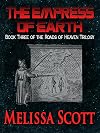
And so we come to the third and final book of the Silence Leigh trilogy, and, well, the journey here was at least a lot of fun, but this is a disappointing end to the trilogy. Silence and her friends finally reach Earth, and Scott decides to riff off UFO mythology and treat their arrival like some sort of close encounter. But they, er, crash-land without discovery, and then must discover what is going on and why Earth has been blockaded by the Rose Worlds – which is never actually really explained. When Silence does a bit of magic, she’s hailed as “the empress of Earth”, although where the legend came from or what it means is all a bit of a mystery. It all feels somewhat over-familiar, which the previous two books did not, and show more the resolution is massively rushed. The plan to free Earth is discussed on page 315, and it’s all over, as is the book, by page 346. It’s as if there were a fourth book waiting, but Scott chose not, or was not contracted, to write it. Of course, it’s not the first time something like this has happened in science fiction. It’s a commercial genre, after all. And there have been plenty of sf writers happy to churn out yet another episode as long as an editor was willing to buy it. EC Tubb managed 31 books of the Dumarest saga before Donald A Wollheim died and his daughter chose not to continue the series. An unsatisfactory conclusion to the series was published by a small press in 1992 (in French; in 1997 in English). I don’t know that something like this happened with the Silence Leigh – or Roads to Heaven – series, although I understand this book has been extensively rewritten for its present Kindle publication. Which is annoying. Although I can understand why Scott took the opportunity to rewrite it. A disappointing end to what had been an interesting trilogy. show less
Well, that was the end to a fun trilogy. Here's some immediate thoughts in case I don't come back for a better review.
First, a brief lol at Pluto being a planet. It isn't a bad thing, just funny.
Second, building in the inherent differences in thinking between scientific and alchemic thinking. This has been present in the whole series, but I liked how everybody wanted to keep their trades secret, which is very occultic thinking. It was a nice touch.
I also continue to enjoy Silence's learned misogyny presenting itself and her having to confront it. It was a great bit of humanity. Scott isn't at Bujold's level, but I also very much enjoyed the women being in positions of great power and not always having to sacrifice their femininity or show more all of their cultural mores to gain it.
Balthazar was a bit more of a human character, but Chase Mago wasn't. Alas. And I have no idea if it was standard for 80s sci-fi to be so sexless. It really wasn't a bad thing and I hope it made the trilogy more readable to people 30 years ago. The same part - where the triad just happens and isn't really discussed - makes it mesh much better in universe anyway. It's simply a thing that exists; there's nothing to get offended by. In the end I think it's a strength of the series.
An extended traveling through Purgatory scene, then nothing. Sadface.
I wouldn't say this was all groundbreaking, but it was a fun romp. show less
First, a brief lol at Pluto being a planet. It isn't a bad thing, just funny.
Second, building in the inherent differences in thinking between scientific and alchemic thinking. This has been present in the whole series, but I liked how everybody wanted to keep their trades secret, which is very occultic thinking. It was a nice touch.
I also continue to enjoy Silence's learned misogyny presenting itself and her having to confront it. It was a great bit of humanity. Scott isn't at Bujold's level, but I also very much enjoyed the women being in positions of great power and not always having to sacrifice their femininity or show more all of their cultural mores to gain it.
Balthazar was a bit more of a human character, but Chase Mago wasn't. Alas. And I have no idea if it was standard for 80s sci-fi to be so sexless. It really wasn't a bad thing and I hope it made the trilogy more readable to people 30 years ago. The same part - where the triad just happens and isn't really discussed - makes it mesh much better in universe anyway. It's simply a thing that exists; there's nothing to get offended by. In the end I think it's a strength of the series.
An extended traveling through Purgatory scene, then nothing. Sadface.
I wouldn't say this was all groundbreaking, but it was a fun romp. show less
I’ve loved Melissa Scott since i read Shadow Man years ago. There’s a lot to like in the universe of this trilogy, including some very original concepts blending music and space travel, but somehow overall it’s less than the sum of its parts and the end feels rushed. I enjoyed it all the same, but it’s not quite there for me.
Better than the second, not as good as the first, but I still love the space travel by metaphorical voidmarks. And I like that the characters aren't superhuman. When they get bruised, they hurt for a while.
[I actually read all three books in this series at a go, but the other two are ebooks, and I'm still working out how to get my ebooks on here relatively painlessly.]
The culmination of the Silence Leigh trilogy. Silence is a citizen of the Hegemony - a huge, misogynistic confederation of planets and cultures. The Hegemony runs on magic, and as much as possible eschews mechanical and computers. Silence is an oddity - she is a female starship pilot. Her dream, adopted from her grandfather, is to find the "road" - the starship path - to lost Earth.
In earlier books, she was stripped of her inheritance, married two men to be able to continue piloting, became embroiled in a revolution, and discovered that she was a mage.
Unlike some other show more feminist SFF classics, this trilogy hasn't aged all that well. Nor is it Scott's best work. Scott dips her toe into a number of issues - Silence's internalization of cultural misogyny, for example, or the implications of her multi-partner marriage - without exploring them in any depth. The hand-waving and two-dimensional walk-on characters get tiring after a while.
What is fully and lovingly described is how once a ship reaches twelve-fifths of heaven, where the material becomes the "celestial", a pilot follows "voidmarks" to their destination. This is interesting *and* original. Once Silence is trained as a mage, her perception of the celestial expands, making piloting more difficult.
But she is still intent on breaking a blockade on the route to Earth. Once she does, she discovers that Earth doesn't use magic, and that the Rose Worlds - responsible for the blockade - ruthlessly keep Earth's population corralled. Silence herself is thought to be a long-foretold avatar of freedom. She has to use every resource available to try and break Earth free of the Rose Worlds' domination. show less
The culmination of the Silence Leigh trilogy. Silence is a citizen of the Hegemony - a huge, misogynistic confederation of planets and cultures. The Hegemony runs on magic, and as much as possible eschews mechanical and computers. Silence is an oddity - she is a female starship pilot. Her dream, adopted from her grandfather, is to find the "road" - the starship path - to lost Earth.
In earlier books, she was stripped of her inheritance, married two men to be able to continue piloting, became embroiled in a revolution, and discovered that she was a mage.
Unlike some other show more feminist SFF classics, this trilogy hasn't aged all that well. Nor is it Scott's best work. Scott dips her toe into a number of issues - Silence's internalization of cultural misogyny, for example, or the implications of her multi-partner marriage - without exploring them in any depth. The hand-waving and two-dimensional walk-on characters get tiring after a while.
What is fully and lovingly described is how once a ship reaches twelve-fifths of heaven, where the material becomes the "celestial", a pilot follows "voidmarks" to their destination. This is interesting *and* original. Once Silence is trained as a mage, her perception of the celestial expands, making piloting more difficult.
But she is still intent on breaking a blockade on the route to Earth. Once she does, she discovers that Earth doesn't use magic, and that the Rose Worlds - responsible for the blockade - ruthlessly keep Earth's population corralled. Silence herself is thought to be a long-foretold avatar of freedom. She has to use every resource available to try and break Earth free of the Rose Worlds' domination. show less
As the third and last in the series, I was pleased to finally reach the conclusion. Using the items gained in the last novel, Silence, her husbands, and her master set out to find a way to Earth. I found the description of the process interesting, although it took a more of the book than I think it should have. Once on Earth, our intrepid heroes spend an enormous amount of time of the learning about Earth, it's cultures and people - and why it's been cut off from the rest of human race. The Rose Worlders keep Earth trapped and the pollution controlled with machines. Silence and her crew spend the last few chapters setting up a rebellion - and then in the last few pages - everything happened at once. Literally, the entire rebellion, all show more the action, all the wrap up - all of it - 5 pages, max. While the story (this one, and the trilogy as a whole) is a good story, I was often baffled by the part of the story that Scott choose to focus on. Why the whole thing with the gang and the farm people and the entire chapter about them traveling in a train?
In the end, it's a good story and a good trilogy, worth reading, but I haven't quite figured out Scott's style of writing yet. show less
In the end, it's a good story and a good trilogy, worth reading, but I haven't quite figured out Scott's style of writing yet. show less
Ratings
Members
- Recently Added By
Lists

Books Read in 2013
1,630 works; 51 members
Author Information

66+ Works 7,499 Members
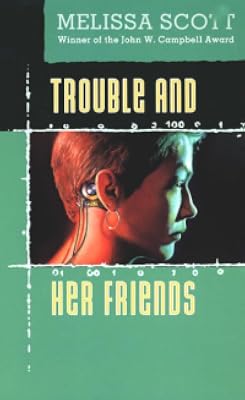
Melissa Scott is a science fiction writer. She was born in Little Rock, Arkansas in 1961. Scott studied history at Harvard University before earning her Ph. D. in comparative history from Brandeis University. Scott's first science fiction book, The Game Beyond, was published in 1984. In 1986, she won the John W. Campbell Award for Best New Writer. show more Scott received the Lambda Literary Award for Gay/Lesbian Science Fiction in both 1995 and 1996 for the books Trouble and Her Friends and Shadow Man. She is a co-founder of WaveLengths, a journal of gay/lesbian/bisexual-interest science fiction and fantasy. (Bowker Author Biography) show less
Some Editions
Series

Work Relationships
Is contained in
Common Knowledge
- Canonical title
- The Empress of Earth
- Original publication date
- 1987
- People/Characters
- Silence Leigh; Julian Chase Mago; Denis Balthasar
Classifications
Statistics
- Members
- 256
- Popularity
- 126,916
- Reviews
- 6
- Rating
- (3.53)
- Languages
- English
- Media
- Paper, Audiobook, Ebook
- ISBNs
- 2
- UPCs
- 1
- ASINs
- 4