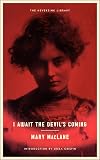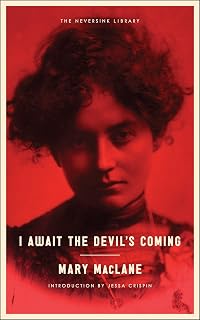
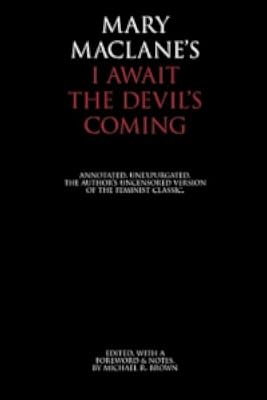
I Await the Devil's Coming
by Mary MacLane
On This Page
Description
Published in 1902 when the author was not yet twenty years old, Mary MacLane's searingly frank memoir is so far ahead of its time that it may shock even current-day readers. Indeed, the original title I Await the Devil's Coming (referring to MacLane's oft-expressed infatuation with Satan himself) was deemed too racy, and subsequent editions were published under the considerably tamer title The Story of Mary MacLane. No matter what you call it, it's a compelling, indelible read that will show more stick with you long after you've read the last sentence.. show less
Tags
Recommendations






























Member Reviews
Self-described as a “Portrayal”, this book shifts through so many different forms: memoir, autobiography, poetry, manifesto, journal, philosophical treatise and, dare I suggest, fiction, that I can’t adequately pin it to the styrene foam board. I doubt a lepidopterist had as restless a specimen. So, I must default: that’s what she said. Portrayal with a capital P. The fact that her chosen word for her work rhymes with “betrayal” can’t be just coincidence. Mary MacLane surely felt let down by somebody; and her Portrayal does not stint on this fact. By all of mankind. And so she reaches for the Devil . . .
“From people who persist in calling my good body ‘mere vile clay’; from idiots who appear to know all about me and show more enjoin me not to bathe my eyes in hot water since it hurts their own; from fools who tell me what I ‘want’ to do: Kind Devil, deliver me.”
Such hubris and self-abnegation; disgust and rejoicing; phlegmatic phrases with hypertension testing arterial walls: I am stunned by this woman’s persistent honesty. Or is it hyperbole? I honestly can’t tell.
“Out in the graveyard her child is forgotten. And presently the wooden headstone will begin to decay. But the worms will not forget their part. They have eaten the small body by now, and enjoyed it. Always worms enjoy a body to eat.
“And also the Devil rejoiced.
“And I rejoiced with the Devil.”
Just how bored was this woman? I mean, it was 1902 in Butte, Montana. The only person she speaks to outside of the Devil is an Italian immigrant: peddler of miscellany, misandry and self-preservation. And that’s the third time I used “self” as a prefix. That also can’t be coincidence.
“She suffered with the pain of a woman, young; and I suffer with the pain of a woman, young and all alone.
“And so it is.”
Fifteen years passed before Mary MacLane wrote her second memoir. She seemed to have experienced a fair bit of life, caused big enough splashes in puddles along the way, and yet died virtually unknown. Certainly unknown to me until a friend at a brewery showed me his copy. Yes, two men puzzling over the unique prose from a unique voice from a unique woman. Somehow, I think Mary would’ve appreciated that.
“But I am too young yet to think of peace. It is not peace that I want. Peace is for forty and fifty. I am waiting for my Experience.
“I am awaiting the coming of the Devil.”
Amen, dear lady. This forty-plus male agrees. show less
“From people who persist in calling my good body ‘mere vile clay’; from idiots who appear to know all about me and show more enjoin me not to bathe my eyes in hot water since it hurts their own; from fools who tell me what I ‘want’ to do: Kind Devil, deliver me.”
Such hubris and self-abnegation; disgust and rejoicing; phlegmatic phrases with hypertension testing arterial walls: I am stunned by this woman’s persistent honesty. Or is it hyperbole? I honestly can’t tell.
“Out in the graveyard her child is forgotten. And presently the wooden headstone will begin to decay. But the worms will not forget their part. They have eaten the small body by now, and enjoyed it. Always worms enjoy a body to eat.
“And also the Devil rejoiced.
“And I rejoiced with the Devil.”
Just how bored was this woman? I mean, it was 1902 in Butte, Montana. The only person she speaks to outside of the Devil is an Italian immigrant: peddler of miscellany, misandry and self-preservation. And that’s the third time I used “self” as a prefix. That also can’t be coincidence.
“She suffered with the pain of a woman, young; and I suffer with the pain of a woman, young and all alone.
“And so it is.”
Fifteen years passed before Mary MacLane wrote her second memoir. She seemed to have experienced a fair bit of life, caused big enough splashes in puddles along the way, and yet died virtually unknown. Certainly unknown to me until a friend at a brewery showed me his copy. Yes, two men puzzling over the unique prose from a unique voice from a unique woman. Somehow, I think Mary would’ve appreciated that.
“But I am too young yet to think of peace. It is not peace that I want. Peace is for forty and fifty. I am waiting for my Experience.
“I am awaiting the coming of the Devil.”
Amen, dear lady. This forty-plus male agrees. show less
It would be difficult to not feel a little intimidated in writing this review when my sister wrote the introduction. Which is of course why I bought it. I mean, I would have been intrigued by the description anyway, and it is from one of my favorite publishers, but with my sister's name on the cover -- it was practically a contractual obligation.
And her introduction was on fire with enthusiasm. It sounded like the kind of book we would have given our eye teeth to have discovered in high school, in our tiny one (flashing) stoplight town in Kansas. I worried, a bit, that I would be oversold, and that I would turn the pages feeling hollow, waiting for the fireworks to start. But no, I loved every page of this book with a fierceness, and show more wish I could deliver a copy to every rural library in the plains states.
So, why? What makes this book so electric? Mary MacLane was a self-proclaimed genius, who wrote this memoir of sorts at the age of nineteen, in remove Butte, Montana in 1902. It is, primarily, a book about yearning. Yearning to be known, yearning to be loved, yearning for something, almost anything of note to happen to her. MacLane feels totally alienated from the people around her -- by her genius, by her philosophy, by her disdain of their petty hypocrisies. Of course, these sentences could describe nearly any teenager in America. What makes MacLane unique is the thoroughness with which she examines herself, the starkness of her prose. She knows how to truly exist in the moment, how to hold all its beauty, or its melancholy, or its despair, or all of these at once, and then how to serve it up to us so that we can exist in it, too -- can step into her beloved landscape and feel the air bite us, watch the flash of red in the sunset.
I don't know what else to say. Read it. show less
And her introduction was on fire with enthusiasm. It sounded like the kind of book we would have given our eye teeth to have discovered in high school, in our tiny one (flashing) stoplight town in Kansas. I worried, a bit, that I would be oversold, and that I would turn the pages feeling hollow, waiting for the fireworks to start. But no, I loved every page of this book with a fierceness, and show more wish I could deliver a copy to every rural library in the plains states.
So, why? What makes this book so electric? Mary MacLane was a self-proclaimed genius, who wrote this memoir of sorts at the age of nineteen, in remove Butte, Montana in 1902. It is, primarily, a book about yearning. Yearning to be known, yearning to be loved, yearning for something, almost anything of note to happen to her. MacLane feels totally alienated from the people around her -- by her genius, by her philosophy, by her disdain of their petty hypocrisies. Of course, these sentences could describe nearly any teenager in America. What makes MacLane unique is the thoroughness with which she examines herself, the starkness of her prose. She knows how to truly exist in the moment, how to hold all its beauty, or its melancholy, or its despair, or all of these at once, and then how to serve it up to us so that we can exist in it, too -- can step into her beloved landscape and feel the air bite us, watch the flash of red in the sunset.
I don't know what else to say. Read it. show less
Living in Butte, Montana in 1902, nineteen-year old Mary MacLane penned her confessional memoir over the course of three months. In hyperbolic phrases and daily descriptions, MacLane charted her intentions, emotions and hopes for happiness. Though it was an immediate success upon publication, selling over 100,000 copies in its first month, I Await the Devil's Coming faded into obscurity until its recent repress.
"I can think of nothing in the world like the utter little-ness, the paltriness, the contemptibleness, the degradation, of the woman who is tied down under a roof with a man who is really nothing to her; who wears the man's name, who bears the man's children -- who plays the virtuous woman. There are too many such in the world show more now. May I never, I say, become that abnormal, merciless animal, that deformed monstrosity -- a virtuous woman."
MacLane’s voice fills every point on the spectrum of teenage emotions, but also writes in passages well beyond her nineteen years. She often flutters in egotistic, self-serving rhetoric; a nineteenth century version of celebrities like Amanda Bynes, spouting off to Twitter followers who are endlessly willing to listen. But unlike today's Twitter mouthpieces, MacLane spends much of I Await the Devil’s Coming dissecting and criticizing the place of women in American society. MacLane writes in a voice meant for another era in both respects, making every page of her short diary a fascinating peek into the life of a young woman decades ahead of her time.
Blog: www.rivercityreading.com show less
"I can think of nothing in the world like the utter little-ness, the paltriness, the contemptibleness, the degradation, of the woman who is tied down under a roof with a man who is really nothing to her; who wears the man's name, who bears the man's children -- who plays the virtuous woman. There are too many such in the world show more now. May I never, I say, become that abnormal, merciless animal, that deformed monstrosity -- a virtuous woman."
MacLane’s voice fills every point on the spectrum of teenage emotions, but also writes in passages well beyond her nineteen years. She often flutters in egotistic, self-serving rhetoric; a nineteenth century version of celebrities like Amanda Bynes, spouting off to Twitter followers who are endlessly willing to listen. But unlike today's Twitter mouthpieces, MacLane spends much of I Await the Devil’s Coming dissecting and criticizing the place of women in American society. MacLane writes in a voice meant for another era in both respects, making every page of her short diary a fascinating peek into the life of a young woman decades ahead of her time.
Blog: www.rivercityreading.com show less
http://msarki.tumblr.com/post/137775661428/i-await-the-devils-coming-by-mary-mac...
This review is based on the version collected in the Petrarca Press edition of [b:Human Days: A Mary MacLane Reader|13266635|Human Days A Mary MacLane Reader|Mary MacLane|https://d.gr-assets.com/books/1324376021s/13266635.jpg|18279424]. I am adding my review here solely because of my reading of the Introduction written by [a:Jessa Crispin|6561741|Jessa Crispin|https://d.gr-assets.com/authors/1430328539p2/6561741.jpg] included in this publication published by Melville House. In some ways I do see similarities between these two women. I believe it can be found in the determination both share in living their lives the way they personally see fit to do, and show more refuse every mediation generally attached to most, if not all of us. In literature Jessa Crispin seems to me to be our most interesting of contemporary female sword fighters, and one who is not at all hesitant to brandish her steel whenever she feels it necessary.
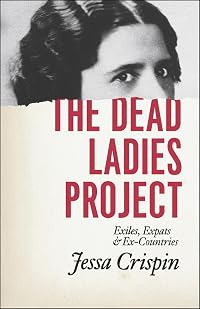
I have to agree with H.L. Mencken who said, “Mary MacLane is one of the few who actually knows how to write English.” Couldn’t be truer, even in today’s world. How refreshing to read this sensational confessional and feel first-hand her astounding power in her words. Her strength is extraordinary. From the very beginning of her manuscript it took no time at all for me to realize I had stumbled onto something quite magnificent and meaningful. Within the first few pages it was obvious to me that Mary MacLane was far far ahead of her time. (I had the same experience while reading Jessa Crispin’s [b:The Dead Ladies Project: Exiles, Expats, and Ex-Countries|24000166|The Dead Ladies Project Exiles, Expats, and Ex-Countries|Jessa Crispin|https://d.gr-assets.com/books/1425657099s/24000166.jpg|43600371].) MacLane’s audacity and brazen attitude even toward potential admirers of her work struck me as quite remarkable. My reading of this text only furthered my interest in learning everything I possibly could about this fascinating woman. Surely it must be unfortunate to find myself so enamored with a young woman who is destined to always refuse my love for her, a blazing fervor that will regretfully remain unrequited.
There are few young people today as sophisticated, well-read, and talented as Mary MacLane. Back when she wrote this diary there was also no guarantee her words would ever be published, or if she would have even a smidgen of an audience in which to have it read. In spite of it Mary MacLane became a star, and not due to anything resembling today’s internet social media. Of course, she did later write articles for publications such as New York World which catered to these same types of people who love gossip, sordid behavior, and innuendo. Though only nineteen years old when she wrote this first book MacLane displayed a maturity and confidence usually absent by others her age.
Much has been made of MacLane’s love for the Devil. Not once did I ever feel she was evil or bad in any way. She simply did not want to be like the other women she witnessed in her life. She did not want to be kept by a man, but rather taken, for one day, in ecstasy. Her happiness would depend on each moment of wickedness, the ravaging delight discovered in all her senses, likened to her enjoyment of an occasional charcoal-grilled rare Porterhouse steak smothered with steaming onions and mushrooms. So phooey on her love for the Devil (whatever that is). She simply wanted to be alarmingly ignited and thus alive enough to feel.
…And so I want a fascinating wicked man to come and make me positively, rather than negatively, wicked. show less
This review is based on the version collected in the Petrarca Press edition of [b:Human Days: A Mary MacLane Reader|13266635|Human Days A Mary MacLane Reader|Mary MacLane|https://d.gr-assets.com/books/1324376021s/13266635.jpg|18279424]. I am adding my review here solely because of my reading of the Introduction written by [a:Jessa Crispin|6561741|Jessa Crispin|https://d.gr-assets.com/authors/1430328539p2/6561741.jpg] included in this publication published by Melville House. In some ways I do see similarities between these two women. I believe it can be found in the determination both share in living their lives the way they personally see fit to do, and show more refuse every mediation generally attached to most, if not all of us. In literature Jessa Crispin seems to me to be our most interesting of contemporary female sword fighters, and one who is not at all hesitant to brandish her steel whenever she feels it necessary.
I have to agree with H.L. Mencken who said, “Mary MacLane is one of the few who actually knows how to write English.” Couldn’t be truer, even in today’s world. How refreshing to read this sensational confessional and feel first-hand her astounding power in her words. Her strength is extraordinary. From the very beginning of her manuscript it took no time at all for me to realize I had stumbled onto something quite magnificent and meaningful. Within the first few pages it was obvious to me that Mary MacLane was far far ahead of her time. (I had the same experience while reading Jessa Crispin’s [b:The Dead Ladies Project: Exiles, Expats, and Ex-Countries|24000166|The Dead Ladies Project Exiles, Expats, and Ex-Countries|Jessa Crispin|https://d.gr-assets.com/books/1425657099s/24000166.jpg|43600371].) MacLane’s audacity and brazen attitude even toward potential admirers of her work struck me as quite remarkable. My reading of this text only furthered my interest in learning everything I possibly could about this fascinating woman. Surely it must be unfortunate to find myself so enamored with a young woman who is destined to always refuse my love for her, a blazing fervor that will regretfully remain unrequited.
There are few young people today as sophisticated, well-read, and talented as Mary MacLane. Back when she wrote this diary there was also no guarantee her words would ever be published, or if she would have even a smidgen of an audience in which to have it read. In spite of it Mary MacLane became a star, and not due to anything resembling today’s internet social media. Of course, she did later write articles for publications such as New York World which catered to these same types of people who love gossip, sordid behavior, and innuendo. Though only nineteen years old when she wrote this first book MacLane displayed a maturity and confidence usually absent by others her age.
Much has been made of MacLane’s love for the Devil. Not once did I ever feel she was evil or bad in any way. She simply did not want to be like the other women she witnessed in her life. She did not want to be kept by a man, but rather taken, for one day, in ecstasy. Her happiness would depend on each moment of wickedness, the ravaging delight discovered in all her senses, likened to her enjoyment of an occasional charcoal-grilled rare Porterhouse steak smothered with steaming onions and mushrooms. So phooey on her love for the Devil (whatever that is). She simply wanted to be alarmingly ignited and thus alive enough to feel.
…And so I want a fascinating wicked man to come and make me positively, rather than negatively, wicked. show less
MacLane inspires me to let shit go and consider the bigger picture. Like "courting delinquency" and "welcoming the devil into my bed". Thanks for the pointers, Mary.
(But for real I love this and her. Laughed a lot. "Bring me my red sky!")
(But for real I love this and her. Laughed a lot. "Bring me my red sky!")
Fun in a campy way if you're in the mood for a memoir by a very hyperbolic 19-year-old in turn-of-the-century Butte, Montana. If you've been hanging out with too many overdramatic Morrisey-listening self-absorbed teenagers, you might want to pass for the time being, but it's also absorbing in its way. The more things change, the more they stay the same—and I do, embarrassingly, recognize some of those same tendencies in my alienated little self of... well, not 19. But 14, surely. Review to follow.
An interesting look at teenage angst 100 years ago. I couldn't help but feel for this young woman. She was obviously creative and thoughtful but had no other outlet for her teenage energies besides her journal. I think she was very lonely while she wrote this.
Members
- Recently Added By
Lists

Books Read in 2023
5,638 works; 147 members

Stuff from Bard
70 works; 1 member
Author Information

22+ Works 464 Members
Awards and Honors
Distinctions
Work Relationships
Inspired
Common Knowledge
- Canonical title
- I Await the Devil's Coming
- Original publication date
- 1902
Classifications
Statistics
- Members
- 242
- Popularity
- 134,472
- Reviews
- 9
- Rating
- (3.67)
- Languages
- English, French, Portuguese, Swedish
- Media
- Paper, Ebook
- ISBNs
- 9
- ASINs
- 5