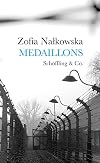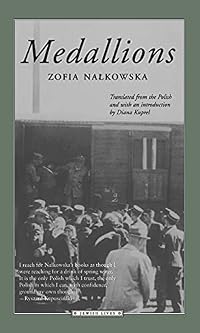
Medallions
by Zofia Nałkowska
On This Page
Description
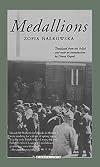
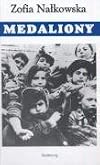
"Nothing of the former world holds true anymore," Zofia Nalkowska wrote in her Wartime Diaries on 7 May 1943. "Nothing has remained." The burning of the Warsaw ghetto had broken Nalkowska's privileged life in two; in the years to come, the need to bear witness to the horrors she had seen firsthand would lead this gifted member of the Polish avant-garde to write the stories in Medallions. Considered a masterpiece of antifascist world literature, Medallions stands as the culmination of show more Nalkowska's literary style--a style that the Polish writer Witold Gombrowicz once described as "the iron capital of her art and one of the very few exportables in our national literature." Nalkowska's narratives, written in documentary form with simple, concise, severely elegant prose, give voice to the experience of victims and witnesses of the Nazi genocide. Medallions includes seven short stories and one summation, "The Adults and Children of Auschwitz." These terse, sometimes fragmented pieces take the form of testimonials, private interviews, and chance conversations in which the protagonists, speaking for themselves, with their sometimes limited understanding of the human drama, also speak on behalf of millions. More than mere historical record, Medallions offers the reader startling immediacy--the repetition of a past event as it persists in the testimonial present, in the scars on the consciousness and conscience of individuals. Book jacket. show lessTags
Recommendations














Member Reviews
49 pages you will never forget
By sally tarbox on 15 April 2018
Format: Paperback
This is such a short work - just 49 pages- but so immensely horrifying, as the author (a member of the Commission investigating Nazi war crimes) describes events in wartime Poland.
The chapters are written as accounts by witnesses; calmly, as if merely narrating facts - and all the more powerful for that. Men investigating an anatomical institute where corpses were rendered into soap; memories of a camp survivor; an escapee from a cattle truck transport...
A masterpiece of Holocaust literature.
By sally tarbox on 15 April 2018
Format: Paperback
This is such a short work - just 49 pages- but so immensely horrifying, as the author (a member of the Commission investigating Nazi war crimes) describes events in wartime Poland.
The chapters are written as accounts by witnesses; calmly, as if merely narrating facts - and all the more powerful for that. Men investigating an anatomical institute where corpses were rendered into soap; memories of a camp survivor; an escapee from a cattle truck transport...
A masterpiece of Holocaust literature.
It's a shocking, factual account of the atrocities committed in Poland in different concentration camps, on the way to them, in Jewish ghettos, and other places of extermination. Nalkowska relates them with no comment, or apparent emotion. Only the motto to the collection hints at the author’s shock and disbelief: “Ludzie ludziom zgotowali ten los.” (People did it to people.)
The accounts come from the hearings of witnesses, detained workers at the camps, a German anatomy professor’s assistant (the professor himself- Dr Spanner- fled in 1944), a cook, an undertaker (or more accurately a woman who took care of graves), people from transports, and direct descriptions of what was left behind in situ. Nalkowska, a playwright and show more author, was a member of the commission called to examine the crimes against humanity committed during WW II in Poland.
Among the more shocking ones is the description of the production of soap from the cadavers’ fat, but contrary to popular belief, most prisoners in this particular institution in Gdansk-Wrzeszcz, were ethnic Poles.
I had to read it years ago as a part of the high school curriculum in Poland, and having just re-read it, I am equally shocked, and more confident than ever that everybody should read it just to remember what people are capable of.
By the way, there is no subtitle (Jewish Lives) in the Polish version, and in fact, the book is about the extermination of Poles, Jews, and other nations.
Link: Medaliony by Nalkowska (in Polish)
http://www.nowakowska.piwko.pl/materialy/lektury/zofia_nalkowska/medaliony.htm
Link to World War II Atrocities in Poland (Wikipedia)
http://en.wikipedia.org/wiki/Nazi_crimes_against_ethnic_Poles show less
The accounts come from the hearings of witnesses, detained workers at the camps, a German anatomy professor’s assistant (the professor himself- Dr Spanner- fled in 1944), a cook, an undertaker (or more accurately a woman who took care of graves), people from transports, and direct descriptions of what was left behind in situ. Nalkowska, a playwright and show more author, was a member of the commission called to examine the crimes against humanity committed during WW II in Poland.
Among the more shocking ones is the description of the production of soap from the cadavers’ fat, but contrary to popular belief, most prisoners in this particular institution in Gdansk-Wrzeszcz, were ethnic Poles.
I had to read it years ago as a part of the high school curriculum in Poland, and having just re-read it, I am equally shocked, and more confident than ever that everybody should read it just to remember what people are capable of.
By the way, there is no subtitle (Jewish Lives) in the Polish version, and in fact, the book is about the extermination of Poles, Jews, and other nations.
Link: Medaliony by Nalkowska (in Polish)
http://www.nowakowska.piwko.pl/materialy/lektury/zofia_nalkowska/medaliony.htm
Link to World War II Atrocities in Poland (Wikipedia)
http://en.wikipedia.org/wiki/Nazi_crimes_against_ethnic_Poles show less
Link to the text in Polish:
http://www.nowakowska.piwko.pl/materialy/lektury/zofia_nalkowska/medaliony.htm
“Posągi i medaliony potłuczone leżały wzdłuż alei. Groby z otwartymi wnętrzami ukazały w pękniętych trumnach swoich umarłych” (Kobieta cmentarna)
http://www.nowakowska.piwko.pl/materialy/lektury/zofia_nalkowska/medaliony.htm
“Posągi i medaliony potłuczone leżały wzdłuż alei. Groby z otwartymi wnętrzami ukazały w pękniętych trumnach swoich umarłych” (Kobieta cmentarna)
Esperanto
Nalkowska participó en la "Comisión de Investigación de los Crímenes Hitlerianos" que se formó en su pais justo después de la guerra. Este librito reune siete narraciones y un pequeño reportaje basados todos en lo que oyó en las sesiones de esta Comisión. Sin duda, aquí hay poca invención literaria, apenas retoques estilísticos. Por eso los relatos, muy breves, resultan espeluznantes, porque los cuentan casi directamente quienes los vivieron. A veces las historias las cuentan alemanes o polacos que vieron, o incluso participaron en lo que ocurría, aunque asegurasen no tener conciencia de estar haciendo algo malo, o al menos no terrible. Me llamó la atención la historia de la encargada del cementerio justo junto al guetto show more de una ciudad que no se nombra y que oye a los judíos gritar y llorar y afirma que "dan pena" porque "en el fondo, también son personas", y los ve arrojarse al vacío desde sus casas a las que los SS han prendido fuego con ellos dentro. También la historia del que emplean como enterrador en fosas comunes y un buen día tiene que enterrar a su mujer y su hija asesinadas. O la de la que consigue huir del tren que le llevaba al campo de concentración, y agoniza varios días en medio del círculo de aldeanos que no se atreven a rematarla (hasta que uno lo hace) pero tampoco le ayudan pese a estar herida. O la del que ayudaba a fabricar jabón con la grasa de los cadáveres. show less
Sep 14, 2011Spanish
Ratings
Members
- Recently Added By
Author Information

36+ Works 260 Members
Some Editions
Awards and Honors
Notable Lists
Series
Belongs to Publisher Series
Common Knowledge
- Canonical title
- Medallions
- Original title
- Medaliony
- Alternate titles*
- Medallions: Jewish Lives (angle) (angle); Medalionoj (esperante) (esperante)
- Original publication date
- 1946
- Important places*
- Pollando
- Important events*
- Holokauxsto
- First words
- It was our second visit there that May morning.
- Last words
- (Click to show. Warning: May contain spoilers.)He received in reply: "We're playing at burning Jews."
*Some information comes from Common Knowledge in other languages. Click "Edit" for more information.
Classifications
Statistics
- Members
- 115
- Popularity
- 282,062
- Reviews
- 5
- Rating
- (4.00)
- Languages
- 9 — Dutch, English, Esperanto, German, Hebrew, Italian, Japanese, Polish, Spanish
- Media
- Paper, Ebook
- ISBNs
- 18
- ASINs
- 4