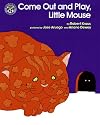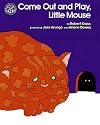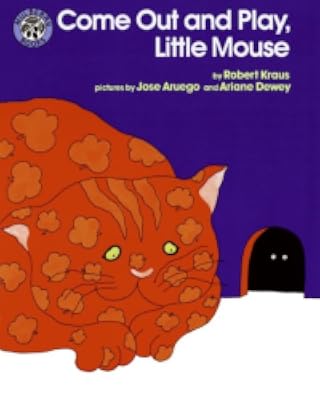
Come Out and Play, Little Mouse
by Robert Kraus
On This Page
Description
Big Brother saves Little Mouse from a cat's treacherous invitation to come out and play.Tags
Recommendations
























Member Reviews
In my opinion, “Come Out and Play, Little Mouse” is an adorable story for a young child to read. One thing that I immediately liked about this story is that it displays the days of the week in it. I think that this is an excellent way to teach children the different days of the week. Each page is a different day and shows what the mouse will do on that day. The writing is very organized and paced well. The writing is predictable and repeated some of the same lines over and over. I think this is a great element for beginning readers, because it will help reinforce their learning of these words. For example, the cat says, “Come out and play, little mouse,” and the mouse says, “I can’t play today…,” and then he explains why show more he cannot play that day. The plot is well thought-out. The cat keeps asking the mouse to play with him, but the mouse is busy. When the mouse does come out of his home to play with the cat, the cat tries to catch him. The mouse’s big brother dresses up as a dog and scares the cat away to protect the little mouse. The mice then go home and play with their family. The cat is sad that the mice cannot play. However, the story leads readers to think that the cat learns his lesson to not play aggressively with the mouse. The book pushes readers to think about how to be a good friend and how to treat others. I believe that the big idea is to show readers that they should play nicely with their friends and that they should spend time with their family because family is one of the most important things in life. show less
Ratings
Members
- Recently Added By
Author Information

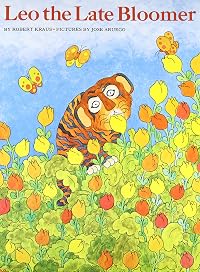
Robert Kraus was born in Milwaukee, Wisconsin on June 21, 1925. When he was 10-years-old, he won a cartoon contest staged by the Milwaukee Journal. He received a plaque and had his cartoon printed in the paper. Two years later, the newspaper hired him to produce a weekly cartoon called Public Nuisances. By the time he was 16-years-old, he was show more selling cartoons to magazines like Esquire and the Saturday Evening Post. He studied at Milwaukee's Layton Art School and the Art Students' League in New York. After selling a few cartoons to The New Yorker, he was hired by the magazine as a contract artist. He worked there for 15 years and created 21 covers. While there, he started writing and illustrating children's books. His books included All the Mice Came, Leo the Late Bloomer, and Whose Mouse Are You? He left The New Yorker in 1966 and founded Windmill Books. Within a year, the house had won a prestigious Caldecott Medal. After 20 years, he sold Windmill to Simon and Schuster. In 1983, he began a syndicated Sunday comic feature, called Zap! The Video Chap. He died of congestive heart failure on August 7, 2001 at the age of 76. (Bowker Author Biography) show less
Some Editions
Classifications
Statistics
- Members
- 278
- Popularity
- 116,550
- Reviews
- 1
- Rating
- (2.75)
- Languages
- English, French
- Media
- Paper
- ISBNs
- 14