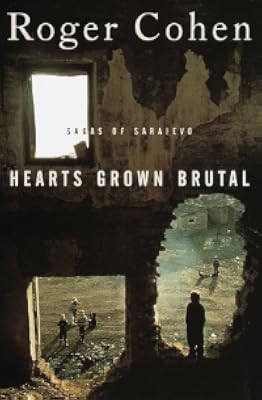
Hearts Grown Brutal : Sagas of Sarajevo
by Roger Cohen
On This Page
Description
The disintegration of Yugoslavia and the civil war that followed during the post-Cold War era is seen through the lives of four families representing various factions in the struggle.Tags
Recommendations
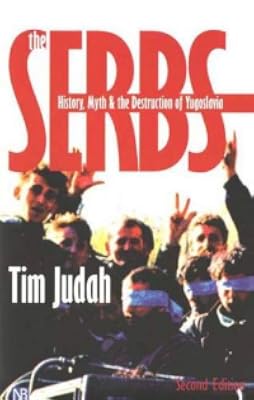
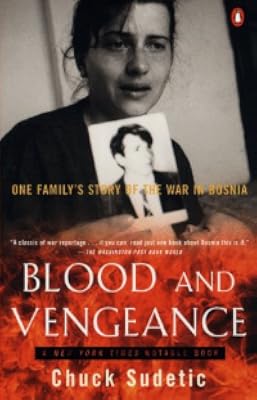
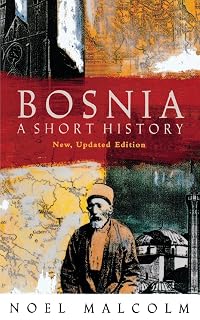
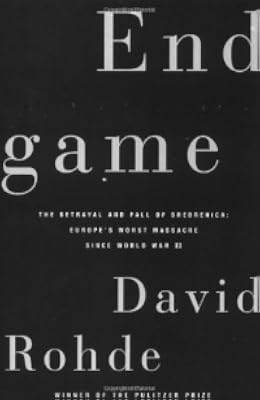




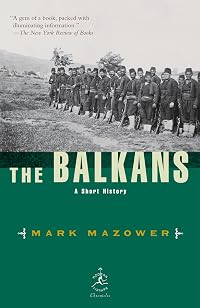
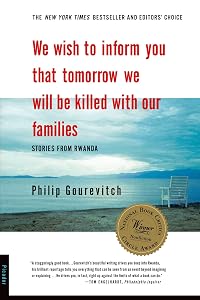

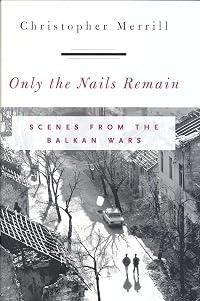
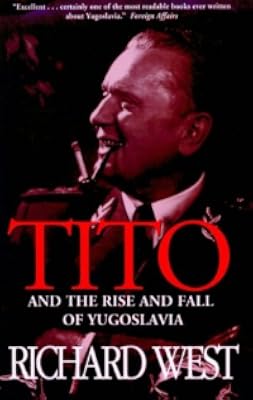


Member Reviews
Roger Cohen's "Hearts Grown Brutal - Sagas of Sarajevo" belongs, for me, securely in that category of historical works, which includes Edmund Haller-Carr's "The Twenty Years' Crisis", which I wish fervently I had read earlier in my life, to aid with my understanding of what was going on during the 20th century.
Despite having lived half of my life during that period, and despite having had a deep interest in WWII, it was only when I read Haller-Carr's work, published in 1939, (one week before the war began), that I finally grasped the pre-programmed tragedy of the Versailles Treaty, and the series of diplomatic and strategic blunders that led to their inevitable conclusion. Cohen's exemplary and authoritative work detailing the factors show more leading up to, and the course of the Balkan War, was even more profoundly enlightening for me.
As a European, of course I'd "lived through" the Balkan War, albeit at a very safe distance in Germany. I had the benefits of being able to follow the proceedings on British and German Television News, and occasionally also in the printed press. However, during that period of my life, I was much occupied with other matters and experienced these images and reports as if through a train window shunting it's way at night through a goods yard. Occasionally the carriages would pass beneath a barrage of floodlights revealing scenes in alarming clarity, before trundling slowy into an enveloping shroud of greyness.
I recall passing by and seeing horrifying images transmitted into our living room, and thinking "Who's killing who now?"; seeing the shelling of Sarajevo and hearing the claims of the surrounding gunners that the bombed had in fact bombed themselves, and thinking "Who's fooling who now?". But the truth was that my doubts were only gut-feeling. I didn't know for certain, and simply didn't have the time to try to better my understanding. I just kept asking myself why nobody was helping. Why was this being allowed to happen, in the midst of Europe, within post-communist countries to which we'd recently held out the hand of welcome to our free and democratic, values-based community.
Mr Cohen's work has, for me answered all of these questions and more, including those about why Muslim lives in peril seemed to raise matters of moral relativism rather than a need to take action.
For those wishing to better their understanding of this cynical ending to a century which W H Auden may well have described as low and dishonest, as he did in "September 1, 1939" , then this book should be on your "Must Read" list. show less
Despite having lived half of my life during that period, and despite having had a deep interest in WWII, it was only when I read Haller-Carr's work, published in 1939, (one week before the war began), that I finally grasped the pre-programmed tragedy of the Versailles Treaty, and the series of diplomatic and strategic blunders that led to their inevitable conclusion. Cohen's exemplary and authoritative work detailing the factors show more leading up to, and the course of the Balkan War, was even more profoundly enlightening for me.
As a European, of course I'd "lived through" the Balkan War, albeit at a very safe distance in Germany. I had the benefits of being able to follow the proceedings on British and German Television News, and occasionally also in the printed press. However, during that period of my life, I was much occupied with other matters and experienced these images and reports as if through a train window shunting it's way at night through a goods yard. Occasionally the carriages would pass beneath a barrage of floodlights revealing scenes in alarming clarity, before trundling slowy into an enveloping shroud of greyness.
I recall passing by and seeing horrifying images transmitted into our living room, and thinking "Who's killing who now?"; seeing the shelling of Sarajevo and hearing the claims of the surrounding gunners that the bombed had in fact bombed themselves, and thinking "Who's fooling who now?". But the truth was that my doubts were only gut-feeling. I didn't know for certain, and simply didn't have the time to try to better my understanding. I just kept asking myself why nobody was helping. Why was this being allowed to happen, in the midst of Europe, within post-communist countries to which we'd recently held out the hand of welcome to our free and democratic, values-based community.
Mr Cohen's work has, for me answered all of these questions and more, including those about why Muslim lives in peril seemed to raise matters of moral relativism rather than a need to take action.
For those wishing to better their understanding of this cynical ending to a century which W H Auden may well have described as low and dishonest, as he did in "September 1, 1939" , then this book should be on your "Must Read" list. show less
Ratings
Members
- Recently Added By
Author Information

8+ Works 441 Members
Common Knowledge
- Important places*
- Bosnië en Herzegovina
*Some information comes from Common Knowledge in other languages. Click "Edit" for more information.
Classifications
- Genres
- Nonfiction, History, General Nonfiction
- DDC/MDS
- 949.703 — History & geography History of Europe Greece, Albania, Yugoslavia, Serbia, Romania, Bulgaria Former Yugoslavia (Bosnia and Herzegovina ∙ Croatia ∙ Kosovo ∙ Montenegro ∙ Macedonia ∙ Serbia ∙ Slovenia) [formerly also Bulgaria]
- LCC
- DR1313.3 .C64 — History of Europe, Asia, Africa and Oceania Balkan Peninsula History of Balkan Peninsula Yugoslavia History By period 1918- Yugoslav War, 1991-1995
- BISAC
Statistics
- Members
- 60
- Popularity
- 515,842
- Reviews
- 1
- Rating
- (4.70)
- Languages
- English
- Media
- Paper, Ebook
- ISBNs
- 4
- ASINs
- 1