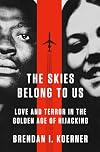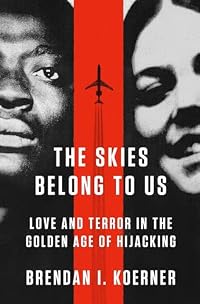
The Skies Belong to Us
by Brendan I. Koerner 
On This Page
Description
In an America torn apart by the Vietnam War and the demise of Sixties idealism, airplane hijackings were astonishingly routine. Over a five-year period starting in 1968, the desperate and disillusioned seized commercial jets nearly once a week. Some hijackers wished to escape to foreign lands; others aimed to swap hostages for sacks of cash. The longest-distance hijacking in American history took place in 1972 when a shattered Army veteran and a mischievous party girl, Roger Holder and Cathy show more Kerkow, commandeered Western Airlines Flight 701 as a vague war protest. Through a combination of savvy and dumb luck, the couple managed to flee across an ocean with a half-million dollars in ransom, a feat that made them notorious around the globe. Journalist Brendan I. Koerner spent four years chronicling this madcap tale, which involves a cast of characters ranging from exiled Black Panthers to African despots to French movie stars.--From publisher description. Documents the 1972 story behind the longest-distance hijacking in U.S. history, tracing the events of the hijacking against a backdrop of civil unrest and the skyjacking wave of the early 1970s. show lessTags
Recommendations


















Member Reviews
This book fascinated me from beginning to end. While the focus is on Roger Holder's convoluted and oddly successful plan to skyjack a plane with his lover Cathy Kerkow, the story told is broad and full of wacky, real life characters. As the US stumbled out of Vietnam, the political and social climates were rife with damaged servicemen and angry citizens seeking ways to make a stand. Skyjacking became the perfect outlet for a staggering number of these people.
While the events in this book are only a few decades behind us, much has changed in dramatic ways. I was particularly struck by the airlines' lackadaisical attitude toward security, as well as their vehement opposition to change. Lives were lost and people lived in fear while show more airline executives and government officials bickered about details and finances.
Koerner has an engaging, conversational writing style that made me feel like he was sitting beside me, telling me a story. This is a nonfiction book that often reads like fiction. At times I had to remind myself that, while crazy, these things did really happen. show less
While the events in this book are only a few decades behind us, much has changed in dramatic ways. I was particularly struck by the airlines' lackadaisical attitude toward security, as well as their vehement opposition to change. Lives were lost and people lived in fear while show more airline executives and government officials bickered about details and finances.
Koerner has an engaging, conversational writing style that made me feel like he was sitting beside me, telling me a story. This is a nonfiction book that often reads like fiction. At times I had to remind myself that, while crazy, these things did really happen. show less
 This review was written for LibraryThing Early Reviewers.
This book ended up being much more interesting than I originally thought it would be. The story is about a specific couple and their lives leading up to and after they complete a hijacking. Their story is not what kept my attention, it was the the overview of the hijacking era that I found to be fascinating. I had no idea how prevalent hijackings were during this time period and enjoyed reading a little snapshot into some specific stories throughout the time period. It was also interesting to see how airport security practices progressed only after a significant amount of time and hijackings.
This review was written for LibraryThing Early Reviewers.This book is written in a very compelling manner which draws in the reader. The subject matter is skyjacking in the days of low airport security, with heavy focus on the story of Holder and Kerkow, a lovestruck couple.
I love the combination of extensive research with a dynamic writing style which gives the reader plenty of reason to keep reading. Though it goes largely unsaid, I find it very interesting to consider the bearing that the air safety considerations in this book have on events of the last two decades. I think it's appropriate that Koerner doesn't mention 9/11, but it's crazy to know the details of the "golden days" of skyjacking in light of what happened on 9/11/2001.
But the story of radical people dealing with the prospect show more of skyjacking for profit and/or getting their voice heard is a really interesting one. The main protagonists are an interesting pair in the world of Black Panthers, dissenters against the Vietnam War, Communists, and more. They are largely oblivious to their positioning within the larger context of flight industry changes and government response to hijacking, but Koerner fills that part of the story in for us.
This is a great read, and I would recommend it to anyone. show less
I love the combination of extensive research with a dynamic writing style which gives the reader plenty of reason to keep reading. Though it goes largely unsaid, I find it very interesting to consider the bearing that the air safety considerations in this book have on events of the last two decades. I think it's appropriate that Koerner doesn't mention 9/11, but it's crazy to know the details of the "golden days" of skyjacking in light of what happened on 9/11/2001.
But the story of radical people dealing with the prospect show more of skyjacking for profit and/or getting their voice heard is a really interesting one. The main protagonists are an interesting pair in the world of Black Panthers, dissenters against the Vietnam War, Communists, and more. They are largely oblivious to their positioning within the larger context of flight industry changes and government response to hijacking, but Koerner fills that part of the story in for us.
This is a great read, and I would recommend it to anyone. show less
This review was written for LibraryThing Early Reviewers.The Skies Belong to Us: Love and Terror in the Golden Age of Hijacking by Brendan I. Koerner is a detailed history of a pair of hijackers as well as a history of hijacking in general. Koerner is a former columnist for The New York Times and Slate. His work has been printed in the New York Times Magazine, Harpers and many other publications. He is currently a contributing editor at Wire. This is his second book.
I am just barely old enough to remember all the “Take this bus to Cuba” and other hijacking jokes of the 1970s. I do recall television comedies also picked up on the theme too. How ever funny it seemed at the time, it was a serious matter. Koerner lays out many facts that I have forgotten. Surprising to me was the number of show more veterans who hijacked planes for multiple reasons from demanding money to give to North Vietnamese orphanages to the purely delusional. Cuba was a popular destination to either give the hijacked plane as a gift to Castro, to study communism, or as one veteran insisted to kill Castro with his bare hands. The number of juveniles that hijacked planes is also surprising high. Although many methods of taking over the plane were clever, many hijackers had put very little thought into the their plan aside from taking it over. More than once, commuter planes were hijacked with orders to fly to Cuba or other international destinations.
Another rather surprising bit of information is how opposed the airlines were to additional security. Airlines refused to increase security. They did not want to treat their passengers like criminals and more importantly they did the math and found it was cheaper to meet hijackers demands than buy into security. For a long time, hijackers never hurt passengers and the worst case was “being late for dinner.” Hijacking was an common inconvenience. Airlines learned the best thing to do was meet the demands and carry on. There are several instances where the airlines and pilots completely shut the FBI out for fear that confrontation would bring violence. I remember hearing how sky marshals brought safety to the skies. Koerner, however, shows the number of sky marshals compared to the number of flights made it very improbable that a sky marshal would actually be on a hijacked plane. To complicate the sky marshals job, airlines regularly bumped them off flights to open a seat for a paying customer. Eventually, everyone, including Castro, got fed up with hijackings.
The Skies Belong to Us documents several different hijackings and the results from mandatory sentencing to public opinion. One hijacking is covered throughout the book. Alternating chapters of history and the hijacking of Western Airlines flight 701 from Los Angeles to Algiers – the longest hijacking in American history. Koerner gives the complete biography of the two involved in hijacking flight 701: William Roger Holder and Cathy Kerkow. Their story takes up the majority of the book. This inside look into their lives before, during, and after the hijacking ties the entire book together. It give personal insight into a successful hijacking. Their story is very compelling and very well worth reading.
The general history of highjacking is a look back into an age that those under fifty will find hard to believe existed. The idea of post 9/11 TSA security would be a thing of dark science fiction fifty years ago. It was truly a different era. A younger reader today will not understand how these things were allowed to happen. Why didn't the government force airlines and passengers to agree to higher security? Perhaps there are some who are older wondering how we allowed the government the power it has today. That maybe the back story in this book. How we as a society changed our view on rights and security: what was unacceptable then and fully expected now. This is more than just an excellent history book. It is part of our culture, then and now. show less
I am just barely old enough to remember all the “Take this bus to Cuba” and other hijacking jokes of the 1970s. I do recall television comedies also picked up on the theme too. How ever funny it seemed at the time, it was a serious matter. Koerner lays out many facts that I have forgotten. Surprising to me was the number of show more veterans who hijacked planes for multiple reasons from demanding money to give to North Vietnamese orphanages to the purely delusional. Cuba was a popular destination to either give the hijacked plane as a gift to Castro, to study communism, or as one veteran insisted to kill Castro with his bare hands. The number of juveniles that hijacked planes is also surprising high. Although many methods of taking over the plane were clever, many hijackers had put very little thought into the their plan aside from taking it over. More than once, commuter planes were hijacked with orders to fly to Cuba or other international destinations.
Another rather surprising bit of information is how opposed the airlines were to additional security. Airlines refused to increase security. They did not want to treat their passengers like criminals and more importantly they did the math and found it was cheaper to meet hijackers demands than buy into security. For a long time, hijackers never hurt passengers and the worst case was “being late for dinner.” Hijacking was an common inconvenience. Airlines learned the best thing to do was meet the demands and carry on. There are several instances where the airlines and pilots completely shut the FBI out for fear that confrontation would bring violence. I remember hearing how sky marshals brought safety to the skies. Koerner, however, shows the number of sky marshals compared to the number of flights made it very improbable that a sky marshal would actually be on a hijacked plane. To complicate the sky marshals job, airlines regularly bumped them off flights to open a seat for a paying customer. Eventually, everyone, including Castro, got fed up with hijackings.
The Skies Belong to Us documents several different hijackings and the results from mandatory sentencing to public opinion. One hijacking is covered throughout the book. Alternating chapters of history and the hijacking of Western Airlines flight 701 from Los Angeles to Algiers – the longest hijacking in American history. Koerner gives the complete biography of the two involved in hijacking flight 701: William Roger Holder and Cathy Kerkow. Their story takes up the majority of the book. This inside look into their lives before, during, and after the hijacking ties the entire book together. It give personal insight into a successful hijacking. Their story is very compelling and very well worth reading.
The general history of highjacking is a look back into an age that those under fifty will find hard to believe existed. The idea of post 9/11 TSA security would be a thing of dark science fiction fifty years ago. It was truly a different era. A younger reader today will not understand how these things were allowed to happen. Why didn't the government force airlines and passengers to agree to higher security? Perhaps there are some who are older wondering how we allowed the government the power it has today. That maybe the back story in this book. How we as a society changed our view on rights and security: what was unacceptable then and fully expected now. This is more than just an excellent history book. It is part of our culture, then and now. show less
Koerner writes an excellent overview of the history of hijacking airplanes or "skyjacking" and focuses on the story of William Holder and Cathy Kerkow who pulled off the longest highjacking ever. The book ties many interesting historical footnotes together including the Black Panthers history as well as who the Rolling Stones song "Sweet Black Angel" is about. All throughout the book, Koerner does an excellent job getting into the heads of Holder and Kerkow. As we debate whether or not we should allow items such as nail clippers on a plane, this book does an excellent job of showing how far we have come in the name of security in air travel.
This review was written for LibraryThing Early Reviewers.This is a book for those who like their true crime mixed with history, politics and sociology. I have vague memories of skyjacking as a social phenomena from when I was a kid, but never realized just how prevalent it was. It's amazing to realize, in our ultra security-conscious world, just how easy it was to bring weapons of mass destruction aboard airplanes. Even through all this, the airlines and the government at the time were hugely opposed to any kind of screening, claiming it would be massively disruptive and impossible to implement, and that travelers would never put up with it. We all know how that turned out. As a snapshot of a particular, turbulent time in America and the world the book is fascinating. It pulls the veneer off show more entities such as the Black Panthers, reminding the reader of the crimes that led leaders such as Eldridge Cleaver into exile. And the image of Jean Paul Sartre and the French intelligencia feting these two losers makes it clear just how much the world has changed, and how the face of terrorism has evolved. show less
This review was written for LibraryThing Early Reviewers.I honestly had no idea that skyjacking was a thing in the 1960s and 1970s. I'd heard of Dan (or D. B.) Cooper, but that was literally it until this book.
The parts that kept me interested were the small snapshots of other skyjackings and how airport security measures came to be in response to them. The actual skyjacking that this book is mostly about didn't intrigue me as much, and I think it would have been better dealt with in a long essay, rather than in a book.
The author also has the tendency to describe every woman in terms of her attractiveness (or not), and he goes out of his way to talk about Cathy Kerkow's looks and "immodesty" to the point that it was distracting and ridiculous.
The parts that kept me interested were the small snapshots of other skyjackings and how airport security measures came to be in response to them. The actual skyjacking that this book is mostly about didn't intrigue me as much, and I think it would have been better dealt with in a long essay, rather than in a book.
The author also has the tendency to describe every woman in terms of her attractiveness (or not), and he goes out of his way to talk about Cathy Kerkow's looks and "immodesty" to the point that it was distracting and ridiculous.
Members
- Recently Added By
Published Reviews
On June 2, 1972, a few minutes before his flight from Los Angeles was scheduled to land in Seattle, a tall, skinny black man in an Army dress uniform walked up the aisle and handed the flight attendant an index card that said he was wired to bomb the plane. Like everything else about the man, his note seemed to veer between the meticulous and the insane. He had drawn a diagram of the bomb he show more said he was carrying in his briefcase; it was so credible the pilots concluded he had had training in explosives. But his note seemed the product of a manic mind: “Success through Death,” it read, and it said that he had accomplices in the cabin from the violent radical Weatherman group, and the not-violent radical group Students for a Democratic Society. The pilots decided to comply. They asked the man where he wanted to go. North Vietnam, he said. show less
added by private library
Lists

2014 Notable Books for Adults
26 works; 5 members

Books Read in 2013
1,629 works; 51 members
Author Information

6+ Works 527 Members
Brendan I. Koerner is a LibraryThing Author, an author who lists their personal library on LibraryThing.
Some Editions
Awards and Honors
Awards
Distinctions
Notable Lists
Common Knowledge
- Canonical title
- The Skies Belong to Us
- Alternate titles
- The Skies Belong to Us: Love and Terror in the Golden Age of Hijacking
- Original publication date
- 2013-06-18
- People/Characters
- Roger Holder; Cathy Kerkow
- Epigraph
- My son, from whence this madness, this neglect
Of my commands, and those whom I protect
Why this unmanly rage? Recall to mind
Whom you forsake, what pledges leave behind.
—Virgil, The Aeneid
I shou... (show all)lda stayed in Job Corps,
but now I'm an outlaw...
—Ghostface Killah - Dedication
- For Maceo and Ciel
Figures can't calculate... - First words
- The man in the black sunglasses tells the waitress he's fine with just coffee.
- Last words
- (Click to show. Warning: May contain spoilers.)Even the most rebellious soul cannot be immune to that human truth.
- Publisher's editor
- Mobley, Vanessa
- Blurbers
- Turse, Nick; Grann, David; Duhigg, Charles; Fallows, James; Wallace, Benjamin
- Original language
- English
Classifications
- Genres
- Nonfiction, General Nonfiction, History, Biography & Memoir
- DDC/MDS
- 364.15 — Social sciences Social problems and social services Criminology Criminal offenses Offenses against the person
- LCC
- HE9803 .Z7 .H545 — Social sciences Transportation and communications Transportation and communications Air transportation. Airlines
- BISAC
Statistics
- Members
- 349
- Popularity
- 89,951
- Reviews
- 29
- Rating
- (4.05)
- Languages
- English, French, Portuguese
- Media
- Paper, Audiobook, Ebook
- ISBNs
- 10
- ASINs
- 5