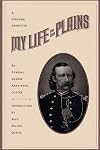
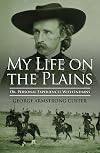
My Life on the Plains
by George Armstrong Custer
On This Page
Description
Compilation of Custer's reminiscences concerning his participation in the U.S. Army's 1867-69 campaigns against the Plains Indians. Fascinating document of military history, offering insights into the notorious general's perspectives and character.Tags
Recommendations
















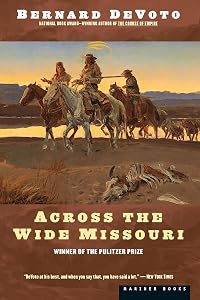

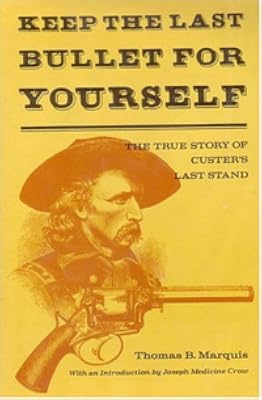

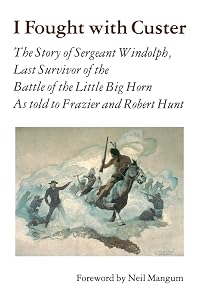
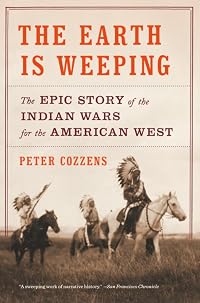


Member Reviews
Custer fairly recounts the words of Black Kettle's sister, Mawissa, on the occasion of surviving one of Custer's massacres: "[S]he began the delivery of an address which for wisdom of sentiment, and easy, natural, but impassioned delivery, might have been heard with intense interest by an audience of cultivated refinement." [358] Custer is not content to merely ignore her plea for justice and mercy, but he manages to reveal his own lack of character by trivializing the confidence and esteem the delegation offered.
This work was carefully edited by Custer's wife. It does not appear to have helped; she must have suffered the same infirmities of character.
Reading the words of this warrior one can only wonder at his Quaker -- show more Pennsylvania Dutch -- background. Like Napoleon, he graduated at the bottom of his class of cadets. He displayed little competence with technical operations or subjects. However, he entered combat with a personal zest and physical exuberance that was unmatched by any but the Indian warrior himself. At the end of the Civil War, with his indefatigable fiery spirit he had made himself the youngest General of the War.
Custer tells the many stories of his life, as if it is a stage play. Theatrical, impersonal, unlikely, and always at the expense of others. If anyone doubts that the United States was forcibly wrested from a bronze people, who, in turn, had forcibly wrested the hunting ground from some other group, it is only necessary to read Custer's recitations. I take it as an Admission. show less
This work was carefully edited by Custer's wife. It does not appear to have helped; she must have suffered the same infirmities of character.
Reading the words of this warrior one can only wonder at his Quaker -- show more Pennsylvania Dutch -- background. Like Napoleon, he graduated at the bottom of his class of cadets. He displayed little competence with technical operations or subjects. However, he entered combat with a personal zest and physical exuberance that was unmatched by any but the Indian warrior himself. At the end of the Civil War, with his indefatigable fiery spirit he had made himself the youngest General of the War.
Custer tells the many stories of his life, as if it is a stage play. Theatrical, impersonal, unlikely, and always at the expense of others. If anyone doubts that the United States was forcibly wrested from a bronze people, who, in turn, had forcibly wrested the hunting ground from some other group, it is only necessary to read Custer's recitations. I take it as an Admission. show less
Ratings
Members
- Recently Added By
Author Information

9+ Works 350 Members
Some Editions
Series
Belongs to Publisher Series
Lakeside Classics (book 50)
Common Knowledge
- People/Characters
- George Armstrong Custer
Classifications
- Genres
- History, Nonfiction, Biography & Memoir, General Nonfiction
- DDC/MDS
- 973.8 — History & geography History of North America United States The Gilded Age, Reconstruction, Spanish American War (1865-1901)
- LCC
- F594 .C97 — Local History of the United States, Canada and Latin America United States local history The West. Trans-Mississippi Region. Great Plains
- BISAC
Statistics
- Members
- 297
- Popularity
- 107,702
- Reviews
- 2
- Rating
- (3.40)
- Languages
- English, Italian
- Media
- Paper, Audiobook, Ebook
- ISBNs
- 25
- UPCs
- 1
- ASINs
- 19