On This Page
Description
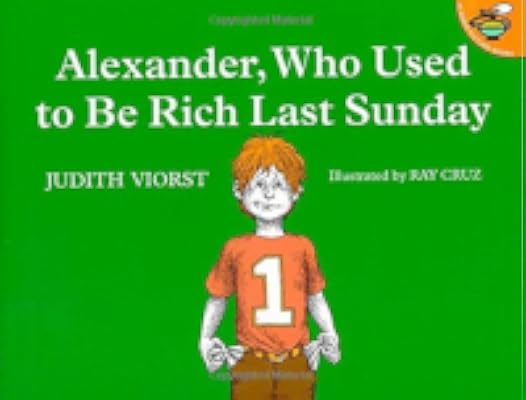
Although Alexander and his money are quickly parted, he comes to realize all the things that can be done with a dollar.Tags
Recommendations
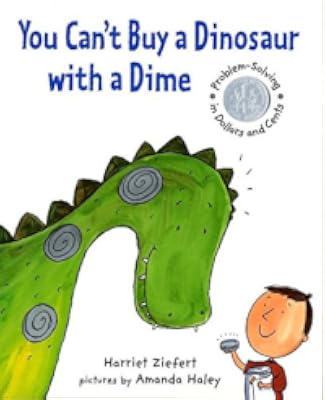
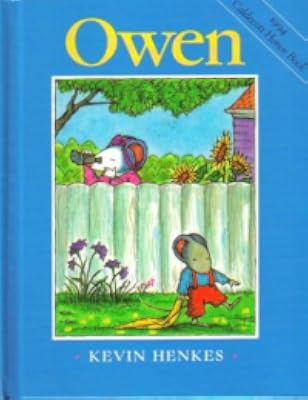
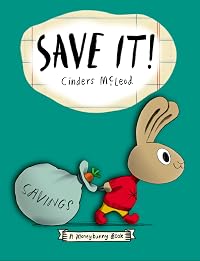


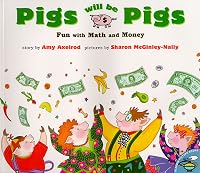
Member Recommendations
Member Reviews
I never realized there were more Alexander books, but I am so glad to have stumbled upon this one! It is just as silly as The Terrible, Horrible, No Good, Very Bad Day and teaches children great lessons about finance and self control. Another must-have!
This is a good book, but not my favorite. The book talked about money, but it did not show the reader how to count the money he spent at the end of the book. It also did not add the money at the end of the book to show a dollar, which is what he had at the beginning. I think there should be a visual for students to understand the concept of money and how it works in order for this book to be used in a math lesson. Overall, it was a cute book to read. However, I would not use it as part of a math lesson. I would recommend this book for grades 2-4.
I really liked this story because the language it uses really gives you a sense of the main character as well as his older brothers. For example, one page demonstrated a brotherly relationship by saying, " Anthony told me to use the dollar to go downtown to a store and buy a new face. Anthony stinks." I like how this relationship is described throughout the story so you can see how the brothers interact. I also really liked the language in this story because it was descriptive and patterned. The story described, down to each penny, how Alexander spent his whole dollar, and wound up broke just like he started in the beginning of the story. The main idea of this story is to show how hard it is to save money and how easily spent it is. No show more matter how hard Alexander tries to save his money he still ends up spending it all. show less
An engaging shaggy dog tale with B&W (as I recall) illustrations of a boy chasing a dollar... I think the best and most accurate compliment I can give is I find rather like somewhat Shel Silverstein.
This would be a great book to read a young class of students learning the idea of subtraction or parts of a whole. Alexander got a dollar from his grandparents and over the course of a week managed to spend the whole thing until he was left with nothing
Alexander Who Used to Be Rich Last Sunday was a funny book! This book is about a little boy who just cannot save up his money but is jealous when his brothers and everyone else has more money than him. Alexander buys different objects including a melted candle, a teddy bear, and a pack of gum that he doesn't absolutely need and wastes his money. I think this is a good book to show students how to save up their money and buy things that they need rather than always buying things they just want.
I read the first of Judith Viorst's Alexander books to my son when he was an infant. He went on to discover other books in the series. His most recent discovery is Alexander Who Used to Be Rich Last Sunday.
The book opens with Alexander lamenting the fact that he has no money. As the story unwinds, he explains why he has no money. Since last Sunday he has spent his money on all sorts of frivolous things.
As the book was written in the late 1970s, the amount of money has on Sunday is quite small. Children today might be surprised by how little Alexander has. The specific prices mentioned make the book feel more dated than Alexander and the Terrible No Good, Very Bad Day.
It's still though a good starting point for discussing money and the show more different sorts of coins and bills there are. Since Alexander was given a dollar on Sunday, children can also be asked to keep track of how Alexander spends his money to practice subtraction. show less
The book opens with Alexander lamenting the fact that he has no money. As the story unwinds, he explains why he has no money. Since last Sunday he has spent his money on all sorts of frivolous things.
As the book was written in the late 1970s, the amount of money has on Sunday is quite small. Children today might be surprised by how little Alexander has. The specific prices mentioned make the book feel more dated than Alexander and the Terrible No Good, Very Bad Day.
It's still though a good starting point for discussing money and the show more different sorts of coins and bills there are. Since Alexander was given a dollar on Sunday, children can also be asked to keep track of how Alexander spends his money to practice subtraction. show less
Members
- Recently Added By
Lists

Books About Boys
175 works; 15 members
Author Information

93+ Works 36,487 Members
Judith Viorst was born in Newark, New Jersey on February 2, 1931. She graduated from Rutgers University (1952) and the Washington Psychoanalytic Institute (1981). She has written extensively, her works include children's books, collections of poetry, lyrics to musicals, several works of fiction, and a cookbook. She has won a Silver Pencil award show more (for The Tenth Good Thing About Barney) and an Emmy (for poems used in an Anne Bancroft TV special). (Bowker Author Biography) Judith Viorst is the bestselling author of "Forever Fifty," "How Did I Get to Be Forty," "Necessary Losses," & several other works. She is also the author of the classic children's book "Alexander & the Terrible, Horrible, No Good, Very Bad Day." A graduate of the Washington Psychoanalytic Institute, she is the recipient of various awards for her journalism & psychological writings. She lives in Washington, D.C., with her husband, political writer Milton Viorst. They have three sons. (Publisher Provided) show less
Awards and Honors
Awards
Series

Work Relationships
Is contained in
Has as a student's study guide
Common Knowledge
- Canonical title
- Alexander, Who Used to Be Rich Last Sunday; Alexander, Who Used To Be Rich Last Sunday
- Original publication date
- 1978
- People/Characters
- Alexander
- Dedication
- To the boys' Grandma Betty and Grandpa Louie Viorst
- Last words
- (Click to show. Warning: May contain spoilers.)And...some bus tokens.
- Original language
- English
Classifications
Statistics
- Members
- 4,262
- Popularity
- 3,578
- Reviews
- 88
- Rating
- (3.94)
- Languages
- English, Spanish
- Media
- Paper, Audiobook, Ebook
- ISBNs
- 45
- ASINs
- 19