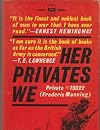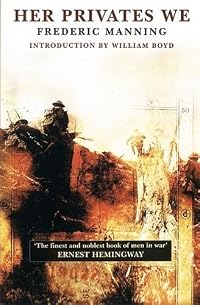
Her Privates We
by Frederic Manning
On This Page
Description
First published privately in 1929 as The Middle Parts of Fortune, Her Privates We is the novel of the Battle of the Somme told from the perspective of an ordinary private. This edition now restores all the 'prunings and excisions' that were made to the first edition because the bluntness of language was thought to make the book unfit for public distribution. An undisputed classic of war writing and a lasting tribute to all who participated in the war, Her Privates We was originally published show more as written by 'Private 19022'. Championed by amongst others Ernest Hemingway, Ezra Pound, TS Eliot and TE Lawrence, it has become recognised as a classic in the seventy years since its first publication. Now republished, with an introduction by William Boyd, it will again amaze a new generation of readers. show lessTags
Recommendations
















Member Reviews
The First World War seems to have been too beastly for literature, or perhaps simply too efficient at killing the people who might have written novels about it. Other than the Poets (or to quote Blackadder, the "endless, bloody, poetry") and All Quiet on the Western Front which my not having read is rapidly becoming a mortal embarrassment, this seems to be the only significant work of literature produced by a combatant about the front line. Frederic Manning certainly wasn't your common-or-garden Tommy — he was a litterateur, an Australian, probably gay, and in his late thirties when he enlisted — but Her Privates We is a monument to the men who found themselves, through no fault of their own, entrenched in the Somme. What makes it show more live and breathe is the ventriloquism — the brilliantly rendered voices of a Britain where regional accents and vocab were yet unmuddied by mass media. I learnt fanti for "crazy", and snobs for a cobbler, and I was glad to see that "cunt-struck" has over a century of pedigree. The swearing is as fluent as can be. Very few writers can render accents convincingly in prose, and Manning is one of them. He was with the Shropshires (or "Westshires" in the novel), where I'm from, and some of the voices here reminded me of the codgers they brought into my primary school in the 80's to tell us first-hand what a terrific disaster the whole thing was for everyone involved.
Most of the story takes place behind — or between — the lines, as the Westshires are shunted from one desolated mining town to another, waiting to be shoved back into the meat-grinder. It's endless marching punctuated by pointless (and sometimes deadly) parading, office politics, raiding of estaminets, and attempts, successful or not, to have a "bon time" on smuggled whisky and vinegarish wine. The POV character, Bourne — a rough analogue of Manning — hangs around with a nondescript soldier called Shem and the 16 year-old Martlow, who's emblematic of Owen's "Doomed Youth", and whom I thought maybe Bourne/Manning was quietly in love with. But it's equally likely that that's the interpretation of a reader who's never been in a remotely similar situation, and for whom sentences like this will never be fully comprehensible:
Most of the story takes place behind — or between — the lines, as the Westshires are shunted from one desolated mining town to another, waiting to be shoved back into the meat-grinder. It's endless marching punctuated by pointless (and sometimes deadly) parading, office politics, raiding of estaminets, and attempts, successful or not, to have a "bon time" on smuggled whisky and vinegarish wine. The POV character, Bourne — a rough analogue of Manning — hangs around with a nondescript soldier called Shem and the 16 year-old Martlow, who's emblematic of Owen's "Doomed Youth", and whom I thought maybe Bourne/Manning was quietly in love with. But it's equally likely that that's the interpretation of a reader who's never been in a remotely similar situation, and for whom sentences like this will never be fully comprehensible:
They laid themselves down, as they were to get a few hours' sleep; and Bourne, dropping off between the two of them, wondered what was the spiritual thing in them which lived and seemed to grow even stronger, in the midst of beastliness.show less
Also known as The Middle Parts of Fortune. If you remember reading All Quiet on the Western Front and thought that was good (which it is), then this is better. An absolute classic of anti-war WW1 fiction, written by a veteran, and it's a shame it's not better known. I had never heard of it until recently. This is the real McCoy right down to the truly dreadful language. When it was first published in 1928 it had to be quickly expurgated to avoid prosecution under obscenity laws. This is the unexpurgated version, and it's filthy. But that only makes it more real.
One might think that a book about WWI would offer little that a reader today could relate to. Not true. I found much in Her Privates We with which to identify. In his modern intro to the book first published in 1929, William Boyd notes that the unexpurgated version, with its vivid and vulgar language typical to the talk of rank and file soldiers, makes the book curiously contemporary, and he's right. The usual Anglo-saxon crudities used by the British soldiers in the book are the same ones still used by soldiers in any army in the world.
Hemingway remarked that Her Privates We was one of the best books he'd ever read about men at war, and that he read it often.
I have to agree with Boyd and Hemingway. There is something so very real, so show more 'now' about the story Manning tells, about his main character, Bourne, and the other soldiers he befriends and observes throughout the narrative. There was one particular anecdote, one in which Bourne and another soldier had to escort a couple of large stupid Lancashire men to a military prison which reminded me almost immediately of the plot of a popular novel (and film) of the 70s Vietnam era, Darryl Ponicsan's The Last Detail. I wondered idly as I read this section whether Ponicsan had ever read Manning's book.
Another passage which struck me deeply, was a passing comment Bourne made about friendship versus the comradeship the military life often forces upon you.
"I have one or two particular chums, of course; and in some ways, you know, good comradeship takes the place of friendship. It is different; it has its own loyalties and affections; and I am not so sure that it does not rise on occasion to an intensity of feeling which friendship never touches."
And that is exactly what the phrase "old army buddies" is all about. It can't be explained to someone who has never served, but friendships made outside the military rarely rise to that level, to that lasting feeling of "comradeship."
There were many such passages here - truisms and even casual conversations between chums that I understood easily. My own experiences in the US Army in the 60s, then 70s and 80s, were the same. I had my own Bournes, Martlows and Shems, and the end of the story, as heartbreaking as it is, seemed inevitable. That's how real and immediate this book still is. So I understand why Hemingway, Arnold Bennett, T.E. Lawrence and others marked this book for greatness. It is deserving of its status as a classic of war literature. Terrific stuff. I cannot recommend it highly enough. show less
Hemingway remarked that Her Privates We was one of the best books he'd ever read about men at war, and that he read it often.
I have to agree with Boyd and Hemingway. There is something so very real, so show more 'now' about the story Manning tells, about his main character, Bourne, and the other soldiers he befriends and observes throughout the narrative. There was one particular anecdote, one in which Bourne and another soldier had to escort a couple of large stupid Lancashire men to a military prison which reminded me almost immediately of the plot of a popular novel (and film) of the 70s Vietnam era, Darryl Ponicsan's The Last Detail. I wondered idly as I read this section whether Ponicsan had ever read Manning's book.
Another passage which struck me deeply, was a passing comment Bourne made about friendship versus the comradeship the military life often forces upon you.
"I have one or two particular chums, of course; and in some ways, you know, good comradeship takes the place of friendship. It is different; it has its own loyalties and affections; and I am not so sure that it does not rise on occasion to an intensity of feeling which friendship never touches."
And that is exactly what the phrase "old army buddies" is all about. It can't be explained to someone who has never served, but friendships made outside the military rarely rise to that level, to that lasting feeling of "comradeship."
There were many such passages here - truisms and even casual conversations between chums that I understood easily. My own experiences in the US Army in the 60s, then 70s and 80s, were the same. I had my own Bournes, Martlows and Shems, and the end of the story, as heartbreaking as it is, seemed inevitable. That's how real and immediate this book still is. So I understand why Hemingway, Arnold Bennett, T.E. Lawrence and others marked this book for greatness. It is deserving of its status as a classic of war literature. Terrific stuff. I cannot recommend it highly enough. show less
I don't know if this is my kind of book, since I find war novels and memoirs unsettling, but the excerpts and chapters I read convinced me that Manning - a delicate, largely English figure who shared some familial relationship with Australia - wrote the fantastic WWI novel that many critics of the time felt this to be.
For me, the most affecting moment is when the narrator recalls a loss of spirit halfway through the deployment, once the men have seen real action, and realised that the Germans on the other side know as little about the complex politics and motivations of the war than they do. Wow.
For me, the most affecting moment is when the narrator recalls a loss of spirit halfway through the deployment, once the men have seen real action, and realised that the Germans on the other side know as little about the complex politics and motivations of the war than they do. Wow.
I found this book to be both monotonous and beautifully rendered at the same time.
Set in World War I, the book focuses on the lives of ordinary soldiers in the trenches, mostly as seen through the eyes of one particular soldier, Bourne. The first three quarters of the book focuses on the every day lives of the soldiers as they wait for something to actually happen. There's a lot of obtaining of rations and going out for drinks. In addition, some soldiers speak in an uneducated dialect that's hard to follow. And there are whole paragraphs in French. My high school French was partially up to the task of translation, but if I hadn't had that, I never would have known what was said. Not that it really mattered.
You can tell Manning focused show more on writing and teaching poetry. His writing itself is really evocative of time and place. I credit him highly for that. There are numerous exquisitely rendered sentences that make you go "oh wow". But the rest of what makes novels great seemed a bit missing.
He isn't big on building suspense. Honestly, until the last quarter of the book, I just felt like I couldn't keep going at times. Oddly paralleling some of the sentiments of the soldiers. But when I am reading for pleasure, this feeling really isn't a plus.
The ending (which I won't elaborate upon), when battle finally came, was very well done, and you almost felt like you were in the war yourself. That part was five star.
All in all, I just don't think this is a book I'd recommend anyone read for enjoyment. If you enjoy literature about war and the military, you may want to read it. I think it would be a great book to teach in a literature class even just to expose students to the writing itself. But it is a book I'm glad to have read, but was really sorry I was reading while I was reading it. And it's a book I just wouldn't go around recommending to regular readers; but if you were an English lit major or read and love fiction about war, this one may be for you. show less
Set in World War I, the book focuses on the lives of ordinary soldiers in the trenches, mostly as seen through the eyes of one particular soldier, Bourne. The first three quarters of the book focuses on the every day lives of the soldiers as they wait for something to actually happen. There's a lot of obtaining of rations and going out for drinks. In addition, some soldiers speak in an uneducated dialect that's hard to follow. And there are whole paragraphs in French. My high school French was partially up to the task of translation, but if I hadn't had that, I never would have known what was said. Not that it really mattered.
You can tell Manning focused show more on writing and teaching poetry. His writing itself is really evocative of time and place. I credit him highly for that. There are numerous exquisitely rendered sentences that make you go "oh wow". But the rest of what makes novels great seemed a bit missing.
He isn't big on building suspense. Honestly, until the last quarter of the book, I just felt like I couldn't keep going at times. Oddly paralleling some of the sentiments of the soldiers. But when I am reading for pleasure, this feeling really isn't a plus.
The ending (which I won't elaborate upon), when battle finally came, was very well done, and you almost felt like you were in the war yourself. That part was five star.
All in all, I just don't think this is a book I'd recommend anyone read for enjoyment. If you enjoy literature about war and the military, you may want to read it. I think it would be a great book to teach in a literature class even just to expose students to the writing itself. But it is a book I'm glad to have read, but was really sorry I was reading while I was reading it. And it's a book I just wouldn't go around recommending to regular readers; but if you were an English lit major or read and love fiction about war, this one may be for you. show less
Very good, a book that leaves an intense memory of atmosphere, place and the grimy, utterly unromantic business of war. Ideally to be read in conjunction with All Quiet on the Western Front: two sides of a conflict suffering precisely the same needless misery.
4.5 stars. Full review on my blog with photos but highly recommended book!
http://thereadersroom.org/2015/03/26/1001-book-review-her-privates-we-by-frederi...
Her Privates We refers to the common soldiers who fought during World War I. The novel is the fictionalized account of the author’s own experiences as a soldier. It is a extraordinary account of the lives of foot soldiers that is told with the elegance and emotionally-evocative brilliance that only the best authors can achieve.
Manning first published this book under the title, The Middle Part of Fortune. Both versions of the title are derived from a passage in Hamlet, and each chapter begins with a quote from Shakespeare. The term “privates” has meaning in both the military show more sense and as an allusion to sex (which is appropriate in that it reflects the vulgarity of language we hear from some of the soldiers in the book).
The novel centers primarily on one soldier, Bourne, who is not quite like all the other foot soldiers. He is charismatic, resourceful, well-respected and intelligent but there is a sense of alienation between Bourne and the other soldiers. Bourne closely resembles the author and is the reason this is considered to be a semi-autobiographical novel. Manning was born in Australia and served as a private in WWI. He was selected for officer training but failed the course and some historical accounts indicated that he drank heavily and was frequently in trouble with his superiors. Like his protagonist, Manning fought in the Battle of the Somme and experienced life in the trenches.
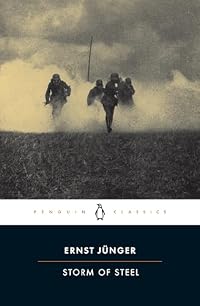
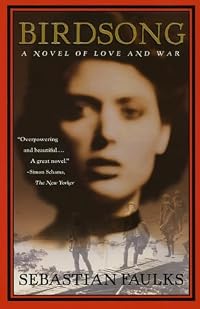
Since embarking on the 1001 challenge, I’ve read lots of war books (or books prominently featuring WWI & II) including: The Things they Carried, All Quiet on the Western Front, Storm of Steel, Birdsong, & Atonement. I’ve appreciated all the books I just mentioned, although I don’t typically enjoy reading books about the combat. This book was different than other war books. There was much less graphic description of war atrocities (injuries, deaths, etc) and while those things are not ignored or glossed over, the book is more about the emotional experience of average soldiers even before they get to the front line.
Her Privates We is a gem among even some of the best books about the war. The writing is beautifully elegant and emotionally evocative. The dialogue between the soldiers feels very realistic, at times crude, at times funny and at other times filled with incredible emotion and pain. Hemingway referred to this book as “the finest and noblest book of men in war” and it is hard to disagree with him.
As you can probably tell by now, I very much enjoyed this book. Although it started off a little slow for me, halfway through I was hooked. For my professional life, I work with military veterans and I found incredible similarity in how Manning describes the emotional impact of being in the trenches and how the veterans I work with describe their own emotional experience of war. I really felt for these soldiers and the book packed an emotional punch for me. Manning provides readers with a understanding of the tension between officers and foot soldiers and immerses readers into the complex emotional and psychological states of soldiers while they prepare for combat. Your heart breaks (and I may have even shed a few tears) for these young men as they move ever closer to their own deaths.
To get a feel for the writing in this book, I’ve included some additional quotes:
There is a gulf between men just returned from action, and those who have not been in the show, as unbridgeable as that between the sober and the drunk.
The war might be a damned sight more tolerable if it weren’t for the bloody army.
There is nothing in war which is not in human nature; but the violence and passions of men become in the aggregate, an impersonal and incalculable force, a blind and irrational movement of the collective will, which one cannot control, which one cannot understand, which one can only endure as these peasants, in their bitterness and resignation, endured. C’est la guerre.
They don’t know what we’ve got to go through, that’s the truth of it,” said Weeper. “they measure the distance, an’ they count the men, an’ the guns, an’ think a battle’s no’ but a sum you can do wi’ a pencil an’ a bit of’ paper.”
one seemed to be traveling through some sterile landscape in the moon, or some soulless region on the shadowy confines of hell.
They had been brought to the last extremity of hope, and yet they put their hands on each other’s shoulders and said with a passionate conviction that it would be all right, though they had faith in nothing but in themselves and in each other.
One could not separate the desire from the dread which restrained it; the strength of one’s hope strove equal the despair which oppressed it; one’s determination could only be measured by the terrors and difficulties which it overcame. All the mean, piddling standards of ordinary life vanished in the collision of these warring opposites. Between them one could only attempt to maintain an equilibrium which every instant disturbed and made unstable.
I highly recommend this book to anyone interested in WWI and the experience of soldiers who fought in this war. show less
http://thereadersroom.org/2015/03/26/1001-book-review-her-privates-we-by-frederi...
Her Privates We refers to the common soldiers who fought during World War I. The novel is the fictionalized account of the author’s own experiences as a soldier. It is a extraordinary account of the lives of foot soldiers that is told with the elegance and emotionally-evocative brilliance that only the best authors can achieve.
Manning first published this book under the title, The Middle Part of Fortune. Both versions of the title are derived from a passage in Hamlet, and each chapter begins with a quote from Shakespeare. The term “privates” has meaning in both the military show more sense and as an allusion to sex (which is appropriate in that it reflects the vulgarity of language we hear from some of the soldiers in the book).
The novel centers primarily on one soldier, Bourne, who is not quite like all the other foot soldiers. He is charismatic, resourceful, well-respected and intelligent but there is a sense of alienation between Bourne and the other soldiers. Bourne closely resembles the author and is the reason this is considered to be a semi-autobiographical novel. Manning was born in Australia and served as a private in WWI. He was selected for officer training but failed the course and some historical accounts indicated that he drank heavily and was frequently in trouble with his superiors. Like his protagonist, Manning fought in the Battle of the Somme and experienced life in the trenches.
Since embarking on the 1001 challenge, I’ve read lots of war books (or books prominently featuring WWI & II) including: The Things they Carried, All Quiet on the Western Front, Storm of Steel, Birdsong, & Atonement. I’ve appreciated all the books I just mentioned, although I don’t typically enjoy reading books about the combat. This book was different than other war books. There was much less graphic description of war atrocities (injuries, deaths, etc) and while those things are not ignored or glossed over, the book is more about the emotional experience of average soldiers even before they get to the front line.
Her Privates We is a gem among even some of the best books about the war. The writing is beautifully elegant and emotionally evocative. The dialogue between the soldiers feels very realistic, at times crude, at times funny and at other times filled with incredible emotion and pain. Hemingway referred to this book as “the finest and noblest book of men in war” and it is hard to disagree with him.
As you can probably tell by now, I very much enjoyed this book. Although it started off a little slow for me, halfway through I was hooked. For my professional life, I work with military veterans and I found incredible similarity in how Manning describes the emotional impact of being in the trenches and how the veterans I work with describe their own emotional experience of war. I really felt for these soldiers and the book packed an emotional punch for me. Manning provides readers with a understanding of the tension between officers and foot soldiers and immerses readers into the complex emotional and psychological states of soldiers while they prepare for combat. Your heart breaks (and I may have even shed a few tears) for these young men as they move ever closer to their own deaths.
To get a feel for the writing in this book, I’ve included some additional quotes:
There is a gulf between men just returned from action, and those who have not been in the show, as unbridgeable as that between the sober and the drunk.
The war might be a damned sight more tolerable if it weren’t for the bloody army.
There is nothing in war which is not in human nature; but the violence and passions of men become in the aggregate, an impersonal and incalculable force, a blind and irrational movement of the collective will, which one cannot control, which one cannot understand, which one can only endure as these peasants, in their bitterness and resignation, endured. C’est la guerre.
They don’t know what we’ve got to go through, that’s the truth of it,” said Weeper. “they measure the distance, an’ they count the men, an’ the guns, an’ think a battle’s no’ but a sum you can do wi’ a pencil an’ a bit of’ paper.”
one seemed to be traveling through some sterile landscape in the moon, or some soulless region on the shadowy confines of hell.
They had been brought to the last extremity of hope, and yet they put their hands on each other’s shoulders and said with a passionate conviction that it would be all right, though they had faith in nothing but in themselves and in each other.
One could not separate the desire from the dread which restrained it; the strength of one’s hope strove equal the despair which oppressed it; one’s determination could only be measured by the terrors and difficulties which it overcame. All the mean, piddling standards of ordinary life vanished in the collision of these warring opposites. Between them one could only attempt to maintain an equilibrium which every instant disturbed and made unstable.
I highly recommend this book to anyone interested in WWI and the experience of soldiers who fought in this war. show less
Members
- Recently Added By
Lists

1001 Books You Must Read Before You Die
1,448 works; 1,132 members

Australia's Greatest Books, as chosen by Geoffrey Dutton (1985)
97 works; 6 members

1,001 BYMRBYD Concensus
723 works; 27 members

THE WAR ROOM
813 works; 24 members
Author Information

10+ Works 898 Members
Awards and Honors
Notable Lists
Australia's Greatest Books (1930)
Series
Belongs to Publisher Series
D'ací i d'allà (20)
Work Relationships
Is an abridged version of
Is abridged in
Common Knowledge
- Original publication date
- 1930
- Disambiguation notice
- "Her Privates We" is an expurgated version of "The Middle Parts of Fortune"
Classifications
Statistics
- Members
- 425
- Popularity
- 72,292
- Reviews
- 13
- Rating
- (3.99)
- Languages
- Catalan, English
- Media
- Paper, Ebook
- ISBNs
- 15
- ASINs
- 14