On This Page
Description
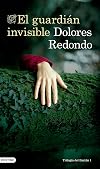
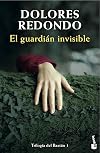
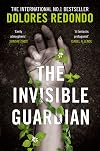
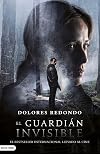
A killer at large in a remote Basque Country valley , a detective to rival Sarah Lund, myth versus reality, masterful storytelling -- the Spanish bestseller that has taken Europe by storm. The naked body of a teenage girl is found on the banks of the River Baztán. Less than 24 hours after this discovery, a link is made to the murder of another girl the month before. Is this the work of a ritualistic killer or of the Invisible Guardian, the Basajaun, a creature of Basque mythology? show more 30-year-old Inspector Amaia Salazar heads an investigation which will take her back to Elizondo, the village in the heart of Basque country where she was born, and to which she had hoped never to return. A place of mists, rain and forests. A place of unresolved conflicts, of a dark secret that scarred her childhood and which will come back to torment her. Torn between the rational, procedural part of her job and local myths and superstitions, Amaia Salazar has to fight off the demons of her past in order to confront the reality of a serial killer at loose in a region steeped in the history of the Spanish Inquisition. show lessTags
Recommendations



















Member Recommendations

Member Reviews
A memorable, original, well-written book that snagged on a genre boundary inflexibility that I didn't know I had.
I used to add a tagline to my stories:
'What you read is not what I wrote. I provide the text. You provide the meaning.'
So I thought I understood that a book isn't just the text that the author puts on the page, it's also the expectations assumptions and preferences that the reader brings to the book.
Except, as reading 'The Invisible Guardian' showed me, I hadn't applied this knowledge to my own reading so, instead of being swept along by all the strengths of this book, I reached a point where I tripped over my own inflexible genre boundaries and fell flat on my face.
I delayed writing this review for a week to give show more myself time to think about this. Towards the end of the book, I was all 'What just happened here? Where did this go wrong?' But now I have to acknowledge that the book didn't go wrong, I did.
A week later, 'The Invisible Guardian' is bright in my memory for its strong emotional impact, its distinctive sense of place, its clearly carved characters and the complex relationships between them and its unflinching exploration of a fundamentally abusive relationship between a mother and daughter.
It also works as a solid police procedural pursuit of a serial killer, with a complicated plot and side plots. The politics between and within the different police units are nicely handled and the pacing of the slow reveal of who the killer is was pretty much perfect.
What tripped me up was a supernatural element to the story that I felt didn't fit. On reflection, the only thing it didn't fit with was my expectations. I'm happy to read books with supernatural plot elements but I'd labelled 'The Invisible Guardian' a police procedural set in the Basque country and so I rejected the supernatural elements as unnecessary and inappropriate.
Yet the story is called, 'The Invisible Guardian' so why didn't I expect there to be one. The story is set in a part of the Basque country famous for its witch trials and its ancient pre-Christian beliefs, so why didn't I expect witches and pre-Christian beliefs to play a part in the story? From the beginning, the forest and the mountains are almost a character in the story, dominating the village and making its continued existence over centuries into an act of sheer will power. So why had I not expected the spirit of the mountains to be as important as the spirit of the town? Why did I not see that women in the novel, including the Inspector Salazar have had their whole view of how the world works formed by growing up in that valley?
All of this is in the book and I see now that what didn't work was my reading, not Dolores Dolondo's writing.
I'll be back for the rest of this trilogy and this time, I'll read with my eyes and my mind open.
Below I've included the impressions I had of the book as I went along plus some notes on what I think now that I've finished the book. If you follow my journey you'll see where and how I stumbled.
20% I'm not sure what to make of this yet
I'm not sure what to make of this book yet.
I picked it up because it was promoted as the best example of Spanish 'literary crime fiction'. I also liked that it was set in Baztan and was said to draw on Basque traditions and history.
The premise is the inspector Amaia Salazar is sent back to her home village of Elizondo to investigate an apparent serial killer.
So far, most of the focus has been on Salazar and her family (husband, sisters, aunt, strained childhood relationship with her, now dead, mother,) than on the investigation of the crimes.
I'm glad about this. I've become averse to reading books about men killing lots of woman in some bizarre ritual that meets their needs. Too often, they lead to a kind of twisted empathy between the investigator and the killer and the women become plot devices or the raw material for the killer's 'art'.
The prose is calm. This doesn't smell like a thriller. It feels more like a troubled, discontented but successful woman re-examining herself in the mirror presented by returning home in a role that carries authority and brings conflict. I don't feel I'm really in Salazar's head yet, although I'd like to be.
I do like the sense of place, particularly that sense of silent sentience you get when you're alone in an ancient woodland.
Editor's Note: I should have paid more attention to that silent sentience. Also, this turned out to be a book that was mainly about powerful women and weak men.
30% This is not a standard police procedural and a sidebar on tarot
This is not a standard police procedural. Nor is about a tragic, world-weary DI with dark secrets in her past. It seems that it's about a deeply intuitive, well-trained investigator being asked to see what is happening in the town she grew up and being challenged to open herself up to the possible reality of things she had long ago dismissed as myths.
It's very well done. It doesn't push. It doesn't use clichès or tropes as a short cut to exposition. It also doesn't really let me in Salazar's head. Rather it lets me watch her as closely as someone who knows her well might have the opportunity to do. It presents scenes from her history and shares some of her reactions but it sets me the challenge of reading her.
I'm rather enjoying that. It's nice when an author has the courage not to present a definitive version of a person. I'm sure there's no definitive version of me, so why should I believe a definitive version of a fictional character.
Salazar's aunt reads the Tarot. There is an interesting discussion on what is needed to read the cards. The aunt believes it requires a talent she calls being a 'super receptor' and that, for those with the talent, the cards provide a framework for gathering information and presenting a narrative.
This rang true for me. I used to read the tarot and read palms when I was at university. Later I qualified in using various psychometric tests. I found that both of them gave me the same kind of framework for reading people or, more accurately, for helping people read themselves.
Editor's Note: I can see how I was already dismissing anything more than logic and intuition from what I was reading. I think this was reinforced by the fact that the aunt had a background in psychology but the signs that something else if going on were already there.
50% Some of this is hard to listen to...
...that is, it's a disturbing listen. The prose is smooth and mostly calm and the characters are described with dispassionate accuracy, so I can start to be lulled into a sort of there's-nothing-to-worry-about-here mood and then we'll be back in Salazar's childhood and her mother will be doing something unpleasant and WHAM the emotion goes from nothing to very distressing.
I'm rolling with it at the moment, but there'd better be a very good reason for these scenes or because if all this is gratuitous, I'll be very pissed off.
Editor's Note: It became more disturbing as it went along. The flip from calm to distressed was actually a way of showing how Inspector Salazar dealt with, or perhaps experienced is better, her childhood trauma. Her mother is truly frightening in this and those scenes burn brightly in my memory but none of them is gratuitous.
83% Err what just happened?
So I just slipped from police procedural, wrapped around with dark family history and possible PTSD, into full-blown let's-solve-the-case-using-Urban-Fantasy in a single step. It felt like stepping out on to rock only to find that it's scree and you're going to go somewhere you really hadn't intended to.
Editor's Note: what can I say? That's how it felt. Yet the ending of the book had almost nothing supernatural about it. It was a good conclusion both to the family story and the crime. Yet, I can see that the next books must continue the supernatural theme because Salazar can't unsee what she's seen or be someone other than who she is. show less
I used to add a tagline to my stories:
'What you read is not what I wrote. I provide the text. You provide the meaning.'
So I thought I understood that a book isn't just the text that the author puts on the page, it's also the expectations assumptions and preferences that the reader brings to the book.
Except, as reading 'The Invisible Guardian' showed me, I hadn't applied this knowledge to my own reading so, instead of being swept along by all the strengths of this book, I reached a point where I tripped over my own inflexible genre boundaries and fell flat on my face.
I delayed writing this review for a week to give show more myself time to think about this. Towards the end of the book, I was all 'What just happened here? Where did this go wrong?' But now I have to acknowledge that the book didn't go wrong, I did.
A week later, 'The Invisible Guardian' is bright in my memory for its strong emotional impact, its distinctive sense of place, its clearly carved characters and the complex relationships between them and its unflinching exploration of a fundamentally abusive relationship between a mother and daughter.
It also works as a solid police procedural pursuit of a serial killer, with a complicated plot and side plots. The politics between and within the different police units are nicely handled and the pacing of the slow reveal of who the killer is was pretty much perfect.
What tripped me up was a supernatural element to the story that I felt didn't fit. On reflection, the only thing it didn't fit with was my expectations. I'm happy to read books with supernatural plot elements but I'd labelled 'The Invisible Guardian' a police procedural set in the Basque country and so I rejected the supernatural elements as unnecessary and inappropriate.
Yet the story is called, 'The Invisible Guardian' so why didn't I expect there to be one. The story is set in a part of the Basque country famous for its witch trials and its ancient pre-Christian beliefs, so why didn't I expect witches and pre-Christian beliefs to play a part in the story? From the beginning, the forest and the mountains are almost a character in the story, dominating the village and making its continued existence over centuries into an act of sheer will power. So why had I not expected the spirit of the mountains to be as important as the spirit of the town? Why did I not see that women in the novel, including the Inspector Salazar have had their whole view of how the world works formed by growing up in that valley?
All of this is in the book and I see now that what didn't work was my reading, not Dolores Dolondo's writing.
I'll be back for the rest of this trilogy and this time, I'll read with my eyes and my mind open.
Below I've included the impressions I had of the book as I went along plus some notes on what I think now that I've finished the book. If you follow my journey you'll see where and how I stumbled.
20% I'm not sure what to make of this yet
I'm not sure what to make of this book yet.
I picked it up because it was promoted as the best example of Spanish 'literary crime fiction'. I also liked that it was set in Baztan and was said to draw on Basque traditions and history.
The premise is the inspector Amaia Salazar is sent back to her home village of Elizondo to investigate an apparent serial killer.
So far, most of the focus has been on Salazar and her family (husband, sisters, aunt, strained childhood relationship with her, now dead, mother,) than on the investigation of the crimes.
I'm glad about this. I've become averse to reading books about men killing lots of woman in some bizarre ritual that meets their needs. Too often, they lead to a kind of twisted empathy between the investigator and the killer and the women become plot devices or the raw material for the killer's 'art'.
The prose is calm. This doesn't smell like a thriller. It feels more like a troubled, discontented but successful woman re-examining herself in the mirror presented by returning home in a role that carries authority and brings conflict. I don't feel I'm really in Salazar's head yet, although I'd like to be.
I do like the sense of place, particularly that sense of silent sentience you get when you're alone in an ancient woodland.
Editor's Note: I should have paid more attention to that silent sentience. Also, this turned out to be a book that was mainly about powerful women and weak men.
30% This is not a standard police procedural and a sidebar on tarot
This is not a standard police procedural. Nor is about a tragic, world-weary DI with dark secrets in her past. It seems that it's about a deeply intuitive, well-trained investigator being asked to see what is happening in the town she grew up and being challenged to open herself up to the possible reality of things she had long ago dismissed as myths.
It's very well done. It doesn't push. It doesn't use clichès or tropes as a short cut to exposition. It also doesn't really let me in Salazar's head. Rather it lets me watch her as closely as someone who knows her well might have the opportunity to do. It presents scenes from her history and shares some of her reactions but it sets me the challenge of reading her.
I'm rather enjoying that. It's nice when an author has the courage not to present a definitive version of a person. I'm sure there's no definitive version of me, so why should I believe a definitive version of a fictional character.
Salazar's aunt reads the Tarot. There is an interesting discussion on what is needed to read the cards. The aunt believes it requires a talent she calls being a 'super receptor' and that, for those with the talent, the cards provide a framework for gathering information and presenting a narrative.
This rang true for me. I used to read the tarot and read palms when I was at university. Later I qualified in using various psychometric tests. I found that both of them gave me the same kind of framework for reading people or, more accurately, for helping people read themselves.
Editor's Note: I can see how I was already dismissing anything more than logic and intuition from what I was reading. I think this was reinforced by the fact that the aunt had a background in psychology but the signs that something else if going on were already there.
50% Some of this is hard to listen to...
...that is, it's a disturbing listen. The prose is smooth and mostly calm and the characters are described with dispassionate accuracy, so I can start to be lulled into a sort of there's-nothing-to-worry-about-here mood and then we'll be back in Salazar's childhood and her mother will be doing something unpleasant and WHAM the emotion goes from nothing to very distressing.
I'm rolling with it at the moment, but there'd better be a very good reason for these scenes or because if all this is gratuitous, I'll be very pissed off.
Editor's Note: It became more disturbing as it went along. The flip from calm to distressed was actually a way of showing how Inspector Salazar dealt with, or perhaps experienced is better, her childhood trauma. Her mother is truly frightening in this and those scenes burn brightly in my memory but none of them is gratuitous.
83% Err what just happened?
So I just slipped from police procedural, wrapped around with dark family history and possible PTSD, into full-blown let's-solve-the-case-using-Urban-Fantasy in a single step. It felt like stepping out on to rock only to find that it's scree and you're going to go somewhere you really hadn't intended to.
Editor's Note: what can I say? That's how it felt. Yet the ending of the book had almost nothing supernatural about it. It was a good conclusion both to the family story and the crime. Yet, I can see that the next books must continue the supernatural theme because Salazar can't unsee what she's seen or be someone other than who she is. show less
Es increíble como la literatura y el talento de las letras no dejan de sorprendernos, de dar vida a nuevas historias, de buscar (y, sobre todo, encontrar) la originalidad en los argumentos las recurrentes a lo largo de la historia de la novela negra. ¿Y puede haber una noticia mejor? Sí. Se trata de una escritora vasca y ambienta su historia en nuestro país, explotando la belleza de sus paisajes y la increíble y mágica mitología a su alcance.
Si tengo que ser sincera, diré que no esperaba absolutamente nada de esta novela. Me decidí a leerla porque las recomendaciones para que lo hiciera eran incesantes e insistentes, demasiado como para que pasasen desapercibidas. Había abandonado la lectura de la novela de investigación show more policial hace muchos años, por lo que retomar esa temática no me apetecía demasiado. Pero le di una oportunidad a 'El guardián invisible' de Dolores Redondo, y estoy muy contenta de haberme tropezado con ella. Su lectura, innegablemente, me ha seducido desde las primeras páginas. El argumento es adictivo, atrapante. Y el ritmo se mantiene de forma intensa durante todo el transcurso de los hechos. Un gran trabajo, sin lugar a dudas.
Pero los lectores más exigentes buscamos algo más que una lectura ágil y con enganche, ¿Qué convierte el inicio de la trilogía del Batzán en una novela inolvidable e imprescindible?
En primer lugar, como he dicho, su ambientación. Un pueblo de la geografía vasco-navarresca, junto al río Batzán. Un sitio hermoso, verde, vivo, infinito y efímero a la par. La autora hace llegar de forma muy cercana los olores, colores, detalles, rutina de la vida real allí. Dolores Redondo nos transporta a las inmediaciones de un lugar tan bello como aterrador.
En segundo lugar, los personajes... porque Amaia Salazar es una protagonista increíble, poderosa y innata. Se trata de una de estas mujeres cargadas de coraje y de empatía al lector, una de estas mujeres, hechas de letras, que se convierten en figuras imprescindibles en nuestra memoria. Desde luego, la inspectora Salazar me ha fascinado y cautivado desde la primera toma de contacto, y tengo que subrayar que se trata del corazón indiscutible de la obra.
En tercer lugar, la verosimilitud en contraste con los tintes propios de la literatura fantástica. Y es que la autora entremezcla los detalles más científicos y exhaustivos de una investigación policial (muy bien documentada, por cierto) con la magia y la fantasía tan ricas y populares en las leyendas de las regiones de nuestro país. Este último detalles es que lo termina de redondear la obra, de elevarla sobre las demás, de aportar algo nuevo.
Ha sido todo un hallazgo del que me siento muy feliz y muy satisfecha. He disfrutado minuciosamente de sus lecturas y me he dejado atrapar por el arroyo del Batzán. Mis más sinceras enhorabuenas a Dolores Redondo por este brillante arranque de esta trilogía que espero continuar muy pronto. show less
Si tengo que ser sincera, diré que no esperaba absolutamente nada de esta novela. Me decidí a leerla porque las recomendaciones para que lo hiciera eran incesantes e insistentes, demasiado como para que pasasen desapercibidas. Había abandonado la lectura de la novela de investigación show more policial hace muchos años, por lo que retomar esa temática no me apetecía demasiado. Pero le di una oportunidad a 'El guardián invisible' de Dolores Redondo, y estoy muy contenta de haberme tropezado con ella. Su lectura, innegablemente, me ha seducido desde las primeras páginas. El argumento es adictivo, atrapante. Y el ritmo se mantiene de forma intensa durante todo el transcurso de los hechos. Un gran trabajo, sin lugar a dudas.
Pero los lectores más exigentes buscamos algo más que una lectura ágil y con enganche, ¿Qué convierte el inicio de la trilogía del Batzán en una novela inolvidable e imprescindible?
En primer lugar, como he dicho, su ambientación. Un pueblo de la geografía vasco-navarresca, junto al río Batzán. Un sitio hermoso, verde, vivo, infinito y efímero a la par. La autora hace llegar de forma muy cercana los olores, colores, detalles, rutina de la vida real allí. Dolores Redondo nos transporta a las inmediaciones de un lugar tan bello como aterrador.
En segundo lugar, los personajes... porque Amaia Salazar es una protagonista increíble, poderosa y innata. Se trata de una de estas mujeres cargadas de coraje y de empatía al lector, una de estas mujeres, hechas de letras, que se convierten en figuras imprescindibles en nuestra memoria. Desde luego, la inspectora Salazar me ha fascinado y cautivado desde la primera toma de contacto, y tengo que subrayar que se trata del corazón indiscutible de la obra.
En tercer lugar, la verosimilitud en contraste con los tintes propios de la literatura fantástica. Y es que la autora entremezcla los detalles más científicos y exhaustivos de una investigación policial (muy bien documentada, por cierto) con la magia y la fantasía tan ricas y populares en las leyendas de las regiones de nuestro país. Este último detalles es que lo termina de redondear la obra, de elevarla sobre las demás, de aportar algo nuevo.
Ha sido todo un hallazgo del que me siento muy feliz y muy satisfecha. He disfrutado minuciosamente de sus lecturas y me he dejado atrapar por el arroyo del Batzán. Mis más sinceras enhorabuenas a Dolores Redondo por este brillante arranque de esta trilogía que espero continuar muy pronto. show less
I absolutely love this book, an English translation of El guardián invisible, an international bestseller.
The "mystery" itself isn't all that great, the identity of the perp wasn't that particularly surprising, and the element of "psychological thriller" was a bit forced.
Nevertheless, I rate it 5***** for its "local color" portrayal of the Basque Country (more correctly, "Euskal Herria") as well as its elements of folklore and myth, particularly the figure of the basajaun (a mythical woodland figure) and the brief appearance of Mari, the chief deity of pre-Christian Euskal Herria who probably dates back to the Neolithic Mother Goddess.
There are some occasional stylistic flaws, but I'm inclined to put them down to the translation. show more There are also some instances in which the Indo-European as opposed to Euskadi is used – for example, the city of Pomplona which in Euskadi is known as Irun. This may be a little confusing to those to whom Euskadi is a complete novelty, and this may also be a fault of the translation.
The Invisible Goddess seems to be the first in a trilogy. I'm not sure whether the other two volumes have yet to be published or have merely not yet been translated from the original Spanish. Since I have a particular interest in Euskadi folklore, I'm anxiously awaiting the next two volumes.
A major TRIGGER caution: This book has some very graphic descriptions of dead bodies and of autopsies and also includes recollections of child abuse from a quarter-century earlier, either or both of which some readers might find triggering. show less
The "mystery" itself isn't all that great, the identity of the perp wasn't that particularly surprising, and the element of "psychological thriller" was a bit forced.
Nevertheless, I rate it 5***** for its "local color" portrayal of the Basque Country (more correctly, "Euskal Herria") as well as its elements of folklore and myth, particularly the figure of the basajaun (a mythical woodland figure) and the brief appearance of Mari, the chief deity of pre-Christian Euskal Herria who probably dates back to the Neolithic Mother Goddess.
There are some occasional stylistic flaws, but I'm inclined to put them down to the translation. show more There are also some instances in which the Indo-European as opposed to Euskadi is used – for example, the city of Pomplona which in Euskadi is known as Irun. This may be a little confusing to those to whom Euskadi is a complete novelty, and this may also be a fault of the translation.
The Invisible Goddess seems to be the first in a trilogy. I'm not sure whether the other two volumes have yet to be published or have merely not yet been translated from the original Spanish. Since I have a particular interest in Euskadi folklore, I'm anxiously awaiting the next two volumes.
A major TRIGGER caution: This book has some very graphic descriptions of dead bodies and of autopsies and also includes recollections of child abuse from a quarter-century earlier, either or both of which some readers might find triggering. show less
Inspector Amaia Salazar returns to her home town, having been put in charge of the search for a serial killer. She also has to contend with PTSD from her experiences at the hands of her abusive mother and spooky goings-on in the forest with creatures from Basque legend.
Enjoyable background in Tarot mysticism and the basajaun and uncertainty as to whether they were real or just part of the characters' belief system. Looking forward to the second part of the trilogy.
Enjoyable background in Tarot mysticism and the basajaun and uncertainty as to whether they were real or just part of the characters' belief system. Looking forward to the second part of the trilogy.
If you read fiction translated from other languages at least in part because it allows you to virtually visit places and cultures different from your own then THE INVISIBLE GUARDIAN might be just what you’re looking for. Set in northern Spain the book is infused with local customs, culture and geography and it is easy for the reader to imagine themselves in the woods around Elizondo or any of the other exotic locations in which the novel’s action takes place. My personal transportation was ably assisted by the excellent narration of the audio book by Emma Gregory which meant I wasn’t fumbling in my woefully monolingual way with the nomenclature.
The book starts out fairly traditionally for a modern crime novel: bodies of beautiful show more young girls are found near Elizondo. The bodies have, of course, been tampered with in seemingly ritualistic ways and police are struggling to identify suspects. The deviation from standard fare comes when local mythology is woven into the storyline. Could the deaths be due to the activities of a basajuan (the Basque version of Big Foot)?
The detective assigned to the case is Amaia Salazar. She – and her story – are the standout elements of the novel for me. As with all good fictional detectives Amaia has some personal demons to deal with but Redondo has not chosen the well-worn path of substance abuse and a bad marriage for her leading lady. Indeed she is happily married (to an independently wealthy American artist named James) and only drinks an occasional glass of wine. But Amaia’s childhood was the stuff of nightmares and things come bubbling to the surface when she must return to Elizondo – the town of her birth – to take on this case. In parallel with the unfolding investigation Amaia’s back story and the relationships between her surviving family members are revealed compellingly.
To be honest I found the main plot a bit messy and not all of my incredulity was due to a personal disdain for intelligent adults treating tarot readings seriously. It felt at times as if some decisions for the book’s direction had been made by committee. A committee more interested in potential screen rights and the American market than in pulling together a coherent story. Amaia’s experiences at Quantico, her husband’s fascination for the bull running of Pamplona (just like Hemmingway it is rather obviously pointed out) and some other American friendliness all seemed a bit forced to me. That said, though it wasn’t terribly difficult to predict (given a couple of glaringly obvious early hints) the resolution was a fitting one and ultimately relied at least as much on old-fashioned policing as it did the impossibly speedy forensics Amaia gained access to.
Given serial killers are not really my thing I doubt I’d have read this book if it wasn’t on the shortlist for this year’s International Dagger Award but on balance I’m glad I was prompted to seek it out. The serial killer element is tempered by the inclusion of local mythology and fact that other parts of the storyline (including a sadly believable copycat crime) receive real focus. And I really did enjoy meeting Amaia Salazar and am intrigued enough to find out what happens next for her. show less
The book starts out fairly traditionally for a modern crime novel: bodies of beautiful show more young girls are found near Elizondo. The bodies have, of course, been tampered with in seemingly ritualistic ways and police are struggling to identify suspects. The deviation from standard fare comes when local mythology is woven into the storyline. Could the deaths be due to the activities of a basajuan (the Basque version of Big Foot)?
The detective assigned to the case is Amaia Salazar. She – and her story – are the standout elements of the novel for me. As with all good fictional detectives Amaia has some personal demons to deal with but Redondo has not chosen the well-worn path of substance abuse and a bad marriage for her leading lady. Indeed she is happily married (to an independently wealthy American artist named James) and only drinks an occasional glass of wine. But Amaia’s childhood was the stuff of nightmares and things come bubbling to the surface when she must return to Elizondo – the town of her birth – to take on this case. In parallel with the unfolding investigation Amaia’s back story and the relationships between her surviving family members are revealed compellingly.
To be honest I found the main plot a bit messy and not all of my incredulity was due to a personal disdain for intelligent adults treating tarot readings seriously. It felt at times as if some decisions for the book’s direction had been made by committee. A committee more interested in potential screen rights and the American market than in pulling together a coherent story. Amaia’s experiences at Quantico, her husband’s fascination for the bull running of Pamplona (just like Hemmingway it is rather obviously pointed out) and some other American friendliness all seemed a bit forced to me. That said, though it wasn’t terribly difficult to predict (given a couple of glaringly obvious early hints) the resolution was a fitting one and ultimately relied at least as much on old-fashioned policing as it did the impossibly speedy forensics Amaia gained access to.
Given serial killers are not really my thing I doubt I’d have read this book if it wasn’t on the shortlist for this year’s International Dagger Award but on balance I’m glad I was prompted to seek it out. The serial killer element is tempered by the inclusion of local mythology and fact that other parts of the storyline (including a sadly believable copycat crime) receive real focus. And I really did enjoy meeting Amaia Salazar and am intrigued enough to find out what happens next for her. show less
A serial killer is terrorising the small Spanish village of Elizondo, targeting young girls. Inspector Amaia Salazar heads up the investigation, and returns to Elizondo where she grew up. People there are superstitious and believe that there are evil forces at work, and additionally Amaia has to deal with difficult childhood memories, and an uneasy relationship with her sister Flora.
I really enjoyed this book, although there was a lot going on – possibly a little too much – but somehow it worked. It was originally published in Spanish and I find that translations can sometimes feel a bit clunky; however, that was not the case here. Apart from the Basque setting, and the Spanish characters, you would not know that this was a show more translation. I liked Amaia a lot and thought she was a good main character. The mystery itself did get a bit convoluted, but not so much so that I couldn’t follow it easily. I enjoyed reading about the superstitious nature of the small village, and thought it was an interesting setting.
If you like crime fiction and enjoy an unusual setting, give this one a try – you could well enjoy it. show less
I really enjoyed this book, although there was a lot going on – possibly a little too much – but somehow it worked. It was originally published in Spanish and I find that translations can sometimes feel a bit clunky; however, that was not the case here. Apart from the Basque setting, and the Spanish characters, you would not know that this was a show more translation. I liked Amaia a lot and thought she was a good main character. The mystery itself did get a bit convoluted, but not so much so that I couldn’t follow it easily. I enjoyed reading about the superstitious nature of the small village, and thought it was an interesting setting.
If you like crime fiction and enjoy an unusual setting, give this one a try – you could well enjoy it. show less
I'm confused. The book wasn't that good, and yet I enjoyed it. There was so much going on: a series of murders, family relationships, mysticism, work relationships... The author didn't quite manage to keep it all together. Too much information was given away too soon and too often. Too many times the dialog consisted of info dumps or meticulous explanations. Still, I was drawn in by the story and the main character, and couldn't stop reading until very late at night. Like I said, I'm confused. I guess I think the story holds, but the execution leaves much to hope for.
Members
- Recently Added By
Published Reviews
En los márgenes del río Baztán, en el valle de Navarra, aparece el cuerpo desnudo de una adolescente en una circunstancia que lo relacionan con un asesinato ocurido en los alrededores un mes atrás.
La inspectora de la sección de homicidios de la policía foral, Amaia Salazar, será la encargada de dirigir una invesitgación que la llevará de vuelta a Elizondo, una pequeña población de show more la que es originaria y de donde ha tratado de huir toda su vida. Enfrentada con las cada vez más complicadas derivaciones del caso y con sus propios fantasmas familiares, la investigación de Amaia es una carrera contrarreloj para dar con un asesino que puede mostrar el rostro más aterrador de una realidad brutal al tiempo que convocar a los seres más inquietantes de las leyendas del Norte... show less
La inspectora de la sección de homicidios de la policía foral, Amaia Salazar, será la encargada de dirigir una invesitgación que la llevará de vuelta a Elizondo, una pequeña población de show more la que es originaria y de donde ha tratado de huir toda su vida. Enfrentada con las cada vez más complicadas derivaciones del caso y con sus propios fantasmas familiares, la investigación de Amaia es una carrera contrarreloj para dar con un asesino que puede mostrar el rostro más aterrador de una realidad brutal al tiempo que convocar a los seres más inquietantes de las leyendas del Norte... show less
added by Pakoniet
Lists

Books Read in 2017
4,249 works; 130 members

Books Read in 2018
4,360 works; 110 members

Books Read in 2019
4,052 works; 108 members

Books Read in 2021
5,361 works; 114 members

The 100 Best Crime Novels and Thrillers since 1945
100 works; 6 members
Author Information

Some Editions
Awards and Honors
Series

Belongs to Publisher Series
Clàssica (957)
Áncora y Delfín (1250)
Work Relationships
Is contained in
Has the adaptation
Common Knowledge
- Canonical title
- The Invisible Guardian
- Original title
- El guardián invisible
- Original publication date
- 2012
- People/Characters*
- Amaia Salazar; Flora Salazar; Ros Salazar; Fermín Montes; Víctor Oyarzabal; Jonan Etxaide (show all 13); Engrasi Salazar; Inspector Iriarte; Sotsinspector Zabalza; James Wexford; Natalia Takxenko; Juan Salazar; Rosario Iturzaeta
- Important places
- Basque Country, Spain; Navarre, Spain; Elizondo, Navarre, Spain
- Related movies
- El guardián invisible (2017 | IMDb)
- Epigraph
- Oblidar és un acte involuntari. Com més vols deixar
alguna cosa enrera, més et persegueix.
WILLIAM JONAS BARKLEY
Estimada nena, has de pensar que aquesta poma
no és com les altres, aquesta poma... (show all) té màgia.
La Blancaneu i el sets nans,
de WALT DISNEY
Forgetting is an involuntary act. The more you want to leave something behind you, the more it follows you.
-- WILLIAM JONAS BARKLEY
This is no ordinary apple; it's a magic wishing a... (show all)pple.
-- WALT DISNEY'S SNOW WHITE - Dedication
- Per a l'Eduardo, que em va demanar que escrivís aquest llibre,
i per a en Ricard Domingo, que el va saber veure quan era invisible.
Per a en Rubén i l'Esther, per fer-me plorar de riure.
For Eduardo, who asked me to write this book,
and for Ricard Domingo who saw it when it was invisible.
For Ruben and Esther, for making me cry with laughter. - First words
- L'Ainhoa Elizasu va ser la segona víctima del basajaun, tot i que aleshores la premsa encara no li deia així.
Ainhoa Elizasu was the second victim of the "basajaun", although the press was yet to coin that name for it. - Last words
- (Click to show. Warning: May contain spoilers.)Un es més tard.
No li va venir la regla. Ni al cap de dos... ni al cap de tres....
CONTINUARÀ...
(Click to show. Warning: May contain spoilers.)Nor the next month, nor the next . . . - Publisher's editor*
- Columna
- Original language
- Spanish
*Some information comes from Common Knowledge in other languages. Click "Edit" for more information.
Classifications
Statistics
- Members
- 792
- Popularity
- 35,235
- Reviews
- 43
- Rating
- (3.72)
- Languages
- 15 — Basque, Catalan, Czech, Dutch, English, Finnish, French, German, Galician, Italian, Norwegian (Bokmål), Polish, Portuguese (Portugal), Spanish, Swedish
- Media
- Paper, Audiobook, Ebook
- ISBNs
- 58
- ASINs
- 15