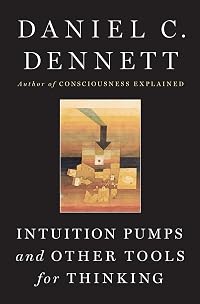
Intuition Pumps and Other Tools for Thinking
by Daniel C. Dennett
On This Page
Description
"A philosopher of rare originality, rigor, and wit." --Jim Holt, Wall Street Journal Over a storied career, Daniel C. Dennett has engaged questions about science and the workings of the mind. His answers have combined rigorous argument with strong empirical grounding. And a lot of fun. Intuition Pumps and Other Tools for Thinking offers seventy-seven of Dennett's most successful "imagination-extenders and focus-holders" meant to guide you through some of life's most treacherous subject show more matter: evolution, meaning, mind, and free will. With patience and wit, Dennett deftly deploys his thinking tools to gain traction on these thorny issues while offering listeners insight into how and why each tool was built. Alongside well-known favorites like Occam's Razor and reductio ad absurdum lie thrilling descriptions of Dennett's own creations: Trapped in the Robot Control Room, Beware of the Prime Mammal, and The Wandering Two-Bitser. Ranging across disciplines as diverse as psychology, biology, computer science, and physics, Dennett's tools embrace in equal measure light-heartedness and accessibility as they welcome uninitiated and seasoned listeners alike. As always, his goal remains to teach you how to "think reliably and even gracefully about really hard questions." A sweeping work of intellectual seriousness that's also studded with impish delights, Intuition Pumps offers intrepid thinkers--in all walks of life--delicious opportunities to explore their pet ideas with new powers. show lessTags
Recommendations

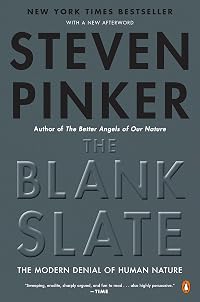
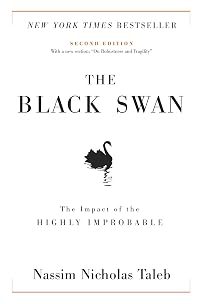
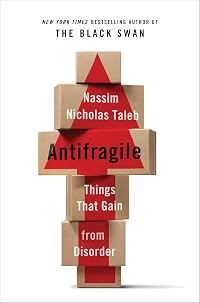
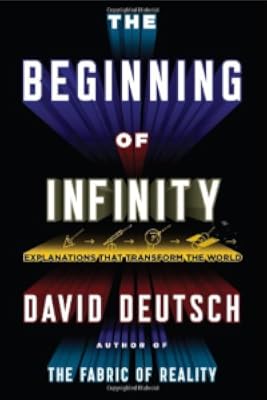

Member Recommendations


Member Reviews
Daniel Dennett has been churning out amazing books and arguments for decades, but this is his best and most accessible to the lay person. Dennett _does_ philosophy, right there on the page in front of you, and explains it in jargon-free prose that any undergraduate could understand. This a book outlining how to best think like a human.
"Thinking is hard. Thinking about some problems is so hard it can make your head ache just thinking about thinking about them."
Dennett then gives us dozens of tools to use, tricks to try, and false flags to be wary of before ending up at his favorite hard problems - free will and consciousness. These arguments have been made before in _Consciousness Explained_ and _Freedom Evolves_, but this time they come show more with a prep course on working through the arguments.
"'It's inconceivable.' That's what some people declare when they confront the 'mystery' of consciousness, or the claim that life arouse on this planet more than three billion years ago without any helping hand from an Intelligent Designer, for instance. When I hear this, I am always tempted to say 'Well of course its inconceivable _to you_. You left your thinking tools behind and you're hardly trying."
This is a readable approach on how to try. show less
"Thinking is hard. Thinking about some problems is so hard it can make your head ache just thinking about thinking about them."
Dennett then gives us dozens of tools to use, tricks to try, and false flags to be wary of before ending up at his favorite hard problems - free will and consciousness. These arguments have been made before in _Consciousness Explained_ and _Freedom Evolves_, but this time they come show more with a prep course on working through the arguments.
"'It's inconceivable.' That's what some people declare when they confront the 'mystery' of consciousness, or the claim that life arouse on this planet more than three billion years ago without any helping hand from an Intelligent Designer, for instance. When I hear this, I am always tempted to say 'Well of course its inconceivable _to you_. You left your thinking tools behind and you're hardly trying."
This is a readable approach on how to try. show less
This book is a collection of Dennett’s “favorite thinking tools,” which he generously shares with us because “thinking is hard.” His favorite techniques are what he calls “intuition pumps,” which are thought experiments designed to elicit solutions to, or at least deeper understanding of, complex or arcane problems. They are, in a sense, a philosopher’s version of Aesop’s fables. Dennett’s peculiar contribution to the technique is to:
“…consider the intuition pump to be a tool with many settings, and “turn all the knobs” to see if the same intuitions still get pumped when you consider variations.”
Using clever examples, Dennett shows how computers perform logical manipulations through simple deterministic show more steps without having to “understand” what they are doing. He explains clearly how biological evolution through natural selection operates without an Intelligent Designer. In his words, Nature has achieved competence without comprehension.
The book ranges over issues in psychology, computer science, biology, and physics. For example, Dennett employs insights from all of those sciences to throw light on the problem of “free will” and how a better, more sophisticated definition of the concept shows how it can operate in a deterministic world.
Despite the abstruseness of its subject matter, the book is written in a lucid yet impish style.
This is a book well worth reading.
(JAB) show less
“…consider the intuition pump to be a tool with many settings, and “turn all the knobs” to see if the same intuitions still get pumped when you consider variations.”
Using clever examples, Dennett shows how computers perform logical manipulations through simple deterministic show more steps without having to “understand” what they are doing. He explains clearly how biological evolution through natural selection operates without an Intelligent Designer. In his words, Nature has achieved competence without comprehension.
The book ranges over issues in psychology, computer science, biology, and physics. For example, Dennett employs insights from all of those sciences to throw light on the problem of “free will” and how a better, more sophisticated definition of the concept shows how it can operate in a deterministic world.
Despite the abstruseness of its subject matter, the book is written in a lucid yet impish style.
This is a book well worth reading.
(JAB) show less
'You can't do much carpentry with your bare hands, and you can't do much thinking with your bare brain.'
'The aim of philosophy, abstractly formulated, is to understand how things in the broadest possible sense of the term hang together in the broadest possible sense of the term.'
The solutions to the most difficult questions in existence, about the universe, life, meaning, free will and consciousness are not intuitive. If they were, we would've figured them out long ago. Daniel Dennett's book offers a plethora of Thinking Tools drawn from computer science, biology and many other realms which, like the apps on your phone, give you the power to do more things better - to think difficults thoughts more easily, and even tackle the most show more difficult questions about meaning and consciousness. It's designed to change your way of thinking and to nudge you out of some ultimately wrong intuitions you may hold. It is basically a summary of his life's work.
I think Dennett's toolkit, which is made out of many thought experiments ('Intuition Pumps') and more, is extremely useful for any aspiring thinker, whether you agree with him or not. show less
'The aim of philosophy, abstractly formulated, is to understand how things in the broadest possible sense of the term hang together in the broadest possible sense of the term.'
The solutions to the most difficult questions in existence, about the universe, life, meaning, free will and consciousness are not intuitive. If they were, we would've figured them out long ago. Daniel Dennett's book offers a plethora of Thinking Tools drawn from computer science, biology and many other realms which, like the apps on your phone, give you the power to do more things better - to think difficults thoughts more easily, and even tackle the most show more difficult questions about meaning and consciousness. It's designed to change your way of thinking and to nudge you out of some ultimately wrong intuitions you may hold. It is basically a summary of his life's work.
I think Dennett's toolkit, which is made out of many thought experiments ('Intuition Pumps') and more, is extremely useful for any aspiring thinker, whether you agree with him or not. show less
Some books aim to popularize philosophy, others do philosophy -- this does both. Some books raise questions, some raise questions and give answers, still others raise questions and challenge the reader to offer answers while giving guidance on how to avoid traps and survey of answers given already -- this does all of the above.
If this book has a flaw, it's that it might predispose one to not want to discuss theories of consciousness, free will & determinism, evolution vs. ID, and a host of other topics until the other party to the conversation has read it -- but this can, and should be resisted (if such a feeling arises) because perhaps the best way to think about these topics and to learn and explore while doing so would be to attempt show more the exercises Dennett proposes, to accept the challenge of being able to explain what you're doing with an argument understandably, to anyone, to ensure you've given it the proper amount of consideration yourself.
Despite doing his best to use conversational English, Mr. Dennett, by necessity, uses the language of philosophy that might still cause anyone who hasn't at least taken a 101 course to blanche a bit. I'll admit myself to having to go back and re-read passages a couple times to make sure I was understanding the terms and his use of them, but I suspect most anyone who would be drawn to this book anyways would not struggle.
If anything, in his aim to be personable and make the concepts accessible, he might be spending a little more time than some would consider humble talking about his own contributions to the field. ("And then there was the time I knocked a famous linguist off his game with this question ...", "And, this other time, at philosophy camp, I ... " if you know what I mean.)
Seriously though, this is probably now the 'go-to' book I would recommend to anyone thinking about studying philosophy, or who maybe studied a little, and wants to get back into the habit, or who just wants to think about ways to think and argue well.
Highly recommended as a companion read to Sam Harris's "Free Will" for a more balanced and rounded consideration of at least how to think about compatibilism. show less
If this book has a flaw, it's that it might predispose one to not want to discuss theories of consciousness, free will & determinism, evolution vs. ID, and a host of other topics until the other party to the conversation has read it -- but this can, and should be resisted (if such a feeling arises) because perhaps the best way to think about these topics and to learn and explore while doing so would be to attempt show more the exercises Dennett proposes, to accept the challenge of being able to explain what you're doing with an argument understandably, to anyone, to ensure you've given it the proper amount of consideration yourself.
Despite doing his best to use conversational English, Mr. Dennett, by necessity, uses the language of philosophy that might still cause anyone who hasn't at least taken a 101 course to blanche a bit. I'll admit myself to having to go back and re-read passages a couple times to make sure I was understanding the terms and his use of them, but I suspect most anyone who would be drawn to this book anyways would not struggle.
If anything, in his aim to be personable and make the concepts accessible, he might be spending a little more time than some would consider humble talking about his own contributions to the field. ("And then there was the time I knocked a famous linguist off his game with this question ...", "And, this other time, at philosophy camp, I ... " if you know what I mean.)
Seriously though, this is probably now the 'go-to' book I would recommend to anyone thinking about studying philosophy, or who maybe studied a little, and wants to get back into the habit, or who just wants to think about ways to think and argue well.
Highly recommended as a companion read to Sam Harris's "Free Will" for a more balanced and rounded consideration of at least how to think about compatibilism. show less
Dennett by far always writes clearly and vividly. In general usually you agree with him, but if even no (quite seldom of course), that works analogically a forceful brain trainer.
Another brilliant discussion from Dr. Dennett about consciousness, evolution and free will.
I don't find the conceit of the intuition pump as compared to a thought experiment, or in some cases, an analogy especially interesting, but it is fascinating and exhilarating to read the discussion from someone who thinks about what he thinks about for a living. I have read Dennett on free will before and sometimes found the intricacies to be beyond me, but chapters 65-73 here, perhaps because of the "intuition pumps" used, were unusually enlightening. Highly recommended.
====================
Part of the edge of this writing comes from the critical environment in which these topics have been discussed, and to some degree from the author's own show more ego, which one suspects is large. One possible negative side effect is the chapter entitled "Three species of Goulding" which attacks Stephen Jay Gould's logical errors. Dr. Gould, and his theory of punctuated equilibrium, were fairly widely attacked during his lifetime. The attacks seemed over the top at times (I recall one memorable diatribe attacking Dr. Gould's father's politics), probably because of his celebrity, the popularity of his books, and that his theory was attractive to some creationists. Since he died in 2002, I think he is now a fairly soft target, and the way that the material in chapter 9 is presented is unnecessarily harsh. show less
====================
Part of the edge of this writing comes from the critical environment in which these topics have been discussed, and to some degree from the author's own show more ego, which one suspects is large. One possible negative side effect is the chapter entitled "Three species of Goulding" which attacks Stephen Jay Gould's logical errors. Dr. Gould, and his theory of punctuated equilibrium, were fairly widely attacked during his lifetime. The attacks seemed over the top at times (I recall one memorable diatribe attacking Dr. Gould's father's politics), probably because of his celebrity, the popularity of his books, and that his theory was attractive to some creationists. Since he died in 2002, I think he is now a fairly soft target, and the way that the material in chapter 9 is presented is unnecessarily harsh. show less
I'm very critical of philosophy in general, but Dennett seems to be one of the few philosophers doing it (mostly) right. The book consists of a vast collection of small thinking tools for sousing out comprehension from complex concepts -- most of them are silly, but it's likely beneficial to skim through the first half of the book to see if any of them work for you.
What I found most fascinating, however, were the last few chapters. One was on "what is it like to be a philosopher" (apparently very circle-jerky; no big surprises there), and the other on "use the [thinking] tools; try harder" which is a good call to action for finding a use for critical thinking in ways which turn out to actually be useful.
I'd recommend this book to show more people with philosophical inklings but who distrust the field, and then I'd tell them to head over to lesswrong.com and see if any of it sticks. The rest of you -- those on-board with Dennett and those with no interest in philosophy -- stay away and go read Kahneman; it'll be a better use of your time. show less
What I found most fascinating, however, were the last few chapters. One was on "what is it like to be a philosopher" (apparently very circle-jerky; no big surprises there), and the other on "use the [thinking] tools; try harder" which is a good call to action for finding a use for critical thinking in ways which turn out to actually be useful.
I'd recommend this book to show more people with philosophical inklings but who distrust the field, and then I'd tell them to head over to lesswrong.com and see if any of it sticks. The rest of you -- those on-board with Dennett and those with no interest in philosophy -- stay away and go read Kahneman; it'll be a better use of your time. show less
Members
- Recently Added By
Published Reviews
ThingScore 75
The mind? A collection of computerlike information processes, which happen to take place in carbon-based rather than silicon-based hardware.
The self? Simply a “center of narrative gravity,” a convenient fiction that allows us to integrate various neuronal data streams.
The elusive subjective conscious experience — the redness of red, the painfulness of pain — that philosophers call show more qualia? Sheer illusion.
Human beings, Mr. Dennett said, quoting a favorite pop philosopher, Dilbert, are “moist robots.”
“I’m a robot, and you’re a robot, but that doesn’t make us any less dignified or wonderful or lovable or responsible for our actions,” he said. “Why does our dignity depend on our being scientifically inexplicable?” show less
The self? Simply a “center of narrative gravity,” a convenient fiction that allows us to integrate various neuronal data streams.
The elusive subjective conscious experience — the redness of red, the painfulness of pain — that philosophers call show more qualia? Sheer illusion.
Human beings, Mr. Dennett said, quoting a favorite pop philosopher, Dilbert, are “moist robots.”
“I’m a robot, and you’re a robot, but that doesn’t make us any less dignified or wonderful or lovable or responsible for our actions,” he said. “Why does our dignity depend on our being scientifically inexplicable?” show less
added by jimroberts
Lists

Mind Expanding Books by hackerkid
581 works; 8 members
Author Information

44+ Works 17,451 Members
Daniel C. Dennett is a University Professor and Austin B. Fletcher Professor of Philosophy at Tufts University and the author of numerous books including Intuition Pumps and Other Tools for Thinking, Breaking the Spell, Darwin's Dangerous Idea, and Consciousness Explained.
Some Editions
Awards and Honors
Notable Lists
Common Knowledge
- Canonical title
- Intuition Pumps and Other Tools for Thinking
- Original title
- Intuition Pumps and Other Tools for Thinking
- Original publication date
- 2013
- Epigraph
- You can't do much carpentry with your bare hands and you can't do much Thinking with your bare brain - Bo Dahlbom
- Dedication
- For Tufts University, my academic home
- First words
- Thinking is hard. Thinking about some problems is so hard it makes your head ache just Thinking about them.
- Last words
- (Click to show. Warning: May contain spoilers.)We haven't yet succeeded in fully conceiving how meaning could exist in the material world, or how life arosed and evolved, or whether free will can be one of our endowments, but we have made progress: the questions we're posing and addressing now are better than the answers of yesteryear. We are hot on the trail of the answers.
- Blurbers
- Baggini, Julian; Dawkins, Richard
- Original language
- English
Classifications
- Genres
- Philosophy, Science & Nature, General Nonfiction, Nonfiction
- DDC/MDS
- 121.6 — Philosophy & psychology Epistemology (how do you know what you know?) Epistemology (Theory of knowledge) Belief
- LCC
- BD31 .D46 — Philosophy, Psychology and Religion Speculative philosophy Speculative philosophy General philosophical works
- BISAC
Statistics
- Members
- 1,120
- Popularity
- 22,656
- Reviews
- 15
- Rating
- (3.53)
- Languages
- 6 — Dutch, English, Italian, Polish, Spanish, Turkish
- Media
- Paper, Audiobook, Ebook
- ISBNs
- 20
- ASINs
- 9