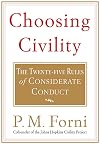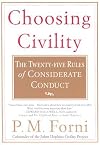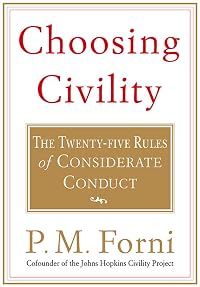
Choosing Civility: The Twenty-five Rules of Considerate Conduct
by P. M. Forni
On This Page
Description
Most people would agree that thoughtful behavior and common decency are in short supply, or simply forgotten in hurried lives of emails, cellphones, and multi-tasking. In Choosing Civility, P. M. Forni identifies the twenty-five rules that are most essential in connecting effectively and happily with others. In clear, witty, and, well...civilized language, Forni covers topics that include: Think Twice Before Asking FavorsGive Constructive CriticismRefrain from Idle ComplaintsRespect Others' show more OpinionsDon't Shift Responsibility and BlameCare for Your Guests Accept and Give PraiseFinally, Forni provides examples of how to put each rule into practice and so make life-and the lives of others-more enjoyable, companionable, and rewarding.Choosing Civility is a simple, practical, perfectly measured, and quietly magical handbook on the lost art of civility and compassion. show lessTags
Recommendations















Member Reviews
Very readable, thought-provoking book about courtesy, politeness, civility, whatever you want to call it.
What I liked: It tried to find a balance between paying attention to/respecting the needs of yourself and paying attention to/respecting the needs of others. Being civil doesn't just mean accommodating the requests of others, it also means recognizing your own boundaries and expressing your needs (politely). Basically, be mindful of yourself and the world around you, whether in terms of making noise, making apologies, accepting blame, or caring for animals. It's not just about making the world a more comfortable place, but about making yourself a better person.
What I had problems with: Sometimes the rule-based nature was a bit show more off-putting. I would have liked it more if it had dwelt more on the personal benefits of engaging in civil behavior. show less
What I liked: It tried to find a balance between paying attention to/respecting the needs of yourself and paying attention to/respecting the needs of others. Being civil doesn't just mean accommodating the requests of others, it also means recognizing your own boundaries and expressing your needs (politely). Basically, be mindful of yourself and the world around you, whether in terms of making noise, making apologies, accepting blame, or caring for animals. It's not just about making the world a more comfortable place, but about making yourself a better person.
What I had problems with: Sometimes the rule-based nature was a bit show more off-putting. I would have liked it more if it had dwelt more on the personal benefits of engaging in civil behavior. show less
Forni doesn't teach us anything new here. Don't say ill will about others. Be mindful of the noise you make. Wear clean clothing. Yet these 25 rules are constantly overlooked by us all in daily life and this book serves as the gentle reminder that we need in order to make this world a better place.One of my new years resolutions was to make an even more considerable effort of being kind to others. This book has become one of my bibles. I will carry it until it with me until it's ragged and torn. Civility has become absent from our subconscious and we need reminders like these to counsel us along in our journeys. Not only is this a self-help book for our world, but a self-help book for our lives. We are social beings and our happiness is show more affected by how we coexist with others. Taking the first step and showing utmost respect towards others will improve our relationships and consequently, our own lives. show less
This is the First Year Reading Book for our campus and one of the required textbooks for a course I'm teaching.
This book as has some great ideas, but it is really tedious to read. I struggled to finish the book all summer and finally made it through. Its slow in the first part and feels like it takes forever to get to the "good" stuff. I don't think my students fared much better with it either, but hopefully the supplemental assignments will make up for that.
This book has a lot of common sense for some ( not all) but offers some good ideas and a good starting point for truly thinking about our actions and the affects they may/can have on others.
This book as has some great ideas, but it is really tedious to read. I struggled to finish the book all summer and finally made it through. Its slow in the first part and feels like it takes forever to get to the "good" stuff. I don't think my students fared much better with it either, but hopefully the supplemental assignments will make up for that.
This book has a lot of common sense for some ( not all) but offers some good ideas and a good starting point for truly thinking about our actions and the affects they may/can have on others.
I just finished reading Choosing Civility: The Twenty-Five Rules of Considerate Conduct (Paperback) by P.M. Forni. The book does make some good suggestions and gives its share of good advice. For example, back in a rough patch in my life back in 1977 I embarrassed one of my now close friends with a series of somewhat questionable messages left with other Stanford summer students left to people who answered the payphone in the lobby of his summer dormitory. Notwithstanding this embarrassment, when he returned to the New York area he took the chance of setting me up in a part-time job he had held earlier that summer. Some of the tips he provided on getting along in the work setting were almost verbatim the tips given in this book. He show more could not have gotten the tips from the book since it wasn't written until 23 years or more later. I picked up this book while browsing the overstock at a small bookstore in Vermont. I finally got sick of looking at it on my shelf and started reading it, in installments, while reading other books.
There are several reasons, however, I give this book only two stars on Goodreads.com. As I pointed out above, many of the tips could be offered by a reasonably intelligent and articulate 20 year old. The book seems almost a compendium of those. Also, the book would have been exhausting and not too interesting to read, cover to cover. All the same, I suppose, it is a handy advice reference in certain circumstances. This book was not one of the highlights of my somewhat extensive reading. show less
There are several reasons, however, I give this book only two stars on Goodreads.com. As I pointed out above, many of the tips could be offered by a reasonably intelligent and articulate 20 year old. The book seems almost a compendium of those. Also, the book would have been exhausting and not too interesting to read, cover to cover. All the same, I suppose, it is a handy advice reference in certain circumstances. This book was not one of the highlights of my somewhat extensive reading. show less
The author provides a list of recommended behaviors for civility. I found this fairly useless in that it is preachy not much more than behavior norms and obvious faux pas. There is not much here.
A small book thoughtfully written in easy to digest chapters. A wonderful reference to use when addressing civility issues with children, although not written for that purpose.
Forni is European and it shows. He comes from a culture where respect for people is assumed. America disappoints him now and then. He wants to help America.I need to practice these twenty-five things. If I practiced just these twenty-five things, I would be a much better person. So what are they? Let me list them to remind myself:1. Pay attention2. Acknowledge others3. Think the best4. Listen5. Be inclusive6. Speak kindly7. Don’t speak ill8. Accept and give praise9. Respect even a subtle “no”10. Respect others’ opinions11. Mind your body12. Be agreeable13. Keep it down (and rediscover silence)…most difficult for me14. Respect other people’s time15. Respect other people’s space16. Apologize earnestly and show more thoughtfully17. Assert yourself18. Avoid personal questions19. Care for your guests20. Be a considerate guest21. Think twice before asking for favors22. Refrain from idle complaints23. Give constructive criticism24. Respect the environment and be gentle to animals25. Don’t shift responsibility and blameThat’s it. I can do these them. I will start now. show less
Members
- Recently Added By
Author Information
13+ Works 813 Members
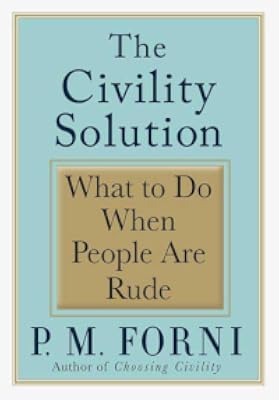
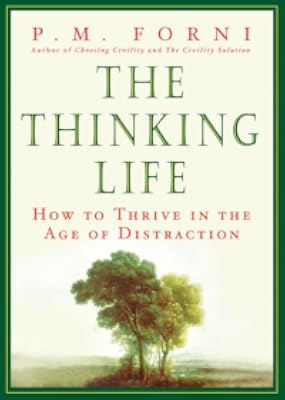
Pier Massimo Forni was born in Bologna, Italy on October 16, 1951. He received an undergraduate degree from the University of Pavia in 1974. He served for two years in the Italian army's Alpini corps. He received a Ph.D. in Italian literature from the University of California, Los Angeles, in 1981 and joined the Johns Hopkins University faculty in show more 1985. In 1997, he became the principal founder of the Johns Hopkins Civility Project. He wrote several books including Choosing Civility: The Twenty-Five Rules of Considerate Conduct, The Civility Solution: What to Do When People Are Rude, and The Thinking Life: How to Thrive in the Age of Distraction. He died from complications of Parkinson's disease on December 1, 2018 at the age of 67. (Bowker Author Biography) show less
Classifications
Statistics
- Members
- 502
- Popularity
- 60,149
- Reviews
- 9
- Rating
- (3.73)
- Languages
- Chinese, English
- Media
- Paper, Audiobook, Ebook
- ISBNs
- 10
- ASINs
- 5