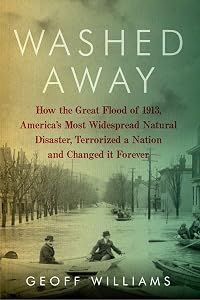
Washed Away: How the Great Flood of 1913, America's Most Widespread Natural Disaster, Terrorized a Nation and Changed It Forever
by Geoff Williams
On This Page
Description
In this book the author tells the story of a flood of near biblical proportions; its destruction, its heroes and victims, and how it shaped America's natural disaster policies for the next century. Fourteen states in all were hit, along with every major and minor river east of the Mississippi. The storm began March 23, 1913, with a series of tornadoes that killed 150 people and injured 400. Then the freezing rains started and the flooding began. It continued for days. Some people drowned in show more their attics, others on the roads when the tried to flee. It was the nation's most widespread flood ever, more than 700 people died, hundreds of thousands of homes and buildings were destroyed, and millions were left homeless. The destruction extended far beyond the Ohio valley to Illinois, Indiana, Michigan, Nebraska, Pennsylvania, Tennessee, Arkansas, Louisiana, Kentucky, West Virginia, New York, New Jersey, and Vermont. In the aftermath, flaws in America's natural disaster response systems were exposed, echoing today's outrage over Hurricane Katrina. People demanded change. Laws were passed, and dams were built. Teams of experts vowed to develop flood control techniques for the region and stop flooding for good. So far those efforts have succeeded. It is estimated that in the Miami (Ohio) Valley alone, nearly 2,000 floods have been prevented, and the same methods have been used as a model for flood control nationwide and around the world. show lessTags
Recommendations
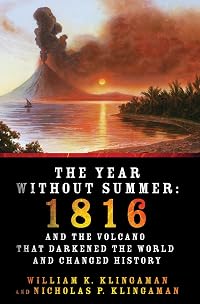
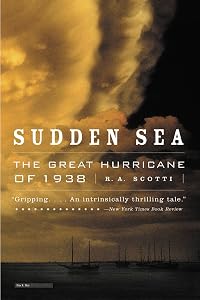
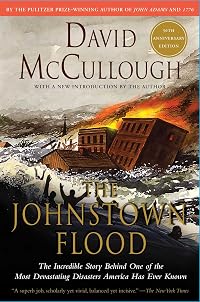
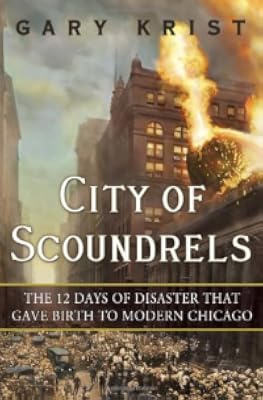








Member Recommendations

PuddinTame A young adult novel of a young woman in Dayton, Ohio, who lived through the Great Flood of 1913.
Member Reviews
I had never heard about this event until I stumbled upon this book. The stories in it are amazing and heartbreaking. I have told so many people about it. Read this book. It is one of the most fascinating books I read this year. I did have to break up the reading, inserting a couple lighter books. It became overwhelming just as the flood was. It is compelling reading, especially if you can imagine the people.
First Line: On March 23, 1913, the United States of America was reminded that when it comes to nature, we're not really in charge.
This is the often gripping story of how storms and floods of almost Biblical proportions first began with a series of tornadoes that killed 150 people in Omaha, Nebraska, and then continued on to ravage fourteen states-- and every river east of the Mississippi. The rain went on for days, and once started, the flooding seemed as though it would never stop. It was America's widest spread flood ever. More than 700 people died, hundreds of thousands of homes and buildings were destroyed, and millions were left homeless. This disaster proved that America had no real flood control, and the government set out to show more change that. Laws were passed, dams were built, and the techniques they used have been held up as a model for flood control around the world.
The author grew up hearing stories about the flood in Ohio from family members, and once he became an adult, he decided to check into it a little bit. What he learned shocked him and formed the basis for this book. The sections describing the floods and devastation at times reach the quality of the best fiction: a swift, sure pace, and first person accounts that draw the reader right into the narrative. Only once did I feel that Williams stumbled, even though he was trying to prove a very important point. When writing about drowning victims, he refutes the idea so often found in literature that drowning is a poetic way to die. It is anything but poetic, and Williams rapidly proved his point, but he continued at such great length that it completely threw me out of the engrossing story he'd been telling.
Complete with many illustrations, Washed Away tells of a critical time in American history and reminded me that so many things which we take for granted today have their origins in our country's reactions to some of the worst things Mother Nature can throw at us. show less
This is the often gripping story of how storms and floods of almost Biblical proportions first began with a series of tornadoes that killed 150 people in Omaha, Nebraska, and then continued on to ravage fourteen states-- and every river east of the Mississippi. The rain went on for days, and once started, the flooding seemed as though it would never stop. It was America's widest spread flood ever. More than 700 people died, hundreds of thousands of homes and buildings were destroyed, and millions were left homeless. This disaster proved that America had no real flood control, and the government set out to show more change that. Laws were passed, dams were built, and the techniques they used have been held up as a model for flood control around the world.
The author grew up hearing stories about the flood in Ohio from family members, and once he became an adult, he decided to check into it a little bit. What he learned shocked him and formed the basis for this book. The sections describing the floods and devastation at times reach the quality of the best fiction: a swift, sure pace, and first person accounts that draw the reader right into the narrative. Only once did I feel that Williams stumbled, even though he was trying to prove a very important point. When writing about drowning victims, he refutes the idea so often found in literature that drowning is a poetic way to die. It is anything but poetic, and Williams rapidly proved his point, but he continued at such great length that it completely threw me out of the engrossing story he'd been telling.
Complete with many illustrations, Washed Away tells of a critical time in American history and reminded me that so many things which we take for granted today have their origins in our country's reactions to some of the worst things Mother Nature can throw at us. show less
This book reads much like a novel…very enjoyable! Not only do you get to learn a play by play, and day by day account of the Great Flood of 1913, which I had never even heard of before, and the many experiences of individuals, but this author put in the effort to do EXTRA research from Census records, and Ancestry.com, on many of the people and families mentioned so you actually know a little something more about them.
Although there are no sources specifically referencing every fact he represents, he does point out at the end of the book that he scoured the newspapers, focusing on the dates from March 23-27, but also looked beyond, into April and May of 1913 for the writing of this book. He does list all of the newspapers he show more collected information from in the last chapter, in Notes and Research and Acknowledgments. He has also collected information from a few books that had been written on the Great Flood of 1913 (just Google it and now many books will pop up), and from magazines and websites. He is from the area, so was able to visit most of the critical areas, especially Dayton, Ohio, where flood waters reached upwards of 25 feet, to get a feel for the depth of the flooding and even interviewed a few descendants of the victims. I love that he did all the hard work and collected the information for us from so many newspapers to tell the story of this great historical event. If one is serious about finding and verifying particular facts, it can actually be done with a little effort.
This book is a genealogist’s dream book. If you have family or ancestors from the area, I would definitely check into this source. He does have a complete alphabetical name index. And behind the index of names, he has included 37 photos of the flood.
The scene opens with detailed personal accounts of the Omaha, Nebraska, tornado that devastated the city and killing hundreds. He pulls together different stories from different areas of the city and at different times up until the second the tornado hit. Other tornadoes, at least six, and possibly more, all in one massive storm hit Nebraska, Iowa, Illinois, Missouri, Michigan, and Indiana, within a two-hour time span and killing more than two hundred people and destroying thousands of homes. The gathered little tidbits of experiences during this tornado is quite amazing!
He then moves into play by play, recording the time and the five days during which the rains and the flooding in different towns of, mostly Indiana and Ohio, began on March 24, 1913, the day after the Omaha tornado. The author doesn’t just slam down names of people who lost their lives. He has researched and gives a little background on some of the lives lost. And he wonders and expresses what may have been their last thoughts, which he has received a lot of negative feedback from reviewers…but I loved it! Here, he really wants you to feel their struggles and even describes exactly what happens to the body as it is drowning. He intertwines a little historical background as he is telling their stories.
I chose to read this book because it did mention that Louisiana was also affected. Since my ancestors are from Southwest Louisiana, I thought it would be interesting to first see which of them would have been alive during this time and may have experienced the end of this flood. But, Louisiana was only briefly talked about in the Epilogue, and only about the New Orleans area…well away from where my family would have resided. Water was barely topping the levee at one spot, in which they put down a couple of large boards on top and had 12 black men stand on them while others filled sand bags and piled them up from behind. As the sandbags reached the height of each man, they were, one by one allowed to step down to safety. The levee held and no men were lost to the flooding. Crazy!
----------
My Cajun ancestors alive on March 23, 1913 during this:
Grandparents:
Paul Sully LeBlanc (1883-1970), age 30
Ina Wilma Roberts (1907-1982), age 6
Great-grandparents:
Paul Albert LeBlanc (1859-1948), age 54
Elizabeth Broussard (1860-1946), age 53
and
Julius Leslie Roberts (1881-1974), age 32
Mary Laplace (1888-1948), age 25 show less
Although there are no sources specifically referencing every fact he represents, he does point out at the end of the book that he scoured the newspapers, focusing on the dates from March 23-27, but also looked beyond, into April and May of 1913 for the writing of this book. He does list all of the newspapers he show more collected information from in the last chapter, in Notes and Research and Acknowledgments. He has also collected information from a few books that had been written on the Great Flood of 1913 (just Google it and now many books will pop up), and from magazines and websites. He is from the area, so was able to visit most of the critical areas, especially Dayton, Ohio, where flood waters reached upwards of 25 feet, to get a feel for the depth of the flooding and even interviewed a few descendants of the victims. I love that he did all the hard work and collected the information for us from so many newspapers to tell the story of this great historical event. If one is serious about finding and verifying particular facts, it can actually be done with a little effort.
This book is a genealogist’s dream book. If you have family or ancestors from the area, I would definitely check into this source. He does have a complete alphabetical name index. And behind the index of names, he has included 37 photos of the flood.
The scene opens with detailed personal accounts of the Omaha, Nebraska, tornado that devastated the city and killing hundreds. He pulls together different stories from different areas of the city and at different times up until the second the tornado hit. Other tornadoes, at least six, and possibly more, all in one massive storm hit Nebraska, Iowa, Illinois, Missouri, Michigan, and Indiana, within a two-hour time span and killing more than two hundred people and destroying thousands of homes. The gathered little tidbits of experiences during this tornado is quite amazing!
He then moves into play by play, recording the time and the five days during which the rains and the flooding in different towns of, mostly Indiana and Ohio, began on March 24, 1913, the day after the Omaha tornado. The author doesn’t just slam down names of people who lost their lives. He has researched and gives a little background on some of the lives lost. And he wonders and expresses what may have been their last thoughts, which he has received a lot of negative feedback from reviewers…but I loved it! Here, he really wants you to feel their struggles and even describes exactly what happens to the body as it is drowning. He intertwines a little historical background as he is telling their stories.
I chose to read this book because it did mention that Louisiana was also affected. Since my ancestors are from Southwest Louisiana, I thought it would be interesting to first see which of them would have been alive during this time and may have experienced the end of this flood. But, Louisiana was only briefly talked about in the Epilogue, and only about the New Orleans area…well away from where my family would have resided. Water was barely topping the levee at one spot, in which they put down a couple of large boards on top and had 12 black men stand on them while others filled sand bags and piled them up from behind. As the sandbags reached the height of each man, they were, one by one allowed to step down to safety. The levee held and no men were lost to the flooding. Crazy!
----------
My Cajun ancestors alive on March 23, 1913 during this:
Grandparents:
Paul Sully LeBlanc (1883-1970), age 30
Ina Wilma Roberts (1907-1982), age 6
Great-grandparents:
Paul Albert LeBlanc (1859-1948), age 54
Elizabeth Broussard (1860-1946), age 53
and
Julius Leslie Roberts (1881-1974), age 32
Mary Laplace (1888-1948), age 25 show less
Washed Away: How the Great Flood of 1913, America’s Most Widespread Disaster, Terrorized a Nation and Changed it Forever by Geoff Williams
356 pages
★★★
In 1913, tornadoes and rain would cause terrible flooding throughout Ohio, Indiana, Illinois and many other surrounding areas. When it was all said and done, over 700 people were dead, many injured and homeless. It would lead to new laws and safety measures at the time, still used today (some more successfully than others). This book is the story of those people that had to deal with the destruction that came through their lives – some would survive, others wouldn’t be so lucky.
I’m sorta morbid. The more death and destruction, the more likely I am to want to read about it. show more Obviously I’m not alone or there wouldn’t be so many books of its kind. So where does this book land in all I have read? Middle ground. It was an interesting subject, one now forgotten in history but one that made a huge difference up to present time. It did seem to jump around quite a bit. He may mention someone and then get back to their story after dozens of other people and stories have been told. It had a tendency to be repetitive in parts. It bugged me that there was no bibliography. It is obvious he did a lot of research but the fact that except for a few mentions of sources in the writing and a small acknowledgement, there is no proof of this research and I felt like it deserved much more attention. I know I’m nitpicking. On the plus side, I did find the author’s style interesting. The breaking up of time, a step-by-step of events and the close-up of the people kept me reading. The author also has a humorous, sarcastic streak which I found here and there that amused me. Not bad but glad I picked it up from the library. show less
356 pages
★★★
In 1913, tornadoes and rain would cause terrible flooding throughout Ohio, Indiana, Illinois and many other surrounding areas. When it was all said and done, over 700 people were dead, many injured and homeless. It would lead to new laws and safety measures at the time, still used today (some more successfully than others). This book is the story of those people that had to deal with the destruction that came through their lives – some would survive, others wouldn’t be so lucky.
I’m sorta morbid. The more death and destruction, the more likely I am to want to read about it. show more Obviously I’m not alone or there wouldn’t be so many books of its kind. So where does this book land in all I have read? Middle ground. It was an interesting subject, one now forgotten in history but one that made a huge difference up to present time. It did seem to jump around quite a bit. He may mention someone and then get back to their story after dozens of other people and stories have been told. It had a tendency to be repetitive in parts. It bugged me that there was no bibliography. It is obvious he did a lot of research but the fact that except for a few mentions of sources in the writing and a small acknowledgement, there is no proof of this research and I felt like it deserved much more attention. I know I’m nitpicking. On the plus side, I did find the author’s style interesting. The breaking up of time, a step-by-step of events and the close-up of the people kept me reading. The author also has a humorous, sarcastic streak which I found here and there that amused me. Not bad but glad I picked it up from the library. show less
Great Flood of 1913
"the nation's most widespread flood ever—more than 700 people died,
hundreds of thousands of homes and buildings were destroyed, and millions were left homeless"
The research for this book is extensive....
many stories of survival and loss are quite interesting....and very difficult to picture.
Reading got a little strained (tiring)here and there but I maintained my interest for these 2 reasons
"Every major river east of the Mississippi rose.... Indiana, Ohio, and Pennsylvania were the hardest-hit states.
I gave it 3.5★.... and would commend the author on the amount of research that went into assembling the book.
"the nation's most widespread flood ever—more than 700 people died,
hundreds of thousands of homes and buildings were destroyed, and millions were left homeless"
The research for this book is extensive....
many stories of survival and loss are quite interesting....and very difficult to picture.
Reading got a little strained (tiring)here and there but I maintained my interest for these 2 reasons
"Every major river east of the Mississippi rose.... Indiana, Ohio, and Pennsylvania were the hardest-hit states.
I gave it 3.5★.... and would commend the author on the amount of research that went into assembling the book.
Terribly written and in desperate need of a good, honest editor. Very little history and a lot of speculation about what the people were thinking, even about what they "may or may not have done", with rabbit trails about the romanticism of drowning and swimming requirements of American colleges in the early 1900s. Yes, seriously. I made it to page 41 before giving up.
Ratings
Members
- Recently Added By
Published Reviews
ThingScore 75
Deeply researched, personal accounts of the Midwestern natural disaster whose ramifications can be felt today. Journalist Williams (C.C. Pyle's Amazing Foot Race: The True Story of the 1928 Coast-to-Coast Run Across America, 2007) offers an eerily prescient work that comes in the wake of another storm of the century, Hurricane Sandy. In mid-March 1913, a series of tornadoes accompanied by a show more deluge of rain on saturated, thawing ground caused inordinate damage to a swath of Ohio and Indiana, impacting both neighboring states and those as far away as Vermont and New Jersey and leaving approximately 1,000 dead and untold damage to the heartland. show less
added by Lemeritus
Lists

Accidents, Disasters, and Tragedies
175 works; 7 members

Mississippi River in Books
20 works; 3 members

2026 Reading List
50 works; 1 member
Author Information
3 Works 163 Members
Geoff Williams is the author of C. C. Pyle's Amazing Foot Race: The True Story of the 1928 Coast-to-Coast Run Across America. For most of his life, Williams has lived less than an hour away from the Great Flood's epicenter in Dayton, Ohio.
Some Editions
Awards and Honors
Awards
Common Knowledge
- Original publication date
- 2013-02-13
- People/Characters
- Adams Family [Dayton, Ohio, 1913]; A. John Bell; Ernest P. Bicknell; Samuel Bundy; James M. Cox; Charles Gephardt (show all 18); Christian Dane Hagerty; Theresa Hammond; Ben Hecht; Walter D. Jones; William Kerr (Constable, New Castle, PA); Klingshirn Family (Tiffin, Ohio, 1913); Arthur E. Morgan (Ernest); John H. Patterson (NCR owner); Thomas Thomas; Katharine Wright; Milton Wright; Orville Wright
- Important places
- Ohio River Valley, USA; Miami River Valley, USA; Mississippi River Valley, USA
- Important events
- Great Flood of 1913 [USA]
- Dedication
- To the men, women, and especially the children
whose lives were cut short in the Great Flood of 1913 - First words
- On March 23, 1913, The United States of America was reminded that when it comes to nature, we're not really in charge. (Author's Note)
March 21, 1913, Rock, Wisconsin, 5 pm-5:12 pm
Edward Suchomil deserved a lot more in life than to be struck down by lightening. - Quotations
- May 1, [1913] Poydras, Louisiana
Approximately sixteen miles south of New Orleans, the levee began to cave away a few minutes after five in the morning. Something had to be done quickly, or risk lossing the commu... (show all)nity. The solution staggers the imagination.
Within twenty minutes, a farmer and about twelve African-American arrived to find two inches of water spilling over the levee.
Sandbags – two thousand of them – were on the way, but within minutes it wouldn't matter.
[. . .]
In any case, two twelve-inch boards were laid on the dirt levee, right where the water was dribbling over, and then the twelve men climbed onto them, effectively becoming part of the levee. They were “human sandbags,” as the papers put it, and the twelve men were at risk that that any of them might be, at any moment, sucked into the river to meet a grisly end. Their bodies packed tightly into the part of the levee that was breaking away, the men kept the Mississippi River where it belonged. [. . .] it took an hour, but eventually all of the men were able to leave safely, and two thousand bags of dirt were in place. The levee held. (Chap. 20: “Remember the Promises in the Attic,” p.323-324)
The Great Flood of 1913 was a devastating correction, a rap on society's collective knuckles that we underestimate and ignore mother nature at our peril, possibly a useful lesson going forward for civilizations concerned abou... (show all)t melting ice caps and global warming stirring up extreme storms such as those that have hit the East Coast in recent years [. . . ]. (Chap. 20: “Remember the Promises in the Attic,” p.341) - Last words
- (Click to show. Warning: May contain spoilers.)The Reverend had just uttered the words: “The grim reaper has been in our midsts.”
- Canonical DDC/MDS
- 363.3493097709041
- Canonical LCC
- GB1399.3
Classifications
- Genres
- Nonfiction, History, General Nonfiction
- DDC/MDS
- 363.3493097709041 — Society, government, & culture Social problems and social services Public Safety - Police, Crime Investigation Terrorism, Disasters, Civil Defense Disaster relief Specific kinds of disasters Floods
- LCC
- GB1399.3 — Geography, Anthropology and Recreation Physical geography Physical geography Hydrology. Water Ground and surface waters Rivers. Stream measurements
- BISAC
Statistics
- Members
- 109
- Popularity
- 298,483
- Reviews
- 6
- Rating
- (3.18)
- Languages
- English
- Media
- Paper, Ebook
- ISBNs
- 6
- ASINs
- 2