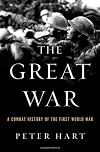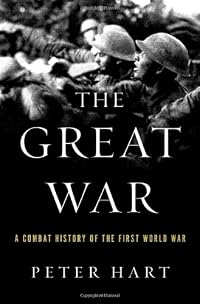
The Great War: A Combat History of the First World War
by Peter Hart
On This Page
Description
Named one of the Ten Best Books of 2013 by the Economist World War I altered the landscape of the modern world in every conceivable arena. Millions died; empires collapsed; new ideologies and political movements arose; poison gas, warplanes, tanks, submarines, and other technologies appeared. "Total war" emerged as a grim, mature reality. In The Great War, Peter Hart provides a masterful combat history of this global conflict. Focusing on the decisive engagements, Hart explores the immense show more challenges faced by the commanders on all sides. He surveys the belligerent nations, analyzing their strengths, weaknesses, and strategic imperatives. Russia, for example, was obsessed with securing an exit from the Black Sea, while France-having lost to Prussia in 1871, before Germany united-constructed a network of defensive alliances, even as it held a grudge over the loss of Alsace-Lorraine. Hart offers deft portraits of the commanders, the prewar plans, and the unexpected obstacles and setbacks that upended the initial operations. show lessTags
Recommendations


Member Reviews
Like many Americans, my understanding of World War I is sketchy. I understand that Europeans may be more familiar with its history, but for most on this side of the Atlantic, it is Wilson kept us out of war and then got us into it, we came in late and won the war and Pershing and Rickenbacker are heroes but we are not quite sure why. For any wishing to improve their understanding, “The Great War” is the place to start.
This book is organized chronologically and by theatre. It begins with The Road To War and follows with a chapters devoted to the eastern and western fronts and the Sea War for each year. Chapters also cover specific topics such as Gallipoli, Salonika, Mesopotamia, Palestine and the Italian Front.
The genius of this show more book is that it is superficial enough to fit in one volume while still telling the whole story. This is a Combat History. It delves only minimally into the political and social currents that drove the war. The reader will see an occasional reference to isolationist pressures within the United States, but mostly in connection with German U-Boat rules of engagement and the saving of Eamon deValera from execution after the Irish Easter Uprising in 1916. It is focused on the Western Front. For 1915 the chapter on the Western Front is 32 pages long while the story of the Eastern front is told in 10 pages. Sometimes more is told in what is not said than in what is said. The first United States involvement appears over 90% of the way through the book. The first major U.S. operation is past the 95% mark. I say this not to suggest that the American contribution is under reported, but that this book shows just how late it began and how small it was in comparison to that of its allies.
Although “The Great War” covers the whole conflict, author Peter Hart delves into the significance of various character and incidents involved. He explains the use of aircraft and explores questions such as the quality of generals, the importance of battles such as the Jutland, the relationship between the British and the French on the Western Front and the changing tactics and defenses. He is willing to inject his judgments, such as the worthlessness of sideshows such as Gallipoli and Mesopotamia that took resources from the critical Western Front and the political actions, such as the British confiscation of the Turkish Dreadnoughts that may have driven the Turks to the Central Powers while reporting the raw facts.
I had known bits and pieces of World War I. What this book does is put the War into context that aids in understanding the whole struggle; its origins, development, conclusions and legacy. This makes “The Great War” an excellent place to begin a study of World War I.
I did receive a free copy of this book for review. show less
This book is organized chronologically and by theatre. It begins with The Road To War and follows with a chapters devoted to the eastern and western fronts and the Sea War for each year. Chapters also cover specific topics such as Gallipoli, Salonika, Mesopotamia, Palestine and the Italian Front.
The genius of this show more book is that it is superficial enough to fit in one volume while still telling the whole story. This is a Combat History. It delves only minimally into the political and social currents that drove the war. The reader will see an occasional reference to isolationist pressures within the United States, but mostly in connection with German U-Boat rules of engagement and the saving of Eamon deValera from execution after the Irish Easter Uprising in 1916. It is focused on the Western Front. For 1915 the chapter on the Western Front is 32 pages long while the story of the Eastern front is told in 10 pages. Sometimes more is told in what is not said than in what is said. The first United States involvement appears over 90% of the way through the book. The first major U.S. operation is past the 95% mark. I say this not to suggest that the American contribution is under reported, but that this book shows just how late it began and how small it was in comparison to that of its allies.
Although “The Great War” covers the whole conflict, author Peter Hart delves into the significance of various character and incidents involved. He explains the use of aircraft and explores questions such as the quality of generals, the importance of battles such as the Jutland, the relationship between the British and the French on the Western Front and the changing tactics and defenses. He is willing to inject his judgments, such as the worthlessness of sideshows such as Gallipoli and Mesopotamia that took resources from the critical Western Front and the political actions, such as the British confiscation of the Turkish Dreadnoughts that may have driven the Turks to the Central Powers while reporting the raw facts.
I had known bits and pieces of World War I. What this book does is put the War into context that aids in understanding the whole struggle; its origins, development, conclusions and legacy. This makes “The Great War” an excellent place to begin a study of World War I.
I did receive a free copy of this book for review. show less
 This review was written for LibraryThing Early Reviewers.
The Great War: A Combat History of the First World War by Peter Hart is a masterful and engrossing examination of one of the most significant conflicts in history. This book delivers a rich and detailed account of World War I, offering a captivating blend of strategic insights, personal narratives, and a broader understanding of the war's profound impact.
Hart's meticulous research and ability to make complex military campaigns accessible set this book apart. It presents the war's progression in a compelling and informative manner, giving readers a deep appreciation of the key battles and their consequences.
What distinguishes this book is its focus on the human experience of war. Through poignant accounts and personal stories, it show more provides an emotional connection to the soldiers who endured the horrors of the trenches. This human element makes the book not only informative but also deeply moving.
The inclusion of maps, illustrations, and primary source materials enhances the reader's understanding and immersion in the era. It offers a well-rounded view of the war, encompassing its political, economic, and social dimensions.
The book's readability and engaging narrative style make it accessible to a wide range of readers, from history buffs to those new to the subject. The prose is skillfully crafted, ensuring that the reader remains engrossed from start to finish.
In sum, The Great War: A Combat History of the First World War is an exceptional resource for those seeking a comprehensive and vivid account of World War I. It combines historical precision with a captivating storytelling style, making it an invaluable addition to the library of anyone interested in understanding the complexities and lasting impact of this pivotal period in history. show less
Hart's meticulous research and ability to make complex military campaigns accessible set this book apart. It presents the war's progression in a compelling and informative manner, giving readers a deep appreciation of the key battles and their consequences.
What distinguishes this book is its focus on the human experience of war. Through poignant accounts and personal stories, it show more provides an emotional connection to the soldiers who endured the horrors of the trenches. This human element makes the book not only informative but also deeply moving.
The inclusion of maps, illustrations, and primary source materials enhances the reader's understanding and immersion in the era. It offers a well-rounded view of the war, encompassing its political, economic, and social dimensions.
The book's readability and engaging narrative style make it accessible to a wide range of readers, from history buffs to those new to the subject. The prose is skillfully crafted, ensuring that the reader remains engrossed from start to finish.
In sum, The Great War: A Combat History of the First World War is an exceptional resource for those seeking a comprehensive and vivid account of World War I. It combines historical precision with a captivating storytelling style, making it an invaluable addition to the library of anyone interested in understanding the complexities and lasting impact of this pivotal period in history. show less
This review was written for LibraryThing Early Reviewers.Being an account of World War I; as a "combat history" it leans to some extent on battle narratives (very well chosen, but ultimately repetitive for all that) and contains a certain amount of tactical detail. As is unfortunately predictable, given the author and publisher's nationality, there is considerable emphasis on the British military, who were, alas poor reader, involved mostly in tedious slogs between the trenches. At times this emphasis becomes more than a mere nuisance, as when he brushes aside the 'Miracle on the Marne' in a few paragraphs and then offers page after page of description of the mudfests in the north during which the British and Germans completed the 'Race to the Sea', generally considered much less important, show more and certainly less interesting. He is entirely dismissive of all the other fronts, even the Russian one, as 'sideshows'. He's entitled to his opinion (it's his book, after all), but I found it difficult to see how tossing a few more divisions into the West Front meatgrinder, especially before the Allied tactical innovations of the last year of the war, would have changed much. Above all, when one invests a month in a book, it had better be somewhere in the masterpiece neighborhood; this book is interesting reading throughout, but it's no masterpiece. show less
A concise yet emotional general history of the First World War, an event, as Hart justifiably says, that was the most important event in the 20th century.
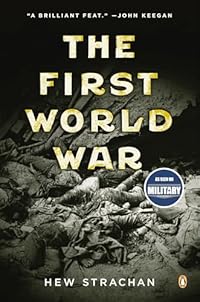
Hart does not attempt the comprehensiveness of volume one of Hew Strachan’s First World War or even John Keegan’s An Illustrated History of the First World War. Hart explicitly confines himself to just the main theaters of the war thus there is no coverage of sub-Saharan operations or events in China, and he concentrates on the Western Front because it is there, he argues, that the war was ultimately decided and mostly by British efforts.
Thus one of the three things Hart particularly emphasizes is the folly of the “easterners”, generals and politicians, particularly David Lloyd show more George and Winston Churchill, who wasted resources on pursuing illusive victory in other areas. That includes not only the notorious Gallipoli campaign but the mission creep of operations in Mesopotamia and Palestine after the vital assets of oil fields and the Suez Canal were secured.
Another area of emphasis is an attack on the clichéd image of the war: men going over the top, slogging across a shell ravaged land only to die by machine gun fire, bodies tangled in barbed wire, a stupid slaughter conducted for four long years by stupid generals, “lions led by donkeys” as the famous statement goes. In fact, Allied tactics did change in the use of artillery, how trenches were assaulted, how and when taken objectives were held, and the use of machine guns. The trouble is the Central Powers also learned and changed the way they conducted defense and assaults, and Hart does a nice job of tracing that evolution. British success at Neuve Chapelle in 1915 led to the tactics used in the Battle of the Somme in 1916. That famous disaster was not the result of British stupidity but inadequate artillery support and Germans changing their defense tactics, but the lessons of the Somme led to 1918’s Hundred Days that concluded the war.
The stunning success of the combined operations of aerial bombing and close air support, tanks, sophisticated coordination between artillery and infantry, and an evolution in the tactics and weapons used to assault German positions point to the lie of General Douglas Haig being a stubborn, conservative technophobe unwilling to innovate but just blunder to victory by sheer manpower. That is the third point Hart emphasizes: that many of the war’s generals did innovate and did their best in a challenging environment of alliance warfare and the strength new technology lent to defense.
Hart bookends his history with chapters on the political origins and consequences of the war making this an acceptable introduction to the war.
But the emotional power of the book comes from the extensive quoting of participants in the events from Count Franz von Harrach, a passenger in the car when Archduke Ferdinand and his wife were assassinated, to soldiers on the war’s last day. Enlisted men and officers, sailors and infantrymen and aviators, the Allied and the Central Powers all have their say from a French soldier commenting on the ant-like appearance of soldiers at Verdun to a British artilleryman slaying his horse at the Siege of Kut to men being gassed in a bunker to the horror of leaving comrades to drown in the muddy wastes of a shell-cratered battlefield, Hart brings the feel of the war home in ways many other histories do not. That makes this a worthwhile read for beginning and advanced students of the war.
I read this in galley form from the publisher so cannot speak to the quality of the index or maps, but the published product seems adequate in both. show less
Hart does not attempt the comprehensiveness of volume one of Hew Strachan’s First World War or even John Keegan’s An Illustrated History of the First World War. Hart explicitly confines himself to just the main theaters of the war thus there is no coverage of sub-Saharan operations or events in China, and he concentrates on the Western Front because it is there, he argues, that the war was ultimately decided and mostly by British efforts.
Thus one of the three things Hart particularly emphasizes is the folly of the “easterners”, generals and politicians, particularly David Lloyd show more George and Winston Churchill, who wasted resources on pursuing illusive victory in other areas. That includes not only the notorious Gallipoli campaign but the mission creep of operations in Mesopotamia and Palestine after the vital assets of oil fields and the Suez Canal were secured.
Another area of emphasis is an attack on the clichéd image of the war: men going over the top, slogging across a shell ravaged land only to die by machine gun fire, bodies tangled in barbed wire, a stupid slaughter conducted for four long years by stupid generals, “lions led by donkeys” as the famous statement goes. In fact, Allied tactics did change in the use of artillery, how trenches were assaulted, how and when taken objectives were held, and the use of machine guns. The trouble is the Central Powers also learned and changed the way they conducted defense and assaults, and Hart does a nice job of tracing that evolution. British success at Neuve Chapelle in 1915 led to the tactics used in the Battle of the Somme in 1916. That famous disaster was not the result of British stupidity but inadequate artillery support and Germans changing their defense tactics, but the lessons of the Somme led to 1918’s Hundred Days that concluded the war.
The stunning success of the combined operations of aerial bombing and close air support, tanks, sophisticated coordination between artillery and infantry, and an evolution in the tactics and weapons used to assault German positions point to the lie of General Douglas Haig being a stubborn, conservative technophobe unwilling to innovate but just blunder to victory by sheer manpower. That is the third point Hart emphasizes: that many of the war’s generals did innovate and did their best in a challenging environment of alliance warfare and the strength new technology lent to defense.
Hart bookends his history with chapters on the political origins and consequences of the war making this an acceptable introduction to the war.
But the emotional power of the book comes from the extensive quoting of participants in the events from Count Franz von Harrach, a passenger in the car when Archduke Ferdinand and his wife were assassinated, to soldiers on the war’s last day. Enlisted men and officers, sailors and infantrymen and aviators, the Allied and the Central Powers all have their say from a French soldier commenting on the ant-like appearance of soldiers at Verdun to a British artilleryman slaying his horse at the Siege of Kut to men being gassed in a bunker to the horror of leaving comrades to drown in the muddy wastes of a shell-cratered battlefield, Hart brings the feel of the war home in ways many other histories do not. That makes this a worthwhile read for beginning and advanced students of the war.
I read this in galley form from the publisher so cannot speak to the quality of the index or maps, but the published product seems adequate in both. show less
This review was written for LibraryThing Early Reviewers.Peter Hart has written a wonderful addition to the literature documenting World War One. "The Great War" starts long before the war itself, examining what transpired in the late 1800s that would cause so many nations to enter into a horrific period of conflict. As Hart notes, "when industrial nation states resorted to armed conflict they generated a monstrous capacity for death and destruction, while at the same time the vastness of their populations meant that a lot of people were killed before victory could be proclaimed." The book traces the war from 1914 through 1918, and examines the conflict from the western front, eastern front, the war at sea, Gallipoli, Salonika, Mesopotamia, Italy, and Palestine. My one major annoyance at the show more book - and this could be the result of it being an advanced reader copy - is the lack of maps. I found myself frequently turning to Wikipedia or Google to be able to trace the conflict and follow the action as it swept across nations. show less
This review was written for LibraryThing Early Reviewers.In searching for a book about First World War beyond the usually recommended and focusing on the actual tactics and strategies on the battlefield instead of various political and social events that other books seem to promote, it was my hope that Peter Hart's "The Great War: A Combat History of the First World War" would fill that need. Upon finishing "The Great War" I can say that the book not only met my expectations, but put to shame some other books that frankly put blame on individuals for the conduct on the war by ignoring the facts.
Hart emphasizes the importance of the Western Front throughout the book as being the main theater of the entire war. Although Hart gives a good amount of pages and thorough telling of the events in the show more Naval War, the Eastern Front, and several side-show theaters like the Italian, Mesopotamia, and Palestine; he gives the developments in all those other theaters on how they affected the Western Front through various means. The tactical and strategic battle of wits between commanders on both sides on all fronts are given excellent explanations by Hart and are shown to be the reason the war lasted so long and the casualties were so high.
Hart argues that it was the British were responsible for the victorious outcome of the Allied cause, but only after taking over as the main coalition partner from the French in 1916 and with assistance from the Americans whose presence on the battlefield forced the Germans' hand into a failed offensive push in 1918. Throughout the book, Hart shows the three-year progression of collective British thinking about how to fight the war, not only learning from their successes and failures but those of the French and Germans. At the end of the book even Hart admits that if the war had continued into 1919 while entering German territory, the Americans would have surpassed the British as the main combatant given their fresher force.
Sprinkled throughout the book, Hart incorporated first-hand accounts of soldiers from all sides about how combat was like during the war. It is eye-opening look at a sometimes misunderstood war for any reader. Although generally good, Hart seems to just putting quotes back-to-back numerous times in the book which upsets the flow of the overall work. Occasional grammar, spelling, and punctuation mistakes do crop up as well though they are few and far between so as not to takeaway from the overall work.
For anyone wanting to understand the First World War on a tactical and strategic level, Peter Hart's "The Great War" is a fantastic read and will give the reader a better understanding of this shamefully misunderstood period in history that affects us even today. show less
Hart emphasizes the importance of the Western Front throughout the book as being the main theater of the entire war. Although Hart gives a good amount of pages and thorough telling of the events in the show more Naval War, the Eastern Front, and several side-show theaters like the Italian, Mesopotamia, and Palestine; he gives the developments in all those other theaters on how they affected the Western Front through various means. The tactical and strategic battle of wits between commanders on both sides on all fronts are given excellent explanations by Hart and are shown to be the reason the war lasted so long and the casualties were so high.
Hart argues that it was the British were responsible for the victorious outcome of the Allied cause, but only after taking over as the main coalition partner from the French in 1916 and with assistance from the Americans whose presence on the battlefield forced the Germans' hand into a failed offensive push in 1918. Throughout the book, Hart shows the three-year progression of collective British thinking about how to fight the war, not only learning from their successes and failures but those of the French and Germans. At the end of the book even Hart admits that if the war had continued into 1919 while entering German territory, the Americans would have surpassed the British as the main combatant given their fresher force.
Sprinkled throughout the book, Hart incorporated first-hand accounts of soldiers from all sides about how combat was like during the war. It is eye-opening look at a sometimes misunderstood war for any reader. Although generally good, Hart seems to just putting quotes back-to-back numerous times in the book which upsets the flow of the overall work. Occasional grammar, spelling, and punctuation mistakes do crop up as well though they are few and far between so as not to takeaway from the overall work.
For anyone wanting to understand the First World War on a tactical and strategic level, Peter Hart's "The Great War" is a fantastic read and will give the reader a better understanding of this shamefully misunderstood period in history that affects us even today. show less
A comprehensive military history of the First World War that covers all major thesters, with an emphasis on the Western Front because that was where the war was decided. The text is filled with excerpts from soldiers' memoirs, which bring vividness to the consequences of tactical and strategic decisions. The maps could be better, but that is a problem easily remedied by the Internet.
Members
- Recently Added By
Author Information

28 Works 1,721 Members
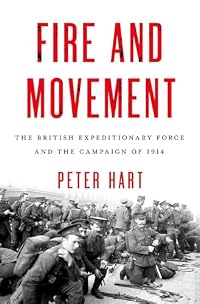
Peter Hart is Oral Historian of the Imperial War Museum in London. He is the author of many works of military history, including Gallipoli and Fire and Movement: The British Expeditionary Force and the Campaign of 1914.
Common Knowledge
- People/Characters
- Paul von Hindenburg; Erich Ludendorff; Wilhelm II, German Kaiser and King of Prussia; Douglas Haig; David Lloyd George; Ferdinand Foch (show all 10); Joseph Joffre; Philippe Pétain; Vladimir Lenin; Leon Trotsky
- Important places
- Ypres, West Flanders, Belgium; Somme River, France; Marne River, France; Passendale, West Flanders, Belgium (as Paschendaele); Verdun, Meuse, Grand-Est, France; Jerusalem (show all 9); Gallipoli, Turkey; France; Middle East
- Important events
- World War I (1914 | 1918); Battle of Jutland (1916); Battle of the Somme (1918); Battle of the Marne (1914); Battle of Caporetto; Gallipoli Campaign (1915-04-25 | 1916-01-09)
- First words
- THE GREAT WAR was the single most important event of the twentieth century, shaping the world that we live in today.
- Last words
- (Click to show. Warning: May contain spoilers.)The decimation of a generation is not forgotten; while the problems left unsolved or created by that terrible conflagration persist to threaten the peace of the world to this very day.
Classifications
Statistics
- Members
- 252
- Popularity
- 128,189
- Reviews
- 19
- Rating
- (3.90)
- Languages
- English
- Media
- Paper, Audiobook, Ebook
- ISBNs
- 5
- ASINs
- 2