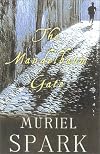
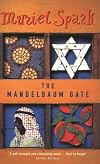
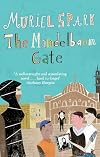
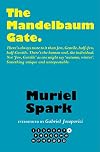
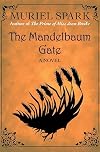
The Mandelbaum Gate
by Muriel Spark
On This Page
Description
For Barbara Vaughn, a checkpoint between Jordan and the newly formed Israel is the threshold to painful self-discovery Barbara Vaughn is a scholarly woman whose fascination with religion stems partly from a conversion to Catholicism, and partly from her own half-Jewish background. When her boyfriend joins an archaeological excursion to search for additional Dead Sea Scrolls, Vaughn takes the opportunity to explore the Holy Land. But this is 1960, and with the nation of Israel still in its show more infancy, the British Empire in retreat from the region, and the Eichmann trials in full swing, Vaughn uncovers much deeper mysteries than those found at tourist sites. Both an espionage thriller and a journey of faith, The Mandelbaum Gate won the James Tait Black Memorial Prize upon its publication, and is one of Spark's most compelling novels. This ebook features an illustrated biography of Muriel Spark including rare photos and never-before-seen documents from the author's archive at the National Library of Scotland. show lessTags
Recommendations























Member Reviews
I thought (until moments ago) that this was Spark's first novel because it has all the Sparkian elements that, unfortunately, aren't as finely tuned in this work as they are in many of her other novels. A preoccupation with religious identity set against the backdrop of a very specific time and place? Most definitely. A variety of eccentric characters? Yes, but several seem to betray their own characters in contrived ways. (Spark gives us a latently lesbian headmistress who somewhat unaccountably ends up hopping into bed with a pro-Nasser Muslim communist. The possibly latently homosexual, staid British F.O. dogsbody ends up hopping into bed with the rogue-ish, girlish tour guide. The protagonist who goes through a lot of trouble to show more fulfill her Catholic pilgrimage to the Holy Lands decides 3/4 of the way through that she'll abandon the Church if need be to marry the man she loves. The young Muslim-turned Catholic-turned I forget what is in love with his sister but...well, you get the idea...) Brevity of style? No, this one drags by Sparkian standards. Incisiveness? Yes, but again, it's still blunted by Sparkian standards. Flashbacks *and* flashforwards? Yes, but not nearly as deftly done as in The Prime of Miss Jean Brodie.
In short, this isn't one of Spark's standouts, but Spark at her worst outshines many at their best. It's unfortunate that the book's thoughtful ruminations on the protagonist's divided religious identity amongst the unease of a divided city devolves into farce. The last half of the book turns into an espionage thriller that is less John le Carre and more Benny Hill, which isn't an entirely terrible thing.
Recommended for Spark completists. show less
In short, this isn't one of Spark's standouts, but Spark at her worst outshines many at their best. It's unfortunate that the book's thoughtful ruminations on the protagonist's divided religious identity amongst the unease of a divided city devolves into farce. The last half of the book turns into an espionage thriller that is less John le Carre and more Benny Hill, which isn't an entirely terrible thing.
Recommended for Spark completists. show less
An exotic city poised between two wars; English diplomats and dubious foreigners engaged in a semi-comic spy story; a character with a moral dilemma that would make sense only to experts in Roman Catholic doctrine; sex, drugs and sandal-smuggling. Yes, it could only be a Graham Greene novel ... But hang on a moment: there are witty non-sequiturs, there's a character who discovers a new rhyme for "Capricorn", there are extensive conversations between female characters, there is as much Judaism as Catholicism, and the sex is treated as lightly as the spying. Could it be Muriel Spark after all?
The setting is Jerusalem in 1961, with the Eichmann trial going on, and the city divided between Israel and Jordan. Diplomats, clerics and tourists show more can pass between the two parts of the city through a checkpoint (by a house formerly occupied by someone called Mandelbaum), but the border is closed to Jews and Arabs. Barbara Vaughan, the very model of an English spinster schoolteacher, arrives in Israel on a conventional enough pilgrimage to the holy places. But things soon get more complicated, when we find out that she's actually hoping to meet her secret lover on the Jordanian side of the border...
This is a complicated book, rather longer than most of Spark's other novels, and with a great deal going on in many different directions, but at its core there is a woman who has one Jewish and one Christian parent, has not been brought up as a Jew, and has converted in adult life to Roman Catholicism, who is now trying to sort out how to respond to modern Israel and the Arab-Israeli conflict. And is also having a hard time dealing with the way English society refuses to see a single middle-class woman in her forties as anything other than a desexualised nun-figure. Obviously it's hard to avoid jumping to the conclusion that there's a lot of the author in Barbara (Spark had a Jewish father, whilst Barbara has a Jewish mother, though, so their situation is not quite the same).
Interesting, maybe more of a conventional "well-made-novel" and not quite as much fun as some of Spark's other books. Some of her observations about the Arab-Israeli conflict are still relevant, notably the way she puts her finger on how easy it is for legitimate criticism of Israeli actions to slide into the worst sort of antisemitism, but obviously a great deal has happened since 1961 and much is now merely of historical interest. And there does seem to be a certain amount that is merely repetition of popular prejudices, like the idea that every Palestinian claims to have lost beautiful orange groves, or that the Israelis are all humourless propagandists for their modern agro-industrial state. show less
The setting is Jerusalem in 1961, with the Eichmann trial going on, and the city divided between Israel and Jordan. Diplomats, clerics and tourists show more can pass between the two parts of the city through a checkpoint (by a house formerly occupied by someone called Mandelbaum), but the border is closed to Jews and Arabs. Barbara Vaughan, the very model of an English spinster schoolteacher, arrives in Israel on a conventional enough pilgrimage to the holy places. But things soon get more complicated, when we find out that she's actually hoping to meet her secret lover on the Jordanian side of the border...
This is a complicated book, rather longer than most of Spark's other novels, and with a great deal going on in many different directions, but at its core there is a woman who has one Jewish and one Christian parent, has not been brought up as a Jew, and has converted in adult life to Roman Catholicism, who is now trying to sort out how to respond to modern Israel and the Arab-Israeli conflict. And is also having a hard time dealing with the way English society refuses to see a single middle-class woman in her forties as anything other than a desexualised nun-figure. Obviously it's hard to avoid jumping to the conclusion that there's a lot of the author in Barbara (Spark had a Jewish father, whilst Barbara has a Jewish mother, though, so their situation is not quite the same).
Interesting, maybe more of a conventional "well-made-novel" and not quite as much fun as some of Spark's other books. Some of her observations about the Arab-Israeli conflict are still relevant, notably the way she puts her finger on how easy it is for legitimate criticism of Israeli actions to slide into the worst sort of antisemitism, but obviously a great deal has happened since 1961 and much is now merely of historical interest. And there does seem to be a certain amount that is merely repetition of popular prejudices, like the idea that every Palestinian claims to have lost beautiful orange groves, or that the Israelis are all humourless propagandists for their modern agro-industrial state. show less
'The Mandelbaum Gate' is very different to every other Muriel Spark novel I've yet read. It's more than twice as long as her punchy novellas and I did not find it funny. Still present and correct are her sharp insight into each character and careful plotting. The setting is Jerusalem in 1961, divided between Israel and Jordan. To cross from one side of the city to the other requires passage through the Mandelbaum Gate. Compared to Spark's other work, I found the setting more vivid and obtrusive, as it shapes the circuitous plot. The novel is not told in linear style, often skipping events that are filled in later or alluding to subsequent happenings. It centres upon a pilgrimage undertaken by Barbara Vaughn, a self-described Roman show more Catholic spinster who is also engaged and half Jewish on her mother's side. Her background and religious affiliation naturally influence her plans, which bring her into the orbit of characters on both sides of the gate. Spark is masterful at showing the muddled nature of people's motives, which are often mysterious even to themselves.
The tense games of concealment and escape that unfold reminded me of John le Carré. There is a similar sense of politics as practised chaotically by individuals and grim awareness of irony and self-interest. The relationship between religion and politics is particularly evident in Jerusalem, of course. The Eichmann trial is briefly featured and discussed several times. Spark examines religious attitudes delicately by giving her cast varied and uncertain affiliations. I found the younger Arab siblings Abdul and Suzi particularly interesting in their political ambivalence. The friendship between Barbara and Suzi was excellent, especially as a contrast to Barbara's relationship with Ricky and awkwardness with Ruth. There is a pleasing sense of the unpredictable about events, which keeps the tension high throughout. Although amateur espionage was not what I expected from a Muriel Spark novel, it was involving and beautifully written. I think the book could perhaps have been a little shorter, as the amnesia episode appeared to serve no purpose other than drawing things out. Barbara was an excellent protagonist, though. I liked her self-aware independence of mind very much:
However my favourite line was, 'Every spinster should be assumed guilty before she is proved innocent, it is only common civility'. A sentiment worth printing on a coffee mug. show less
The tense games of concealment and escape that unfold reminded me of John le Carré. There is a similar sense of politics as practised chaotically by individuals and grim awareness of irony and self-interest. The relationship between religion and politics is particularly evident in Jerusalem, of course. The Eichmann trial is briefly featured and discussed several times. Spark examines religious attitudes delicately by giving her cast varied and uncertain affiliations. I found the younger Arab siblings Abdul and Suzi particularly interesting in their political ambivalence. The friendship between Barbara and Suzi was excellent, especially as a contrast to Barbara's relationship with Ricky and awkwardness with Ruth. There is a pleasing sense of the unpredictable about events, which keeps the tension high throughout. Although amateur espionage was not what I expected from a Muriel Spark novel, it was involving and beautifully written. I think the book could perhaps have been a little shorter, as the amnesia episode appeared to serve no purpose other than drawing things out. Barbara was an excellent protagonist, though. I liked her self-aware independence of mind very much:
He was demanding an explanation. By the long habit of her life, and by temperament, she held as a vital principle that the human mind was bound in duty to continuous acts of definition. Mystery was acceptable to her, but only under the aspect of a crown of thorns. She found no rest in mysterious truths like, 'I am who I am'; they were all right for deathbed definitions, when one's mental obligations were at an end.
However my favourite line was, 'Every spinster should be assumed guilty before she is proved innocent, it is only common civility'. A sentiment worth printing on a coffee mug. show less
My introduction to the writing of Muriel Spark came through reading The Prime of Miss Jean Brodie (after having enjoyed the film version). While I enjoyed this read I had not read any other novels by her recently so I was not sure what to expect upon picking up The Mandelbaum Gate. I am told that it is in some ways not typical, though her books do cover a variety of geographical locations and types of character. It is longer than most, if not all, of her other books as she tends to write quite short novels, and the economy of her prose must in part account for that.
The book is set in 1961 in Jerusalem but it is a 'historical novel' only in the sense that like that genre it is firmly set in a particular time and place. It was published show more in 1965, so Spark was writing only shortly after the events take place, and was therefore discussing relatively current events. The Mandelbaum Gate divides Israel, or Occupied Palestine, depending on your political viewpoint, from Jordan. The political divide takes no account of the sites holy to Christians, and so pilgrims - such as Barbara Vaughan, one of the main characters in the book - are hampered by having to pass through the gate (and needing proof of baptism to do so) if they are to see some of the locations associated with the life and miracles of Christ. Barbara's situation is complicated by the fact that she is half Roman Catholic and half Jewish - the latter being reason enough not to mean that she would be in danger of being arrested as an Israeli spy should she be found on the Jordanian side of the Gate.
Barbara is staying on the Israeli side, in a hotel which is also the residence of a British diplomat Freddy Hamilton. Freddy's job at the Embassy is unclear, though he does describe himself at one point as a filing clerk. He seems to be more than this, but he doesn't seem to do very much work at all in fact, and appears remarkably naive and ineffective in his understanding of the difficulties Barbara will face if she pursues her desire to see the holy sites on the other side of the Gate. Most importantly, for this reader, Freddy is a poet with an artistic turn to his mind as evidenced by the opening of the novel where we are introduced to him in the first paragraph:
"Sometimes, instead of a letter to thank his hostess, Freddy Hamilton would compose a set of formal verses - rondeaux, redoubles, villanelles, rondels or Sicilian octaves - to express his thanks neatly. It was part of his modest nature to do this. He always felt he had perhaps been boring during his stay, and it was one's duty in life to be agreeable. Not so much at the time as afterwards, he felt it keenly on his conscience that he had said no word between the soup and the fish when the bright talk began; he felt at fault in retrospect of the cocktail hours when he had contributed nothing but the smile for which he had been renowned in his pram and, in the following fifty years, elsewhere." (p 3)
Alongside these two main characters are a number of dependent players on both sides of the Gate, including the Cartwrights, Freddy's British friends on the Jordan side with whom he regularly stays; the Ramdez family - ostensibly running a travel agency, but using this as a cover for various other activities - Abdul, the son, teaching Freddy Arabic on the Israeli side, Joe, the father, a rather uninviting character running a brothel on the Jordanian side, where Suzi, his daughter, eventually takes Barbara when they smuggle her through to Jordan. Freddy seems at first attracted to Abdul, but transfers his affection to Suzi, who resembles her brother closely - they are described as beautiful, dark skinned but blue-eyed. It is Suzi's resemblance to Abdul that seems at first to attract Freddy to her. There is also Alexandros, lover of Suzi and owner of a gift shop; Saul Ephraim, archaeologist and unofficial tour guide for Barbara; Rupert Gardnor, colleague of Freddy, and his wife Ruth; and hardly appearing and yet important to the whole thing, Ricky (Miss Rickward), headmistress of the school in which Barbara teaches in England, and Harry Clegg, Barbara's fiance, and archaeologist working in the Dead Sea area.
The story is primarily about Barbara's attempt to gain access to the biblical sites on the other side - the Arab side - of the Mandelbaum Gate, but of course it is really about religion, politics, faith and the complexity of life. No character is entirely clear to us, no one's motivations are entirely certain, no one is entirely virtuous or unvirtuous, with the possible exception of Joe Ramdez. The story is firmly set in a specific place and time with the Eichmann trial occurring in the background indirectly connected through a relation of Barbara. There is also Nasser's Post Office, Jewish cousins in Golders Green, and Freddy's amnesia among the many events that transpire in this detailed but not too busy book.
What is typical of Spark in this book is her style of writing, which is precise yet comfortable. It invites the reader to relax and enjoy details that, while not inconsiderable all of which seem to move the story forward, fill in details that help make sense of the plot without impeding any suspense that has built up. There is also a sense of humor and wit amid the very serious issues, a wonderful use of repetition and of moving the narrative backwards and forwards in time, a sort of helix effect of strands spiraling around each other, with the author in complete control - this is often enough to make me laugh at its cleverness, as well as the witty elements in the writing. She always seems to invest much vigor in her writing which is taut but with a sort of panache. Through a solid foundation--the structure allows the novel to grow slowly but not too slow--the story gradually comes to a satisfying denouement.
There are motifs such as Freddy's attitude (such as it is, it takes some of the edge off any sense of danger), and biblical references like this phrase from the Book of Revelation - "Being what thou art, lukewarm, neither cold nor hot, thou wilt make me vomit thee out of my mouth." Both Freddy and Barbara independently decide that people should really not quote the Scriptures at one, and yet that phrase keeps coming back. It seems what the novel is all about - the clash of British culture, where one's religion is no one else's business and yet of vital importance in various ways, with Middle Eastern culture, where it is a matter of life and death, and one cannot afford to be lukewarm. One moment that this becomes more clear is when Freddy and Suzi are taking Barbara, wrapped in the clothes of an Arab servant and lying low in the car, through part of Jordan, and Freddy thinks they will all feel better if they stop for a pink gin before lunch. That is typical of Freddy, but also indicative of the overall theme of the novel.
The novel ends, wonderfully, with Freddy exploring Old Jerusalem and describing, for the first time in the novel, the actual Mandelbaum Gate--a fitting conclusion for this fine story. show less
The book is set in 1961 in Jerusalem but it is a 'historical novel' only in the sense that like that genre it is firmly set in a particular time and place. It was published show more in 1965, so Spark was writing only shortly after the events take place, and was therefore discussing relatively current events. The Mandelbaum Gate divides Israel, or Occupied Palestine, depending on your political viewpoint, from Jordan. The political divide takes no account of the sites holy to Christians, and so pilgrims - such as Barbara Vaughan, one of the main characters in the book - are hampered by having to pass through the gate (and needing proof of baptism to do so) if they are to see some of the locations associated with the life and miracles of Christ. Barbara's situation is complicated by the fact that she is half Roman Catholic and half Jewish - the latter being reason enough not to mean that she would be in danger of being arrested as an Israeli spy should she be found on the Jordanian side of the Gate.
Barbara is staying on the Israeli side, in a hotel which is also the residence of a British diplomat Freddy Hamilton. Freddy's job at the Embassy is unclear, though he does describe himself at one point as a filing clerk. He seems to be more than this, but he doesn't seem to do very much work at all in fact, and appears remarkably naive and ineffective in his understanding of the difficulties Barbara will face if she pursues her desire to see the holy sites on the other side of the Gate. Most importantly, for this reader, Freddy is a poet with an artistic turn to his mind as evidenced by the opening of the novel where we are introduced to him in the first paragraph:
"Sometimes, instead of a letter to thank his hostess, Freddy Hamilton would compose a set of formal verses - rondeaux, redoubles, villanelles, rondels or Sicilian octaves - to express his thanks neatly. It was part of his modest nature to do this. He always felt he had perhaps been boring during his stay, and it was one's duty in life to be agreeable. Not so much at the time as afterwards, he felt it keenly on his conscience that he had said no word between the soup and the fish when the bright talk began; he felt at fault in retrospect of the cocktail hours when he had contributed nothing but the smile for which he had been renowned in his pram and, in the following fifty years, elsewhere." (p 3)
Alongside these two main characters are a number of dependent players on both sides of the Gate, including the Cartwrights, Freddy's British friends on the Jordan side with whom he regularly stays; the Ramdez family - ostensibly running a travel agency, but using this as a cover for various other activities - Abdul, the son, teaching Freddy Arabic on the Israeli side, Joe, the father, a rather uninviting character running a brothel on the Jordanian side, where Suzi, his daughter, eventually takes Barbara when they smuggle her through to Jordan. Freddy seems at first attracted to Abdul, but transfers his affection to Suzi, who resembles her brother closely - they are described as beautiful, dark skinned but blue-eyed. It is Suzi's resemblance to Abdul that seems at first to attract Freddy to her. There is also Alexandros, lover of Suzi and owner of a gift shop; Saul Ephraim, archaeologist and unofficial tour guide for Barbara; Rupert Gardnor, colleague of Freddy, and his wife Ruth; and hardly appearing and yet important to the whole thing, Ricky (Miss Rickward), headmistress of the school in which Barbara teaches in England, and Harry Clegg, Barbara's fiance, and archaeologist working in the Dead Sea area.
The story is primarily about Barbara's attempt to gain access to the biblical sites on the other side - the Arab side - of the Mandelbaum Gate, but of course it is really about religion, politics, faith and the complexity of life. No character is entirely clear to us, no one's motivations are entirely certain, no one is entirely virtuous or unvirtuous, with the possible exception of Joe Ramdez. The story is firmly set in a specific place and time with the Eichmann trial occurring in the background indirectly connected through a relation of Barbara. There is also Nasser's Post Office, Jewish cousins in Golders Green, and Freddy's amnesia among the many events that transpire in this detailed but not too busy book.
What is typical of Spark in this book is her style of writing, which is precise yet comfortable. It invites the reader to relax and enjoy details that, while not inconsiderable all of which seem to move the story forward, fill in details that help make sense of the plot without impeding any suspense that has built up. There is also a sense of humor and wit amid the very serious issues, a wonderful use of repetition and of moving the narrative backwards and forwards in time, a sort of helix effect of strands spiraling around each other, with the author in complete control - this is often enough to make me laugh at its cleverness, as well as the witty elements in the writing. She always seems to invest much vigor in her writing which is taut but with a sort of panache. Through a solid foundation--the structure allows the novel to grow slowly but not too slow--the story gradually comes to a satisfying denouement.
There are motifs such as Freddy's attitude (such as it is, it takes some of the edge off any sense of danger), and biblical references like this phrase from the Book of Revelation - "Being what thou art, lukewarm, neither cold nor hot, thou wilt make me vomit thee out of my mouth." Both Freddy and Barbara independently decide that people should really not quote the Scriptures at one, and yet that phrase keeps coming back. It seems what the novel is all about - the clash of British culture, where one's religion is no one else's business and yet of vital importance in various ways, with Middle Eastern culture, where it is a matter of life and death, and one cannot afford to be lukewarm. One moment that this becomes more clear is when Freddy and Suzi are taking Barbara, wrapped in the clothes of an Arab servant and lying low in the car, through part of Jordan, and Freddy thinks they will all feel better if they stop for a pink gin before lunch. That is typical of Freddy, but also indicative of the overall theme of the novel.
The novel ends, wonderfully, with Freddy exploring Old Jerusalem and describing, for the first time in the novel, the actual Mandelbaum Gate--a fitting conclusion for this fine story. show less
I'm definitely a fan of Muriel Spark, having read a good number her other better known works and short stories, but I found this novel, which takes place in the then new country of Israel in 1961—when Jerusalem was divided between the Israeli state and Jordan by the Mandelbaum gate—was slow to get off the ground. Spark spent the first half of the book situating her characters and the geographic and political situation, at which time any Jewish person was barred from Jordan and immediately suspected of spying if they ever DID make it across the borders, which of course could result in very dire consequences. Our two main protagonists are Freddy Hamilton, a Britisher working for the foreign office, and Barbara Vaughan, a British show more old-maidish teacher on a visit to Israel and Jordan on a religious pilgrimage; she has Jewish roots on her mother's side and considers herself a half-Jew, but as a convert to Catholicism, is eager to visit all the sacred sites the old city has to offer, added to which she has entered into a love affair with an archeologist working on the Dead See Scrolls site (also on the Jordanian side of the border), whom she hopes to meet there and eventually marry if certain circumstances prove favourable. The story really takes off when Freddy comes back from what should have been a routine weekend visit to friends of his on the Jordanian side of Jerusalem, having blanked out several days from his memory; he is convinced he's returned to his hotel on the Sunday night as per his usual, only it is Tuesday, and the people at the F.O. have been nervously looking for him. When it turns out he's somehow been involved in the disappearance of Barbara Vaughn, who up till then was only a passing acquaintance because they were staying at the same hotel, a very interesting adventure is described to to the reader, one involving espionage and bed-hopping, with plenty of mixed messages and cultural incidents which show Spark's mordant humour to brilliant effect. Definitely a novel I'll want to revisit now I have the measure of it, so I can better appreciate Spark's slow buildup next time. show less
The Mandelbaum Gate is, I would guess, Muriel Spark's longest novel, and one that both treads familiar and exotic territory. It centres around a brief period in the divided Jerusalem of 1961, together with excursions into Israel and Jordan, backwards into the England of the assimilated Jew and the horsey upper middle class, and forwards into an uncertain figure. Eichmann is being tried in Jerusalem, and relations between Arab and Israeli are as fraught as they have ever been. Alongside the very British Freddie and the elusive half Jewish Barbara, Spark focuses on the Palestinian Ramdez family, existing in no man's land and trying to survive and rule a dangerous and ambiguous world. What is the book about? Faith, certainly - Catholicism show more with its capricious demands, Judaism with its exclusivity; love - obsession, sexual, asexual; politics and espionage; the beauty and terribleness of the Middle East; families falling apart and coming together. The book is somehow out of time, but very firmly embedded in a particular era - it's no surprise that diplomat Freddie spends much of it in an amnesiac fugue, Barbara in disguise, the Ramdez family in a myriad of different identities, in an environment of spies, and the byzantine workings of governments and churches. Jordan and Israel can never just be beautiful places, or sites of historical interest - they are essentially political and unstable; used for many different purposes. It's a slippery book, ambiguous and tricky - but such is love, such is religion, such is politicss... show less
Read this first time back in late '60s: it was reviewed as quite a masterful tale of the characters against the background of rising Mid East-Arab-Israel/Jew tensions... Innocent by comparison with the tragedies that have since unfolded & continue to do so at ever deeper unhappy trajectory for all. However, Ms Spark was not to know/blame for any of that and as ever she writes with vigour and intelligent sensitivity - within the backdrop there's some poignant references to the Eichmann Trial & Europe's Holocaust failings - about a group of mostly Britons who intermingle their loves, prejudices & aspirations as they blunder in and out of the ancient sites & hot-spots of all types in the Holy Lands of the Christians, the Jews & the show more Muslims. A good read, but not Spark's best by some way. show less
Members
- Recently Added By
Lists

Anthony Burgess 99 Post War Novels
99 works; 7 members
Author Information

101+ Works 22,638 Members
Muriel Spark has been called "our most chillingly comic writer since Evelyn Waugh" by the London Spectator, and the New Yorker praised her novel Memento Mori ri (1959) as "flawless." Her fiction is marked by its remarkable diversity, wit, and craftsmanship. "She happens to be, by some rare concatenation of grace and talent, an artist, a show more serious---and most accomplished---writer, a moralist engaged with the human predicament, wildly entertaining, and a joy to read" (SRSR). She became widely known in the United States when the New Yorker devoted almost an entire issue to The Prime of Miss Jean Brodie (1961). Set in Edinburgh in the 1930s, this is the story of a schoolteacher, her unorthodox approach to life, and its effect on her select group of adolescent girls. Though their idol turns out to have feet of clay, she leaves an indelible mark on their lives. The Girls of Slender Means (1963), also warmly praised, is a sardonic look at the vivacity of youth and the anxieties of young womanhood. Reviewing The Mandelbaum Gate (1965) for the New Republic, Honor Tracy wrote: "There is an abundance here of invention, humor, poetry, wit, perception, that all but takes the breath away. . . . The story, in fact, is pure adventure, with the suspense as artfully maintained as anywhere by Graham Greene, but this is only one ingredient. There are memorable descriptions of the Holy Land, fascinating insights into the jumble of intrigue and piety surrounding the Holy Places, and penetrating studies of Arabs. . . . In each of [Spark's] novels heretofore one of her qualities has tended to predominate over the others. Here for the first time they are all impressively marshaled side by side, resulting in her best work so far." The daughter of an Englishwoman and a Scottish-Jewish father, Spark was born and educated in Edinburgh. After her marriage in 1938, she lived for some years in Central Africa, a period rarely reflected in her work. During World War II, she returned to Britain, where she worked in the Political Intelligence Department of the Foreign Office after the breakup of her marriage. She has been a magazine editor and written poetry and literary criticism. Spark has lived in London's Camberwell section, the setting of The Ballad of Peckham Rye (1960), but now makes her home in New York. Her novels reflect her conversion to Roman Catholicism. (Bowker Author Biography) Writer Muriel Spark was born in Edinburgh on February 1, 1918. In 1934-1935 she took a course in commercial correspondence and précis writing at Heriot-Watt College. After her marriage in 1937, she lived for some years in Central Africa. During World War II, she returned to Britain, where she worked in the Political Intelligence Department of the Foreign Office after the breakup of her marriage. After the war, she began her literary career. She became General Secretary of the Poetry Society, worked as an editor and wrote studies of Mary Shelley, John Masefield and the Brontë sisters. Her first book of poetry, The Fanfarlo and Other Verse, was published in 1952 and her first novel, The Comforters, was published in 1957. She wrote over twenty books including The Prime of Miss Jean Brodie and The Finishing School. She won numerous awards and honors including the 1965 James Tait Black Memorial Prize for The Mandelbaum Gate, the 1992 U. S. Ingersoll Foundation T. S. Eliot Award, the 1997 David Cohen British Literature Prize for Lifetime Achievement, and in 1993 she became Dame Commander of the Order of the British Empire in recognition of her services to literature. The Scottish Arts Council created the Muriel Spark International Fellowship in 2004. She died on April 13, 2006. (Bowker Author Biography) show less
Some Editions
Awards and Honors
Awards
Notable Lists
Series
Belongs to Publisher Series
Work Relationships
Is contained in
Common Knowledge
- Canonical title
- The Mandelbaum Gate
- Original title
- The Mandelbaum Gate
- Alternate titles
- De Mandelbaum Poort
- Original publication date
- 1965
- People/Characters
- Barbara Vaughan; Freddy Hamilton
- Important places*
- Jerusalem; Akko
- Dedication
- For Lynn and Virginia Carrick
- First words
- Sometimes, instead of a letter to thank his hostess, Freddy Hamilton would compose a set of formal verses - rondeaux, redoubles, villanelles, rondels or Sicilian octaves - to express his thanks neatly.
- Quotations*
- Ich weiß deine Werke, daß du weder kalt noch warm bist. Ach, daß du kalt oder warm wärest! Weil du aber lau bist und weder kalt noch warm, werde ich dich ausspeien aus meinem Munde
als drehte er den Knopf eines Rundfunkgeräts von einem gestörten Sender zum anderen, so ließ er den Zeiger seines Gedächtnisses über die Skala der Erinnerungen hinhuschen, bis er auf jenen klaren Augenblick stieß ... - Last words
- (Click to show. Warning: May contain spoilers.)He walked round the city until at last, fumbling in his pocket for his diplomatic pass, he came to the Mandelbaum Gate, hardly a gate at all, but a piece of street between Jerusalem and Jerusalem, flanked by two huts, and called by that name because a house at the other end once belonged to a Mr. Mandelbaum.
*Some information comes from Common Knowledge in other languages. Click "Edit" for more information.
Classifications
Statistics
- Members
- 576
- Popularity
- 50,835
- Reviews
- 15
- Rating
- (3.59)
- Languages
- 7 — Dutch, English, French, German, Italian, Polish, Swedish
- Media
- Paper, Audiobook, Ebook
- ISBNs
- 27
- ASINs
- 23