
Gabriel Josipovici
Author of The Book of God: A Response to the Bible
About the Author
Gabriel Josipovici is Research Professor in the Graduate School of Humanities at the University of Sussex.
Works by Gabriel Josipovici
A Winter in Zurau 1 copy
Partita 1 copy
Dokunma 1 copy
La escritura y el cuerpo 1 copy
CONFIANZA O SOSPECHA 1 copy
Associated Works
Three Novels: Molloy, Malone Dies, The Unnamable (1951) — Introduction, some editions — 3,366 copies, 30 reviews
The Portable Saul Bellow with a Critical Introduction By Gabriel Josipovici (1956) — Introduction — 4 copies
Tagged
Common Knowledge
- Legal name
- Josipovici, Gabriel David
- Birthdate
- 1940-10-08
- Gender
- male
- Education
- University of Oxford (St. Edmund Hall)
- Occupations
- novelist
dramatist
short story writer
literary theorist - Nationality
- UK
- Birthplace
- Nice, France
- Places of residence
- Nice, France (birth)
Egypt
UK - Associated Place (for map)
- Nice, France
Members
Reviews
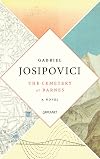
This short book tells a story without a plot, and yet it entices. Josipovici’s storytelling style is not spectacular; he uses an almost careless, gently rippling tone, and many repetitive elements, but offering a richness that arises from an ingenious play of appearance and reality.
The unnamed narrator is a professional translator, a seemingly phlegmatic man with no remarkable personality, but one obsessed with the tragic verses of Monteverdi's Orfeo and the languorous poetry of Joachim du show more Bellay. He has settled into a sluggish bourgeois existence, with a lot of attention for the good things in life, but clearly also on the verge of depression or even over it. He is still obsessed with his late first wife, who was everything to him, but who he constantly shadowed when she returned from work and who he did not try to save when she fell into the Thames. And the marriage to his second wife seems perfectly harmonious, but their seemingly polite bickering reveals a yawning chasm between the two.
In other words, Josipovici presents an intriguing game of contradictions, in which he regularly casts doubt on the truthfulness of the above-mentioned elements and refers to the possibility of imaginary lives. He reinforces this by constantly jumping through time and place. Almost imperceptibly, we pass from the protagonist's life with his second wife in a farmhouse in Wales, to his first marriage and residence in London, to his lonely existence in Paris after the death of his first wife. This play with time and place constantly unbalances the reader. On top of that the author regularly repeats the same events and actions, but each time with small variations and an occasional sinister accent, in which death constantly comes into play. Also the male protagonist himself, almost carelessly, introduces these small variations in his story, by regularly repeating the original texts of Monteverdi and du Bellay, but each time translating them slightly differently, shifting the meaning of the verses. In this way, Josipovici seems to ingeniously link modernism and postmodernism, confusing his reader, while at the same time addressing a very rich palette of existential themes. It was my first acquaintance with this author, but it certainly won't be my last. show less
The unnamed narrator is a professional translator, a seemingly phlegmatic man with no remarkable personality, but one obsessed with the tragic verses of Monteverdi's Orfeo and the languorous poetry of Joachim du show more Bellay. He has settled into a sluggish bourgeois existence, with a lot of attention for the good things in life, but clearly also on the verge of depression or even over it. He is still obsessed with his late first wife, who was everything to him, but who he constantly shadowed when she returned from work and who he did not try to save when she fell into the Thames. And the marriage to his second wife seems perfectly harmonious, but their seemingly polite bickering reveals a yawning chasm between the two.
In other words, Josipovici presents an intriguing game of contradictions, in which he regularly casts doubt on the truthfulness of the above-mentioned elements and refers to the possibility of imaginary lives. He reinforces this by constantly jumping through time and place. Almost imperceptibly, we pass from the protagonist's life with his second wife in a farmhouse in Wales, to his first marriage and residence in London, to his lonely existence in Paris after the death of his first wife. This play with time and place constantly unbalances the reader. On top of that the author regularly repeats the same events and actions, but each time with small variations and an occasional sinister accent, in which death constantly comes into play. Also the male protagonist himself, almost carelessly, introduces these small variations in his story, by regularly repeating the original texts of Monteverdi and du Bellay, but each time translating them slightly differently, shifting the meaning of the verses. In this way, Josipovici seems to ingeniously link modernism and postmodernism, confusing his reader, while at the same time addressing a very rich palette of existential themes. It was my first acquaintance with this author, but it certainly won't be my last. show less
A good book should be a dialogue between writer and reader, but it’s especially true with Josipovici, and even more so with this than the others I’ve read. It is an inescapably collaborative experience: a conversation between multiple writers, characters, and the reader, requiring patience, attention to detail, analytical thinking, and a bit of research. Eventually, most things fall into place, but there is a lot to piece together before the payoff.
I considered writing a review that was show more something of a pastiche, as I did for Calvino’s If on a Winter’s Night a Traveller (see my review HERE), which has some similarities with this. However, I think it’s more helpful to my future self, and anyone considering reading the book, to take a more conventional approach, even though the book itself is so unconventional.
Image: Book characters communicating, by Gary Hovland (Source)
Ingredients
The book comprises thirty episodes, essays, sections, chapters… I’m not sure of the best term. The time and place are vague and varied, the narrative styles and contexts also differ, and the connections, if any, are hard to spot for a long time. It’s frustrating, but in a way that made me want to solve it.
Variations
Many things “make up this peculiar book”. The title is a nod to Bach’s thirty Goldberg Variations and in the first episode of the book, Goldberg is paid to read to insomniac Westfield, echoing the actual Goldberg playing Bach to an insomniac Count.
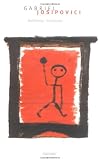
But music plays little part in this book. Two paintings are far more significant, one of which is on the cover. Furthermore, variations are not especially obvious (except that Westfield believes there are only seven original ideas, and that the book ends up in a different version of the start). It’s more that there are layers of storytelling reality - like Calvino. In one episode, someone sends seven tales, “each a variant on the theme” that more quietly trickles in the background of the book:
“A man who had enough wanted everything… As a result he was left with nothing.”
Themes
Conversations touch on art, classical mythology (especially the Odyssey and the Iliad), anthropology, archaeology, disability, storytelling, literature, philosophy, theology, sleep, the compulsion to write, writer’s block, and families. Paul Klee’s The Wander-Artist (on the cover of my edition) becomes increasingly important as muse, metaphor, and impediment.
However, it’s a painting first mentioned in an episode titled “Containers” that symbolises the themes most succinctly:
Image: Still Life with Bottles and Books (Anon, 1525) (Source)
One door locked, another ajar, but you can’t see the contents of anything, nor read the titles of either of the books. But it includes a literal key.
Meta
“He has tried to enliven things by inventing a present day figure through which to filter the rest.”
Occasionally, layers of narrative are exposed. A character is writing about being asked to write something, but it turns out we're reading their letter to someone else about the request - which is what the writer will submit.
Someone else narrates their life in the third person:
“Everything had developed an echo… Nothing was simply itself any more.”
Characters who seem unrelated sometimes echo each other, most startlingly two who dream or believe a butterfly went in their ear and is stuck in their head. The significance is opaque.
Part way through, I spotted what seemed to be a couple of errors (one a name, and the other about time periods), but later, when a writer notices his timelines are wrong, he is consoled by the thought:
“Perhaps it is not the details that count… but something else… That which lies in between… In between the details and in between the different stories.”
Josipovici is a careful writer. Any inconsistencies are surely deliberate, even if I didn't fully appreciate the significance. Further confirmation comes in the penultimate chapter that initially seems to repeat the first. Initially.
The layers are never like the clearly defined nesting of a matryoshka doll; it’s more like the partially overlapping petals of a delicate rose.
Image: Overlapping petals of a rose. Photo by Thomas Curryer (Source)
See also
Other stories that explore layers of narrative:
• Calvino’s If on a Winter’s Night a Traveller (see my review HERE).
• Charlie Kaufman’s film Adaptation, about his attempt to film Susan Orelan’s The Orchid Thief (see my review HERE).
• Megan Dunn’s Tinderbox (see my review HERE) about her trying to rewrite Ray Bradbury’s Fahrenheit 451 (see my review HERE) from the perspective of the female characters.
Quotes
• “I have read all the books that have been written, Mr Goldberg, and it makes me melancholy.” [May I never reach that position.]
• “Writing brings release, because one is both vulnerable and, in a curious way, active and in control. That is why writing is so much better than crying.”
And from Calvino:
“At every rereading I seem to be reading a new book for the first time. Is it I who keep changing… Or is reading a construction?” show less
I considered writing a review that was show more something of a pastiche, as I did for Calvino’s If on a Winter’s Night a Traveller (see my review HERE), which has some similarities with this. However, I think it’s more helpful to my future self, and anyone considering reading the book, to take a more conventional approach, even though the book itself is so unconventional.
Image: Book characters communicating, by Gary Hovland (Source)
Ingredients
The book comprises thirty episodes, essays, sections, chapters… I’m not sure of the best term. The time and place are vague and varied, the narrative styles and contexts also differ, and the connections, if any, are hard to spot for a long time. It’s frustrating, but in a way that made me want to solve it.
Variations
Many things “make up this peculiar book”. The title is a nod to Bach’s thirty Goldberg Variations and in the first episode of the book, Goldberg is paid to read to insomniac Westfield, echoing the actual Goldberg playing Bach to an insomniac Count.
But music plays little part in this book. Two paintings are far more significant, one of which is on the cover. Furthermore, variations are not especially obvious (except that Westfield believes there are only seven original ideas, and that the book ends up in a different version of the start). It’s more that there are layers of storytelling reality - like Calvino. In one episode, someone sends seven tales, “each a variant on the theme” that more quietly trickles in the background of the book:
“A man who had enough wanted everything… As a result he was left with nothing.”
Themes
Conversations touch on art, classical mythology (especially the Odyssey and the Iliad), anthropology, archaeology, disability, storytelling, literature, philosophy, theology, sleep, the compulsion to write, writer’s block, and families. Paul Klee’s The Wander-Artist (on the cover of my edition) becomes increasingly important as muse, metaphor, and impediment.
However, it’s a painting first mentioned in an episode titled “Containers” that symbolises the themes most succinctly:
Image: Still Life with Bottles and Books (Anon, 1525) (Source)
One door locked, another ajar, but you can’t see the contents of anything, nor read the titles of either of the books. But it includes a literal key.
Meta
“He has tried to enliven things by inventing a present day figure through which to filter the rest.”
Occasionally, layers of narrative are exposed. A character is writing about being asked to write something, but it turns out we're reading their letter to someone else about the request - which is what the writer will submit.
Someone else narrates their life in the third person:
“Everything had developed an echo… Nothing was simply itself any more.”
Characters who seem unrelated sometimes echo each other, most startlingly two who dream or believe a butterfly went in their ear and is stuck in their head. The significance is opaque.
Part way through, I spotted what seemed to be a couple of errors (one a name, and the other about time periods), but later, when a writer notices his timelines are wrong, he is consoled by the thought:
“Perhaps it is not the details that count… but something else… That which lies in between… In between the details and in between the different stories.”
Josipovici is a careful writer. Any inconsistencies are surely deliberate, even if I didn't fully appreciate the significance. Further confirmation comes in the penultimate chapter that initially seems to repeat the first. Initially.
The layers are never like the clearly defined nesting of a matryoshka doll; it’s more like the partially overlapping petals of a delicate rose.
Image: Overlapping petals of a rose. Photo by Thomas Curryer (Source)
See also
Other stories that explore layers of narrative:
• Calvino’s If on a Winter’s Night a Traveller (see my review HERE).
• Charlie Kaufman’s film Adaptation, about his attempt to film Susan Orelan’s The Orchid Thief (see my review HERE).
• Megan Dunn’s Tinderbox (see my review HERE) about her trying to rewrite Ray Bradbury’s Fahrenheit 451 (see my review HERE) from the perspective of the female characters.
Quotes
• “I have read all the books that have been written, Mr Goldberg, and it makes me melancholy.” [May I never reach that position.]
• “Writing brings release, because one is both vulnerable and, in a curious way, active and in control. That is why writing is so much better than crying.”
And from Calvino:
“At every rereading I seem to be reading a new book for the first time. Is it I who keep changing… Or is reading a construction?” show less
A few notes and impressions
The early chapters had everything for me, Oliver Sacks, Proust, Sir Thomas Browne, John Donne, Samuel Beckett. It was a frisson of delight for the mind to have this parade of thinkers on the page.
The subject of the book can be summed up by Sam Beckett writing about Proust 'Only he who forgets remembers'. At least that is what Josipovici recalls from reading Becket's book on Proust. What he found by looking further was that the closest Beckett got to it was: "The show more man with the good memory does not remember anything because he does not forget anything". That's what the madeleine moment is all about - memory brings up what is forgotten.
This line made me think of that poor bastard Funes the Memorious, who remembered everything and was cursed to be incapable of living his life as more memories became his life.
Josipovici retells the tragic story of Rosa, who was awakened after decades of dormancy in Sacks' book Awakenings, by new medicine that brought her to the present. But she could not bare it and refused further treatment. She simply could not stay in a place she did not belong or understand.
With these stories, I think of both my parents. Children of war. My mother left her home aged 26 to move to the end of the earth for a better life. But over the years, I discovered that her points of reference were still her village, the well, the fields, the houses, the lake, the annual pilgrimage, the friends she grew up with after the war. She never left, she still saw the world as though her home was its centre and the points of the compass radiated from it. She never forgot, making living in the present a chore.
My father could never escape the way war took his childhood away from him. All he wanted to do was forget, but, that trauma never left him. He spent the rest of his life believing he had a better life, but it was only the other side of the same coin. Better, safer, but the deep flaws in his personality told of his troubles. That is also what Josipovici is doing here, remembering can only bring about what was forgotten. For my parents, forgetting never occurred. Memory was a curse, like that experienced by Borges' Funes.
I learned a fascinating thing, the statues of confederate heroes all over the southern USA weren't put up after the civil war but decades later as a reaction to emancipation, in the fight against it. So the contest for keeping them, is really the symbol of racial hatred, like the Jim Crow laws that sought to reverse the freedoms won by imposing segregation.
Forgetting is what we all need, to get on, memorials, another rich area of examination in this book, allow forgetting by holding the details of events even traumatic ones for us. If we have to think about memorials too hard, we are given the responsibility of it. This is a troubling thought, shouldn't we all take responsibility for past wrongs? Memory is a burden if you have to deal with it yourself. The point being forgetting is essential to move on, to allow a cultural change to happen for a future.
Josipovici does what we really want all academics to do for us, not just stick to their silos, but explore outside and into the matters that trouble us, and ease us into new ideas. He reminded me of my family and how they lived, and I forgive them just a little more. So I can forget it all.
Shakespeare's Hamlet, Sterne's Tristam Shandy, Wallace Stevens late poems, tombstone inscriptions, Holocaust memorials, S11 memorial, The Iliad, Passover, Nietschze, Srebrenica, are all reference points for forgetting.
..............
One of the best books I've read this year. show less
The early chapters had everything for me, Oliver Sacks, Proust, Sir Thomas Browne, John Donne, Samuel Beckett. It was a frisson of delight for the mind to have this parade of thinkers on the page.
The subject of the book can be summed up by Sam Beckett writing about Proust 'Only he who forgets remembers'. At least that is what Josipovici recalls from reading Becket's book on Proust. What he found by looking further was that the closest Beckett got to it was: "The show more man with the good memory does not remember anything because he does not forget anything". That's what the madeleine moment is all about - memory brings up what is forgotten.
This line made me think of that poor bastard Funes the Memorious, who remembered everything and was cursed to be incapable of living his life as more memories became his life.
Josipovici retells the tragic story of Rosa, who was awakened after decades of dormancy in Sacks' book Awakenings, by new medicine that brought her to the present. But she could not bare it and refused further treatment. She simply could not stay in a place she did not belong or understand.
With these stories, I think of both my parents. Children of war. My mother left her home aged 26 to move to the end of the earth for a better life. But over the years, I discovered that her points of reference were still her village, the well, the fields, the houses, the lake, the annual pilgrimage, the friends she grew up with after the war. She never left, she still saw the world as though her home was its centre and the points of the compass radiated from it. She never forgot, making living in the present a chore.
My father could never escape the way war took his childhood away from him. All he wanted to do was forget, but, that trauma never left him. He spent the rest of his life believing he had a better life, but it was only the other side of the same coin. Better, safer, but the deep flaws in his personality told of his troubles. That is also what Josipovici is doing here, remembering can only bring about what was forgotten. For my parents, forgetting never occurred. Memory was a curse, like that experienced by Borges' Funes.
I learned a fascinating thing, the statues of confederate heroes all over the southern USA weren't put up after the civil war but decades later as a reaction to emancipation, in the fight against it. So the contest for keeping them, is really the symbol of racial hatred, like the Jim Crow laws that sought to reverse the freedoms won by imposing segregation.
Forgetting is what we all need, to get on, memorials, another rich area of examination in this book, allow forgetting by holding the details of events even traumatic ones for us. If we have to think about memorials too hard, we are given the responsibility of it. This is a troubling thought, shouldn't we all take responsibility for past wrongs? Memory is a burden if you have to deal with it yourself. The point being forgetting is essential to move on, to allow a cultural change to happen for a future.
Josipovici does what we really want all academics to do for us, not just stick to their silos, but explore outside and into the matters that trouble us, and ease us into new ideas. He reminded me of my family and how they lived, and I forgive them just a little more. So I can forget it all.
Shakespeare's Hamlet, Sterne's Tristam Shandy, Wallace Stevens late poems, tombstone inscriptions, Holocaust memorials, S11 memorial, The Iliad, Passover, Nietschze, Srebrenica, are all reference points for forgetting.
..............
One of the best books I've read this year. show less
With the striking contradiction in the title and subtitle (Infinity, the story of a moment), Josipovici immediately indicates that this is a text that should not be taken literally. And indeed, the insecure servant Massimo's account of the life of his former aristocratic boss Tancredo Pavone constantly misleads you. An unknown interviewer questions Massimo about Pavone, although it is not clear what the interviewer's intention is. And Massimo himself constantly loses the thread, falls silent show more at every turn, and claims that he barely understands anything about Pavone. It is therefore remarkable that, in the meantime, while answering the interviewer's questions, he reproduces verbatim the very long monologues that Pavone has spoken to him. And with a technique that Josipovici clearly owes to W.G. Sebald – Massimo constantly quotes “he said”, sometimes four or five times on a page – he gives the impression that this is a faithful representation, while it is also clear that Massimo may not be such a reliable narrator. And another contradiction: from Massimo's words we can unintentionally conclude that Pavone was an eccentric, headstrong and very misanthropic person, but the relationship between the subordinate servant and his boss gradually seems more and more like a close bond of friendship, especially towards the end. And the self-righteous Pavona turns out to be a fragile person. And one more: Pavone spouts his bile about the evolution of Western culture, but he is a widely celebrated avant-garde music composer himself. And although Pavone swears by elitist culture and lives an aristocratic lifestyle, he seems particularly struck by the culture of the Ibe tribe in West Africa and the Buddhist monasteries in Nepal. And I could go on like this for a while. By now it will be clear that Josipovici puts the unsuspecting reader to the test with all the metatextual aspects of this slim book. Even though I'm not a fan of so much hocus pocus (hence only 3 stars), I have to admit that this is quite impressive. show less
Lists
Awards


You May Also Like


Associated Authors
Statistics
- Works
- 62
- Also by
- 9
- Members
- 1,268
- Popularity
- #20,231
- Rating
- 4.1
- Reviews
- 44
- ISBNs
- 119
- Languages
- 7
- Favorited
- 6