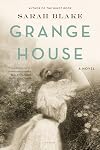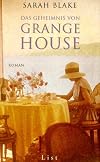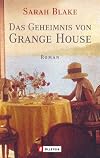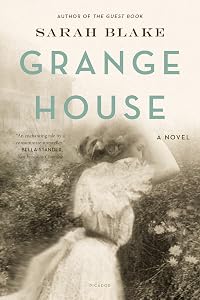
Grange House
by Sarah Blake
On This Page
Description
From the author of the New York Times bestselling novels THE POSTMISTRESS and THE GUEST BOOK comes Sarah Blake's GRANGE HOUSE."Pleasing, intricate...[a] delightful book" --New York Times Book ReviewMaisie Thomas spends every summer at Grange House, a hotel on the coast of Maine ruled by the elegant Miss Grange. In 1896, when Maisie turns 17, her visit marks a turning point. On the morning after her arrival, local fishermen make a gruesome discovery: drowned lovers, found clasped in each show more other's arms. It's only the first in a series of events that casts a shadow over Maisie's summer. As she considers the attentions of two very different young men, Maisie also falls under the gaze of Miss Grange, who begins to tell her disturbing stories of her past.Rich with the details, customs, and language of the era, Sarah Blake's Grange House is a wonderfully atmospheric, page-turning novel of literary suspense and romance. show lessTags
Recommendations
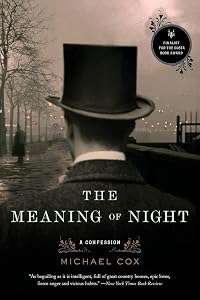
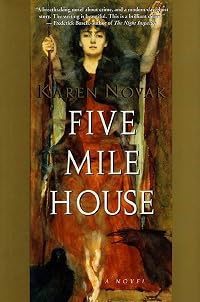
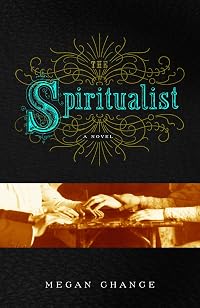
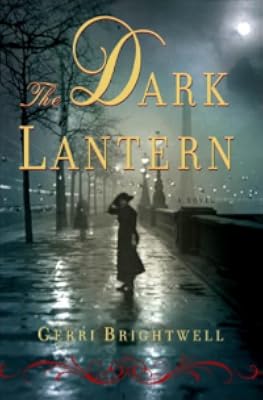
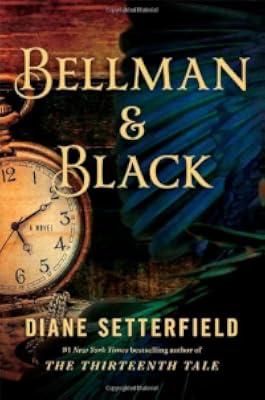
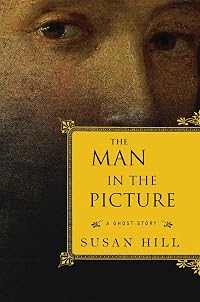
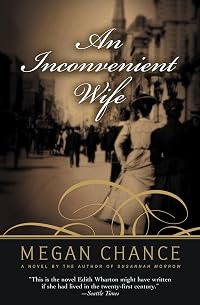
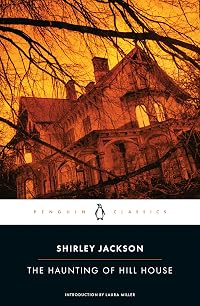



Member Reviews
When Maisie Thomas and her family return to Grange House in 1896 for their annual summer visit, she has no clue how this particular year will change her life. The almost-spectral figure of Miss Grange invites Maisie to be part of the house's story - one fulls of ghosts, lost children, and disasters visited upon generation after generation - and Maisie runs in fear. However, fate will not let her stray far. Calamity falls upon her family, and Maisie is drawn into Miss Grange's mystery, even as two young men begin to vie for her affection. As young as she is, Maisie knows one thing: she will not marry simply because it's what she is supposed to do, and nothing will ease her heart until she knows the secret of the grave in the woods.
Grange show more House is beautifully written with a strong clear voice. It would be easy to read it and assume it was written over a hundred years ago. Every scene - even the sentence constructive - has a distinct Victorian-Gothic lilt. The story is enjoyable as well, with the ghosts, secrets, and hidden identities that one would expect. Maisie is a likeable girl, and very true to her time period. One of the major twists to the ending seemed obvious to me for a while, but I didn't foresee everything so it still had a nice surprise. show less
Grange show more House is beautifully written with a strong clear voice. It would be easy to read it and assume it was written over a hundred years ago. Every scene - even the sentence constructive - has a distinct Victorian-Gothic lilt. The story is enjoyable as well, with the ghosts, secrets, and hidden identities that one would expect. Maisie is a likeable girl, and very true to her time period. One of the major twists to the ending seemed obvious to me for a while, but I didn't foresee everything so it still had a nice surprise. show less
There are so many beautiful facets to this fascinating story. I loved the prose, the atmosphere, the very complicated but gripping story. About half way through, I wanted to message the author and tell her how absolutely touching this story is. Very thoughtful, very philosophical.
This author reminds me of Kate Morton---but better. A fourth Bronte sister, maybe. The only not-so-great reaction I had to the book was that the dialogue was a little hokey and melodramatic, at times, and I'm still not so sure how I feel about the ending. Though I had the "main thing" figured out by page 78, and reaffirmed my suspicions by page 101, I still very much enjoyed reading how everything played out and will admit there were one or two things that show more surprised me later---but still before they were actually revealed.
I loved how the author used imagery and dichotomies in so many ways. Maisie's story is a definite "coming of age", though the aforementioned hokey dialogue proves things are happening way too fast for her to process.
The younger Nell expressed many of my thoughts and desires as a writer. There is so much I want to express with my writing...so much of it is inexpressible until I see it there on the page before me.
Grange House is definitely one of my new all-time favorite novels. I want to go back and reread it all now! show less
This author reminds me of Kate Morton---but better. A fourth Bronte sister, maybe. The only not-so-great reaction I had to the book was that the dialogue was a little hokey and melodramatic, at times, and I'm still not so sure how I feel about the ending. Though I had the "main thing" figured out by page 78, and reaffirmed my suspicions by page 101, I still very much enjoyed reading how everything played out and will admit there were one or two things that show more surprised me later---but still before they were actually revealed.
I loved how the author used imagery and dichotomies in so many ways. Maisie's story is a definite "coming of age", though the aforementioned hokey dialogue proves things are happening way too fast for her to process.
The younger Nell expressed many of my thoughts and desires as a writer. There is so much I want to express with my writing...so much of it is inexpressible until I see it there on the page before me.
Grange House is definitely one of my new all-time favorite novels. I want to go back and reread it all now! show less
If you like 19th C. novels such as those by the Bronte sisters, you will probably enjoy this book. Sarah Blake is a scholar and professor of 19th C. literature and in this, her first novel, she has fit in just about every classic gothic twist and turn -- from ghosts and mysterious strangers to abandoned babies and drowned lovers. But though it it all VERY complex and (melo)dramatic, Grange House is written well enough that (though the events seem unlikely!) it never quite goes over the top to ridiculous!
Maisie Thomas, at 17, returns to Grange House, an inn on the coast of Maine, where she has summered most of her life with her mother and father. She has a special friendship with the elderly Miss Grange, the surviving member of the show more family who owned the house, and now lives as a semi invalid in the attic room where her reclusive mother lived before her. At 17, Maisie is no longer a child and though she is approaching the time when her parents want to marry her off to a suitable husband, she feels a great yearning to break free from that mold, and like Miss Grange, be a writer and independant free spirited woman.
Miss Grange, recognizing this yearning and creative spirit in Maisie, declares that Maisie must "finish the story" of Grange House which she cannot. She shares her dairies with Maisie, and her fictionalized stories of her life at Grange House, in which Maisie's father -- a business friend of Mr. Grange's -- played a role. A series of tragedies turned the once happy Grange House into a sad place haunted by memories and events that repeat and repeat in Miss Grange's stories and diaries. Maisie tries to discern the truth in these stories, at the same time she is trying to find her own place in the world.
This novel really has a very feminist theme -- should a young woman be aiming her attention towards love and marriage, or should she fulfill her creative spirit though it may leave her alone and reclusive? I realized at the end that it was really the actions and theory of a man outside of the family, on how a woman of a certain age "should" behave, that set a whole series of events and the tragic plot of the story in motion.
The storyline is complex, the series of tragedies almost melodramatic, but the mystery is compelling and I stayed up late in the night to get to the end and find out the "secret" of Grange House! show less
Maisie Thomas, at 17, returns to Grange House, an inn on the coast of Maine, where she has summered most of her life with her mother and father. She has a special friendship with the elderly Miss Grange, the surviving member of the show more family who owned the house, and now lives as a semi invalid in the attic room where her reclusive mother lived before her. At 17, Maisie is no longer a child and though she is approaching the time when her parents want to marry her off to a suitable husband, she feels a great yearning to break free from that mold, and like Miss Grange, be a writer and independant free spirited woman.
Miss Grange, recognizing this yearning and creative spirit in Maisie, declares that Maisie must "finish the story" of Grange House which she cannot. She shares her dairies with Maisie, and her fictionalized stories of her life at Grange House, in which Maisie's father -- a business friend of Mr. Grange's -- played a role. A series of tragedies turned the once happy Grange House into a sad place haunted by memories and events that repeat and repeat in Miss Grange's stories and diaries. Maisie tries to discern the truth in these stories, at the same time she is trying to find her own place in the world.
This novel really has a very feminist theme -- should a young woman be aiming her attention towards love and marriage, or should she fulfill her creative spirit though it may leave her alone and reclusive? I realized at the end that it was really the actions and theory of a man outside of the family, on how a woman of a certain age "should" behave, that set a whole series of events and the tragic plot of the story in motion.
The storyline is complex, the series of tragedies almost melodramatic, but the mystery is compelling and I stayed up late in the night to get to the end and find out the "secret" of Grange House! show less
9-17-2008
This debut novel is so incredibly lyrical and poetic that I keep going back to it and just opening it up at a random page and reading a passage here and there. It’s so evocative of Charlotte Bronte that I’m sure the author must have been influenced heavily by her, which would make sense anyway because Blake has a degree in Victorian literature. Indeed I believe her intent is to reinvent the classic Victorian novel in the tradition of Bronte or Radcliffe, and she really does an admirable job.
This story is set in 19th century America, on the wind-swept coast of Maine, as 17-year old Maisie Thomas and her parents return to Grange House for their usual summer holiday. Although Maisie has been coming with her parents to Grange show more House every year all of her life, this is the year that the secrets of Grange House and of her own family begin to emerge, and Maisie makes some truly earth-shaking discoveries about herself and her family. On top of all that she must struggle mightily with her own conflicting desires as she approaches womanhood and tries to find a balance between the intellectual stimulation and experiences she craves and the conventions of the times in which she lives.
The summer starts off inauspiciously when a pair of runaway lovers are found drowned in the sea nearby, one of them a serving girl from Grange House, and Maisie is drawn into the veiled, convoluted ramblings of Nell Grange, the woman to whose family the house once belonged and who still resides in the upper rooms of the house, roaming above the guests’ heads like a restless shadow. A lone, sad grave in the woods hints at a history still untold, and Maisie soon learns that, willing or not, she will be the one to tell it.
Don’t let the young age of the protagonist put you off. This is not a young adult novel, although it would be perfectly appropriate for teens (in fact, if teens want to get a taste of what true, talented writing is (I won’t revisit my unkind thoughts on certain people in the YA market calling themselves ‘writers’ *cough cough*), I highly recommend it. At any rate, it is definitely a mainstream adult novel and I would compare it most closely to a modernized Jane Eyre in style and feel. Blake certainly has the gothic Victorian atmosphere nailed, complete with fog, rambling old houses, secrets and muttering old ladies in attics, but without the more overwrought, eye-rolling dramatics. Maisie is a protagonist any woman can be proud of, too – and that’s saying something coming from me, because I generally dislike more female protagonists than I like!
The sheer beauty of the language is more than worth the read, as well. It was like reading poetry in long form, or listening to a perfect melody. Blake spins out the story slowly, almost tortuously, and I was on tenterhooks until the very last page. Ask my husband! For the last 10 pages I literally had to get up and walk around the house, reading as I walked, because I was just so tensed up and tormented about how it was going to end! I’m such a sucker, but that only speaks to the talent of this new voice in fiction. I’m all over this Sarah Blake now and will be watching closely for her follow-up. show less
This debut novel is so incredibly lyrical and poetic that I keep going back to it and just opening it up at a random page and reading a passage here and there. It’s so evocative of Charlotte Bronte that I’m sure the author must have been influenced heavily by her, which would make sense anyway because Blake has a degree in Victorian literature. Indeed I believe her intent is to reinvent the classic Victorian novel in the tradition of Bronte or Radcliffe, and she really does an admirable job.
This story is set in 19th century America, on the wind-swept coast of Maine, as 17-year old Maisie Thomas and her parents return to Grange House for their usual summer holiday. Although Maisie has been coming with her parents to Grange show more House every year all of her life, this is the year that the secrets of Grange House and of her own family begin to emerge, and Maisie makes some truly earth-shaking discoveries about herself and her family. On top of all that she must struggle mightily with her own conflicting desires as she approaches womanhood and tries to find a balance between the intellectual stimulation and experiences she craves and the conventions of the times in which she lives.
The summer starts off inauspiciously when a pair of runaway lovers are found drowned in the sea nearby, one of them a serving girl from Grange House, and Maisie is drawn into the veiled, convoluted ramblings of Nell Grange, the woman to whose family the house once belonged and who still resides in the upper rooms of the house, roaming above the guests’ heads like a restless shadow. A lone, sad grave in the woods hints at a history still untold, and Maisie soon learns that, willing or not, she will be the one to tell it.
Don’t let the young age of the protagonist put you off. This is not a young adult novel, although it would be perfectly appropriate for teens (in fact, if teens want to get a taste of what true, talented writing is (I won’t revisit my unkind thoughts on certain people in the YA market calling themselves ‘writers’ *cough cough*), I highly recommend it. At any rate, it is definitely a mainstream adult novel and I would compare it most closely to a modernized Jane Eyre in style and feel. Blake certainly has the gothic Victorian atmosphere nailed, complete with fog, rambling old houses, secrets and muttering old ladies in attics, but without the more overwrought, eye-rolling dramatics. Maisie is a protagonist any woman can be proud of, too – and that’s saying something coming from me, because I generally dislike more female protagonists than I like!
The sheer beauty of the language is more than worth the read, as well. It was like reading poetry in long form, or listening to a perfect melody. Blake spins out the story slowly, almost tortuously, and I was on tenterhooks until the very last page. Ask my husband! For the last 10 pages I literally had to get up and walk around the house, reading as I walked, because I was just so tensed up and tormented about how it was going to end! I’m such a sucker, but that only speaks to the talent of this new voice in fiction. I’m all over this Sarah Blake now and will be watching closely for her follow-up. show less
t's not that this book isn't good; it's that it isn't finished. While suffering from the usual first-novel solipsism about writing - the narrator is Fraught With Authorliness - the story also blunders into almost-foreshadowing, almost-connections, and a few visible bits of authorial cleverness of the kind that should have been sewn down into the story rather than left exposed. The characters are vivid; the scenes evoke; the story contains a curious twist of several people acting on one character's untrustworthy memory, followed by several more characters remembering in wonderfully, realistically self-driven perspective (one of the characters, for example, describes in vivid detail a particular event, but fails to identify what exactly show more is happening, a fact revealed to her only later, when she is able to grasp the implication of the aspect she failed to describe). A more complete version of this novel would have woven the theme of what we remember 'incorrectly' more closely throughout the book, ditched the pettier clevernesses, and foreshadowed more coherently. And it would have been brilliant.
Well, Sarah Blake, I do hope to see more from you. Just remember: your strength in this book lay in having characters remember things messily, on purpose or because of natural naivete, and in your insistence on terse, but vivid, description. Write us another book in which people have realistic memories. You would be doing The Novel a favor if you did so. Just - don't try to be Prospero yet. Telling us about the authorial process makes the reader ignore what you point out about the workings of memory; it makes the genius of showing perspective in memory seem like just another weird thing those weird authors do, rather than Something True About Being Human, And That Means You, Dear Reader. show less
Well, Sarah Blake, I do hope to see more from you. Just remember: your strength in this book lay in having characters remember things messily, on purpose or because of natural naivete, and in your insistence on terse, but vivid, description. Write us another book in which people have realistic memories. You would be doing The Novel a favor if you did so. Just - don't try to be Prospero yet. Telling us about the authorial process makes the reader ignore what you point out about the workings of memory; it makes the genius of showing perspective in memory seem like just another weird thing those weird authors do, rather than Something True About Being Human, And That Means You, Dear Reader. show less
The first time I read this book, I was enthralled. This book has an over-the-top Gothic plot. It's romantic, it's a ghost story. It's Victorian and creepy and suspenseful and interesting. It's no Jane Eyre, but it definitely aspires to be and frankly, I was happy just to read a contemporary novel that makes the attempt. I re-read this recently, and this time I did a lot of skimming since I knew what was going to happen, and the melodrama stretched my patience. Still, it is an interesting read.
I admit this book was right up my alley. What an amazing job she did of evoking a voice that made you believe it was written in a much earlier era. As a writer, I also liked the examination of the concept of "story" in this book.
Members
- Recently Added By
Lists

Books Read in 2017
4,249 works; 130 members

Ghosts
278 works; 18 members

2015 UpROOTed
28 works; 1 member

I Could Live There
185 works; 12 members

Which house?
423 works; 16 members
Author Information

3+ Works 5,030 Members
Common Knowledge
- Canonical title
- Grange House
- Original publication date
- 2000-06-07
- People/Characters
- Maisie Thomas; Miss Grange
- Important places
- Maine, USA
- First words
- If you have come for a long stay, you must arrive at Grange House by water.
- Quotations
- "A man's history is not the course of events told one after the other; it is a place he returns to. A place he circles round and round but cannot, perhaps, ever enter. My darling, I think you are become that place." (Ludlow, ... (show all)to a young Miss Grange, page 183)
"There are other stories beside the one we live," she said. "And I intend that word - beside - to be understood quite literally, Maisie. When we walk, the others we might have been in step in and out beside us." (page 52)
"One must stare down one's horror, stare at it straight and look it in the eye, Dr. Bates. It is when one glances away that one is lost, for then the thing is loosed and it can crep round, playing in the mind with its soft, i... (show all)nsistent fingers." (page 61)
"A sister is one's other half," I offered.
He was silent, waiting.
"Or, say," I continued, more for myself than the city gentleman beside me, "she is at once who I am - and am not" - I paused - "made visible." (page 153... (show all))
Classifications
Statistics
- Members
- 346
- Popularity
- 91,367
- Reviews
- 9
- Rating
- (3.71)
- Languages
- English, French, German
- Media
- Paper, Audiobook, Ebook
- ISBNs
- 10
- ASINs
- 2