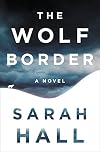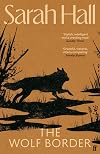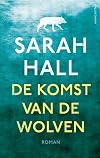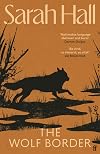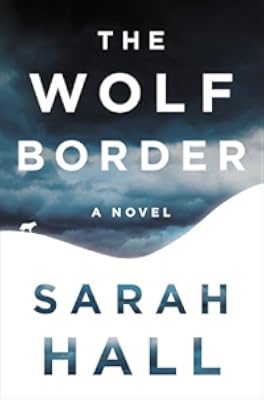
The Wolf Border
by Sarah Hall
On This Page
Description
For almost a decade, zoologist Rachel Caine has lived a solitary existence far from her estranged family in England, monitoring wolves in a remote section of Idaho as part of a wildlife recovery program. But a surprising phone call takes her back to the peat and wet light of the Lake District where she grew up. The eccentric Earl of Annerdale has a controversial scheme to reintroduce the Grey Wolf to the English countryside, and he wants Rachel to spearhead the project.Tags
Recommendations















Member Recommendations
Member Reviews
Possibly the discovery of my reading year (already in mid-January) – magnificent writing. Halfway through the novel I started to slow down – simply did not want it to end, but secretly also wondered how it would end. Sarah could have simply continued writing about Rachel and her men (both hairy and furry) in one endless series – I would have continued reading it, cherishing it, ruminating on it, until the end of sojourn on planet earth. And yet the ending of this novel resulted in some of the most frantic and emotionally spell-bound reading I ever did. I didn’t want it to end, I wanted the pack of wolves to survive, I wanted to know more about Rachel’s trip to Idaho.
So what makes it all so addictive? I suspect the story show more touches on many themes in my own life. There is also the intergenerational perspective which gives it depth. And then there is the wolf and the public outcry around it (last year over a 100,000 sheep in NL have died as a result of a disease called blue tongue, but the less than two hundred sheep killed by wolves are the one thing people can’t stop talking about). The wolf stands for the wild, for something called nature, in a shape we don’t know anymore. All control freaks kick into action the moment the wolf does not behave like a domesticated dog. It spreads fear. Whereas when I met one in the wild, last year, on the heather fields of my youth, I was just intrigued by this big dog walking so casually across the forest track I was hiking on. Such slick movements. Such command, so sly. Magical. The same applies to Hall’s deft treatment of the wider ramifications of the theme of re-introducing wilderness – borders, identity, fear of the uncontrolled, assertion of power and control (over women, over one’s vices and addictions, over one’s nation, over one’s traumas, over one’s life).
So what is the story? Rachel, a single woman in her late thirties, happily works for a reclusive wilderness centre that monitors the movement of two packs of wolves across Idaho and Canada. Life is simple, spartan and fun with changing crews of volunteers, a hostile environment (hunters and farmers killing and snaring wolves) and a small but committed community of conservationists. Rachel is head hunted for a bold conservationist experiment by an old fashioned Lord in Cumbria, Rachel’s place of birth. The flight and first stay in ten years in Cumbria is paid for by the Lord. Rachel meets her mom for the first time in ages and manages to avoid her estranged half-brother. The job interview confirms her fears – the Lord is do good’er, who wants to create an expansive keep for a couple of wolves, re-introducing the species after an absence of 600 years. It is not half as interesting as the wolf project she is involved in, in Idaho – it is something between a zoo and wilderness. Rachel returns to Idaho, but helps out the Lord by arranging the ferrying of a couple of wolves from a rehab clinic in Rumania. But then her mom dies. Her half-brother’s wife arranges for Rachel’s absence from the funeral (while she is snowed in, in her camp in Idaho). And Rachel gets pregnant as a result of a one-night stand with a local colleague. She sort of doesn’t know how to handle the new situation and decides to return to Cumbria, taking up the Lord’s generous package to become his project manager.
The novel then takes us through all the steps for a successful integration and reproduction of a couple of wolves and their four pups on the Lord’s estate in the lake district. Rachel settles in on a cottage on the estate, she mends her relationship with both her half-brother (who turns out to be a drug addict) and her sister in law, she forms her own team of dedicated conservationists (hiring a South African zen ranger, recruiting the Lord’s daughter as dedicated volunteer), she even manages to start a long lasting affair with the local vet (who turned widow two years before her return to Cumbria). She deftly handles the local protests against the project, and manages both her own and the wolves pregnancies. Her baby son Charles proves pivotal in the recovery process of her half brother. All things settle and stabilize into a pleasant rhythm and then… Disaster strikes – the wolves escape from an open gate.
In a dramatic finale, Hall describes the hunt for the six wolves on the run and the media circus which emerges around it. Only then Rachel perceives that this is actually part of the Lord’s plan – the wolves were meant to escape and flee to the Scottish Highlands in an enforced process of rewilding. Scotland has turned independent and the wolves become an emblem of the new nation – a way to distinguish itself from Great Britain. Rather than catching the pack, the Lord in his helicopter hopes to run them across the border and arrange for a radical environmental policy of the new nation.
Sarah Hall’s writing has a lot in common with Barbara Kingsolver’s, but where Kingsolver is conscribed by American niceties, writing in a polished, politically correct manner, Hall’s writing is much more raw and profound, by being both sexually explicit and by engaging with doubt and trauma in a much more profound, in the face, manner. In movie terms Kingsolver is Disney, and Hall is art movie. Gosh, let’s hope she writes a lot more. show less
So what makes it all so addictive? I suspect the story show more touches on many themes in my own life. There is also the intergenerational perspective which gives it depth. And then there is the wolf and the public outcry around it (last year over a 100,000 sheep in NL have died as a result of a disease called blue tongue, but the less than two hundred sheep killed by wolves are the one thing people can’t stop talking about). The wolf stands for the wild, for something called nature, in a shape we don’t know anymore. All control freaks kick into action the moment the wolf does not behave like a domesticated dog. It spreads fear. Whereas when I met one in the wild, last year, on the heather fields of my youth, I was just intrigued by this big dog walking so casually across the forest track I was hiking on. Such slick movements. Such command, so sly. Magical. The same applies to Hall’s deft treatment of the wider ramifications of the theme of re-introducing wilderness – borders, identity, fear of the uncontrolled, assertion of power and control (over women, over one’s vices and addictions, over one’s nation, over one’s traumas, over one’s life).
So what is the story? Rachel, a single woman in her late thirties, happily works for a reclusive wilderness centre that monitors the movement of two packs of wolves across Idaho and Canada. Life is simple, spartan and fun with changing crews of volunteers, a hostile environment (hunters and farmers killing and snaring wolves) and a small but committed community of conservationists. Rachel is head hunted for a bold conservationist experiment by an old fashioned Lord in Cumbria, Rachel’s place of birth. The flight and first stay in ten years in Cumbria is paid for by the Lord. Rachel meets her mom for the first time in ages and manages to avoid her estranged half-brother. The job interview confirms her fears – the Lord is do good’er, who wants to create an expansive keep for a couple of wolves, re-introducing the species after an absence of 600 years. It is not half as interesting as the wolf project she is involved in, in Idaho – it is something between a zoo and wilderness. Rachel returns to Idaho, but helps out the Lord by arranging the ferrying of a couple of wolves from a rehab clinic in Rumania. But then her mom dies. Her half-brother’s wife arranges for Rachel’s absence from the funeral (while she is snowed in, in her camp in Idaho). And Rachel gets pregnant as a result of a one-night stand with a local colleague. She sort of doesn’t know how to handle the new situation and decides to return to Cumbria, taking up the Lord’s generous package to become his project manager.
The novel then takes us through all the steps for a successful integration and reproduction of a couple of wolves and their four pups on the Lord’s estate in the lake district. Rachel settles in on a cottage on the estate, she mends her relationship with both her half-brother (who turns out to be a drug addict) and her sister in law, she forms her own team of dedicated conservationists (hiring a South African zen ranger, recruiting the Lord’s daughter as dedicated volunteer), she even manages to start a long lasting affair with the local vet (who turned widow two years before her return to Cumbria). She deftly handles the local protests against the project, and manages both her own and the wolves pregnancies. Her baby son Charles proves pivotal in the recovery process of her half brother. All things settle and stabilize into a pleasant rhythm and then… Disaster strikes – the wolves escape from an open gate.
In a dramatic finale, Hall describes the hunt for the six wolves on the run and the media circus which emerges around it. Only then Rachel perceives that this is actually part of the Lord’s plan – the wolves were meant to escape and flee to the Scottish Highlands in an enforced process of rewilding. Scotland has turned independent and the wolves become an emblem of the new nation – a way to distinguish itself from Great Britain. Rather than catching the pack, the Lord in his helicopter hopes to run them across the border and arrange for a radical environmental policy of the new nation.
Sarah Hall’s writing has a lot in common with Barbara Kingsolver’s, but where Kingsolver is conscribed by American niceties, writing in a polished, politically correct manner, Hall’s writing is much more raw and profound, by being both sexually explicit and by engaging with doubt and trauma in a much more profound, in the face, manner. In movie terms Kingsolver is Disney, and Hall is art movie. Gosh, let’s hope she writes a lot more. show less
At the start of "The Wolf Border", Rachel Cain, an English zoologist, is living a stable, semi-wild, almost solitary life working on the grey wolf recovery program in the Nez Perce National Historical Park in Idaho. The book, told from Rachel's point of view, covers a period where her life changes fundamentally as she returns to her native English Lake District to work for an eccentric Earl, reconnects with her estranged family, deals with being pregnant and leads a project to reintroduce grey wolves to the North of England.
The book has a strong plot that deals with politics and class and the struggle between the wild and the civilized. On that level alone it would be compelling but what sets it apart is Sarah Hall's muscular writing show more and her unflinching insights into people.
The language is sometimes beautiful, sometimes brutal, always precise. The people are complex and real. The book is filled with sex, death, science, addiction, grief, motherhood and many varieties of love and distaste. The sex is described with an honesty that is so unusual it is almost shocking. The raw pain and anger that death produces in those who are forced to watch it and survive it are graphically evoked. The overwhelming experiences of pregnancy and early motherhood are embraced without being romanticised.
One the themes of this book is rewilding, the untaming of our countryside by returning to it predators that we have long since exterminated. Rachel Caine is working towards this and,
"...would like to believe there will be a place again where the street lights end and wilderness begins: the wolf border."
Rachel walks this border throughout the book, sometimes seeing herself and those around her primarily as animals dominating their territory but still driven by basic needs and urges, sometimes feeling the pull to retreat from that wilderness into a safer world where she can protect the family and friends that she loves.
Rachel stumbles into motherhood through accident and hesitation. Its effect on her is transformative. It changes who she is, not just by making her into someone who would give her life for her child but by making her understand that her new-found vulnerability is also the key to seeing herself and the world clearly. She tells herself
"The only wound is life recklessly creating it knowing it will never be safe it will never last it will only ever be real."
One of the things that I enjoyed about this book was the way in which the Earl and his daughter were portrayed. It perfectly captured the charm and the power of this class and made my hackles rise in self-defense far more than encountering any wolf would.
I recommend the audiobook edition, narrated by Louise Brealey who has the perfect pace and the slightly hard-edged delivery needed for "The Wolf Border". show less
The book has a strong plot that deals with politics and class and the struggle between the wild and the civilized. On that level alone it would be compelling but what sets it apart is Sarah Hall's muscular writing show more and her unflinching insights into people.
The language is sometimes beautiful, sometimes brutal, always precise. The people are complex and real. The book is filled with sex, death, science, addiction, grief, motherhood and many varieties of love and distaste. The sex is described with an honesty that is so unusual it is almost shocking. The raw pain and anger that death produces in those who are forced to watch it and survive it are graphically evoked. The overwhelming experiences of pregnancy and early motherhood are embraced without being romanticised.
One the themes of this book is rewilding, the untaming of our countryside by returning to it predators that we have long since exterminated. Rachel Caine is working towards this and,
"...would like to believe there will be a place again where the street lights end and wilderness begins: the wolf border."
Rachel walks this border throughout the book, sometimes seeing herself and those around her primarily as animals dominating their territory but still driven by basic needs and urges, sometimes feeling the pull to retreat from that wilderness into a safer world where she can protect the family and friends that she loves.
Rachel stumbles into motherhood through accident and hesitation. Its effect on her is transformative. It changes who she is, not just by making her into someone who would give her life for her child but by making her understand that her new-found vulnerability is also the key to seeing herself and the world clearly. She tells herself
"The only wound is life recklessly creating it knowing it will never be safe it will never last it will only ever be real."
One of the things that I enjoyed about this book was the way in which the Earl and his daughter were portrayed. It perfectly captured the charm and the power of this class and made my hackles rise in self-defense far more than encountering any wolf would.
I recommend the audiobook edition, narrated by Louise Brealey who has the perfect pace and the slightly hard-edged delivery needed for "The Wolf Border". show less
Alex Clark - the Guardian
Thu 2 Apr 2015 02.00 AEDT
Share
5
The skills that Sarah Hall demonstrates in her highly anticipated fifth novel are significant and profound; they nourish her larger creative and intellectual vision, rather than existing simply as admirable accomplishments. So it is that the descriptions of altered or threatened landscapes for which she is celebrated – and which feature most prominently in her first novel, Haweswater – are precisely observed but distinctly non-hyperbolic; they convey beauty but resist the picturesque, instead posing questions about it. Arguments about how the land is mediated by its human inhabitants are discreetly introduced. At Christmas time, characters “go hollying, taking with them a show more hemp sack, like old-timers”, a moment of ironised nostalgia immediately followed by a description that is more straightforward but nonetheless appeals to an idealised sense of the countryside in winter: “It is cold, cold enough to snow – the eaves of soil between the tree roots are whitening. The trees ring glassily with birdcalls. In the bare upper branches, the black rooks look almost like spawn.”
In an entirely different season comes an episode of river-swimming that sounds like something from a brochure – “The slate bottom electrifies the water, renders it exotically blue, like something from a rainforest or a lagoon. Further up are waterfalls, in deep, shadowed gulleys, the miasma of their spray jewelled by sunlight. Everything smells of minerals: green and reedy” – but is then undercut when the swimmers are pictured as “lidoists”.
Chief among them is Rachel Caine, from whose point of view the entire novel is narrated; other characters are refracted through her quasi-scientific, determinedly dispassionate subjectivity. Rachel has spent a decade studying the wolves that live on an Idaho reservation, living in semi-seclusion and balancing dry-sounding stuff such as lupine serotonin levels with the more vivid business of tracking the pack, negotiating the area’s management with its indigenous human population, and maintaining vigilance in the face of occasional saboteurs.
Now, though, a succession of ostensibly unrelated events returns her to her native Cumbria. There is the invitation to manage the reintroduction of wolves – 500-odd years after their extinction in Britain – to a vast estate owned by an ecologically ambitious earl with Willy Wonka-style tendencies; the death of her mother, somehow liberating her to return; and, finally, Rachel’s unwanted, unpredicted pregnancy, the result of a brief lapse in her normal regime of efficient, anonymous, consequence-free sexual encounters.
The wolves are the novel’s most obvious distinguishing feature, which makes Hall’s achievement in writing about elusive creatures whose “vanishing acts have been perfected” even more remarkable. Their occasional appearances, once they have been imported from Romania with paramilitary logistical control, are supplemented by the reactions they provoke: the hostility and anxiety from local farmers and parents, who remain immune to the earl’s reassurance that you could safely leave a baby in its pram in their enclosure (and who, to be fair, would try that?); the zealous enthusiasm for rewilding that glosses over its necessarily contrived nature; and the more nebulous hold wolves have on our collective imagination, their changing place in Britain’s island mythology, its “iconography of wilderness”.
For Rachel, they represent both a potential for the return of wilderness and grounds for pragmatism about its limits in contemporary society. “She would like to believe there will be a place, again, where the streetlights end and wilderness begins. The wolf border. And if this is where it has to begin in England, she thinks, this rich, disqualifying plot, with its private sponsorship and antiquated hierarchy, so be it. The ends justify the means.” But as the novel progresses, it becomes clear that England is not the only player in the story. Across the border, Scotland is gearing up for an independence vote in which, in a moment of alternative history that sits oddly but not unworkably in the realist narrative, its people vote to dissolve the union. It is a decision inextricably tied to the physical environment; before too long, “great swaths of foreign-owned land are being recovered, taxes levied on the distilleries, the salmon farms”. When England becomes snowbound, “Scotland is equipped and faring well. The ploughs are out; the roads are gritted. Glasgow airport is open for business, flights to Heathrow are being redirected there.”
If, as Rachel observes, England’s countryside is mainly regarded as a series of gardens for its cities, then Scotland’s independence gives it the opportunity to revert to something more primal, more authentically unmanaged. Ideas of what that means flow through the novel, seeping into its explorations of motherhood, of family and sexual relationships, of duty.
But perhaps it is this schematism that slightly hobbles the novel, too; throughout, something feels off. Despite the obstacles carefully stacked up for Rachel to deal with at the outset, there is a marked absence of jeopardy. Plot complications come and go with a problematic lack of incident. The demonstrators that greet the wolves disperse, either satisfied or bored; the tension over whether the wolf pair will breed vanishes when they do, easily; Rachel’s ambivalence over her pregnancy resolves with little soul-searching, and she subsequently stops having disturbing dreams about her mother. She gets a boyfriend; he’s pretty nice. Each of these elements is a little more complicated than precis suggests, but not a lot more.
This seemed to me an insurmountable problem, a fatal flaw, and I puzzled for days between readings over how so clearly committed and careful a writer could have allowed it to happen. But the novel’s ending – a breach of some sort, a rupture of the peace – provided one solution: Rachel, in her neat cottage on a meticulously maintained estate in which nothing “is allowed to moulder and rot”, her bed and board paid for, her food delivered to her just as the estate’s deer are served up to the hunting wolves, has herself been tamed. Harm comes only in fantasy, such as when she imagines one of the wolves being abducted, to be pitted against “some trained brute of a dog in a gore-smeared ring”. This, of course, is not really wilderness and, both at the end of the narrative and, by implication, in the world beyond the book, there must be a more brutal reckoning. It’s debatable whether a novel should embed its own message so deeply as to create a sheen of implausibility, but it is suggestive and provocative enough to survive the attempt, just about.
https://www.theguardian.com/books/2015/apr/01/the-wolf-border-by-sarah-hall-revi... show less
Thu 2 Apr 2015 02.00 AEDT
Share
5
The skills that Sarah Hall demonstrates in her highly anticipated fifth novel are significant and profound; they nourish her larger creative and intellectual vision, rather than existing simply as admirable accomplishments. So it is that the descriptions of altered or threatened landscapes for which she is celebrated – and which feature most prominently in her first novel, Haweswater – are precisely observed but distinctly non-hyperbolic; they convey beauty but resist the picturesque, instead posing questions about it. Arguments about how the land is mediated by its human inhabitants are discreetly introduced. At Christmas time, characters “go hollying, taking with them a show more hemp sack, like old-timers”, a moment of ironised nostalgia immediately followed by a description that is more straightforward but nonetheless appeals to an idealised sense of the countryside in winter: “It is cold, cold enough to snow – the eaves of soil between the tree roots are whitening. The trees ring glassily with birdcalls. In the bare upper branches, the black rooks look almost like spawn.”
In an entirely different season comes an episode of river-swimming that sounds like something from a brochure – “The slate bottom electrifies the water, renders it exotically blue, like something from a rainforest or a lagoon. Further up are waterfalls, in deep, shadowed gulleys, the miasma of their spray jewelled by sunlight. Everything smells of minerals: green and reedy” – but is then undercut when the swimmers are pictured as “lidoists”.
Chief among them is Rachel Caine, from whose point of view the entire novel is narrated; other characters are refracted through her quasi-scientific, determinedly dispassionate subjectivity. Rachel has spent a decade studying the wolves that live on an Idaho reservation, living in semi-seclusion and balancing dry-sounding stuff such as lupine serotonin levels with the more vivid business of tracking the pack, negotiating the area’s management with its indigenous human population, and maintaining vigilance in the face of occasional saboteurs.
Now, though, a succession of ostensibly unrelated events returns her to her native Cumbria. There is the invitation to manage the reintroduction of wolves – 500-odd years after their extinction in Britain – to a vast estate owned by an ecologically ambitious earl with Willy Wonka-style tendencies; the death of her mother, somehow liberating her to return; and, finally, Rachel’s unwanted, unpredicted pregnancy, the result of a brief lapse in her normal regime of efficient, anonymous, consequence-free sexual encounters.
The wolves are the novel’s most obvious distinguishing feature, which makes Hall’s achievement in writing about elusive creatures whose “vanishing acts have been perfected” even more remarkable. Their occasional appearances, once they have been imported from Romania with paramilitary logistical control, are supplemented by the reactions they provoke: the hostility and anxiety from local farmers and parents, who remain immune to the earl’s reassurance that you could safely leave a baby in its pram in their enclosure (and who, to be fair, would try that?); the zealous enthusiasm for rewilding that glosses over its necessarily contrived nature; and the more nebulous hold wolves have on our collective imagination, their changing place in Britain’s island mythology, its “iconography of wilderness”.
For Rachel, they represent both a potential for the return of wilderness and grounds for pragmatism about its limits in contemporary society. “She would like to believe there will be a place, again, where the streetlights end and wilderness begins. The wolf border. And if this is where it has to begin in England, she thinks, this rich, disqualifying plot, with its private sponsorship and antiquated hierarchy, so be it. The ends justify the means.” But as the novel progresses, it becomes clear that England is not the only player in the story. Across the border, Scotland is gearing up for an independence vote in which, in a moment of alternative history that sits oddly but not unworkably in the realist narrative, its people vote to dissolve the union. It is a decision inextricably tied to the physical environment; before too long, “great swaths of foreign-owned land are being recovered, taxes levied on the distilleries, the salmon farms”. When England becomes snowbound, “Scotland is equipped and faring well. The ploughs are out; the roads are gritted. Glasgow airport is open for business, flights to Heathrow are being redirected there.”
If, as Rachel observes, England’s countryside is mainly regarded as a series of gardens for its cities, then Scotland’s independence gives it the opportunity to revert to something more primal, more authentically unmanaged. Ideas of what that means flow through the novel, seeping into its explorations of motherhood, of family and sexual relationships, of duty.
But perhaps it is this schematism that slightly hobbles the novel, too; throughout, something feels off. Despite the obstacles carefully stacked up for Rachel to deal with at the outset, there is a marked absence of jeopardy. Plot complications come and go with a problematic lack of incident. The demonstrators that greet the wolves disperse, either satisfied or bored; the tension over whether the wolf pair will breed vanishes when they do, easily; Rachel’s ambivalence over her pregnancy resolves with little soul-searching, and she subsequently stops having disturbing dreams about her mother. She gets a boyfriend; he’s pretty nice. Each of these elements is a little more complicated than precis suggests, but not a lot more.
This seemed to me an insurmountable problem, a fatal flaw, and I puzzled for days between readings over how so clearly committed and careful a writer could have allowed it to happen. But the novel’s ending – a breach of some sort, a rupture of the peace – provided one solution: Rachel, in her neat cottage on a meticulously maintained estate in which nothing “is allowed to moulder and rot”, her bed and board paid for, her food delivered to her just as the estate’s deer are served up to the hunting wolves, has herself been tamed. Harm comes only in fantasy, such as when she imagines one of the wolves being abducted, to be pitted against “some trained brute of a dog in a gore-smeared ring”. This, of course, is not really wilderness and, both at the end of the narrative and, by implication, in the world beyond the book, there must be a more brutal reckoning. It’s debatable whether a novel should embed its own message so deeply as to create a sheen of implausibility, but it is suggestive and provocative enough to survive the attempt, just about.
https://www.theguardian.com/books/2015/apr/01/the-wolf-border-by-sarah-hall-revi... show less
There are very few positive portrayals of wolves in literature and folk tale; they are mostly scary or bloodthirsty: the Big Bad Wolf in Little Red Riding Hood, the Wolf in The Three Little Pigs, the Wolf in Peter and the Wolf, the wolf in The Lion, the Witch, and the Wardrobe, and the list goes on. Combine these portrayals that stay in the forefront of the modern imagination with the fact that wolves are apex predators and will attack and kill valuable livestock and it is easy to see why the gray wolf was driven to the brink of extinction through fear and miseducation and why there's still an ongoing challenge today to protect and preserve these amazing creatures. Sarah Hall's haunting latest novel uses wolves and their controversial show more reintroduction into a contained wilderness to examine an entirely different pack, the human pack.
Rachel Caine is a zoologist who specializes in wolves, an expert in her field. She's been tracking a wolf pack in Idaho for many years, monitoring its well-being and trying to educate the public about the need for wolves. When a wealthy earl in Britain decides that he wants to reintroduce wolves into the semi-wild of his vast estates and then has the political clout to overcome all of the difficult logistics of doing so, he meets with Rachel and offers her the job of being the one to make this happen. Rachel grew up in Cumbria, not too far from the earl's estate, so her trip to speak with him comes with loaded memories and a visit to see her dying mother, from whom she has been semi-estranged for years. Despite, or perhaps because of, her connection to the area, Rachel has no intention of taking the position until an unplanned pregnancy sends her running from the complications of Idaho.
Her role in the re-wilding and reintegration of wolves in Britain is far different than her role in Idaho and as the project moves slowly towards success, the personal plot thread dealing with Rachel's own life, her pregnancy, her growing relationship with the vet in the area, her tentative interest in repairing the troubled relationship she has with her younger brother, and the Earl's complicated family situation come to the fore. The human situation weaves enticingly throughout the tale of the breeding pair of wolves offering parallels between these two disparate species. Rachel, like her wolves, must obey the imperatives of nature and find a way to live in the world we've created, a world of the unpredictable, of power and back room dealings, and of the wild.
Hall has written a beautiful and powerful literary meditation on nature ascendant, parenting, and familial bonds. The story is haunting and the tone is often contemplative, even when she describes the political dealings and maneuverings necessary to the preservation of the wolf. Her evocation of weather to reflect the narrative atmosphere is superbly done. Drawing Rachel as initially solitary but eventually coming to be a part of a self-created pack is in many ways a subtle reflection of Merle and Ra's fledgling pack. The stylistic choice of foregoing quotation marks around dialogue is particularly difficult here in that there is also a plethora of internal musing which is hard to differentiate from the spoken without the proper punctuation. This deliberate exclusion seems to be a hallmark of current literary fiction for some unfortunate and frustrating reason. Despite this, overall this is a breathtaking and visceral novel about the concept of wildness and being outside the settled area (the wolf border), both in nature and within ourselves and is a magnificent and compelling read. show less
Rachel Caine is a zoologist who specializes in wolves, an expert in her field. She's been tracking a wolf pack in Idaho for many years, monitoring its well-being and trying to educate the public about the need for wolves. When a wealthy earl in Britain decides that he wants to reintroduce wolves into the semi-wild of his vast estates and then has the political clout to overcome all of the difficult logistics of doing so, he meets with Rachel and offers her the job of being the one to make this happen. Rachel grew up in Cumbria, not too far from the earl's estate, so her trip to speak with him comes with loaded memories and a visit to see her dying mother, from whom she has been semi-estranged for years. Despite, or perhaps because of, her connection to the area, Rachel has no intention of taking the position until an unplanned pregnancy sends her running from the complications of Idaho.
Her role in the re-wilding and reintegration of wolves in Britain is far different than her role in Idaho and as the project moves slowly towards success, the personal plot thread dealing with Rachel's own life, her pregnancy, her growing relationship with the vet in the area, her tentative interest in repairing the troubled relationship she has with her younger brother, and the Earl's complicated family situation come to the fore. The human situation weaves enticingly throughout the tale of the breeding pair of wolves offering parallels between these two disparate species. Rachel, like her wolves, must obey the imperatives of nature and find a way to live in the world we've created, a world of the unpredictable, of power and back room dealings, and of the wild.
Hall has written a beautiful and powerful literary meditation on nature ascendant, parenting, and familial bonds. The story is haunting and the tone is often contemplative, even when she describes the political dealings and maneuverings necessary to the preservation of the wolf. Her evocation of weather to reflect the narrative atmosphere is superbly done. Drawing Rachel as initially solitary but eventually coming to be a part of a self-created pack is in many ways a subtle reflection of Merle and Ra's fledgling pack. The stylistic choice of foregoing quotation marks around dialogue is particularly difficult here in that there is also a plethora of internal musing which is hard to differentiate from the spoken without the proper punctuation. This deliberate exclusion seems to be a hallmark of current literary fiction for some unfortunate and frustrating reason. Despite this, overall this is a breathtaking and visceral novel about the concept of wildness and being outside the settled area (the wolf border), both in nature and within ourselves and is a magnificent and compelling read. show less
This beautifully written book held my attention throughout the story, but I’m not sure how I felt about the ending.
British Rachel Caine has been living in Nez Perce, Idaho for the past ten years, tracking and studying wolves on the (fictional) Chief Joseph Reservation. She goes back to the Cumbria district in England at the behest of a wealthy landowner, who wants to recruit her to oversee the introduction of wolves on his very large estate. She doesn’t want the job and returns to Idaho, but then, during a New Year’s Eve celebration, she gets pregnant by her best friend and co-worker at Chief Joseph. She decides to go to England, take the job, and have an abortion, but once in England finds she wants to keep the baby.
Observations show more of lupine behavior alternate with Rachel’s personal story, all embedded in glorious evocations of the wild landscape around her. While Rachel cares deeply about her wolves, she is oddly dispassionate about other human beings. She becomes close to her brother Lawrence when back in Cumbria, and more tied to her new child than she thought possible. And yet, her distance from everyone keeps us distant as well. Moreover, it affects our feelings about Rachel. To what does she owe the child’s father? Or the local veterinarian with whom she develops a bit of a relationship (the effort is mostly on his side - she shies away when he tries to get closer, as when he brought her flowers). She seems to fear that “domestication” would be as harmful to her as it is to wild wolves.
In the end, after a run-up of rather suspenseful events in which all the issues explored in the book come together, we get only the hint of a resolution. I would have liked to learn how the author felt about some of the existential questions she posed in the book. show less
British Rachel Caine has been living in Nez Perce, Idaho for the past ten years, tracking and studying wolves on the (fictional) Chief Joseph Reservation. She goes back to the Cumbria district in England at the behest of a wealthy landowner, who wants to recruit her to oversee the introduction of wolves on his very large estate. She doesn’t want the job and returns to Idaho, but then, during a New Year’s Eve celebration, she gets pregnant by her best friend and co-worker at Chief Joseph. She decides to go to England, take the job, and have an abortion, but once in England finds she wants to keep the baby.
Observations show more of lupine behavior alternate with Rachel’s personal story, all embedded in glorious evocations of the wild landscape around her. While Rachel cares deeply about her wolves, she is oddly dispassionate about other human beings. She becomes close to her brother Lawrence when back in Cumbria, and more tied to her new child than she thought possible. And yet, her distance from everyone keeps us distant as well. Moreover, it affects our feelings about Rachel. To what does she owe the child’s father? Or the local veterinarian with whom she develops a bit of a relationship (the effort is mostly on his side - she shies away when he tries to get closer, as when he brought her flowers). She seems to fear that “domestication” would be as harmful to her as it is to wild wolves.
In the end, after a run-up of rather suspenseful events in which all the issues explored in the book come together, we get only the hint of a resolution. I would have liked to learn how the author felt about some of the existential questions she posed in the book. show less
Having worked in Idaho for many years, Rachel is invited to return to England, where the Earl of Annerdale seeks to reintroduce wolves to the countryside. It is an offer she plans to refuse, but one which is too tempting to ignore outright.
"The moors were endless, haunting; they had everything and gave upsecrets only intermittently – an orchid fluting in a bog, a flash of blue wing, some phantom, long-boned creature, caught for a moment against the horizon before disappearing. Only the ubiquitous sheep tamed the countryside."
The concept of re-wilding is fascinating on its own. (The author acknowledges the value of specific works on the subject in her notes at the back of the novel, if readers would like to explore independently.)
But show more Sarah Hall lays parallels for the reader, so that the layered themes -- ideas of stewardship and dependence, taming and observing, protection and isolation -- are particularly striking.
This novel is not titled for the content about wolves, but for the border between one state identified as civilized and another state identified as wild.
Both definitions are conceived of by humans. There is some observation of the wolves, of course, but always through the lens of the human gaze, of a world dominated by humans as the ultimate predator.
Rachel's borders are shifting, expanding. And that makes for a solid character-driven tale. (Readers are completely immersed in her perspective; even the dialogue is presented all-of-a-piece with the story. There are no borders here either: a thought in the mind may or may not be spoken, but exists in Rachel's consciousness whether or not it is shared.)
"For the first time in her life, work is not the primary concern: work is not in full possession of her soul.... She cannot hide in it. All those years in which she was safe and exempt, focused on the management of another species. Now, a different sphere has ascended. The qualities of human reward and failure rest with her. It is terrifying."
As complicated as it was to erect a barrier to protect the rewilded wolves in England, constructed barriers are not necessarily effective. Barriers break down when not all inhabitants of the world agree that their construction is a priority.
This is the kind of dilemma with which Rachel grapples in The Wolf Border: the ascendance of a different sphere.
A sophisticated and engaging novel: Sarah Hall's The Wolf Border. (I have more to say about it, here on BuriedInPrint.) show less
"The moors were endless, haunting; they had everything and gave upsecrets only intermittently – an orchid fluting in a bog, a flash of blue wing, some phantom, long-boned creature, caught for a moment against the horizon before disappearing. Only the ubiquitous sheep tamed the countryside."
The concept of re-wilding is fascinating on its own. (The author acknowledges the value of specific works on the subject in her notes at the back of the novel, if readers would like to explore independently.)
But show more Sarah Hall lays parallels for the reader, so that the layered themes -- ideas of stewardship and dependence, taming and observing, protection and isolation -- are particularly striking.
This novel is not titled for the content about wolves, but for the border between one state identified as civilized and another state identified as wild.
Both definitions are conceived of by humans. There is some observation of the wolves, of course, but always through the lens of the human gaze, of a world dominated by humans as the ultimate predator.
Rachel's borders are shifting, expanding. And that makes for a solid character-driven tale. (Readers are completely immersed in her perspective; even the dialogue is presented all-of-a-piece with the story. There are no borders here either: a thought in the mind may or may not be spoken, but exists in Rachel's consciousness whether or not it is shared.)
"For the first time in her life, work is not the primary concern: work is not in full possession of her soul.... She cannot hide in it. All those years in which she was safe and exempt, focused on the management of another species. Now, a different sphere has ascended. The qualities of human reward and failure rest with her. It is terrifying."
As complicated as it was to erect a barrier to protect the rewilded wolves in England, constructed barriers are not necessarily effective. Barriers break down when not all inhabitants of the world agree that their construction is a priority.
This is the kind of dilemma with which Rachel grapples in The Wolf Border: the ascendance of a different sphere.
A sophisticated and engaging novel: Sarah Hall's The Wolf Border. (I have more to say about it, here on BuriedInPrint.) show less
Hall has outdone herself. This is a well layered novel about animals, extinction, the environment, anti-environmentalists, motherhood, and more.
Members
- Recently Added By
Lists

Books Read in 2016
4,666 works; 197 members
Author Information

19+ Works 3,765 Members
Some Editions
Awards and Honors
Awards
Distinctions
Notable Lists
Common Knowledge
- Canonical title
- The Wolf Border
- People/Characters
- Rachel Caine
- Important places
- Idaho, USA; Cumbria, England, UK; Lake District, Cumbria, England, UK
- Original language*
- English
*Some information comes from Common Knowledge in other languages. Click "Edit" for more information.
Classifications
Statistics
- Members
- 410
- Popularity
- 75,378
- Reviews
- 27
- Rating
- (3.90)
- Languages
- 7 — Dutch, English, French, German, Italian, Portuguese, Spanish
- Media
- Paper, Audiobook, Ebook
- ISBNs
- 25
- ASINs
- 10