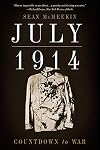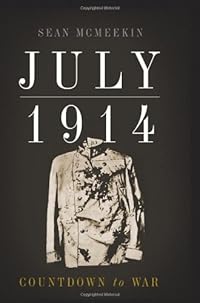
July 1914: Countdown to War
by Sean McMeekin
On This Page
Description
History. Military. Nonfiction. HTML:When a Serbian-backed assassin gunned down Archduke Franz Ferdinand in late June 1914, the world seemed unmoved. Even Ferdinand’s own uncle, Franz Josef I, was notably ambivalent about the death of the Hapsburg heir, saying simply, “It is God’s will.” Certainly, there was nothing to suggest that the episode would lead to conflict—much less a world war of such massive and horrific proportions that it would fundamentally reshape the course of human show more events.As acclaimed historian Sean McMeekin reveals in July 1914, World War I might have been avoided entirely had it not been for a small group of statesmen who, in the month after the assassination, plotted to use Ferdinand’s murder as the trigger for a long-awaited showdown in Europe. The primary culprits, moreover, have long escaped blame. While most accounts of the war’s outbreak place the bulk of responsibility on German and Austro-Hungarian militarism, McMeekin draws on surprising new evidence from archives across Europe to show that the worst offenders were actually to be found in Russia and France, whose belligerence and duplicity ensured that war was inevitable. Whether they plotted for war or rode the whirlwind nearly blind, each of the men involved—from Austrian Foreign Minister Leopold von Berchtold and German Chancellor Bethmann Hollweg to Russian Foreign Minister Sergei Sazonov and French president Raymond Poincaré—sought to capitalize on the fallout from Ferdinand’s murder, unwittingly leading Europe toward the greatest cataclysm it had ever seen.
A revolutionary account of the genesis of World War I, July 1914 tells the gripping story of Europe’s countdown to war from the bloody opening act on June 28th to Britain’s final plunge on August 4th, showing how a single month—and a handful of men—changed the course of the twentieth century. show less
Tags
Recommendations







Member Reviews
This book is a factual and somewhat dry account of the assassination of the archduke Franz Ferdinand on June 28th, 1914 and the days following, up until August 4th, when Germany invaded Belgium and Britain declared war on Germany. Sean McMeekin spends the majority of the book providing a moment by moment account of what the various government officials and heads of state were doing and planning.
A few things stood out, like how avoidable the Great War was. There were saber-rattlers in every country, but so were there men who, if they weren't aware of how big the conflict could become, were interested in preserving the peace. But in a time when messages were mostly delivered by telegram, with a time delay caused by having to go to a show more telegraph office and by the need to encrypt important messages on one end and decrypt them on the other, delays in communications caused mixed messages. With the need to have various men, with their own agendas, deliver and discuss information with officials from the various countries, who also had their own aims, messages became skewed. And these guys did not pride themselves on clarity, but rather seemed to relish ambiguity.
McMeekin's book is somewhat controversial in that he doesn't think the outbreak of hostilities was entirely Germany's fault. He makes a convincing case for there having been a few idiots in the Austro-Hungarian Empire who were gagging for war and that Russia had some powerful motivations to want a conflict. Both Russia and France did mobilize their armies before Germany did. Germany's main fault lay in its inflexibility. Their war plans were the most thorough, with an amazing attention to detail, but that detail meant that there was no way to change any aspect of it. So that when it looked as though war with Russia was inevitable, Germany had to simultaneously go to war with France because their plans only allowed for this scenario. Even worse, the to-do list had "declare war" up at the top, so Germany declared war before it began mobilization, unlike both France and Russia, who were more attuned to how being the first to declare war would look to the outside world.
Britain, preoccupied with problems in Ireland (Churchill wanted to go and shell Belfast, just to teach them a lesson), wanted to avoid involvement, eventually deciding it could get out of participating if Germany left Belgium alone. But those inflexible war plans meant Germany had to march through Belgium. And so it all began.
McMeekin makes a strong argument that Germany was not the only one responsible for starting the First World War. Certainly, Russia, Austria-Hungary, Serbia, Britain and France all share blame for that. But Germany's inflexibility meant that once things got rolling, there would be no turning back.
Oddly enough, the one person who came through this book looking pretty good was Franz Ferdinand. Born into the decaying royal family in a moribund empire, he nonetheless had the courage to marry a woman his family considered of too low a rank to be suitable and to have seemingly forged a happy marriage out of that. He might have been able those who were determined to invade Serbia, as he had been a voice against such actions before his assassination. show less
A few things stood out, like how avoidable the Great War was. There were saber-rattlers in every country, but so were there men who, if they weren't aware of how big the conflict could become, were interested in preserving the peace. But in a time when messages were mostly delivered by telegram, with a time delay caused by having to go to a show more telegraph office and by the need to encrypt important messages on one end and decrypt them on the other, delays in communications caused mixed messages. With the need to have various men, with their own agendas, deliver and discuss information with officials from the various countries, who also had their own aims, messages became skewed. And these guys did not pride themselves on clarity, but rather seemed to relish ambiguity.
McMeekin's book is somewhat controversial in that he doesn't think the outbreak of hostilities was entirely Germany's fault. He makes a convincing case for there having been a few idiots in the Austro-Hungarian Empire who were gagging for war and that Russia had some powerful motivations to want a conflict. Both Russia and France did mobilize their armies before Germany did. Germany's main fault lay in its inflexibility. Their war plans were the most thorough, with an amazing attention to detail, but that detail meant that there was no way to change any aspect of it. So that when it looked as though war with Russia was inevitable, Germany had to simultaneously go to war with France because their plans only allowed for this scenario. Even worse, the to-do list had "declare war" up at the top, so Germany declared war before it began mobilization, unlike both France and Russia, who were more attuned to how being the first to declare war would look to the outside world.
Britain, preoccupied with problems in Ireland (Churchill wanted to go and shell Belfast, just to teach them a lesson), wanted to avoid involvement, eventually deciding it could get out of participating if Germany left Belgium alone. But those inflexible war plans meant Germany had to march through Belgium. And so it all began.
McMeekin makes a strong argument that Germany was not the only one responsible for starting the First World War. Certainly, Russia, Austria-Hungary, Serbia, Britain and France all share blame for that. But Germany's inflexibility meant that once things got rolling, there would be no turning back.
Oddly enough, the one person who came through this book looking pretty good was Franz Ferdinand. Born into the decaying royal family in a moribund empire, he nonetheless had the courage to marry a woman his family considered of too low a rank to be suitable and to have seemingly forged a happy marriage out of that. He might have been able those who were determined to invade Serbia, as he had been a voice against such actions before his assassination. show less
This is an intriguing day by day account of events from the murder of the Austrian Archduke on June 28, 1914 through to August 3, 1914, when WW1 officially started. There was a lot of foolish and reckless behavior.
Nobody seems to have liked the murdered archduke (except for Kaiser Wilhelm) and his death was not truly mourned. However, it was viewed as an insult to Austria for Serbia to condone the killing (there was strong suspicion, but no real proof for a while of the Serbian government's actual role). Austria felt it needed to take revenge on Serbia for the sake of its honor, and Germany (in McMeekin's words) gave it a "blank check" to do what it wanted. Unfortunately Germany did not supervise Austria and its leaders mishandled the show more whole thing. In the end Germany was between a rock and a hard place. A regional fight soon turned into a world war. France and Russia were plotting in the background too, even though Russia was probably more interested in getting Constantinople from the Ottomans. Great Britain was a wild card being preoccupied with Home Rule and having a large number of "Little Englanders" in the government. Only when Germany invaded Belgium did Britain really enter the fray -- Britiain felt an obligation to protect Belgium due to a treaty entered into in the early 1800's. Germany desperately wanted Britain (and France) to stay neutral.
The randomness of history is clearly demonstrated -- who knew what when and what did they do about it -runs through the account. In the end, with 20/20 hindsight, we see a large number of times war could have been avoided, but wasn't. show less
Nobody seems to have liked the murdered archduke (except for Kaiser Wilhelm) and his death was not truly mourned. However, it was viewed as an insult to Austria for Serbia to condone the killing (there was strong suspicion, but no real proof for a while of the Serbian government's actual role). Austria felt it needed to take revenge on Serbia for the sake of its honor, and Germany (in McMeekin's words) gave it a "blank check" to do what it wanted. Unfortunately Germany did not supervise Austria and its leaders mishandled the show more whole thing. In the end Germany was between a rock and a hard place. A regional fight soon turned into a world war. France and Russia were plotting in the background too, even though Russia was probably more interested in getting Constantinople from the Ottomans. Great Britain was a wild card being preoccupied with Home Rule and having a large number of "Little Englanders" in the government. Only when Germany invaded Belgium did Britain really enter the fray -- Britiain felt an obligation to protect Belgium due to a treaty entered into in the early 1800's. Germany desperately wanted Britain (and France) to stay neutral.
The randomness of history is clearly demonstrated -- who knew what when and what did they do about it -runs through the account. In the end, with 20/20 hindsight, we see a large number of times war could have been avoided, but wasn't. show less
An excellent account of the complicated (and frequently shockingly inept) diplomacy and national politics in the weeks leading up to the outbreak of war. McMeekin offers some provocative and perfectly reasonable assessments.
Fascinating and well-researched account of how and why the major powers rushed to war in 1914. This book, filled with characters that come to life, is a real eye opener. Some - myself included - will find it depressing as Mr. McMeekin shows how much of history is random, and how therefore the Great War was not inevitable and could have been easily avoided.
There are a few fine reviews preceding this one. So I will not try to recap the book (again). However, I have read several works on the origins of the First World War. This one has more in depth information on the day to day internal political and external diplomatic activity leading up the declarations of war in August, 1918. The part of the book I found most interesting was the final section "Epilogue: The Question of Responsibility". The author reviews in summary the part played by the various countries and their leadership to determine their contribution to the start of the war. I thought McMeekin had an interesting and novel approach to this question. Don't want to spill the beans...This book is definitely required reading for show more those interested the origins of the war history. show less
I am rating this book highly and then I'm going to admit that I haven't actually finished reading it. The information seems interesting, important and logically organized, but it is just way over my head. I can't concentrate well enough to remember all the unfamiliar names and places and keep it straight. I don't think this is the writer's fault. I just need to read more background material before I am ready for this book.
My thoughts on July 1914: Countdown to War
http://meganeasleywalshauthor.blogspot.ie/2015/08/writer-wednesday-july-1914.htm...
http://meganeasleywalshauthor.blogspot.ie/2015/08/writer-wednesday-july-1914.htm...
Members
- Recently Added By
Lists

World War I books
32 works; 8 members
Talk Discussions
Past Discussions
Sean McMeekin in World War I, The Great War (February 2023)
Author Information

11 Works 1,945 Members
Sean McMeekin is a professor of history at Bard College. The award-winning author of several books, including The Russian Revolution, July 1914, and The Ottoman Endgame, McMeekin lives in Clermont, New York.
Awards and Honors
Distinctions
Common Knowledge
- Canonical title*
- Juli 1914: Der Countdown in den Krieg
- Original publication date
- 2013-05
- People/Characters
- Franz Ferdinand, Archduke of Austria
- Important events
- Origins of World War I
- Dedication
- For the fallen
- First words
- On Sunday morning, 28 June 1914, Archduke Franz Ferdinand awoke in the Hotel Bosnia with a sense of relief that he would soon depart.
- Quotations
- Only the Germans, of course, were responsible for the strategic stupidity of invading France by way of Belgium.
- Last words
- (Click to show. Warning: May contain spoilers.)So far from "willing the war," the Germans went into it kicking and screaming as the Austrian noose snapped shut around their necks.
*Some information comes from Common Knowledge in other languages. Click "Edit" for more information.
Classifications
Statistics
- Members
- 362
- Popularity
- 86,505
- Reviews
- 7
- Rating
- (4.26)
- Languages
- English, German
- Media
- Paper, Audiobook, Ebook
- ISBNs
- 9
- ASINs
- 4