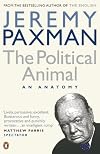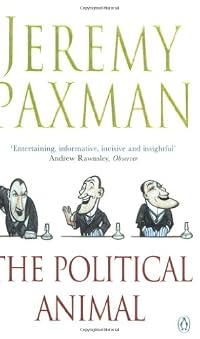
The Political Animal: An Anatomy
by Jeremy Paxman
On This Page
Description
Jeremy Paxman knows every maneouvre a politician will make to avoid answering a difficult question, but in The Political Animal he seeks an answer to just one: What makes politicians tick? Embarking on a journey in which he encounters movers and shakers past and present, he discovers: that Prime Ministers have often lost a parent in childhood why Trollope is the politician's novelist of choice that Lloyd George once hunted Jack the Ripper how an Admiral's speech in parliament helped win WWII show more Where do politicians come from? How do they get elected? What do they do all day? And why do they seek power? All these questions and many more are addressed in Paxman's thrilling dissection of that strange and elusive breed - the political animal. 'Lively, persuasive, excellent. Boisterous and funny, provocative and punchily written... an intelligent romp' Matthew Parris, Spectator 'Entertaining, informative, incisive and insightful' Andrew Rawnsley Observer 'One of the best primers on the vicissitudes of political life I have read Christopher Silvester, Sunday Times Jeremy Paxman is a journalist, best known for his work presenting Newsnight and University Challenge. His books include Empire, On Royalty, The English and The Political Animal. He lives in Oxfordshire. show lessTags
Recommendations
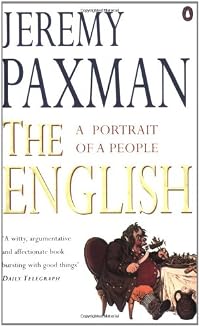
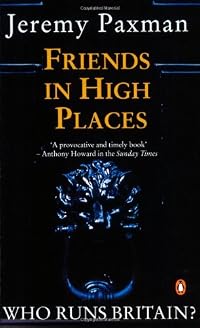







Member Recommendations

Member Reviews
http://nhw.livejournal.com/158270.html
I met Jeremy Paxman, one of Britain's leading political journalists, twice in 1994, in my capacity as the captain of the Queen's University of Belfast's team in University Challenge (the British TV show where teams from different universities take each other on in a general knowledge quiz). He was as acerbic and funny is person as he is on the screen. I remember him growling at me to hurry up and answer a particular question, "Come on, some of us have got homes to go to!" He revealed to us that his least favourite person in the then failing Major government was health secretary Virginia Bottomley. "She never says anything when I interview her." She was probably as frightened of him as we were. He show more says in the first chapter,
"I have met literally hundreds of politicians. Some I have come to like, others to respect, and one or two I have learned must be handled as if they are radioactive. I know that the last feeling is reciprocated by some, but there is - or ought to be - a natural tension between reporters and politicians, and I am not close to any of them. It is easier that way."
This book is no mere pot-boiler. I get the sense that Paxman is genuinely puzzled by what makes politicians tick; why they subject themselves to humiliation by constituency selection committees, fellow MPs, party leaders, and Paxman and his own colleagues in the press, and why, as Enoch Powell observed, all political careers end in failure. He doesn't come up with a systematic reply but does have a lot of amusing anecdotes and one or two good observations - 24 out of the UK's 51 prime ministers lost their fathers before the age of 21, for instance. He talks to one of the two people in England with a personal subscription to Hansard, the official record of parliamentary debates, and asks him, why? And gets the charming answer, "I'm very old, you know. I'm over ninety. And I think I'm pretty mad."
To those who know me it's no big secret that I am attracted to the idea of being a politician. I've stood for election twice, in 1990 and 1996, though did pretty dismally both times. One striking thing is that the very academically gifted tend not to do very well in politics. Only one American president, and as far as I know no British prime minister, has gained a PhD. Paxman points out that the three prime ministers of the twentieth century with the best academic qualifications by far were Asquith, Eden and Wilson, none of them howling successes. He has obviously benefited from a long chat with my former mentor John Alderdice, who I always felt was far too intelligent to be at the heart of politics. A political consultant, quoted by Paxman, is told that political parties ought to try and attract "low-fliers" (perhaps not quite the same thing as the academically ungifted).
Paxman spends a lot of time lambasting the primitive set-up of the British political system, especially the entire architecture and procedure of the Westminster parliament. But the only modest reform he supports is to allow ministers who are MPs to be allowed to speak in relevant debates in the House of Lords, and vice versa. Quite apart from the questions one should ask about the composition of the House of Lords, this misses one of the biggest blind spots in the British constitutional tradition - the requirement that ministers must be members of one or other house, carried through slavishly to the Oireachtas and the unicameral chambers in Stormont, Edinburgh and Cardiff. Surely if most of Europe and the U.S. can manage by separating the legislative and executive, the UK and Ireland could consider this too? I need to work up a proper rant about this for publication somewhere.
It ends up a bit scrappy but there are a lot of things to like about this book. Paxman retains a certain affection for, and understanding of, Northern Ireland, which he mentions several times (indeed I think he give us proportionally more attention than Wales of Scotland). The bibliography cites a huge number of political memoirs - I estimate roughly a hundred autobiographies and about the same number of biographical studies - but almost all British, with a very few Americans and no continentals (or even Irish). show less
I met Jeremy Paxman, one of Britain's leading political journalists, twice in 1994, in my capacity as the captain of the Queen's University of Belfast's team in University Challenge (the British TV show where teams from different universities take each other on in a general knowledge quiz). He was as acerbic and funny is person as he is on the screen. I remember him growling at me to hurry up and answer a particular question, "Come on, some of us have got homes to go to!" He revealed to us that his least favourite person in the then failing Major government was health secretary Virginia Bottomley. "She never says anything when I interview her." She was probably as frightened of him as we were. He show more says in the first chapter,
"I have met literally hundreds of politicians. Some I have come to like, others to respect, and one or two I have learned must be handled as if they are radioactive. I know that the last feeling is reciprocated by some, but there is - or ought to be - a natural tension between reporters and politicians, and I am not close to any of them. It is easier that way."
This book is no mere pot-boiler. I get the sense that Paxman is genuinely puzzled by what makes politicians tick; why they subject themselves to humiliation by constituency selection committees, fellow MPs, party leaders, and Paxman and his own colleagues in the press, and why, as Enoch Powell observed, all political careers end in failure. He doesn't come up with a systematic reply but does have a lot of amusing anecdotes and one or two good observations - 24 out of the UK's 51 prime ministers lost their fathers before the age of 21, for instance. He talks to one of the two people in England with a personal subscription to Hansard, the official record of parliamentary debates, and asks him, why? And gets the charming answer, "I'm very old, you know. I'm over ninety. And I think I'm pretty mad."
To those who know me it's no big secret that I am attracted to the idea of being a politician. I've stood for election twice, in 1990 and 1996, though did pretty dismally both times. One striking thing is that the very academically gifted tend not to do very well in politics. Only one American president, and as far as I know no British prime minister, has gained a PhD. Paxman points out that the three prime ministers of the twentieth century with the best academic qualifications by far were Asquith, Eden and Wilson, none of them howling successes. He has obviously benefited from a long chat with my former mentor John Alderdice, who I always felt was far too intelligent to be at the heart of politics. A political consultant, quoted by Paxman, is told that political parties ought to try and attract "low-fliers" (perhaps not quite the same thing as the academically ungifted).
Paxman spends a lot of time lambasting the primitive set-up of the British political system, especially the entire architecture and procedure of the Westminster parliament. But the only modest reform he supports is to allow ministers who are MPs to be allowed to speak in relevant debates in the House of Lords, and vice versa. Quite apart from the questions one should ask about the composition of the House of Lords, this misses one of the biggest blind spots in the British constitutional tradition - the requirement that ministers must be members of one or other house, carried through slavishly to the Oireachtas and the unicameral chambers in Stormont, Edinburgh and Cardiff. Surely if most of Europe and the U.S. can manage by separating the legislative and executive, the UK and Ireland could consider this too? I need to work up a proper rant about this for publication somewhere.
It ends up a bit scrappy but there are a lot of things to like about this book. Paxman retains a certain affection for, and understanding of, Northern Ireland, which he mentions several times (indeed I think he give us proportionally more attention than Wales of Scotland). The bibliography cites a huge number of political memoirs - I estimate roughly a hundred autobiographies and about the same number of biographical studies - but almost all British, with a very few Americans and no continentals (or even Irish). show less
Pretty good for the most part, although it does lose its way as it goes on (which might be explained in the afterword about how a book about politics in general became about politicians specifically, and that it went two years past deadline). Overall style is somehow both a bit too shallow and a bit too long-winded, and the authorial voice is a little too pleased with itself but then I guess that's what you'd expect from Paxman.
Enjoyable read that confirms many other sources about the essential emptiness of many politician's life's and of the dangers of the professionalised political career.
In meeting many of them I can confirm much of what he says. But in concentrating on the party politician he misses out on the role of community and pressure group leaders. These often have the knowledge and social base that he notices missing from today's politicians.
He fails to explore the reasons for this development. One reason for example is that civil society is more diverse then say in the post war years so politicians become more the interface with this layer rather then its leadership as in the past.
It also makes the classic mistake that the motive for the show more individual is the same as the consequences for then group. Nixon was a flawed human being but he influenced the geopolitical sphere by drawing China away from Russia. Witness the mess of Bush and the axis of evil to see how it could have gone. show less
In meeting many of them I can confirm much of what he says. But in concentrating on the party politician he misses out on the role of community and pressure group leaders. These often have the knowledge and social base that he notices missing from today's politicians.
He fails to explore the reasons for this development. One reason for example is that civil society is more diverse then say in the post war years so politicians become more the interface with this layer rather then its leadership as in the past.
It also makes the classic mistake that the motive for the show more individual is the same as the consequences for then group. Nixon was a flawed human being but he influenced the geopolitical sphere by drawing China away from Russia. Witness the mess of Bush and the axis of evil to see how it could have gone. show less
The best thing to appear on British politics since Yes Minister
shelved at: (Z) : Reference
shelved at: (Z) : Reference
Ratings
Members
- Recently Added By
Author Information

15+ Works 3,548 Members
Jeremy Paxman grew up thinking of himself as English, despite being one quarter Scottish. Currently the anchor of Britain's premier television news program, the BBC's Newsnight, he has had a long and distinguished career in British television. His books include On Royalty, Empire, and The Political Animal.
Common Knowledge
- Original publication date
- 2002
Classifications
- Genres
- Nonfiction, General Nonfiction, Politics and Government, History
- DDC/MDS
- 320 — Society, Government, and Culture Political science Types of Government
- LCC
- DA566.7 .P2 — History of Europe, Asia, Africa and Oceania Great Britain History of Great Britain England History By period Modern, 1485- 20th century
- BISAC
Statistics
- Members
- 397
- Popularity
- 77,441
- Reviews
- 7
- Rating
- (3.50)
- Languages
- English
- Media
- Paper, Audiobook, Ebook
- ISBNs
- 7
- ASINs
- 2