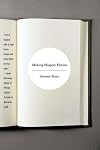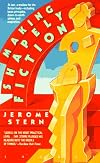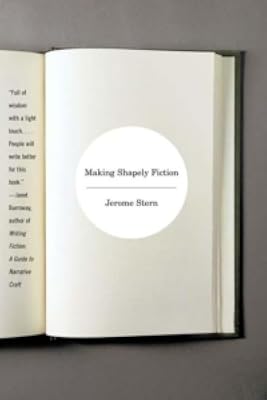
Making Shapely Fiction
by Jerome Stern
On This Page
Description
Here is a book about the craft of writing fiction that is thoroughly useful from the first to the last page?hether the reader is a beginner, a seasoned writer, or a teacher of writing. Jerome Stern maintains that learning to write spontaneously is the first step to writing well. You will see how a work takes form and shape once you grasp the principles of momentum, tension, and immediacy. "Tension," Stern says, "is the mother of fiction. When tension and immediacy combine, the story show more begins."Dialogue and action, beginnings and endings, the true meaning of "write what you know," and a memorable listing of don?s for fiction writers are all covered. A special section features an Alphabet for Writers: entries range from Accuracy to Zigzag, with enlightening comments about such matters as Cliffhangers, Point of View, Irony, and Transitions. show lessTags
Recommendations

Member Reviews
It wasn't so much a manual of how to write as it was an encyclopedia of writing terms and conventions, all conveniently laid out in alphabetical order.
Seriously, nothing new is under the sun, and I've known about all of these since high-school, but sometimes it's kinda nice to be reminded of what you might have forgotten in your old, old, old age. You know, kinda like that old saying, "I've forgotten more than you've ever known." It makes me feel a little bit like a curmudgeon and an old fogey.
It's not a bad state to live in, btw. I recall that I wanted to be a curmudgeon when I was 16.
Now that I've read this, I feel like my life-long dream has finally come true.
Seriously, nothing new is under the sun, and I've known about all of these since high-school, but sometimes it's kinda nice to be reminded of what you might have forgotten in your old, old, old age. You know, kinda like that old saying, "I've forgotten more than you've ever known." It makes me feel a little bit like a curmudgeon and an old fogey.
It's not a bad state to live in, btw. I recall that I wanted to be a curmudgeon when I was 16.
Now that I've read this, I feel like my life-long dream has finally come true.
I have learned a lot from Stern. This is the best book I've read on the various ways longer fictional works can be conceived and structured. I use it in my English 307: Writing the Literary Novel course, and students love it. I highly recommend it for both teachers and students of creative writing.
Practical and straightforward advice. More on the side of definitions, advantages and disadvantages than "this is what is good". Offers lots of ways to play with the 'rules' of writing. If this were a grammar book, it'd be descriptive instead of prescription. In a lot of ways it's covering the same ground as [b:Thirteen Ways of Looking at the Novel|32095|Thirteen Ways of Looking at the Novel|Jane Smiley|http://photo.goodreads.com/books/1168331509s/32095.jpg|801321], but far less academic and more useful.
I might have liked this book more if I had read it closer to the time when it was written; unfortunately [b:On Writing: A Memoir of the Craft|10569|On Writing A Memoir of the Craft|Stephen King|https://images.gr-assets.com/books/1436735207s/10569.jpg|150292] and other writing books more recently published have spoiled me for older works. There was nothing particularly wrong with it, only that it wasn't anything I hadn't heard before.
Ratings
Members
- Recently Added By
Lists

Julie's Read in 2021
19 works; 1 member

Books Read in 2021
5,361 works; 114 members

Favorite Books from the 1990s
32 works; 3 members
Author Information
4 Works 832 Members
Common Knowledge
- Canonical title
- Making Shapely Fiction
- Quotations
- Stories that lead up to revelations and odd situations really quit just where they should begin.
Fiction has to succeed on its own terms. Ideas don't bring life to a story. The story brings life to ideas.
If your readers don't care what happens next, it doesn't make any difference how smart you are.
Classifications
Statistics
- Members
- 564
- Popularity
- 52,431
- Reviews
- 4
- Rating
- (3.80)
- Languages
- English
- Media
- Paper, Ebook
- ISBNs
- 5
- ASINs
- 1