In February, I read Bee Season for my library discussion group. While it wasn't a bad read, it wasn't very memorable.
Which is demonstrated by the fact that in finding this in the catalogue, my thought process went something like, Goldberg, Goldberg, that sounds familiar...but where from?
Didn't pick up on the connection until I going through the front matter of The False Friend.
Grown up Celia is walking down the street in Chicago when she flashes back to a horrific time in her childhood: the abduction of her best friend/worst enemy Djuna. Suddenly, she pictures the two of them, on that day, walking into the woods—and Djuna disappearing into a hole, not a car. What if she lied?
So Celia goes back home, to confront not just her own memories, but all the girls she knew back then, to confirm what she didn't do. Tell everyone what had really happened.
After eight years and several books from Goldberg, The False Friend is a stronger novel than Bee Season. There were fewer point of view characters—which is to say, two, and I'm not sure why Huck had his own. Unfortunately, though the strangest premise is used to set up the book (which I like, because if that's accepted, I don't have accept it at the end when it doesn't make sense), Goldberg almost immediately drops into a rundown of Celia's recent history, rather than the realities of her current life—only to summarize those hours more than a chapter later.
Considering how much of this book is characters reflecting and then maybe show more discussing events that have been silenced for decades, this is a little problematic, and makes it difficult to really know why this is crucial to Celia now, or even who she is at the beginning and end of the novel.
On the other hand, much of this novel plays to Goldberg's strengths as an author: the complexity of family relationships, particularly of the stoic type; the mercurial nature of young girls; looking back on the past and trying to make sense of it; coming back to a should-be familiar place and the shock of finding the new. Celia and Djuna's interpersonal details make sense to me as one never bullied as harshly as Leanne and never popular myself. But Celia's attempts to reconcile who she thinks herself to be, what she remembers as history, and finding only the vaguest of resemblances to what everyone else is telling her—that rang true.
It's a similar premise, though much darker, that Marian Keyes' Rachel's Holiday, where Rachel confronts her traumas of early childhood to her parent's benign recollection. Both books use a similar conceit: no one talked about it, so the protagonist hadn't had anyone to deny the excuses constructed by childish minds looking for reason. show less
Which is demonstrated by the fact that in finding this in the catalogue, my thought process went something like, Goldberg, Goldberg, that sounds familiar...but where from?
Didn't pick up on the connection until I going through the front matter of The False Friend.
Grown up Celia is walking down the street in Chicago when she flashes back to a horrific time in her childhood: the abduction of her best friend/worst enemy Djuna. Suddenly, she pictures the two of them, on that day, walking into the woods—and Djuna disappearing into a hole, not a car. What if she lied?
So Celia goes back home, to confront not just her own memories, but all the girls she knew back then, to confirm what she didn't do. Tell everyone what had really happened.
After eight years and several books from Goldberg, The False Friend is a stronger novel than Bee Season. There were fewer point of view characters—which is to say, two, and I'm not sure why Huck had his own. Unfortunately, though the strangest premise is used to set up the book (which I like, because if that's accepted, I don't have accept it at the end when it doesn't make sense), Goldberg almost immediately drops into a rundown of Celia's recent history, rather than the realities of her current life—only to summarize those hours more than a chapter later.
Considering how much of this book is characters reflecting and then maybe show more discussing events that have been silenced for decades, this is a little problematic, and makes it difficult to really know why this is crucial to Celia now, or even who she is at the beginning and end of the novel.
On the other hand, much of this novel plays to Goldberg's strengths as an author: the complexity of family relationships, particularly of the stoic type; the mercurial nature of young girls; looking back on the past and trying to make sense of it; coming back to a should-be familiar place and the shock of finding the new. Celia and Djuna's interpersonal details make sense to me as one never bullied as harshly as Leanne and never popular myself. But Celia's attempts to reconcile who she thinks herself to be, what she remembers as history, and finding only the vaguest of resemblances to what everyone else is telling her—that rang true.
It's a similar premise, though much darker, that Marian Keyes' Rachel's Holiday, where Rachel confronts her traumas of early childhood to her parent's benign recollection. Both books use a similar conceit: no one talked about it, so the protagonist hadn't had anyone to deny the excuses constructed by childish minds looking for reason. show less
The Last Man Who Knew Everything: Thomas Young, the Anonymous Genius Who Proved Newton Wrong and Deciphered the Rosetta Stone, Among Other Surprising Feats by Andrew Robinson
I actually finished this book. At least, I remember moving the bookmark further and further and then not needing it anymore. This actually happened at least a year ago, and all I remember about "what I learned from this book" is that Thomas Young was smart (although I may only be recalling the title) and that the first few chapters were interesting.
Strong: well-plotted, emotional, pretty language. Self-consciously literary, with a sum-up by the narrator at the end that it might have been stronger without.

Under a different star system, I might have given it three, but I didn't particularly like it.
First things first. I've not read anything in the steampunk (or so I'd call it) style before, and the time period (1970s) isn't one I've read much in either.
This is the first book in the series that I have picked up, and unfortunately it didn't make much of an impression. That little (if any) time was spent catching up new readers to the characters and situation--which would be great for someone familiar with the series, but it took me awhile to get into the story, and I never cared much for the characters.
Speaking of characters, beyond the two main detectives Bryant and May, there is also a random 17 year old they allow to help with the investigation because--? Well, I have no idea, and I found her to be exceedingly annoying. Yes, she has a *deep, dark, horrible, and terribly foreshadowed secret* but frankly, I didn't care. Nor did I have much sympathy when I did. For a real person? Of course. But this is fiction, and the *deep secret* was pretty obvious to a typical reader. Actually, Bryant and May seemed interesting, but there wasn't much of them until late in the book--and then had some pretty pontificating speeches.
The jumping perspectives were a little irritating too. Not only did you get the primary two, plus the guest star, but also a section of close 3rd person was granted to every person directly affected by the plot (that is to say, murdered). So when suddenly in show more someone else's head, that person was (usually) doomed. And two, in particular, gratuitously. And especially the later murders meant little more than an "oh, by the way, there is still suspense; see, people died!" Only that wasn't in the text, there were just more dead people.
Also an odd choice, to me, was the initial framing device: Bryant was being interviewed by some nameless, faceless reporter about the case, but he doesn't come back in the end. Is this typical of the series? I don't know, but in a standalone novel, it didn't work.
Finally: as a mystery, it's not bad. Serviceably written, standard familiar mystery tropes, decent (primary) characters. Start with another book in the series, it'll probably stand up better. show less
First things first. I've not read anything in the steampunk (or so I'd call it) style before, and the time period (1970s) isn't one I've read much in either.
This is the first book in the series that I have picked up, and unfortunately it didn't make much of an impression. That little (if any) time was spent catching up new readers to the characters and situation--which would be great for someone familiar with the series, but it took me awhile to get into the story, and I never cared much for the characters.
Speaking of characters, beyond the two main detectives Bryant and May, there is also a random 17 year old they allow to help with the investigation because--? Well, I have no idea, and I found her to be exceedingly annoying. Yes, she has a *deep, dark, horrible, and terribly foreshadowed secret* but frankly, I didn't care. Nor did I have much sympathy when I did. For a real person? Of course. But this is fiction, and the *deep secret* was pretty obvious to a typical reader. Actually, Bryant and May seemed interesting, but there wasn't much of them until late in the book--and then had some pretty pontificating speeches.
The jumping perspectives were a little irritating too. Not only did you get the primary two, plus the guest star, but also a section of close 3rd person was granted to every person directly affected by the plot (that is to say, murdered). So when suddenly in show more someone else's head, that person was (usually) doomed. And two, in particular, gratuitously. And especially the later murders meant little more than an "oh, by the way, there is still suspense; see, people died!" Only that wasn't in the text, there were just more dead people.
Also an odd choice, to me, was the initial framing device: Bryant was being interviewed by some nameless, faceless reporter about the case, but he doesn't come back in the end. Is this typical of the series? I don't know, but in a standalone novel, it didn't work.
Finally: as a mystery, it's not bad. Serviceably written, standard familiar mystery tropes, decent (primary) characters. Start with another book in the series, it'll probably stand up better. show less
I just couldn't connect to this novel, or any of the characters. Even the narrator managed to be completely distant.
For all the conversations, so little was said. They didn't even seem to talk around the issues, so much as avoid them entirely. However, near the end, I began to sort of understand a few of the characters' situations. And yet--- I just couldn't connect with any of them.
I guess I just wanted more. More history, more backstory, more sense. Maybe less creepiness from Sachiko. While eventually I understood what *had* happened, nothing meant anything because it wasn't connected.
However, it was beautifully written, so carefully drawn. Perhaps I just didn't give it enough focus. And I did read it quickly. Worth reading, especially to talk about. It would be a fun novel to read in a group and would benefit from discussion, I think.
For all the conversations, so little was said. They didn't even seem to talk around the issues, so much as avoid them entirely. However, near the end, I began to sort of understand a few of the characters' situations. And yet--- I just couldn't connect with any of them.
I guess I just wanted more. More history, more backstory, more sense. Maybe less creepiness from Sachiko. While eventually I understood what *had* happened, nothing meant anything because it wasn't connected.
However, it was beautifully written, so carefully drawn. Perhaps I just didn't give it enough focus. And I did read it quickly. Worth reading, especially to talk about. It would be a fun novel to read in a group and would benefit from discussion, I think.
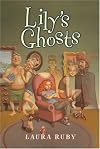
First of all, I loved the ghosts. I loved the set up, I love how they revealed themselves and interacted with the 'living' world. I even loved their perspectives.
Lily is a great young female protagonist, and not like many. She prefers science and doesn't trust fiction (though her friend Vas loves to read, even Hemingway). Lily is wounded and distrustful, and unlike certain older characters, actually mature for her age. Fortunately that doesn't make her preternaturally intelligent or poised, she's simply used to taking care of herself and her background has actually influenced. Like said unnamed character, Lily's mother is also a little flaky, but not an absent parent.
However, I'm not sure why Vas, the eventual love interest, is the only positive male role. There aren't very many characters at all, but of the two male villains and the female villain, only the woman is redeemed in any character. I suppose Uncle Max could count as a non-villain's male, but he hardly shows up as a character. Wesley is over-the-top super-duper evil villain, all but cackling madly, the librarian shows up as a vamp (why?) who is redeemed because Max didn't really leave her, and Benten is her whiny, weak brother. Even the other male ghost is just a flabby middle-aged guy.
Still. before the live-criminal plot showed up, I enjoyed the story. Lily's burgeoning relationship with Vas was authentic and cute, and gave her mother some character development. Even the mother's reluctance verses Lily's show more acceptance of the ghosts at the very end was interesting commentary on the nature of belief, given their characters. And the ghosts (aside from Max, oh wait, and Kidd--was he even really necessary?) were very well developed, and engaging.
What was the point of Kidd? There wasn't one. The secret conspiracy just went too far, it was too convoluted and absurd. Wesley could have been an interesting character, and I would have liked to get to know Max, who quite frankly was far more interesting than his pyromaniac, psychopath of a brother. A 22 year old who murdered his brother, and a year later commissions a portrait of him (presumably right after his mother's suicide.) And what tipped off the mother anyway? Why, for all the 'girl power' in this book, didn't she actually do something about it? If it were for older readers, or if she hadn't aimed for a high adventure with pirates, this might have made an interesting revenge story.
That's not fair to the novel, of course. This is a book for young adults and these are just my thoughts, as an adult and more sophisticated reader, so that part doesn't exactly factor into my review.
For kids, and I think the book is aimed at the 10 and older crowd, so for that group, this book should be great fun. And for older kids and adults, it's a quick, enjoyable read, and worth a try, should you have it somewhere. show less
Lily is a great young female protagonist, and not like many. She prefers science and doesn't trust fiction (though her friend Vas loves to read, even Hemingway). Lily is wounded and distrustful, and unlike certain older characters, actually mature for her age. Fortunately that doesn't make her preternaturally intelligent or poised, she's simply used to taking care of herself and her background has actually influenced. Like said unnamed character, Lily's mother is also a little flaky, but not an absent parent.
However, I'm not sure why Vas, the eventual love interest, is the only positive male role. There aren't very many characters at all, but of the two male villains and the female villain, only the woman is redeemed in any character. I suppose Uncle Max could count as a non-villain's male, but he hardly shows up as a character. Wesley is over-the-top super-duper evil villain, all but cackling madly, the librarian shows up as a vamp (why?) who is redeemed because Max didn't really leave her, and Benten is her whiny, weak brother. Even the other male ghost is just a flabby middle-aged guy.
Still. before the live-criminal plot showed up, I enjoyed the story. Lily's burgeoning relationship with Vas was authentic and cute, and gave her mother some character development. Even the mother's reluctance verses Lily's show more acceptance of the ghosts at the very end was interesting commentary on the nature of belief, given their characters. And the ghosts (aside from Max, oh wait, and Kidd--was he even really necessary?) were very well developed, and engaging.
What was the point of Kidd? There wasn't one. The secret conspiracy just went too far, it was too convoluted and absurd. Wesley could have been an interesting character, and I would have liked to get to know Max, who quite frankly was far more interesting than his pyromaniac, psychopath of a brother. A 22 year old who murdered his brother, and a year later commissions a portrait of him (presumably right after his mother's suicide.) And what tipped off the mother anyway? Why, for all the 'girl power' in this book, didn't she actually do something about it? If it were for older readers, or if she hadn't aimed for a high adventure with pirates, this might have made an interesting revenge story.
That's not fair to the novel, of course. This is a book for young adults and these are just my thoughts, as an adult and more sophisticated reader, so that part doesn't exactly factor into my review.
For kids, and I think the book is aimed at the 10 and older crowd, so for that group, this book should be great fun. And for older kids and adults, it's a quick, enjoyable read, and worth a try, should you have it somewhere. show less
Well, I had my brother read 3 of the poems and as a songwriter, guy, nonreader, he liked them. There were quite a few I very much enjoyed, some that I somewhat enjoyed, and just a few I couldn't connect to. Overall, though, a great introductory collection, and I wish it were possible to use this program in the local schools.
When I picked it up in January, I got about half-way through Heart of Darkness and got nothing out of it. As I read, I could hardly tell what was going on.
This may have been because I wasn't paying attention.
Actually, that is exactly the reason. I was treating it like an assignment. When I picked up the book again, the second half of Heart of Darkness was far more interesting, and then The Secret Sharer was pretty cool too. I mean, the stories are a little odd, about somewhat odd characters. But once I finished The Secret Sharer, I went back and reread Heart of Darkness from the beginning and all in one go. That helped a lot.
Interesting, mysterious, nice description. Worth reading, and at least I don't have to stare at it unread on my shelf, or regret owning it in the first place.
However, what is with the sky and sea welded together "without a joint"(paraphrased)? I liked it well enough in Heart of Darkness, but then it showed up again in The Secret Sharer and really stood out, for that reason alone.
This may have been because I wasn't paying attention.
Actually, that is exactly the reason. I was treating it like an assignment. When I picked up the book again, the second half of Heart of Darkness was far more interesting, and then The Secret Sharer was pretty cool too. I mean, the stories are a little odd, about somewhat odd characters. But once I finished The Secret Sharer, I went back and reread Heart of Darkness from the beginning and all in one go. That helped a lot.
Interesting, mysterious, nice description. Worth reading, and at least I don't have to stare at it unread on my shelf, or regret owning it in the first place.
However, what is with the sky and sea welded together "without a joint"(paraphrased)? I liked it well enough in Heart of Darkness, but then it showed up again in The Secret Sharer and really stood out, for that reason alone.
The only reason I finished this book is because I owned it, which is good, because I did rather enjoy the second half when I could finally just let myself enjoy the ride.
Otherwise, it turns out I have little to say because there's a reason I don't read much genre fiction anymore. It's because it takes too much work to enjoy a read that supposed to take no work at all. After all, that's what trippy little 'action' romances are for. Don't hate me for hating, I picked this hardcover up on clearance after I gorged myself on Jennifer Crusie's at the library a few years ago, and by the time I got around to reading it I'd outgrown the style.
For what it is, it's awesome, and for the intended audience, I recommend it. The mob thing is silly and can't quite support the angst, but if you are looking for a romance with a few laughs, I'd give it a thumbs up.
Otherwise, it turns out I have little to say because there's a reason I don't read much genre fiction anymore. It's because it takes too much work to enjoy a read that supposed to take no work at all. After all, that's what trippy little 'action' romances are for. Don't hate me for hating, I picked this hardcover up on clearance after I gorged myself on Jennifer Crusie's at the library a few years ago, and by the time I got around to reading it I'd outgrown the style.
For what it is, it's awesome, and for the intended audience, I recommend it. The mob thing is silly and can't quite support the angst, but if you are looking for a romance with a few laughs, I'd give it a thumbs up.
Just my thoughts as reading:
Tria is as judgmental as Zoey and as stupid as Clary.
She causes the problems, relies on everyone else to provide the impetus for the solution--though Tria herself has to actually take action at least, since she's the only one with any power.
Tria does not suffer enough for the consequences of what she does.
The characterization is overwhelmingly shallow.
The worldbuilding fails
All of this is primarily tied to the fact it's mostly telling vs. showing.
I'll try to come up with a more coherent review later, but sometimes it just made me angry.
On the other hand, the concept is okay, and the actual execution of the jumping through mirrors, etc, actually worked pretty well. It just hadn't been set up in the story. The tone is uneven and the plot isn't built.
Tria is as judgmental as Zoey and as stupid as Clary.
She causes the problems, relies on everyone else to provide the impetus for the solution--though Tria herself has to actually take action at least, since she's the only one with any power.
Tria does not suffer enough for the consequences of what she does.
The characterization is overwhelmingly shallow.
The worldbuilding fails
All of this is primarily tied to the fact it's mostly telling vs. showing.
I'll try to come up with a more coherent review later, but sometimes it just made me angry.
On the other hand, the concept is okay, and the actual execution of the jumping through mirrors, etc, actually worked pretty well. It just hadn't been set up in the story. The tone is uneven and the plot isn't built.
Between the back cover text, and the cover image, I had rather the wrong idea about the novel: include The Ha-Ha and it feels positively pastoral.
It isn't, but it's a good book all the same.
Howie isn't likable, exactly, but you do want him to succeed, and given the first half, it isn't as predictable as it sounds at first. Howie, as a character, actually struggles, instead of having contrived setups as obstacles, all of Howie's difficulties are part and parcel of who he is, and it's not really a matter of overcoming.
His exact disability isn't clear, although that's hardly necessary. Occasionally as I read, though, I questioned how he was telling his story, considering the original injury specifically affects his ability to communicate, and yet his narration sounds like it was authored by someone with MFA in writing. Still, Dave King does a better job of staying in-character, for such a different character than himself, than most other MFA authors I've read.
Ryan and his mother are both good characters: Ryan as a genuine seeming kid, and Sylvia as, well, as selfish, self-centered current and former addict. I really didn't like Sylvia, and I did kind of hope for some redemption of that character, but that couldn't happen in this book, and for that matter wouldn't be one I'd enjoy reading.
[b:The Ha-Ha: A Novel|439329|The Ha-Ha A Novel|Dave King|http://photo.goodreads.com/books/1174778402s/439329.jpg|938416] is a compelling enough read, I finished it overnight. But if it has show more a weakness, it's that it's not a visual, textural, sensual sort of novel. If there's one thing I'd expect from a narrator who'd lost his language and all his words, it'd be someone who didn't get paid by the word, so to speak. Like I said, an MFA author. Still, that's not a big flaw, and Howie is interesting enough to convince me to go along anyway. show less
It isn't, but it's a good book all the same.
Howie isn't likable, exactly, but you do want him to succeed, and given the first half, it isn't as predictable as it sounds at first. Howie, as a character, actually struggles, instead of having contrived setups as obstacles, all of Howie's difficulties are part and parcel of who he is, and it's not really a matter of overcoming.
His exact disability isn't clear, although that's hardly necessary. Occasionally as I read, though, I questioned how he was telling his story, considering the original injury specifically affects his ability to communicate, and yet his narration sounds like it was authored by someone with MFA in writing. Still, Dave King does a better job of staying in-character, for such a different character than himself, than most other MFA authors I've read.
Ryan and his mother are both good characters: Ryan as a genuine seeming kid, and Sylvia as, well, as selfish, self-centered current and former addict. I really didn't like Sylvia, and I did kind of hope for some redemption of that character, but that couldn't happen in this book, and for that matter wouldn't be one I'd enjoy reading.
[b:The Ha-Ha: A Novel|439329|The Ha-Ha A Novel|Dave King|http://photo.goodreads.com/books/1174778402s/439329.jpg|938416] is a compelling enough read, I finished it overnight. But if it has show more a weakness, it's that it's not a visual, textural, sensual sort of novel. If there's one thing I'd expect from a narrator who'd lost his language and all his words, it'd be someone who didn't get paid by the word, so to speak. Like I said, an MFA author. Still, that's not a big flaw, and Howie is interesting enough to convince me to go along anyway. show less
I had a lot of fun with this book, like I haven't in a long time.
Now, as I was reading it, I could tell it wouldn't be something that would survive a rereading. The voice, as a teenage boy, is a little iffy and the characters aren't particularly complex.
This isn't something that will last the ages, or even much more than a year, with all the pop culture references that even I caught.
However, while the voice may not have convinced me, I fell for its turn of phrase. Even the simple characters had individual twists enough that they didn't feel like cardboard cutouts.
All in all, it's not brilliant, but if you can go along with the premise and take it as is, a comedy almost in the vein of P.G. Wodehouse.
Now, as I was reading it, I could tell it wouldn't be something that would survive a rereading. The voice, as a teenage boy, is a little iffy and the characters aren't particularly complex.
This isn't something that will last the ages, or even much more than a year, with all the pop culture references that even I caught.
However, while the voice may not have convinced me, I fell for its turn of phrase. Even the simple characters had individual twists enough that they didn't feel like cardboard cutouts.
All in all, it's not brilliant, but if you can go along with the premise and take it as is, a comedy almost in the vein of P.G. Wodehouse.
I wouldn't say Thanks! is particularly deep or insightful and it doesn't cover the 'scientific' aspect of gratitude and how it affects humanity etc. It uses a lot of the anecdotes, which I'm not fond of, though for a book on so subjective a subject there's little else to do.
As a Christian, I find it odd to say this, but for the kind of book this is, I was surprised by the emphasis on Christianity-related gratitude a little disconcerting--perhaps because it purported to be a scientific analysis. That's something I can see turning off a lot of readers.
The advice chapter, the last, could be useful to many, if it's followed. Again, not original or deep, but no bad either, and Emmons is a clear writer and easy to follow.
As a Christian, I find it odd to say this, but for the kind of book this is, I was surprised by the emphasis on Christianity-related gratitude a little disconcerting--perhaps because it purported to be a scientific analysis. That's something I can see turning off a lot of readers.
The advice chapter, the last, could be useful to many, if it's followed. Again, not original or deep, but no bad either, and Emmons is a clear writer and easy to follow.
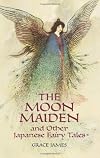
These are very different from what I'm used to, though I liked them very much. While I like that Dover makes so many publications available, I did miss having more information, such as where the individual stories came from, who translated them, etc, or more details about the images.
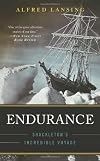
This is intense, but also inspiring. Lansing definitely has a poetic bent and does so well illustrating these men and their circumstances that it was almost like reading fiction: I was so caught up in the suspense, I had no interest in looking up the story anywhere else. Who cares about factual reliability (not that this isn't) when the story is so strong?
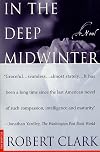
Just finished In the Deep Midwinter by Robert Clark this morning. It...wasn't bad. And a pretty quick read, even with the most stereotypical title that simply had no relationship to the text that I could see beyond pretentiousness. Let's talk about it not as in a literary review, but as I would any genre book or online fic.
It takes place in the late forties, and cyclically follows the story of a family. Richard [Somebody] is off to identify the body of his brother James, who was shot during a hunting expedition. He cleans and sorts his brother's things, finding porn and a mysterious letter from the fancy hotel where his brother and Mrs. [Somebody] whose name begins with "S" were over-charged for a room. But his brother didn't have a wife. Richard's wife, however, is named *gasp* Sarah. Then we switch to Richard and Sarah's daughter, Anna, who currently is divorced and dating an only-almost-divorced man named Charles. Anna also has a toddler son named Douglas, who eventually grows up to have stringy hair and be creepy--but that isn't really relevant to the story.
Back to Richard, who found a letter in his brother's things, addressed in his wife's hand. Then he goes home to said wife, and obsesses over what he doesn't know (because he won't read the letter). Sarah notices his distraction, and angsts. She notices this even though they still, like all decent people, have separate beds--which I admit I never believed happened, but apparently in those days decency and show more procreation trumped comfort--and this is a subject actually clarified in-text.
Oh, and in looking for any "S" who is not his wife, Richard goes looking for his brother's old girlfriends and finds a Susan. Yay! Only not, because she's a forty-year-old graduate student, she knew better than to stay with James, who was a flake. Richard, of course, finds himself lusting after her, because he wasn't disturbed enough by the idea of his wife's contemplation of infidelity.
Charles and Anna meanwhile are so in love, even though according to Anna's mother it's practically infidelity. Charles gets word from his boss it's a good idea to get married, but Anna just stopped her period. These are not the days or classes for shotgun weddings so there's panic, and not so much love. Anna wants Charles to take care of it.
*Spoilers!*
Charles finds Anna an abortionist in the back of a taxi from a Catholic driver on the advice of feckless Henry, poor James' hanger-on. She goes to the poor old man who has to work in the chiropractor's office and is oh so comforting even though her fetus is a little old for this procedure, but let's do it anyway. And then he gives her pills. Charles takes her home--and leaves her alone, because he's a social-climbing jerk, and gets stuck in a snowdrift and looses his power and can't make it back until Anna is in the hospital. Where it gets all philosophical, and I'll talk about later. Anna thinks she died, and that's a metaphor.
The second half of the novel ties everything up pretty much how you'd expect: Anna is too principled to stay with Charles, and he's still a jerk; Sarah really did know what was going on this whole time, including the abortion that all the men thought she'd be too spastic to handle (because she had her own, and this is her only plot line I liked) and she didn't go to the hotel with James? (I turned the book in this afternoon and have forgotten); Richard didn't actually sleep with Susan because coming close freaked him out and left him discombobulated for hours, and I wish it was that easy to articulate everyone's thoughts in such heightened emotions (Richard: my favorite character by so very far); and by the way, everyone's entire life is summarized in the epilogue, like after an ensemble true-story movie when they tell you what happens to each character in a freeze-frame on their face as the credits go by. Before I forget--Sarah's mother had dementia, so Anna has it in 2000 or so. I'm not sure why.
Of all things, I would say it was very--lyrically sterile. The language was beautiful, but it left me cold. To a certain extent that may have been the point. But mostly, I don't really care. The different threads of the story and character intersections simply felt too scattered for me to connect to the themes. Which were: 1) abortion should be legal and 2) and 3) were (distantly) generations and secrets, etc.
Mostly, the first bothered me. Not because of the subject or political stance, but because, unlike the others, it was simply overwrought. As soon as the issue came up the 'characters' spouted the most over the top philosophy and metaphors I simply had to stop skimming. It wasn't all bad though. In the aftermath of the illegal abortion (which was of course awful) the reactions of the parents, the doctor initially , and even Charles were all sincere and moving. Then Charles starts thinking "oh gosh I can't love her anymore" blah blah, but philosophizing being a misogynist, and totally over the top. And then at the end he tells Anna he got his dream job, and she resents him for not asking her to go with him, though she hasn't liked him since the abortion--fair enough. And anyway, he's punished by his son dying in a car accident and his daughter not speaking to him. Anna apparently, could never land another man (which was all I could think after all the monologuing going on about her throwing herself into love earlier).
Richard! Richard was so awesome. In a reminiscence, his wife calls him a "shy moon-calf" paraphrased, and he was sort of like that. The upright, old-fashioned, affectionate father-figure type--appropriate--and I loved when he conspired with Anna and gives her advice, which is all pretty good. And he's a worrier, and he actually goes to see his brother's body in the morgue because he worked as an ambulance driver in WW1 (not really creepy actually, it worked). and he cries going through his brother's things, and he holds it all together, and he has vague ideas of killing the doctor who hurt his baby even though he's never understood the inclination to murder at all before, and really, overall, he's just a sweet old man (odd conclusion after that last bit, I imagine, but, you'd have to read it--and think like me).
But James' whole story felt odd to me, because it's right at the beginning, and then it does eventually come up again, but only somuchas Henry can tell Richard it was really suicide. So-yeah. In between, Anna's and Charles' relationship was so entwined and unified that by the time it came up again I really didn't care, and didn't know what do do with it.
To back up a little bit, the abortion bit drove me up the wall for wordiness and soapboxing (well, okay, compared to *bad* fiction, it, well, wasn't bad. But it felt very over-the-top and there really wasn't a lot of room for subtly. Even the generations thing tended to be blatant--though I thought Sarah's abortion was handled much more deftly than her daughter's, and in comparison to the dementia thing that was more like, really? I liked the thread of secrets though. It felt much more natural that they talked around the secrets, didn't really think of them until there was a catalyst, but their lives were affected nonetheless. And the secrets weren't just spilled all at once, and there weren't wrenching confessions, and things weren't necessarily changed--very nicely handled, and mostly felt real.
Not a bad book of fiction all-in-all, it's 'literature'. I don't know that it was a classic, but I did enjoy most of the reading, and it didn't take too long. Wordy, maybe, but great atmosphere. There isn't one of my friends I'd actually recommend it to, but only because their reading lists are all entirely too long for anything but the next Greatest Thing Ever.
From my blog. show less
It takes place in the late forties, and cyclically follows the story of a family. Richard [Somebody] is off to identify the body of his brother James, who was shot during a hunting expedition. He cleans and sorts his brother's things, finding porn and a mysterious letter from the fancy hotel where his brother and Mrs. [Somebody] whose name begins with "S" were over-charged for a room. But his brother didn't have a wife. Richard's wife, however, is named *gasp* Sarah. Then we switch to Richard and Sarah's daughter, Anna, who currently is divorced and dating an only-almost-divorced man named Charles. Anna also has a toddler son named Douglas, who eventually grows up to have stringy hair and be creepy--but that isn't really relevant to the story.
Back to Richard, who found a letter in his brother's things, addressed in his wife's hand. Then he goes home to said wife, and obsesses over what he doesn't know (because he won't read the letter). Sarah notices his distraction, and angsts. She notices this even though they still, like all decent people, have separate beds--which I admit I never believed happened, but apparently in those days decency and show more procreation trumped comfort--and this is a subject actually clarified in-text.
Oh, and in looking for any "S" who is not his wife, Richard goes looking for his brother's old girlfriends and finds a Susan. Yay! Only not, because she's a forty-year-old graduate student, she knew better than to stay with James, who was a flake. Richard, of course, finds himself lusting after her, because he wasn't disturbed enough by the idea of his wife's contemplation of infidelity.
Charles and Anna meanwhile are so in love, even though according to Anna's mother it's practically infidelity. Charles gets word from his boss it's a good idea to get married, but Anna just stopped her period. These are not the days or classes for shotgun weddings so there's panic, and not so much love. Anna wants Charles to take care of it.
*Spoilers!*
Charles finds Anna an abortionist in the back of a taxi from a Catholic driver on the advice of feckless Henry, poor James' hanger-on. She goes to the poor old man who has to work in the chiropractor's office and is oh so comforting even though her fetus is a little old for this procedure, but let's do it anyway. And then he gives her pills. Charles takes her home--and leaves her alone, because he's a social-climbing jerk, and gets stuck in a snowdrift and looses his power and can't make it back until Anna is in the hospital. Where it gets all philosophical, and I'll talk about later. Anna thinks she died, and that's a metaphor.
The second half of the novel ties everything up pretty much how you'd expect: Anna is too principled to stay with Charles, and he's still a jerk; Sarah really did know what was going on this whole time, including the abortion that all the men thought she'd be too spastic to handle (because she had her own, and this is her only plot line I liked) and she didn't go to the hotel with James? (I turned the book in this afternoon and have forgotten); Richard didn't actually sleep with Susan because coming close freaked him out and left him discombobulated for hours, and I wish it was that easy to articulate everyone's thoughts in such heightened emotions (Richard: my favorite character by so very far); and by the way, everyone's entire life is summarized in the epilogue, like after an ensemble true-story movie when they tell you what happens to each character in a freeze-frame on their face as the credits go by. Before I forget--Sarah's mother had dementia, so Anna has it in 2000 or so. I'm not sure why.
Of all things, I would say it was very--lyrically sterile. The language was beautiful, but it left me cold. To a certain extent that may have been the point. But mostly, I don't really care. The different threads of the story and character intersections simply felt too scattered for me to connect to the themes. Which were: 1) abortion should be legal and 2) and 3) were (distantly) generations and secrets, etc.
Mostly, the first bothered me. Not because of the subject or political stance, but because, unlike the others, it was simply overwrought. As soon as the issue came up the 'characters' spouted the most over the top philosophy and metaphors I simply had to stop skimming. It wasn't all bad though. In the aftermath of the illegal abortion (which was of course awful) the reactions of the parents, the doctor initially , and even Charles were all sincere and moving. Then Charles starts thinking "oh gosh I can't love her anymore" blah blah, but philosophizing being a misogynist, and totally over the top. And then at the end he tells Anna he got his dream job, and she resents him for not asking her to go with him, though she hasn't liked him since the abortion--fair enough. And anyway, he's punished by his son dying in a car accident and his daughter not speaking to him. Anna apparently, could never land another man (which was all I could think after all the monologuing going on about her throwing herself into love earlier).
Richard! Richard was so awesome. In a reminiscence, his wife calls him a "shy moon-calf" paraphrased, and he was sort of like that. The upright, old-fashioned, affectionate father-figure type--appropriate--and I loved when he conspired with Anna and gives her advice, which is all pretty good. And he's a worrier, and he actually goes to see his brother's body in the morgue because he worked as an ambulance driver in WW1 (not really creepy actually, it worked). and he cries going through his brother's things, and he holds it all together, and he has vague ideas of killing the doctor who hurt his baby even though he's never understood the inclination to murder at all before, and really, overall, he's just a sweet old man (odd conclusion after that last bit, I imagine, but, you'd have to read it--and think like me).
But James' whole story felt odd to me, because it's right at the beginning, and then it does eventually come up again, but only somuchas Henry can tell Richard it was really suicide. So-yeah. In between, Anna's and Charles' relationship was so entwined and unified that by the time it came up again I really didn't care, and didn't know what do do with it.
To back up a little bit, the abortion bit drove me up the wall for wordiness and soapboxing (well, okay, compared to *bad* fiction, it, well, wasn't bad. But it felt very over-the-top and there really wasn't a lot of room for subtly. Even the generations thing tended to be blatant--though I thought Sarah's abortion was handled much more deftly than her daughter's, and in comparison to the dementia thing that was more like, really? I liked the thread of secrets though. It felt much more natural that they talked around the secrets, didn't really think of them until there was a catalyst, but their lives were affected nonetheless. And the secrets weren't just spilled all at once, and there weren't wrenching confessions, and things weren't necessarily changed--very nicely handled, and mostly felt real.
Not a bad book of fiction all-in-all, it's 'literature'. I don't know that it was a classic, but I did enjoy most of the reading, and it didn't take too long. Wordy, maybe, but great atmosphere. There isn't one of my friends I'd actually recommend it to, but only because their reading lists are all entirely too long for anything but the next Greatest Thing Ever.
From my blog. show less

I received a copy of this from the Goodreads First Reads giveaway.
I'm sorry to give "the age of things unwritten" such a low rating. I'm a great supporter of poetry and I love the concept of the BlankVerseDead folio series.
First, while I don't mind the newprint pages, I do wish it had some kind of card-stock cover or any cover protection. Newspaper is so fragile.
As for the poetry, I don't know what it was trying to say. I don't know that it said anything at all. As close as I can come is some kind of relationship drama. Now I'm not saying poetry has to 'mean' something, or be otherwise significant. But if I can't take anything away from it—some form of discourse at least from the author to myself—what can I take from it? What most lets me down is that "the age of things unwritten" doesn't illuminate anything: not an image, not a moment, not an emotion or concept. So what's it for?
There are a few lines I enjoyed. VI: "it's not night enough for moonlight" VII: I'll be rakish in secret, unclothed in the dark"..."the way my pocket fits your hand" for example. You notice that neither of these make up a complete thought? Because of the poem does that, build line on line and never quite make a conclusion.
You can't just read it for the sound either. While a couple of the parts have sections that are readable aloud, these clunks just keep tripping up the tongue. It's possible this is deliberate, but I've read this little booklet several times (and aloud) and they don't seem to show more come at any stylistically/thematically important moment.
I'll probably leave this booklet on the library giveaway bookshelf, so maybe someone who will appreciate more than I do will find it. show less
I'm sorry to give "the age of things unwritten" such a low rating. I'm a great supporter of poetry and I love the concept of the BlankVerseDead folio series.
First, while I don't mind the newprint pages, I do wish it had some kind of card-stock cover or any cover protection. Newspaper is so fragile.
As for the poetry, I don't know what it was trying to say. I don't know that it said anything at all. As close as I can come is some kind of relationship drama. Now I'm not saying poetry has to 'mean' something, or be otherwise significant. But if I can't take anything away from it—some form of discourse at least from the author to myself—what can I take from it? What most lets me down is that "the age of things unwritten" doesn't illuminate anything: not an image, not a moment, not an emotion or concept. So what's it for?
There are a few lines I enjoyed. VI: "it's not night enough for moonlight" VII: I'll be rakish in secret, unclothed in the dark"..."the way my pocket fits your hand" for example. You notice that neither of these make up a complete thought? Because of the poem does that, build line on line and never quite make a conclusion.
You can't just read it for the sound either. While a couple of the parts have sections that are readable aloud, these clunks just keep tripping up the tongue. It's possible this is deliberate, but I've read this little booklet several times (and aloud) and they don't seem to show more come at any stylistically/thematically important moment.
I'll probably leave this booklet on the library giveaway bookshelf, so maybe someone who will appreciate more than I do will find it. show less
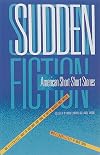
I don't know that there's much to say about the story collection, other than it's very complete. There are several classics, by big-name authors: Updike, Carver ('Popular Mechanics' is one of my old faves), Hemingway. Pretty much something for everyone, and you may well find something that you wouldn't normally look for.
Ray Bradbury's "I See You Never" is fairly traditional short story-like, and one of my favorites in this collection, but "A Questionnaire for Rudolph Gordon", which cleverly played with the childhood and the idea/concept of parents and memory, was not at all like most things called story—it's literally a questionnaire. And then there's "Class Notes", also nontraditional, but I got nothing from it at all.
Perhaps my favorite part of this collection is the "Afterwords" that includes discussions on the meaning of the form (whatever you want to call it) and, for that matter, what it actually is. Not least of all, what to call it. I love reading authors' more off-the-cuff writings. Here, these very short analyses (if you can call them that) feel almost like a conversation, not too formal, like they're working it out as they write.
Ray Bradbury's "I See You Never" is fairly traditional short story-like, and one of my favorites in this collection, but "A Questionnaire for Rudolph Gordon", which cleverly played with the childhood and the idea/concept of parents and memory, was not at all like most things called story—it's literally a questionnaire. And then there's "Class Notes", also nontraditional, but I got nothing from it at all.
Perhaps my favorite part of this collection is the "Afterwords" that includes discussions on the meaning of the form (whatever you want to call it) and, for that matter, what it actually is. Not least of all, what to call it. I love reading authors' more off-the-cuff writings. Here, these very short analyses (if you can call them that) feel almost like a conversation, not too formal, like they're working it out as they write.
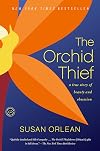
The Orchid Thief is a little odd, in that it covers so much: tracing not simply Laroche's theft of the wild ghost orchid, but the history of orchid collecting (with a call-back to Paxton who played a significant role in [b:At Home: A Short History of Private Life|7507825|At Home A Short History of Private Life|Bill Bryson|http://photo.goodreads.com/books/1285287802s/7507825.jpg|7800569]), the science of orchid growing, the history and place of the Seminole tribe, and Florida's culture and environment.
Susan Orlean handles even that many topics with a deft hand, however, and even though the connecting thread of Larcoche's story seemed to be buried in the long sections of history and science, I still found it readable. It did take me only four hours, so your mileage may vary.
Orlean has the voice of novelist, so distinct and curious, so it took me a little to realize how quickly we jumped right into the story; no orientation available. Laroche himself seems almost too eccentric to be completely real, and Orlean's repeated descriptions of a hacking, foulmouthed, 'clothing-hanger' thin white guy did little to dispel that impression.
The evocation of Florida's swamp and her star orchid enthusiasts were fascinating, and the description of tramping through the swamp goopfully convincing.
If I had any complaint about this book, it might be that I found Orlean's repeated questioning of why people would collect orchids—or anything at all—so passionately, a little, I don't know, show more disingenuous? Obsession has been such a powerful theme since as far back as oral history. She eventually concludes it has to do with making a make-shift community, even family, out of the great wide world while holding on to your individuality and all I could think was duh.
There is something of an answer in the back of the book, which includes a readers' guide with author interview and 'Reading Group Questions' (what a state of society, when we have to tell people what to ask!) and reinforces my prejudice against knowing anything about an author other than the words they write in their books. It isn't entirely fair, but for the example of this book, Orleans is asked if she'd ever 'novelize her experiences' (paraphrased).
"I never have. People have asked me this, but I think real life is so interesting. I don't think I could have imagined a character as eccentric and fascinating as John Laroche."
My response to this is less about Orlean, and more to the culture of our society that insists there's less inherent value and truthfulness in fiction than there is in 'real life'. But how else does perception work? We all tell stories; Orlean admits that this work is about a fascinating character and story.
As a devoted reader of fiction, it's simply an attitude that disappoints me. Orlean is a journalist, so she's clearly coming from a different perspective. And it's in part, undoubtedly a failure in the way we teach fiction in school—which has long done little more than drive people away from literature in droves. But I've read about characters far more eccentric than Laroche and the character he's given in the book pegged by the first page. Again, this isn't wrong on Orlean's part. Just, I think, a lack of imagination that maybe points to something rather more problematic in our cultural milieu.
I should say none of the above general criticism of society affected my star rating. Three stars just means "I liked it" and that's all. I wasn't particularly blown away, and while I enjoyed the prose I don't feel I need to read it again. I just...liked it.
P.S. Apparently there was difficulty finding an orchid for the cover that wasn't 'too sexual'. How...Victorian. Orchids have never particularly affected me that me that way, but does the general reading public have that much difficulty controlling themselves? I mean, I'm sure they can see the illusion without losing it in the bookstore stacks. show less
Susan Orlean handles even that many topics with a deft hand, however, and even though the connecting thread of Larcoche's story seemed to be buried in the long sections of history and science, I still found it readable. It did take me only four hours, so your mileage may vary.
Orlean has the voice of novelist, so distinct and curious, so it took me a little to realize how quickly we jumped right into the story; no orientation available. Laroche himself seems almost too eccentric to be completely real, and Orlean's repeated descriptions of a hacking, foulmouthed, 'clothing-hanger' thin white guy did little to dispel that impression.
The evocation of Florida's swamp and her star orchid enthusiasts were fascinating, and the description of tramping through the swamp goopfully convincing.
If I had any complaint about this book, it might be that I found Orlean's repeated questioning of why people would collect orchids—or anything at all—so passionately, a little, I don't know, show more disingenuous? Obsession has been such a powerful theme since as far back as oral history. She eventually concludes it has to do with making a make-shift community, even family, out of the great wide world while holding on to your individuality and all I could think was duh.
There is something of an answer in the back of the book, which includes a readers' guide with author interview and 'Reading Group Questions' (what a state of society, when we have to tell people what to ask!) and reinforces my prejudice against knowing anything about an author other than the words they write in their books. It isn't entirely fair, but for the example of this book, Orleans is asked if she'd ever 'novelize her experiences' (paraphrased).
"I never have. People have asked me this, but I think real life is so interesting. I don't think I could have imagined a character as eccentric and fascinating as John Laroche."
My response to this is less about Orlean, and more to the culture of our society that insists there's less inherent value and truthfulness in fiction than there is in 'real life'. But how else does perception work? We all tell stories; Orlean admits that this work is about a fascinating character and story.
As a devoted reader of fiction, it's simply an attitude that disappoints me. Orlean is a journalist, so she's clearly coming from a different perspective. And it's in part, undoubtedly a failure in the way we teach fiction in school—which has long done little more than drive people away from literature in droves. But I've read about characters far more eccentric than Laroche and the character he's given in the book pegged by the first page. Again, this isn't wrong on Orlean's part. Just, I think, a lack of imagination that maybe points to something rather more problematic in our cultural milieu.
I should say none of the above general criticism of society affected my star rating. Three stars just means "I liked it" and that's all. I wasn't particularly blown away, and while I enjoyed the prose I don't feel I need to read it again. I just...liked it.
P.S. Apparently there was difficulty finding an orchid for the cover that wasn't 'too sexual'. How...Victorian. Orchids have never particularly affected me that me that way, but does the general reading public have that much difficulty controlling themselves? I mean, I'm sure they can see the illusion without losing it in the bookstore stacks. show less

I barely finished the original! This sounds brilliant XD
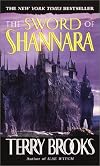
So I found all the one-star reviews and loathing for this book...which reminded me that I read & enjoyed it back in middle school.
The library edition was based on the paperback with the purple-shaded cover, though it'd be rebound in white hardcover. Like the Victoria Holt books I also loved in middle school.
What can I say? There wasn't much to choose from. Also, I loved angst.
The library edition was based on the paperback with the purple-shaded cover, though it'd be rebound in white hardcover. Like the Victoria Holt books I also loved in middle school.
What can I say? There wasn't much to choose from. Also, I loved angst.

I almost want to give it that third star, but the melodrama didn't really start until three quarters of the way through. Before the fun stuff was a bunch of occasional musing on Martha's part about Alice, and no real searching. And I have no idea why Connan was such a catch. He was a jerk, Martha disliked him, Martha got a crush, Connan liked her interest, Martha loves children, Martha loves Connan, Connan loves Martha. So unlike the infamous gold-standard Mr. Darcy, Connan's full character arc goes from arrogant sot to besotted without, you know, ever actually overcoming his obnoxiousness.
And I read a lot of Holt in middle school—I seem to recall a full shelf of them for some reason—and now I'm wondering if I always found the protagonists so vaguely unlikable. Martha does so little, up unto fainting until rescue. She tries for spunky without ever being quite clever enough to manage.
But Alvean and Gilly were good child characters, which is something I'm sensitive too, and I did like their growing relationship with Martha, though, given this novel is from Martha's perspective, I really could barely tell it was happening on her part. And of course, the melodrama was fun, when it arrived.
And I read a lot of Holt in middle school—I seem to recall a full shelf of them for some reason—and now I'm wondering if I always found the protagonists so vaguely unlikable. Martha does so little, up unto fainting until rescue. She tries for spunky without ever being quite clever enough to manage.
But Alvean and Gilly were good child characters, which is something I'm sensitive too, and I did like their growing relationship with Martha, though, given this novel is from Martha's perspective, I really could barely tell it was happening on her part. And of course, the melodrama was fun, when it arrived.
So, this was a pretty engaging read, for a time-travelling romance first-book-in-a-trilogy. I enjoyed reading it well enough.
What can I say? This was one of the few e-books available to rent, so because it's not something I typically enjoy, I'm probably not really being fair.
Because it's a romance, the attitudes of all the characters—from the 18th century or 20th—are fairly palatable to a 21st century readership (or late 20th—at any rate, modern sensibilities). That's not a bad thing, and all the characters are well-handled, and clearly Gabaldon had done her research. This isn't really a complete story in itself, though, just the first part in a trilogy, so there are plenty of questions without answers. Having read some 700 pages though, I don't know that I need to read anymore, none of those questions really had(have) me in suspense.
What can I say? This was one of the few e-books available to rent, so because it's not something I typically enjoy, I'm probably not really being fair.
Because it's a romance, the attitudes of all the characters—from the 18th century or 20th—are fairly palatable to a 21st century readership (or late 20th—at any rate, modern sensibilities). That's not a bad thing, and all the characters are well-handled, and clearly Gabaldon had done her research. This isn't really a complete story in itself, though, just the first part in a trilogy, so there are plenty of questions without answers. Having read some 700 pages though, I don't know that I need to read anymore, none of those questions really had(have) me in suspense.
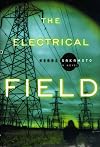
This book may well be impossible for me to review.
Really, I'm sitting here stuck.
It's not a bad book, though I didn't really like it (as though my preferences are indicative of objective quality—and what would even be objective quality in art or literature? But that's a whole 'nother topic.)
Anyway
[b:The Electrical Field|917331|The Electrical Field|Kerri Sakamoto|http://photo.goodreads.com/books/1179437985s/917331.jpg|1181808] is the story of Asako Saito, a second-generation Japanese woman apparently living in Canada, according to the catalogue data, who lived in one of the internment camps during WWII.
I actually grew up near one of those camps. Tule Lake, CA. It was, I think, the largest, and also had the highest security. George Takei lived there for a time. And for some reason, it never seemed to be all that well-known, or at least not referenced with the same frequency of Manzanar. Factoid: apparently my hometown has several of the Tule Lake houses still standing. None are at the site anymore, but a few survived and are still scattered around town.
I don't know where the Saitos spent the war, I couldn't tell from the text, and I haven't looked at other reviews or even the book's page to get the information. Because the uncertainty was a huge part of my reading experience.
Asako is the template of an unreliable narrator, and from the reader's perspective (at least this reader) it's a disorienting experience, trying to follow the actual plot outside the character. Her show more perspective is just so...skewed.
And there is something of a mystery to the novel, but it's only a mystery because the narrator is hiding all the information from the reader, which is another reason why Asako's point of view is so distracting. She can't focus, and neither can the reader. In terms of payoff, as reading this as a mystery, the answer isn't worth it. But then again, it's also an important aspect of the character.
Not really a pleasant character, or someone you particularly want to root for—although worthy of pity—but a well-drawn one, as constructed by the author. She's internally consistent, as disturbed as she is.
I don't know if Asako could be diagnosed with a specific mental illness from the text, that's not the point. Before reading however, I think it's important to note that she has twisted just by life. This isn't something like a tragic fault of the character, I think, just illustrative of how impossible it is for a human being cut off so thoroughly from others to exist in a healthy mental space. Like Lord of the Flies.
I would have liked a glossary of the Japanese words used in the text (yes, I'm that handicapped). Generally I'm no fan of hand-holding from authors, but while the terms used weren't completely opaque in-text, Japanese does have contextual terms that don't seem to translate as one-to-one ratio as many of the romance languages can approximate in English.
So yeah. Not sure where that ended up. A lot to say for not having any idea still what, exactly, I think of this novel.
I do recommend anyone interested in displaced characters, or culture clashes, or unreliable narrators check out this book. And if you've already found it somewhere, it's worth the read. show less
Really, I'm sitting here stuck.
It's not a bad book, though I didn't really like it (as though my preferences are indicative of objective quality—and what would even be objective quality in art or literature? But that's a whole 'nother topic.)
Anyway
[b:The Electrical Field|917331|The Electrical Field|Kerri Sakamoto|http://photo.goodreads.com/books/1179437985s/917331.jpg|1181808] is the story of Asako Saito, a second-generation Japanese woman apparently living in Canada, according to the catalogue data, who lived in one of the internment camps during WWII.
I actually grew up near one of those camps. Tule Lake, CA. It was, I think, the largest, and also had the highest security. George Takei lived there for a time. And for some reason, it never seemed to be all that well-known, or at least not referenced with the same frequency of Manzanar. Factoid: apparently my hometown has several of the Tule Lake houses still standing. None are at the site anymore, but a few survived and are still scattered around town.
I don't know where the Saitos spent the war, I couldn't tell from the text, and I haven't looked at other reviews or even the book's page to get the information. Because the uncertainty was a huge part of my reading experience.
Asako is the template of an unreliable narrator, and from the reader's perspective (at least this reader) it's a disorienting experience, trying to follow the actual plot outside the character. Her show more perspective is just so...skewed.
And there is something of a mystery to the novel, but it's only a mystery because the narrator is hiding all the information from the reader, which is another reason why Asako's point of view is so distracting. She can't focus, and neither can the reader. In terms of payoff, as reading this as a mystery, the answer isn't worth it. But then again, it's also an important aspect of the character.
Not really a pleasant character, or someone you particularly want to root for—although worthy of pity—but a well-drawn one, as constructed by the author. She's internally consistent, as disturbed as she is.
I don't know if Asako could be diagnosed with a specific mental illness from the text, that's not the point. Before reading however, I think it's important to note that she has twisted just by life. This isn't something like a tragic fault of the character, I think, just illustrative of how impossible it is for a human being cut off so thoroughly from others to exist in a healthy mental space. Like Lord of the Flies.
I would have liked a glossary of the Japanese words used in the text (yes, I'm that handicapped). Generally I'm no fan of hand-holding from authors, but while the terms used weren't completely opaque in-text, Japanese does have contextual terms that don't seem to translate as one-to-one ratio as many of the romance languages can approximate in English.
So yeah. Not sure where that ended up. A lot to say for not having any idea still what, exactly, I think of this novel.
I do recommend anyone interested in displaced characters, or culture clashes, or unreliable narrators check out this book. And if you've already found it somewhere, it's worth the read. show less
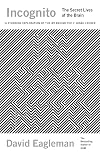
Is it really that hard for people to understand that there's a lot going on below any possible understanding of the consciousness?
And I had a lot of trouble getting used to the introductory level of the text. Not being a neuroscientist, I still have a general understanding of how the brain works, thank you very much. Please don't hold my hand, I find it overly familiar.
And I had a lot of trouble getting used to the introductory level of the text. Not being a neuroscientist, I still have a general understanding of how the brain works, thank you very much. Please don't hold my hand, I find it overly familiar.
The Professor and the Madman: A Tale of Murder, Insanity, and the Making of the Oxford English Dictionary (P.S.) by Simon Winchester
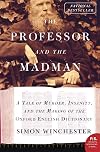
I know I read this. I don't know when but I know I did, so I'd better add it before I forget it entirely.
As carelessly as I use the star ratings, I wouldn't be so unfair as to rate this after, let me think, at least 3 years. But I'd call it about a three. Not as much OED as I would have liked, and rather more murderer...but that's what's attention-grabbing I suppose.
As carelessly as I use the star ratings, I wouldn't be so unfair as to rate this after, let me think, at least 3 years. But I'd call it about a three. Not as much OED as I would have liked, and rather more murderer...but that's what's attention-grabbing I suppose.
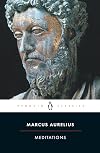
Annoyed that I can't find my edition, but there's only so much I'm willing to do with there are more than 200 editions. :P
And no rating because it doesn't really rate on the scale. It is what it is and the free ebook available from GR isn't great...looks like scanning issues. Not unreadable though, unless you despise King James era English, and this is pretty convoluted even for that. Reader beware.
And no rating because it doesn't really rate on the scale. It is what it is and the free ebook available from GR isn't great...looks like scanning issues. Not unreadable though, unless you despise King James era English, and this is pretty convoluted even for that. Reader beware.
So very genre, but much better than I expected.
Review to come.
Review to come.
I had so much fun with this one, I can't help but go the extra star, though for many reasons I am nearly convinced to give it three. Having read and enjoyed it, however, might make my argument that I'm not that obsessed with Sherlock Holmes that much weaker.