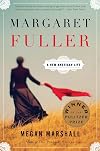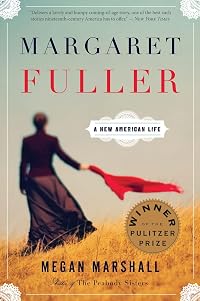
Margaret Fuller: A New American Life
by Megan Marshall
On This Page
Description
Winner of the Pulitzer Prize for Biography From an early age, Margaret Fuller provoked and dazzled New England's intellectual elite. Her famous Conversations changed women's sense of how they could think and live; her editorship of the Transcendentalist literary journal the Dial shaped American Romanticism. Now, Megan Marshall, whose acclaimed The Peabody Sisters "discovered" three fascinating women, has done it again: no biography of Fuller has made her ideas so alive or her life so moving. show more Marshall tells the story of how Fuller, tired of Boston, accepted Horace Greeley's offer to be the New-York Tribune's front-page columnist. The move unleashed a crusading concern for the urban poor and the plight of prostitutes, and a late-in-life hunger for passionate experience. In Italy as a foreign correspondent, Fuller took a secret lover, a young officer in the Roman Guard; she wrote dispatches on the brutal 1849 Siege of Rome; and she gave birth to a son. Yet, when all three died in a shipwreck off Fire Island shortly after Fuller's fortieth birthday, the sense and passion of her life's work were eclipsed by tragedy and scandal. Marshall's inspired account brings an American heroine back to indelible life. show lessTags
Recommendations










Member Reviews
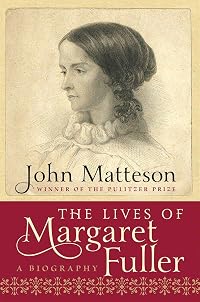
Although I've found the name Margaret Fuller familiar probably since my women's studies classes in college, I didn't really learn about her until our minister gave a sermon about her this spring. After the sermon I asked the minister for suggestions for further reading, and she recommended The Lives of Margaret Fuller by John Matteson. I bought the book because I like our minister and trust her opinion, but I procrastinated starting it. I wanted a book about Margaret Fuller that was written by a woman. I was pretty sure there was one because I'd heard a radio interview with a woman on the subject of Margaret Fuller, and when I went to investigate, I found Megan Marshall's Margaret Fuller: A New American Life, which had just won a show more Pullitzer.
A Pullitzer and a woman author? Clearly this was the biography I wanted to read first.
I didn't have to read far into the book to decide that I really like Marshall's book, and I love Margaret Fuller. I feel like I can relate to her. I, like her, was taught from a young age by a father delighted by my precociousness and tickled at the idea of seeing what the brain of this child of his could absorb. I, too, received detailed critical commentary from my father on my essays and stories. I, too, was left directionless when my father for stopped directing my education.
Fuller's father worried he was making her unmarriageable by promoting her masculine intellect, so he stopped her classical education and sent her to finishing school. I don't know my father's reasons for abandoning my at-home math and science education, but I'm pretty sure it had nothing to do with my marriageability. I do blame him in part for my somewhat stilted social style. His no-nonsense model of critique gave me both the ability to handle criticism and the inability to recognize that others might want me to pull a few punches when I critique their work. This hasn't negatively impacted my ability to marry (although it's possible it's part of the reason I'm married to a scientist rather than a writer).
I also relate to Fuller as she moves into adulthood, great responsibility thrust upon her due to family circumstances, tremendous doubt assailing her at every turn. She's pulled between her passions and her intellect, what's expected of her and what she wishes to do (I say as my five-year-old whines at me and the clock flashes annoyingly, reminding me that I need to start dinner instead of trying to write a book review).
As she reaches her 30's, her growing success highlights our differences. We both started a discussion group, we both have rather sensitive constitutions, and for both of us motherhood was a catalyst for a more balanced union between intellect and heart, but Fuller's genius and ambition and bravery and clear sense of purpose take her places that I'm unlikely ever to go. She becomes the first woman war correspondent (although she has to take a governess job because her newspaper doesn't pay enough to support her), while it's a major accomplishment for me to go into Boston for the day. She feels comfortable and confident hanging out with the big thinkers of her time, and impresses them in the process with her poise and her clear, logical thinking, while I stretch and strain and stumble about for the right words to express the thought I'm trying to form.
A nineteenth-century sybil, Fuller speaks for an America nearly 200 years in the future. This opinion, expressed in 1837, is just one of many examples of the ways in which Margaret Fuller was ahead of her time:
This is an idea that could be---and frequently is---expressed in the 21st century. In fact, it's a big reason I started my own discussion group.
I wish to see my surroundings with Fuller's clarity and to express my thoughts about them in a way that touches people as much as Fuller's words have, effecting change even when her name is eclipsed in national memory by her male counterparts.
Marshall's biography has been a pleasure to read and has given me not only a lot to think about but a role model of sorts to encourage me as I make my own way. show less
A Pullitzer and a woman author? Clearly this was the biography I wanted to read first.
I didn't have to read far into the book to decide that I really like Marshall's book, and I love Margaret Fuller. I feel like I can relate to her. I, like her, was taught from a young age by a father delighted by my precociousness and tickled at the idea of seeing what the brain of this child of his could absorb. I, too, received detailed critical commentary from my father on my essays and stories. I, too, was left directionless when my father for stopped directing my education.
Fuller's father worried he was making her unmarriageable by promoting her masculine intellect, so he stopped her classical education and sent her to finishing school. I don't know my father's reasons for abandoning my at-home math and science education, but I'm pretty sure it had nothing to do with my marriageability. I do blame him in part for my somewhat stilted social style. His no-nonsense model of critique gave me both the ability to handle criticism and the inability to recognize that others might want me to pull a few punches when I critique their work. This hasn't negatively impacted my ability to marry (although it's possible it's part of the reason I'm married to a scientist rather than a writer).
I also relate to Fuller as she moves into adulthood, great responsibility thrust upon her due to family circumstances, tremendous doubt assailing her at every turn. She's pulled between her passions and her intellect, what's expected of her and what she wishes to do (I say as my five-year-old whines at me and the clock flashes annoyingly, reminding me that I need to start dinner instead of trying to write a book review).
As she reaches her 30's, her growing success highlights our differences. We both started a discussion group, we both have rather sensitive constitutions, and for both of us motherhood was a catalyst for a more balanced union between intellect and heart, but Fuller's genius and ambition and bravery and clear sense of purpose take her places that I'm unlikely ever to go. She becomes the first woman war correspondent (although she has to take a governess job because her newspaper doesn't pay enough to support her), while it's a major accomplishment for me to go into Boston for the day. She feels comfortable and confident hanging out with the big thinkers of her time, and impresses them in the process with her poise and her clear, logical thinking, while I stretch and strain and stumble about for the right words to express the thought I'm trying to form.
A nineteenth-century sybil, Fuller speaks for an America nearly 200 years in the future. This opinion, expressed in 1837, is just one of many examples of the ways in which Margaret Fuller was ahead of her time:
She allowed that society as a whole may have improved, but what of the individual? The very signs of progress others pointed to---innovations such as the railroad and the steamship---created or exacerbated "immense wants" in the individual: "the diffusion of information is not necessarily the diffusion of knowledge," she explained, and "the triumph over matter does not always or often lead to the triumph of the Soul." And "when it is made easy for men to communicate with one another, they learn less from on another." (p 114)
This is an idea that could be---and frequently is---expressed in the 21st century. In fact, it's a big reason I started my own discussion group.
I wish to see my surroundings with Fuller's clarity and to express my thoughts about them in a way that touches people as much as Fuller's words have, effecting change even when her name is eclipsed in national memory by her male counterparts.
Marshall's biography has been a pleasure to read and has given me not only a lot to think about but a role model of sorts to encourage me as I make my own way. show less
I do so love reading about exceptional and unconventional women, especially one from the early 1800s, and doubly especially one who is disagreeable by contemporary accounts (triply so if they were not from the usual privileged background which is not the case here).
Educated beyond society standards for a woman at the time (a combination of her father's strict homeschooling fueled by his own failed ambitions, not by any proto-feminist beliefs, and mostly her own uncompromising discipline), Fuller acutely felt the disadvantages of her sex and immense intellect (the necessity/expectation of marriage, the tertiary education denied to women, y'know, the usual patriarchy nonsense). The life of Margaret Fuller is remarkable not just for her show more role as one of the few women in history whom we can point to as having achieved success in a public domain and herald as an inspiration to future women, but also for her extraordinary intellect matched only by her intense discipline.
The scene where Margaret welcomed her male contemporaries (friends, even) to join her Conversations (weekly-themed discussion group intended to inspire like-minded women to question, to define, to state and examine their opinions, to learn to art of intellectual debates and discussions, and most of all, to question their own positions in society) only for it to be dominated by the men deriding the theme of Greek mythos, claiming it lacking and requiring the completeness of Christian revelations, and eventually bringing it around to contemporary church matters, that is, avenues from which women were/are excluded, that scene, it made my blood boil. Another blood-boiling instance was when her father, failing another ambition and now secretly of meagre income, moved the entire family to a farm and assumed her to be a spinster for the foreseeable future, promising her a Europe trip if she tutors all her younger brothers into Harvard (youngest is seven now). Frustrations all round for Fuller and all women denied their full potentials!
Marshall is as detailed as it is possible for a biography to be, quoting from period documents and making it clear when she's extrapolating. Recommended for feminism studies or general interest.
Aside: incredible seduction line that I was not expecting from Fuller: some day when you are not bound to buying and selling, and I, too, am free... you will perhaps... show me some one of those beautiful places which I do not yet know. show less
Educated beyond society standards for a woman at the time (a combination of her father's strict homeschooling fueled by his own failed ambitions, not by any proto-feminist beliefs, and mostly her own uncompromising discipline), Fuller acutely felt the disadvantages of her sex and immense intellect (the necessity/expectation of marriage, the tertiary education denied to women, y'know, the usual patriarchy nonsense). The life of Margaret Fuller is remarkable not just for her show more role as one of the few women in history whom we can point to as having achieved success in a public domain and herald as an inspiration to future women, but also for her extraordinary intellect matched only by her intense discipline.
The scene where Margaret welcomed her male contemporaries (friends, even) to join her Conversations (weekly-themed discussion group intended to inspire like-minded women to question, to define, to state and examine their opinions, to learn to art of intellectual debates and discussions, and most of all, to question their own positions in society) only for it to be dominated by the men deriding the theme of Greek mythos, claiming it lacking and requiring the completeness of Christian revelations, and eventually bringing it around to contemporary church matters, that is, avenues from which women were/are excluded, that scene, it made my blood boil. Another blood-boiling instance was when her father, failing another ambition and now secretly of meagre income, moved the entire family to a farm and assumed her to be a spinster for the foreseeable future, promising her a Europe trip if she tutors all her younger brothers into Harvard (youngest is seven now). Frustrations all round for Fuller and all women denied their full potentials!
Marshall is as detailed as it is possible for a biography to be, quoting from period documents and making it clear when she's extrapolating. Recommended for feminism studies or general interest.
Aside: incredible seduction line that I was not expecting from Fuller: some day when you are not bound to buying and selling, and I, too, am free... you will perhaps... show me some one of those beautiful places which I do not yet know. show less
Megan Marshall’s book is a wonderfully readable account of the life of Boston-born Margaret Fuller (1810-1850), an early feminist. Her father was her primary educator, “designing” her course of study at home. A tough taskmaster he was, which turned out to be of great value to her, for he died young. She needed then to provide for her mother and her siblings. After a short teaching gig, she realized that, although she was successful, it was not her passion - she desperately wanted to write. Another passion was engaging women in developing their intellect. To this end, she led a series of Conversations, to which the women of Boston subscribed, meeting weekly to discuss literary topics. These two passions served to support her show more family.
Though not born of wealth, she was a friend of the Transcendalists in New England, in particular of Ralph Waldo Emerson whom she held in thrall. She wrote constantly, letters and essays, always looking to Emerson for intellectual commentary and discussion. In fact, she probably would have liked a closer union, but he couldn’t be moved in that direction, and sometimes treated her harshly.
The book traces the life of a woman ahead of her time. In her early years, she envied her friends who married and had children. Though that would come later for her, she was content to be a woman of intellect and action. A trip to the Midwest that opened her eyes to a world away from Boston, the publishing of two well-received books and numerous articles, the “plum” job as literary editor of Horace Greeley’s New York Tribune where she finally gained confidence and received the accolades that she deserved, and the trip as foreign correspondent in Europe that was to prove so momentous for her and bring her fulfillment of the wish for a child – all these events unfold beautifully with Marshall’s prose to guide the reader and with Fuller’s words that are liberally quoted throughout.
Not only did Fuller’s writing display her wide range of literary knowledge, but it is styled so beautifully with just the right turn of phrase. In the 1970’s, during the heat of the women’s liberation movement, T-shirts were printed with a quote from her famous book, Woman of the Nineteenth Century. Taken out of context from her belief that women should be able to be what they want to be, the quote was “Let Them Be Sea-Captains.” But it’s probably not one she would have picked. Instead, believing as she did that women should be taught and held to high standards, she might have preferred this one:
"Who would be a goody that could be a genius" show less
Though not born of wealth, she was a friend of the Transcendalists in New England, in particular of Ralph Waldo Emerson whom she held in thrall. She wrote constantly, letters and essays, always looking to Emerson for intellectual commentary and discussion. In fact, she probably would have liked a closer union, but he couldn’t be moved in that direction, and sometimes treated her harshly.
The book traces the life of a woman ahead of her time. In her early years, she envied her friends who married and had children. Though that would come later for her, she was content to be a woman of intellect and action. A trip to the Midwest that opened her eyes to a world away from Boston, the publishing of two well-received books and numerous articles, the “plum” job as literary editor of Horace Greeley’s New York Tribune where she finally gained confidence and received the accolades that she deserved, and the trip as foreign correspondent in Europe that was to prove so momentous for her and bring her fulfillment of the wish for a child – all these events unfold beautifully with Marshall’s prose to guide the reader and with Fuller’s words that are liberally quoted throughout.
Not only did Fuller’s writing display her wide range of literary knowledge, but it is styled so beautifully with just the right turn of phrase. In the 1970’s, during the heat of the women’s liberation movement, T-shirts were printed with a quote from her famous book, Woman of the Nineteenth Century. Taken out of context from her belief that women should be able to be what they want to be, the quote was “Let Them Be Sea-Captains.” But it’s probably not one she would have picked. Instead, believing as she did that women should be taught and held to high standards, she might have preferred this one:
"Who would be a goody that could be a genius" show less
I've been putting off writing about this book even though it will certainly make my "best of the year" list, mostly because I had such an intensely personal reaction to it. Margaret Fuller was a woman I was only peripherally aware of-- like so many remarkable women, whose achievements remain overlooked by those who continue to see men first, and women...a far second, a curiosity--her accomplishments were always "background" material in other books, other reading. I knew she was in Emerson's circle of Transcendentalists, I knew she was a social reformer and early advocate for women's rights, an influence on Susan B. Anthony and Elizabeth Cady Stanton.
But that is all I knew until Megan Marshall's perceptive biography, which among other show more things will make one ask just why it was considered "Emerson's" circle, and not Fuller's.
I wasn't expecting to identify so strongly with Marshall's subject, though. But the portrait of the woman that emerges felt achingly familiar. A precocious child, whose father believed in a strong classical education even for his daughters, Margaret Fuller was fluent in Latin before she was ten years old, and spent hours in debate with her father, who was of a progressive bent, honing her ability to think critically and construct a logical argument. Like her father, she idolized Roman Republican values. Cicero was a personal hero.
This kind of early intensive education made her intellectually confident when she finally entered school, but also socially awkward and emotionally naive--two traits that would dog her for most of her early adolescence and into her early maturity. She was, as we might say now, a brainy girl. A bit of a geek. It was a painfully familiar picture.
In consequence, Marshall portrays a woman whose passions and emotional attachments were idealistic, her heart often in service to her ideals, rather than the other way around. And thus, although she was adept at forming serious friendships and deep attachments, they had a way of disappointing her when the object of her regard failed to live up to her ideals. She all too often failed to take into account the emotional realities of her friends, even her close ones, and they seem to have often felt the need to draw back from Fuller's demanding brand of intense intellectual intimacy.
The moment when the book really coalesced, however, was after the death of Fuller's father, leaving Margaret, as the oldest and most independent of his children, responsible for supporting the family (something her mother was not equipped to do and none of her younger brothers old enough to contemplate). At this period the family is forced to retire to a family "farm" (the word deserves the quotes--it was another of her late father's educational experiments) and eke out their living on the little money they could inveigle from a wealthy but parsimonious uncle and what Fuller herself could earn writing reviews for magazines and taking in students for instruction in the classics. (She also taught her own younger brothers, since the family could not afford to send them to a school).
It was a severely constrained life for Fuller, who until then had participated in or organized any number of salons and discussion groups and had been making a name for herself in intellectual circles. And it was in the midst of this isolation that she, doing the usual round of "good works" expected of women in her social class, went to attend the bedside of a woman dying of what she was told was consumption, but which turned out to be complications from a botched abortion. A short while later, she paid a charitable visit to an ancient widow and her elderly daughter -- each abandoned to their own devices in their poverty, without kith of kin to care for them, left to an endless series of days huddled by a fireplace eating whatever bread charity society workers left for them. These two incidents, which Fuller wrote about in vivid detail in her journal, seem to have been brackets or bookends to the question of a woman's fate if she did not exist under the protection of a man. Marshall identifies this period as the time when Fuller's feminism and radicalism began to sharpen and achieve its focus, setting Fuller on a path that would eventually lead to her declaration of the institution of marriage as a form of slavery, and commitment to working with women prisoners -- most of whom, she decided, owed their incarceration to the way men forced women to live their lives.
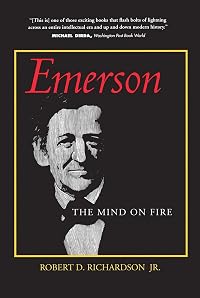
I originally picked up Margaret Fuller: A New American Life as part of a binge of reading about the transcendentalists, thanks to Robert Richardson's enormously impressive biography of Emerson, The Mind on Fire. Richardson calls his book "an intellectual biography." If that is so, then Marshall's might be called an "emotional biography" -- if we can divest the word from its current pop-psychological tones and find in it instead an account of how one woman grew into her passion and life's calling.
It was a calling that consumed her from within and without (like most driven people she was a workaholic). And to the end of her all-too-short life she would write about her struggle to realize her fullest potential in a society where "an independent woman" was something of an absurdity. An idea for which there was no place. And despite all Fuller's accomplishments -- she became the first foreign correspondent for am American newspaper, covered Europe during the revolutionary fervor know as the "European Spring," was a friend to George Sand, knew Garibaldi, was close with many Italian and Polish Republicans-- despite all this, she still to the end of her days struggled to be both a woman and "a human" in the same body, so to speak. And right up to her death society denied her this one wish. Did not, it seems, even understand what she was asking for, was demanding.
I found much to identify with in Fuller's lifelong struggle to live as she would often write "to her fullest potential." It's hard not to think, watching (as an example) the irrational hostility engendered by Hillary Clinton's political career, that any woman with aspirations wouldn't find Fuller's frustrations familiar. "Potential" always seems to be measured against the expense of the other well-defined roles women are required to fill: Daughter. Mother. Wife. Mistress. That Fuller persisted so steadfastly in pursuing her own idea of what it was to be a complete person, in defiance of everybody's expectations -- even her most intellectual friends and most radical compatriots -- is a testament to her will and conviction. Perhaps, in the end, it is only in the struggle to be ourselves in the face of all that is expected of us that we can be said to realize that "full potential" Margaret Fuller was forever chasing. show less
But that is all I knew until Megan Marshall's perceptive biography, which among other show more things will make one ask just why it was considered "Emerson's" circle, and not Fuller's.
I wasn't expecting to identify so strongly with Marshall's subject, though. But the portrait of the woman that emerges felt achingly familiar. A precocious child, whose father believed in a strong classical education even for his daughters, Margaret Fuller was fluent in Latin before she was ten years old, and spent hours in debate with her father, who was of a progressive bent, honing her ability to think critically and construct a logical argument. Like her father, she idolized Roman Republican values. Cicero was a personal hero.
This kind of early intensive education made her intellectually confident when she finally entered school, but also socially awkward and emotionally naive--two traits that would dog her for most of her early adolescence and into her early maturity. She was, as we might say now, a brainy girl. A bit of a geek. It was a painfully familiar picture.
In consequence, Marshall portrays a woman whose passions and emotional attachments were idealistic, her heart often in service to her ideals, rather than the other way around. And thus, although she was adept at forming serious friendships and deep attachments, they had a way of disappointing her when the object of her regard failed to live up to her ideals. She all too often failed to take into account the emotional realities of her friends, even her close ones, and they seem to have often felt the need to draw back from Fuller's demanding brand of intense intellectual intimacy.
The moment when the book really coalesced, however, was after the death of Fuller's father, leaving Margaret, as the oldest and most independent of his children, responsible for supporting the family (something her mother was not equipped to do and none of her younger brothers old enough to contemplate). At this period the family is forced to retire to a family "farm" (the word deserves the quotes--it was another of her late father's educational experiments) and eke out their living on the little money they could inveigle from a wealthy but parsimonious uncle and what Fuller herself could earn writing reviews for magazines and taking in students for instruction in the classics. (She also taught her own younger brothers, since the family could not afford to send them to a school).
It was a severely constrained life for Fuller, who until then had participated in or organized any number of salons and discussion groups and had been making a name for herself in intellectual circles. And it was in the midst of this isolation that she, doing the usual round of "good works" expected of women in her social class, went to attend the bedside of a woman dying of what she was told was consumption, but which turned out to be complications from a botched abortion. A short while later, she paid a charitable visit to an ancient widow and her elderly daughter -- each abandoned to their own devices in their poverty, without kith of kin to care for them, left to an endless series of days huddled by a fireplace eating whatever bread charity society workers left for them. These two incidents, which Fuller wrote about in vivid detail in her journal, seem to have been brackets or bookends to the question of a woman's fate if she did not exist under the protection of a man. Marshall identifies this period as the time when Fuller's feminism and radicalism began to sharpen and achieve its focus, setting Fuller on a path that would eventually lead to her declaration of the institution of marriage as a form of slavery, and commitment to working with women prisoners -- most of whom, she decided, owed their incarceration to the way men forced women to live their lives.
I originally picked up Margaret Fuller: A New American Life as part of a binge of reading about the transcendentalists, thanks to Robert Richardson's enormously impressive biography of Emerson, The Mind on Fire. Richardson calls his book "an intellectual biography." If that is so, then Marshall's might be called an "emotional biography" -- if we can divest the word from its current pop-psychological tones and find in it instead an account of how one woman grew into her passion and life's calling.
It was a calling that consumed her from within and without (like most driven people she was a workaholic). And to the end of her all-too-short life she would write about her struggle to realize her fullest potential in a society where "an independent woman" was something of an absurdity. An idea for which there was no place. And despite all Fuller's accomplishments -- she became the first foreign correspondent for am American newspaper, covered Europe during the revolutionary fervor know as the "European Spring," was a friend to George Sand, knew Garibaldi, was close with many Italian and Polish Republicans-- despite all this, she still to the end of her days struggled to be both a woman and "a human" in the same body, so to speak. And right up to her death society denied her this one wish. Did not, it seems, even understand what she was asking for, was demanding.
I found much to identify with in Fuller's lifelong struggle to live as she would often write "to her fullest potential." It's hard not to think, watching (as an example) the irrational hostility engendered by Hillary Clinton's political career, that any woman with aspirations wouldn't find Fuller's frustrations familiar. "Potential" always seems to be measured against the expense of the other well-defined roles women are required to fill: Daughter. Mother. Wife. Mistress. That Fuller persisted so steadfastly in pursuing her own idea of what it was to be a complete person, in defiance of everybody's expectations -- even her most intellectual friends and most radical compatriots -- is a testament to her will and conviction. Perhaps, in the end, it is only in the struggle to be ourselves in the face of all that is expected of us that we can be said to realize that "full potential" Margaret Fuller was forever chasing. show less
Margaret Fuller is one of my patron saints and spiritual mentors. She'd make my list of famous people I'd love to have dinner with (but I have to admit I'd be quite intimidated!).
A brilliant thinker, philosopher, and writer, Fuller grew up in the heady, fiery, intellectual Boston of the early 19th century, among famed Transcendentalists, philosophers, Unitarian ministers, agitators, organizers, social scions, ex-pat Britons, and blue-blood artists. Despite being a blazing star of her time, admired by some of the most famous American thinkers today, Fuller is depressingly unknown. Here's hoping Marshall's biography is a first step in returning Fuller to her proper place of prominence in American history.
Born to show more schoolmaster-turned-elected official, Fuller's father was a relentless taskmaster, crafting his clever daughter into the model American son -- all the while leaving Margaret to chafe at the limitations she faced as an adult woman. Unable to become a minister, she instead found herself becoming a teacher and writer, growing into a more recognized voice in the Boston literati scene. Conflicted about romantic relationships -- her female friends almost all disappeared once they became wives -- she was torn between an appreciation for the Romantic emphasis on sensuality and the real life ramifications of such behavior. In the end, while covering the revolutionary movements in Italy in the 1840s, she found love and became a mother, writing what she considered her greatest work -- only to die tragically in a shipwreck on her return to the US.
As with Winder's brief biography of Plath which I reviewed earlier, Marshall makes no bones about her obvious affection for her subject. That admiration shines through every page, but doesn't mean Marshall is blind to Fuller's flaws; she presents a complicated woman fully, in the context of her time. A blurb on the back describes this as an 'empathetic biography', which is precisely how I found this to read. (It helped immensely that Marshall has the same feelings toward the Transcendentalist and Unitarian crowd as I do -- when she suggested Bronson Alcott was, perhaps, a 'charlatan', I literally cackled with delight!)
In her Prologue, Marshall wrote she once wanted to write a biography of Fuller "that turned away from the intrigues of her private life, that spoke of public events solely," and I admit, my heart sank. Fuller is one of the original 'the personal is political' figures for me, and I bristled at the thought that her intimate life (experiences as woman, not her sex life) would be separated from her 'public' life. Marshall quickly explained how impossible that endeavor was -- even silly -- as Fuller lived and breathed philosophy, revolution, and identity.
Marshall's style is to use Fuller's own words to tell her story, which means the narrative doesn't read quite as smoothly as some biographies but I found I grew used to the style and was sucked in. There's a slightly circuitous feel to the book at times, as Marshall gleans from letters and journals of others to fill in the places where she doesn't have Fuller's exact language, but in the end, I found this style rather breathtaking. In a way, it felt as if Fuller was dictating her biography.
Although hefty -- 496 pages -- this reads much faster and while dense at moments (the book presumes some awareness of the Transcendentalists), it is completely readable. For those who love remembering the forgotten women of history, get this book (I'd recommend April Bernard's novel Miss Fuller first, then this book, to get a lovely picture of the woman.). show less
A brilliant thinker, philosopher, and writer, Fuller grew up in the heady, fiery, intellectual Boston of the early 19th century, among famed Transcendentalists, philosophers, Unitarian ministers, agitators, organizers, social scions, ex-pat Britons, and blue-blood artists. Despite being a blazing star of her time, admired by some of the most famous American thinkers today, Fuller is depressingly unknown. Here's hoping Marshall's biography is a first step in returning Fuller to her proper place of prominence in American history.
Born to show more schoolmaster-turned-elected official, Fuller's father was a relentless taskmaster, crafting his clever daughter into the model American son -- all the while leaving Margaret to chafe at the limitations she faced as an adult woman. Unable to become a minister, she instead found herself becoming a teacher and writer, growing into a more recognized voice in the Boston literati scene. Conflicted about romantic relationships -- her female friends almost all disappeared once they became wives -- she was torn between an appreciation for the Romantic emphasis on sensuality and the real life ramifications of such behavior. In the end, while covering the revolutionary movements in Italy in the 1840s, she found love and became a mother, writing what she considered her greatest work -- only to die tragically in a shipwreck on her return to the US.
As with Winder's brief biography of Plath which I reviewed earlier, Marshall makes no bones about her obvious affection for her subject. That admiration shines through every page, but doesn't mean Marshall is blind to Fuller's flaws; she presents a complicated woman fully, in the context of her time. A blurb on the back describes this as an 'empathetic biography', which is precisely how I found this to read. (It helped immensely that Marshall has the same feelings toward the Transcendentalist and Unitarian crowd as I do -- when she suggested Bronson Alcott was, perhaps, a 'charlatan', I literally cackled with delight!)
In her Prologue, Marshall wrote she once wanted to write a biography of Fuller "that turned away from the intrigues of her private life, that spoke of public events solely," and I admit, my heart sank. Fuller is one of the original 'the personal is political' figures for me, and I bristled at the thought that her intimate life (experiences as woman, not her sex life) would be separated from her 'public' life. Marshall quickly explained how impossible that endeavor was -- even silly -- as Fuller lived and breathed philosophy, revolution, and identity.
Marshall's style is to use Fuller's own words to tell her story, which means the narrative doesn't read quite as smoothly as some biographies but I found I grew used to the style and was sucked in. There's a slightly circuitous feel to the book at times, as Marshall gleans from letters and journals of others to fill in the places where she doesn't have Fuller's exact language, but in the end, I found this style rather breathtaking. In a way, it felt as if Fuller was dictating her biography.
Although hefty -- 496 pages -- this reads much faster and while dense at moments (the book presumes some awareness of the Transcendentalists), it is completely readable. For those who love remembering the forgotten women of history, get this book (I'd recommend April Bernard's novel Miss Fuller first, then this book, to get a lovely picture of the woman.). show less
“I will never do as Waldo does . . . flee to the woods”
Margaret Fuller was the intellectual equal of her close friend Ralph Waldo Emerson, but while he was retiring she had a passionate, engage-the-world personality that makes Megan Marshall’s thoroughly researched and engaging biography of her the most moving book I’ve read in a long time. The book opens with Margaret as a precocious child, who from an early age was driven to excel intellectually by her father in spite of the fact that she was a daughter not a son, and it ends with the heartbreaking ship wreck that killed Margaret and her new husband and child within sight of the Long Island shoreline.
In between Margaret wrote books that challenged the status quo regarding show more women, culture, and politics. While she was part of the Transcendentalist school of thought she traveled far from New England. During a trip to the Great Lakes region she spent time with Native Americans, afterwards writing about the plight of their culture, and she was in Europe as a correspondent during the continent wide upheavals of 1848. It took me a long time to finish this biography because I kept pausing to read some of Margaret’s own works, which are available for free on sites like Project Gutenberg and Google Books.
Margaret was brilliant in a time when smart woman made men uncomfortable. Gender limited her options, but Margaret tried to use her well developed intellect to play an important role in the world like the heroes of America’s Revolutionary War that she admired. In spite of her antipathy to marriage as it was practiced in the mid-1800’s, Margaret longed for a full life with love and a child of her own, yearnings that were not fulfilled until a few years before her death.
This biography by Megan Marshall held me rapt because it brought both Margaret Fuller and the post-Revolutionary, pre-Civil War era in the United States and Europe to life for me. The book’s pages are full of the intellectual, revolutionary and literary leaders of the time, and Margaret's own words, quoted throughout the text, are so well put and insightful even now that I found myself underlining almost all of them show less
Margaret Fuller was the intellectual equal of her close friend Ralph Waldo Emerson, but while he was retiring she had a passionate, engage-the-world personality that makes Megan Marshall’s thoroughly researched and engaging biography of her the most moving book I’ve read in a long time. The book opens with Margaret as a precocious child, who from an early age was driven to excel intellectually by her father in spite of the fact that she was a daughter not a son, and it ends with the heartbreaking ship wreck that killed Margaret and her new husband and child within sight of the Long Island shoreline.
In between Margaret wrote books that challenged the status quo regarding show more women, culture, and politics. While she was part of the Transcendentalist school of thought she traveled far from New England. During a trip to the Great Lakes region she spent time with Native Americans, afterwards writing about the plight of their culture, and she was in Europe as a correspondent during the continent wide upheavals of 1848. It took me a long time to finish this biography because I kept pausing to read some of Margaret’s own works, which are available for free on sites like Project Gutenberg and Google Books.
Margaret was brilliant in a time when smart woman made men uncomfortable. Gender limited her options, but Margaret tried to use her well developed intellect to play an important role in the world like the heroes of America’s Revolutionary War that she admired. In spite of her antipathy to marriage as it was practiced in the mid-1800’s, Margaret longed for a full life with love and a child of her own, yearnings that were not fulfilled until a few years before her death.
This biography by Megan Marshall held me rapt because it brought both Margaret Fuller and the post-Revolutionary, pre-Civil War era in the United States and Europe to life for me. The book’s pages are full of the intellectual, revolutionary and literary leaders of the time, and Margaret's own words, quoted throughout the text, are so well put and insightful even now that I found myself underlining almost all of them show less
After loving Megan Marshall's first book, The Peabody Sisters, I bought this book as soon as I heard about it. I'm embarrassed to admit that I barely knew who Margaret Fuller was before reading this except for a vague notion of Transcendentalists and feminism. Marshall's book gave me a detailed but readable account of an interesting woman's life.
Margaret Fuller was educated in the classics by her father and was a bright child. She went through awkward teenage years before slowly coming into her own through her friendships with Ralph Waldo Emerson, Elizabeth Peabody, the Channings and many in the Boston Transcendentalist circle of the 1840s. She wrote a novel, edited several magazines (including Emerson's work), wrote a seminal feminist show more work called Woman in the Nineteenth Century, and was a columnist for the New-York Tribune. She went to Italy in the late 1840s and reported on the political upheaval there. She also met an Italian man who she had a child with and ended up marrying. On their way back to America, she, her husband, and their two year old son died in a shipwreck off the coast of New York. Margaret Fuller was 40.
Marshall does an excellent job of showing how Fuller's personal characteristics impacted her career and vice versa. She also uses Fuller's own words to write this book. This worked since Fuller was such a good writer, but it took me a little while to get used to this technique. The quotes interrupted my flow of reading at first and I still wonder exactly what Marshall was paraphrasing in between Fuller's own words. Here's a random example of what I mean.
But "a new young man" was not enough to lure Margaret from the close proximity of enigmatic, "unhelpful, wise" Waldo Emerson. In December, after a tearful parting with her "row" of pupils, who presented her with an "elegantly bound" set of Shakespeare, Margaret was off to the "vestal solitudes" of Groton. "I do not wish to teach again at all," she declared. She knew she might not have her wish, but she expected to devote at least a year to "my own inventions" before attempting once more to effect "my dreams and hopes as to the education of women," if necessary. And: "What hostile or friendly star may not take the ascendant before that time?"
Like I said, I got used to the technique, but it was a little distracting. Overall, a recommended book for anyone interested in biographies of American women. show less
Margaret Fuller was educated in the classics by her father and was a bright child. She went through awkward teenage years before slowly coming into her own through her friendships with Ralph Waldo Emerson, Elizabeth Peabody, the Channings and many in the Boston Transcendentalist circle of the 1840s. She wrote a novel, edited several magazines (including Emerson's work), wrote a seminal feminist show more work called Woman in the Nineteenth Century, and was a columnist for the New-York Tribune. She went to Italy in the late 1840s and reported on the political upheaval there. She also met an Italian man who she had a child with and ended up marrying. On their way back to America, she, her husband, and their two year old son died in a shipwreck off the coast of New York. Margaret Fuller was 40.
Marshall does an excellent job of showing how Fuller's personal characteristics impacted her career and vice versa. She also uses Fuller's own words to write this book. This worked since Fuller was such a good writer, but it took me a little while to get used to this technique. The quotes interrupted my flow of reading at first and I still wonder exactly what Marshall was paraphrasing in between Fuller's own words. Here's a random example of what I mean.
But "a new young man" was not enough to lure Margaret from the close proximity of enigmatic, "unhelpful, wise" Waldo Emerson. In December, after a tearful parting with her "row" of pupils, who presented her with an "elegantly bound" set of Shakespeare, Margaret was off to the "vestal solitudes" of Groton. "I do not wish to teach again at all," she declared. She knew she might not have her wish, but she expected to devote at least a year to "my own inventions" before attempting once more to effect "my dreams and hopes as to the education of women," if necessary. And: "What hostile or friendly star may not take the ascendant before that time?"
Like I said, I got used to the technique, but it was a little distracting. Overall, a recommended book for anyone interested in biographies of American women. show less
Members
- Recently Added By
Lists

Summer Reads 2014
207 works; 70 members
Author Information

6 Works 1,149 Members
Awards and Honors
Awards
Distinctions
Common Knowledge
- Canonical title
- Margaret Fuller: A New American Life
- Original publication date
- 2013
- People/Characters
- Margaret Fuller; Ralph Waldo Emerson
- Important places
- Cambridge, Massachusetts, USA; Massachusetts, USA
- Important events
- Transcendentalism; 19th century
- Epigraph
- When I make an impression it must be by being most myself.
—Margaret Fuller to her editor John Wiley, 1846 - Dedication
- In memory of—
E.S.
E.S.M.
&
E.W.M.M. - First words
- "Dear Father it is a heavy storm I hope you will not have to come home in it." So begins the record of a life that will end on a homeward journey in another heavy storm, a life unusually full of words, both spoken and written... (show all).
- Quotations
- "She allowed that society as a whole may have improved, but what of the individual? The very signs of progress others pointed to---innovations such as the railroad and the steamship---created or exacerbated "immense wants" in... (show all) the individual: "the diffusion of information is not necessarily the diffusion of knowledge," she explained, and "the triumph over matter does not always or often lead to the triumph of the Soul." And "when it is made easy for men to communicate with one another, they learn less from one another." (page 114)
Classifications
- Genres
- Biography & Memoir, Literature Studies and Criticism
- DDC/MDS
- 818.309 — Literature & rhetoric American literature in English American miscellaneous writings in English Middle 19th Century 1830-61
- LCC
- PS2506 .M37 — Language and Literature American literature American literature Individual authors 19th century
- BISAC
Statistics
- Members
- 416
- Popularity
- 74,452
- Reviews
- 14
- Rating
- (4.04)
- Languages
- English
- Media
- Paper, Audiobook, Ebook
- ISBNs
- 6
- ASINs
- 3