On This Page
Description
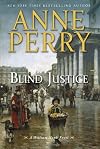
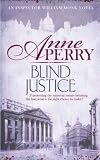
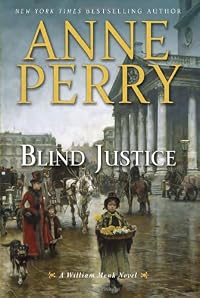
"Inspector William Monk searches for proof of his friend's innocence in a controversial and dangerous case, in the nineteenth novel in Anne Perry's acclaimed series. Oliver Rathbone, now a judge, is presiding over a trial for corruption. Proud of his elevation to this position, he is determined to be proper and fair, and, with much skill, convicts a deeply corrupt man. On the back of this success Rathbone is given a controversial new case: that of a charismatic minister accused of using show more other people's faith for his own gain. This will be a real test of skill, perhaps even dangerous - is this what Rathbone wants? A sensational case begins. True to his principles, Rathbone delivers justice - but at a cost, as murder and suicide ensue, and he is arrested under the charge of blackmail. Can Monk unravel the truth behind the court hysteria? Or will Rathbone spend the rest of his years in prison for exposing a relevant truth, in an appropriate way, for a cause he saw as just?" -- from author's web page . show lessTags
Recommendations








Member Reviews
In this latest novel by Anne Perry, when Hester Monk hears about a church which is pushing its parishioners to donate more than they can afford, indeed, so much that it has financially ruined some, she decides she must investigate. What she learns makes her suspect that the preacher, Adam Taft, is bilking his mostly poor parishioners out of their money, not for other poorer folk as they are being told but so that he and his family can live a lavish lifestyle. When a bookkeeper confirms her suspicions, she reports it to the law.
The Monks' friend Sir Oliver Rathbone, is selected to reside over the trial as judge. As the trial moves forward, it becomes clear that the defence is winning, thanks mainly to the testimony of one witness. show more Rathbone believes that Taft is guilty but there is nothing he, as judge, can do until he realizes he may hold damning evidence against the witness. His interference in the trial has consequences more dire than he had considered not only to the witness but to Taft and Rathbone himself. Soon, he is the one on trial and it is up to the Monks to discover evidence which can save him.
Most of the story revolves around the trials, first of Tate and then Rathbone's. We get very little of Hester's investigation of the church except the outcome. Monk's investigation of the aftermath of Rathbone's revelation is more detailed. There are several references to a past story and reading it may have helped with some of the background but it wasn't necessary to follow this one. Perry did a very good job of weaving this into the narrative without making the mistake of lesser authors of telling it through the conversation of characters who shouldn't need the recap.
However, like in most of Perry's novels, the main character is really Victorian England itself, always lovingly betrayed in all its fog enshrouded glory from the abject poverty surrounding the docks to the palatial estates of the wealthy in Knightsbridge. Whether it's an accurate portrait is less important than that Perry makes it a seductive one.
Despite being set in the sprawl of mid-19th c. London, Blind Justice has the feel of a cosy mystery in the tradition of Agatha Christie. There is little violence and what there is tends to be in the background; bodies are found, never killed in plain view of the reader; the investigators are mostly nice amateurs, in this case, Hester, with a rare understanding of human nature; good almost always triumphs over evil and bad people almost always get their comeuppance. I added the almosts because, unlike the usual cosy, Perry also recognizes that the power to judge can easily become the power to corrupt and that, as the old cliche warns, two wrongs don't make a right. Sometimes, it is important to step away from the abyss even if it allows bad people to get away if we are to remain human. It is this rare ability to add nuances in a genre filled with stories of a manichean simplicity which sets Anne Perry apart and makes her novels so compelling. show less
The Monks' friend Sir Oliver Rathbone, is selected to reside over the trial as judge. As the trial moves forward, it becomes clear that the defence is winning, thanks mainly to the testimony of one witness. show more Rathbone believes that Taft is guilty but there is nothing he, as judge, can do until he realizes he may hold damning evidence against the witness. His interference in the trial has consequences more dire than he had considered not only to the witness but to Taft and Rathbone himself. Soon, he is the one on trial and it is up to the Monks to discover evidence which can save him.
Most of the story revolves around the trials, first of Tate and then Rathbone's. We get very little of Hester's investigation of the church except the outcome. Monk's investigation of the aftermath of Rathbone's revelation is more detailed. There are several references to a past story and reading it may have helped with some of the background but it wasn't necessary to follow this one. Perry did a very good job of weaving this into the narrative without making the mistake of lesser authors of telling it through the conversation of characters who shouldn't need the recap.
However, like in most of Perry's novels, the main character is really Victorian England itself, always lovingly betrayed in all its fog enshrouded glory from the abject poverty surrounding the docks to the palatial estates of the wealthy in Knightsbridge. Whether it's an accurate portrait is less important than that Perry makes it a seductive one.
Despite being set in the sprawl of mid-19th c. London, Blind Justice has the feel of a cosy mystery in the tradition of Agatha Christie. There is little violence and what there is tends to be in the background; bodies are found, never killed in plain view of the reader; the investigators are mostly nice amateurs, in this case, Hester, with a rare understanding of human nature; good almost always triumphs over evil and bad people almost always get their comeuppance. I added the almosts because, unlike the usual cosy, Perry also recognizes that the power to judge can easily become the power to corrupt and that, as the old cliche warns, two wrongs don't make a right. Sometimes, it is important to step away from the abyss even if it allows bad people to get away if we are to remain human. It is this rare ability to add nuances in a genre filled with stories of a manichean simplicity which sets Anne Perry apart and makes her novels so compelling. show less
Absolutely riveting!
Having been given an ARC of Blind Justice, I decided to read as many of the William Monk Series as I could before this one. To say that I became entangled and embroiled in them to the point of distraction is no understatement. William Monk and Hester's journey along with their friends from Sir Oliver to Scruff and others is precious, a journey in growth of the characters involved and in insightful moments of reflection on life, integrity, justice, freedom and love. The series is well worth the reading time. Whether you start at #1 or #19, without a doubt you will want to devour the series.
In Blind Justice Hester takes up the cause of her employees at her clinic for sick and injured prostitutes. Her employee's father show more has been defrauded by the church he belongs to and is now in serious debt. This seemingly worthwhile cause has repercussions that stretch back to Jericho Phillips and for Oliver Rathbone, the presiding judge and now keeper of criminal evidence and child pornography left by his father-in-law. Evidence that stretches into the very upper echelons of society. This double-edged sword of horror and justice is used and rebounds in a way that has far reaching consequences. Just prior to this I realized that although the fraud case may have ended, the complexity of the situation had so much more to reveal. After all at this stage I was not even half way through the book.
A startling and complicated novel, well told. A seemingly simple look at the legal system of the time, that explores integrity, justice, the concepts of right and wrong including those areas of grey we all have trouble grasping. A gripping, highly original novel with Perry as always continuing via her characters in questioning, probing and exposing what it is to be human and how can justice be found.
A NetGalley ARC show less
Having been given an ARC of Blind Justice, I decided to read as many of the William Monk Series as I could before this one. To say that I became entangled and embroiled in them to the point of distraction is no understatement. William Monk and Hester's journey along with their friends from Sir Oliver to Scruff and others is precious, a journey in growth of the characters involved and in insightful moments of reflection on life, integrity, justice, freedom and love. The series is well worth the reading time. Whether you start at #1 or #19, without a doubt you will want to devour the series.
In Blind Justice Hester takes up the cause of her employees at her clinic for sick and injured prostitutes. Her employee's father show more has been defrauded by the church he belongs to and is now in serious debt. This seemingly worthwhile cause has repercussions that stretch back to Jericho Phillips and for Oliver Rathbone, the presiding judge and now keeper of criminal evidence and child pornography left by his father-in-law. Evidence that stretches into the very upper echelons of society. This double-edged sword of horror and justice is used and rebounds in a way that has far reaching consequences. Just prior to this I realized that although the fraud case may have ended, the complexity of the situation had so much more to reveal. After all at this stage I was not even half way through the book.
A startling and complicated novel, well told. A seemingly simple look at the legal system of the time, that explores integrity, justice, the concepts of right and wrong including those areas of grey we all have trouble grasping. A gripping, highly original novel with Perry as always continuing via her characters in questioning, probing and exposing what it is to be human and how can justice be found.
A NetGalley ARC show less
Sir Oliver Rathbone finds himself on the wrong side of the law after presiding over a fraud trial that ended badly. Will Monk and Hester find some means to save their friend from imprisonment or worse?
I like Anne Perry's historical mysteries because they force readers to think about weighty matters like duty, social justice, friendship, good and evil, right and wrong. In this instance, Perry invites readers to contemplate the justice system itself. Perry is a prolific author, and I haven't made an effort to read any of her series in order. This book is closely tied to at least a couple of earlier books in her Monk series, and it left enough questions unanswered at the end that it seems that the fallout from this book may be dealt with show more in another book. I haven't read the earlier related books, and the contents of this book leave me in no doubt about what happened in the earlier ones. Readers who dislike spoilers will definitely want to read this series in order.
I think this book might have worked better as a novella. The book began to feel repetitive about halfway through, as the characters kept having what felt like the same conversation and making the same points over and over. Maybe this was more noticeable to me because the last few of Perry's books that I've read have been novellas, and I've come to prefer them over her longer works. Her writing excels in that medium. Historical fiction is my favorite genre, and Anne Perry is among my favorite authors in this genre. While I've liked some of her other books more than this one, I wouldn't have wanted to miss out on the pleasure of reading it.
This review is based on an electronic advanced reading copy provided by the publisher through NetGalley. show less
I like Anne Perry's historical mysteries because they force readers to think about weighty matters like duty, social justice, friendship, good and evil, right and wrong. In this instance, Perry invites readers to contemplate the justice system itself. Perry is a prolific author, and I haven't made an effort to read any of her series in order. This book is closely tied to at least a couple of earlier books in her Monk series, and it left enough questions unanswered at the end that it seems that the fallout from this book may be dealt with show more in another book. I haven't read the earlier related books, and the contents of this book leave me in no doubt about what happened in the earlier ones. Readers who dislike spoilers will definitely want to read this series in order.
I think this book might have worked better as a novella. The book began to feel repetitive about halfway through, as the characters kept having what felt like the same conversation and making the same points over and over. Maybe this was more noticeable to me because the last few of Perry's books that I've read have been novellas, and I've come to prefer them over her longer works. Her writing excels in that medium. Historical fiction is my favorite genre, and Anne Perry is among my favorite authors in this genre. While I've liked some of her other books more than this one, I wouldn't have wanted to miss out on the pleasure of reading it.
This review is based on an electronic advanced reading copy provided by the publisher through NetGalley. show less
I made several notes during the reading of Blind Justice, the final of which reads: OH DEAR GOD ALREADY.
The first half of this book, and not a small portion of the second half, is comprised primarily of Oliver Rathbone's desperate inner monologue.
"But was it also his reason for taking such a monumental risk with his own career? Would he have done exactly the same had Drew not attacked Hester? Had his mind really been totally focused on delivering justice only within this particular case? He had lain awake and thought hard about it before making his decision, but had he thought clearly? Had he been completely honest? With all the disgust, the outrage, did he even know how to be?"
Honestly. It is lucky that I am by now fully and show more irrevocably committed to this series. Book #20 awaits. show less
The first half of this book, and not a small portion of the second half, is comprised primarily of Oliver Rathbone's desperate inner monologue.
"But was it also his reason for taking such a monumental risk with his own career? Would he have done exactly the same had Drew not attacked Hester? Had his mind really been totally focused on delivering justice only within this particular case? He had lain awake and thought hard about it before making his decision, but had he thought clearly? Had he been completely honest? With all the disgust, the outrage, did he even know how to be?"
Honestly. It is lucky that I am by now fully and show more irrevocably committed to this series. Book #20 awaits. show less
What a dramatic story with Sir Oliver Rathbone now serving as a judge. He has to decide whether or not to use one of the photographs in his possession to show the true character of a witness who is falsely degrading other witnesses. His decision impacts his life in ways he hadn’t anticipated. William Monk and Hester scramble to find evidence to help clear Oliver’s name. Oliver sees the courtroom from a totally different perspective and learns what is most important to him.
I liked hearing parts of the story from Scuff’s point of view and seeing his involvement in the case.
I liked hearing parts of the story from Scuff’s point of view and seeing his involvement in the case.
Although this book is in the Hester and William Monk series, this is definitely a story about Oliver Rathbone. Sir Rathbone finds himself at the pinnacle of his career at the beginning of this book, but because of an error in judgement that he makes in one of the cases he is presiding as judge over, he finds himself at the lowest point personally and professionally that he has ever found himself in. I am an ardent reader of all Ms. Perry's books and I particularly love the William Monk series, but I found this book a bit slow for the first half of the book. And I didn't get to see much of William and Hester who I absolutely love. In the second half though, the pace did pick up and there was a lot more of William and Hester as well as show more some endearing segments with their young ward Scuff. This book's storyline is a continuation of her previous book "A Sunless Sea", so for anyone who hasn't read that particular book, they might find this book a bit incomprehensible. And to anyone new to the series. there is a lot of Victorian courtroom drama with no murder to accompany it, so new readers will not fully understand how good Ms. Perry is at setting her stage for tension and suspense, and how very talented she is at filling her books with a wealth of period detai. I wouldn't recommend this book as a First-Read to this wonderful series, but for Anne Perry fanatics like myself, it is a must-read. Ms. Perry continually proves herself worthy to me, and she sits alone at the top of my favourite author list. show less
I've really been enjoying this series and I've raced through it. However, I do think this was one of the weaker books in the series. Anne Perry seems to start all her books a little slow. I'm fine with that because I enjoy the details about the Victorian era. However, this book really never got going until almost halfway through it. This was mostly because it dealt with Oliver Rathbone, a nice but weak character, rather than Hester and Monk. Once they showed up, it got better.
I do like the way Ms. Perry takes issues in our own times and shows how they were issues in other times. In this case, the book dealt with fraud in religious institutions that gull gullible believers into giving money to those who don't deserve it which still show more happens today.
It's still a great series. I'll be glad to see the last of Margaret, hopefully, but more Hester, Monk, Scruff, and the rest of their ill-assorted team of friends. show less
I do like the way Ms. Perry takes issues in our own times and shows how they were issues in other times. In this case, the book dealt with fraud in religious institutions that gull gullible believers into giving money to those who don't deserve it which still show more happens today.
It's still a great series. I'll be glad to see the last of Margaret, hopefully, but more Hester, Monk, Scruff, and the rest of their ill-assorted team of friends. show less
Members
- Recently Added By
Published Reviews
This book revolves around a whopper of a moral problem: What do you do when only you are in a position to stop great evil, at the cost of betraying a promise and ruining your life?
added by mysterymax
Lists

Top Five Books of 2013
1,562 works; 715 members
Author Information

198+ Works 54,954 Members
Anne Perry was born Juliet Hume on October 28, 1938 in Blackheath, London. Sent to Christchurch, New Zealand to recover from a childhood case of severe pneumonia, she became very close friends with another girl, Pauline Parker. When Perry's family abandoned her, she had only Parker to turn to, and when the Parkers planned to move from New Zealand, show more Parker asked that Perry be allowed to join them. When Parker's mother disagreed, Perry and Parker bludgeoned her to death. Perry eventually served five and a half years in an adult prison for the crime. Once she was freed, she changed her name and moved to America, where she eventually became a writer. Her first Victorian novel, The Cater Street Hangman, was published in 1979. Although the truth of her past came out when the case of Mrs. Parker's murder was made into a movie (Heavenly Creatures), Perry is still a popular author and continues to write. She has written over 50 books and short story collections including the Thomas Pitt series, the William Monk series, and the Daniel Pitt series. Her story, Heroes, won the 2001 Edgar Award for Best Short Story. Her title's Blind Justice and The Angel Court Affair made The New York Times Best Seller List. (Bowker Author Biography) show less
Some Editions
Awards and Honors
Awards
Series

Belongs to Publisher Series
Il giallo Mondadori (3133)
Common Knowledge
- Canonical title
- Blind Justice
- Original title
- Blind Justice
- Original publication date
- 2013
- People/Characters
- William Monk (Commander, Thames River Police Force); Hester Latterly (as Hester Latterly Monk | Monk's wife, former Crimean War nurse, runs the Portpool Lane Clinic for prostitutes); Oliver Rathbone (now Sir Oliver Rathbone, judge, old friend of Hester, former rival & current friend of Monk); Abel Taft (a charismatic preacher); Henry Rathbone (Sir Oliver's father); Rufus Brancaster (show all 22); Blair Gavinton; Dillon Warne; Ingram York; Robertson Drew; Scuff; Josephine Raleigh; Squeaky Robinson; Beata York; Bertrand Allan; Mary Allan; John Raleigh; Gethen Sawley; Herbert Wystan; Margaret Ballinger; Josiah Taylor; Richard Athlone
- Important places
- London, England, UK
- Important events
- Victorian Era (1837 | 1901)
- Dedication
- To Susanna Porter
- First words
- Hester let the hansom cab pass, then crossed Portpool Lane and went in through the door to the clinic for sick and injured prostitutes.
- Last words
- (Click to show. Warning: May contain spoilers.)Monk smiled, his face serene in the widening light.
- Original language*
- Anglais
*Some information comes from Common Knowledge in other languages. Click "Edit" for more information.
Classifications
Statistics
- Members
- 409
- Popularity
- 75,738
- Reviews
- 25
- Rating
- (3.62)
- Languages
- English, French, German, Spanish
- Media
- Paper, Audiobook, Ebook
- ISBNs
- 19
- ASINs
- 5