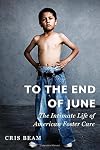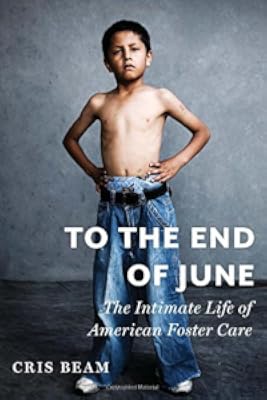
To the End of June: The Intimate Life of American Foster Care
by Cris Beam
On This Page
Description
An intimate, authoritative look at the foster care system that examines why it is failing the kids it is supposed to protect and what can be done to change it.Tags
Recommendations


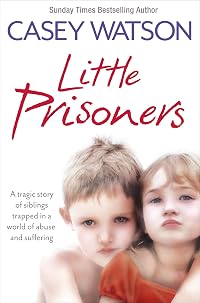
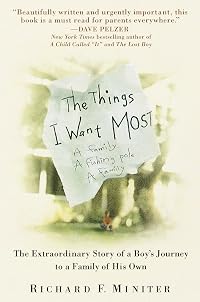
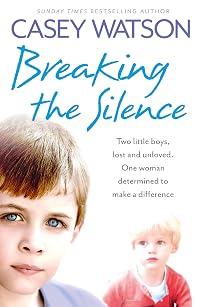
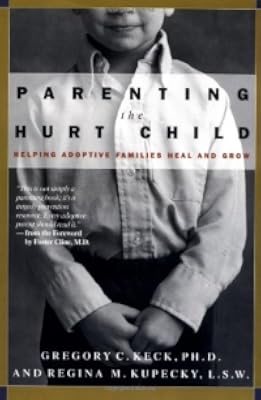


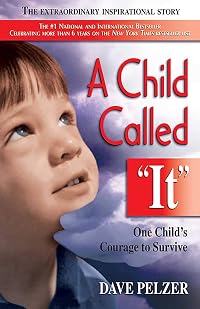
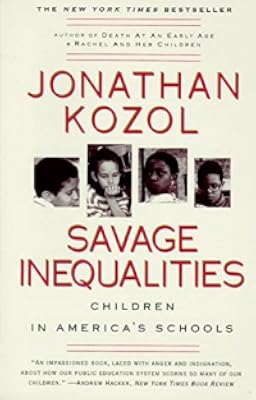
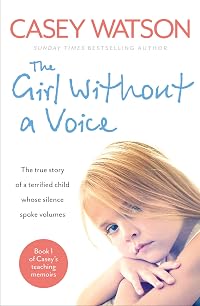
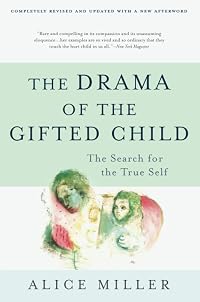


Member Recommendations
Member Reviews
This was an extremely nuanced take of the current foster care system and its highs and lows. From the perspective of a woman who had been a homeless teen after a mentally ill mother kicked her out of the house as well as an (unofficial) foster mother herself, Beam comes largely as an outsider to the system, curious about why it is the way it is. I thought that perspective was very helpful, because the writing was very accessible and unbiased. Beam explores the dynamic laws influencing the foster care system and the political winds that have driven it both towards and away from removal of children from the biological home. Throughout the book she largely sticks with one foster family, Bruce and Alyson Green and their foster kids and show more explores the issues raised in their family, although she also touches on other families and a therapeutic/group home.
I thought the biggest strength of the book was that Beam is unbiased, and even though she's often writing about her friends, she pulls no punches. She explores the best and the worst about each situation/agency/philosophy/housing situation. By the end of the book it's clear that there are no easy answers, that even the most well-meaning of adults have caused secondary casualties and that even the most protected children don't come out psychically unharmed. I spent a lot of the book alternating between feeling like everyone should sign up to foster and that there was no solution for foster families. That dilemma was not resolved, but I learned a lot in the process. show less
I thought the biggest strength of the book was that Beam is unbiased, and even though she's often writing about her friends, she pulls no punches. She explores the best and the worst about each situation/agency/philosophy/housing situation. By the end of the book it's clear that there are no easy answers, that even the most well-meaning of adults have caused secondary casualties and that even the most protected children don't come out psychically unharmed. I spent a lot of the book alternating between feeling like everyone should sign up to foster and that there was no solution for foster families. That dilemma was not resolved, but I learned a lot in the process. show less
A personal view of the foster care system through the lives of a small group of foster children over a period of about five years. The author met and interviewed the young people at various stages of their lives, met with foster parents and was one herself. With the aid of additional research (there are extensive notes at the end of the book detailing this), she draws some conclusions and makes a few recommendations.
We get to know some of the children. We learn where they came from, how many homes they have lived in, how they have managed - or not - and where they are when they are finally officially grown. Beam concludes that the children who have the best outcomes are those for whom there have been persons - parents or not - who have show more committed to them for the long term. She also finds that most child welfare systems depend on finding placements for children rather than finding out what will work best in the particular situation. In other words, the money comes from specific actions and is not there for others that may be more helpful.
Again and again in this book are examples of the failures of foster care, both in terms of the foster parents and in the agencies. There needs to be a shift in priorities and the ability to find and use different solutions to different situations. It hurt my heart to read of how alone so many of these young people really are in the end. show less
We get to know some of the children. We learn where they came from, how many homes they have lived in, how they have managed - or not - and where they are when they are finally officially grown. Beam concludes that the children who have the best outcomes are those for whom there have been persons - parents or not - who have show more committed to them for the long term. She also finds that most child welfare systems depend on finding placements for children rather than finding out what will work best in the particular situation. In other words, the money comes from specific actions and is not there for others that may be more helpful.
Again and again in this book are examples of the failures of foster care, both in terms of the foster parents and in the agencies. There needs to be a shift in priorities and the ability to find and use different solutions to different situations. It hurt my heart to read of how alone so many of these young people really are in the end. show less
Three and a half stars. This is a well written and carefully researched look at the foster care system in the United States. It focuses mainly on New York, but does share what is happening in other states as well. Cris Beam illustrates the problems with stories of individuals and families. We see their hopes and dreams and the crushing realities that they face. A heartbreaking book. A difficult read just because I felt so helpless. I wish that there were more solutions. Thank you Ms Beam for opening our eyes to this issue in such a compelling way.
I expected this book to focus more on the experiences of children in the foster care system so that was a bit disappointing for me but Beam does offer a very revealing, insightful, and compassionate look at the considerable systemic problems of foster care and how the families and children try to cope with them.
"Beam, a foster parent herself, delivers an engaging, narrative-driven investigation that centers on one of the system's most divisive questions: Does separating children from their birth parents do more harm than good"? --NPR
I did enjoy being able to read about what happens in foster care and how it effects the children and the families. It did seem as though some of the foster parents were not doing their job, and honestly shouldn't have been in the position to take care of someone else's child. I did have a hard time keeping all of the families and kids straight. Some of the writing was disjointed and it was difficult to connect with the children who were in the system. It wasn't terrible. There was some good information here, but I think the author is capable of much more and it could have been a 5 star read. Maybe an editor could have helped with the layout of the book. I don't know I'm just a reader, but this is one I could have skipped.
It’s sad. If only it wasn’t.
But foster care is very difficult, as you might expect. And difficulty often brings sadness. This is a story of stories, a book of tales of foster care. Many, many sad stories.
Let’s read these with the hope that someday the stories will be happier.
But foster care is very difficult, as you might expect. And difficulty often brings sadness. This is a story of stories, a book of tales of foster care. Many, many sad stories.
Let’s read these with the hope that someday the stories will be happier.
Members
- Recently Added By
Lists

2014 Notable Books for Adults
26 works; 5 members

GAL Book Club
75 works; 3 members
Author Information

6+ Works 1,060 Members
Cris Beam is the author of Transparent: Love, Family, and Living the T with Transgender Teenagers, which won a Lambda Literary Award, and I am J, a novel for young adults. She teaches creative writing at columbia University and New York University.
Awards and Honors
Awards
Common Knowledge
- Original publication date
- 2013
- Dedication
- For the kids
- First words
- It was an unusually warm October in Brooklyn; the men had switched their puffy coats for crisp white tank tops, and the young mothers had pried back the plastic casings on their strollers.
Classifications
- Genres
- Nonfiction, Sociology, General Nonfiction
- DDC/MDS
- 362.73 — Society, government, & culture Social problems and social services Social Welfare Child welfare Adoption
- LCC
- HV881 .B4193 — Social sciences Social pathology. Social and public welfare. Criminology Social pathology. Social and public welfare. Protection, assistance and relief Special classes Children Destitute, neglected, and abandoned
- BISAC
Statistics
- Members
- 235
- Popularity
- 138,612
- Reviews
- 9
- Rating
- (3.74)
- Languages
- English
- Media
- Paper, Audiobook, Ebook
- ISBNs
- 6
- ASINs
- 2