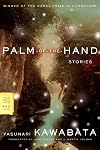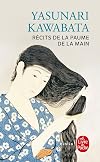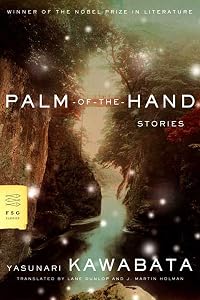
Palm-of-the-Hand Stories
by Yasunari Kawabata
On This Page
Description
Recipient of the Nobel Prize in Literature in 1968, the novelist Yasunari Kawabata felt the essence of his art was to be found not in his longer works but in a series of short stories--which he called "Palm-of-the-Hand Stories." Written over the course of 50 years, here sensitively translated are 70 of them, most written in Kawabata's youth and usually no more than a page or two in length, though the last one, "Gleanings from Snow Country," is somewhat longer and was written just before show more Kawabata's suicide in 1972; it is a miniaturization of the highly praised novel of the same name. The tales are variously realistic, allegorical and fantastic; and, as in the novels, the principal themes are love, loneliness, social change, man's relation with nature and death. Each story exhibits some sharp and often subtle perception of life (in Kawabata's world, stillness can "resound" and men listening to a woman's laugh can experience "a strange kind of aural jealousy"); and each, like a haiku or classic Zen painting, suggests far more than it states. show lessTags
Recommendations



Member Reviews
Kawabata wrote nearly 150 of these very short stories (most of them in the 250 - 1000 word range) over the course of his writing career. Some are complex, densely plotted tales that could be outlines for novels, others are impressionistic captures of single scenes — dialogues, dreams, things seen from the window of a train — and others again are more like conventional short stories. And just about all are fascinating, beautiful pieces of writing, even if it isn't always obvious on a first or second reading what Kawabata is trying to do. About half of those translated here come from the mid-1920s, when Kawabata was starting out as a writer and experimenting with style and form; the last piece in this collection is a pared-down show more reworking of the novel Snow country, written a few months before Kawabata's death in 1972.
Settings vary from the inevitable hot-springs inns to suburban railway stations, rented rooms and theatre backstages in the city, and the themes touched on cover the whole gamut from war, disease, death, adultery, first love, illegitimacy, poverty, blindness, and umbrella-envy to a deadly competition between rival proprietors of public toilets. Obviously, Kawabata took advantage of the form to try things out.
Very interesting, but probably a dangerous book to have on your desk if you're trying to write short stories yourself: you'll soon start thinking that there's nothing worthwhile you could write that hasn't already been done better, shorter and more subtly by Kawabata... show less
Settings vary from the inevitable hot-springs inns to suburban railway stations, rented rooms and theatre backstages in the city, and the themes touched on cover the whole gamut from war, disease, death, adultery, first love, illegitimacy, poverty, blindness, and umbrella-envy to a deadly competition between rival proprietors of public toilets. Obviously, Kawabata took advantage of the form to try things out.
Very interesting, but probably a dangerous book to have on your desk if you're trying to write short stories yourself: you'll soon start thinking that there's nothing worthwhile you could write that hasn't already been done better, shorter and more subtly by Kawabata... show less
It feels very difficult to verbalize the experience of reading these short-stories. They at times border on the fantastical, but mostly describe some intricate psychological play, as if Kawabata has access to the deep labyrinths of thoughts and feelings inside a character’s head. Often the stories refer to dreams, and have themselves a dreamy quality, and they left me with the uneasiness of eavesdropping on people’s very inner feelings: the young sister who loves her older sister’s blind lover; the widow that loved his mistress only through the living actions of his now dead wife; or the anxiety of a crippled girl waiting to hear if her fiancé would return from the war.
But mostly the stories are riddles not easily understood, show more and I was left with the feeling that I missed something essential about it. As if Kawabata wrote of things that were beyond my grasp of feelings and understanding, yet I got a glimpse of it, a sparkle that fed my curiosity and empathy for those people.
Although Kawabata’s writing is very different from [a:Italo Calvino|155517|Italo Calvino|http://d202m5krfqbpi5.cloudfront.net/authors/1181521461p2/155517.jpg],[a:Karen Blixen|8147|Karen Blixen|http://d202m5krfqbpi5.cloudfront.net/authors/1200335489p2/8147.jpg] and [a:Jorge Luis Borges|500|Jorge Luis Borges|http://d202m5krfqbpi5.cloudfront.net/authors/1306036027p2/500.jpg] I perceive in his stories the same feeling that those authors have aroused in me, that of a reading experience that precedes intellectual understanding and transports me to some ancient time where stories carried archetypical meaning. The lover, the mother, the young/older sister, the crippled – all are aspects of me.
It is not a book that will be loved by all, and it may require a certain mood from the reader, but I highly recommend it. show less
But mostly the stories are riddles not easily understood, show more and I was left with the feeling that I missed something essential about it. As if Kawabata wrote of things that were beyond my grasp of feelings and understanding, yet I got a glimpse of it, a sparkle that fed my curiosity and empathy for those people.
Although Kawabata’s writing is very different from [a:Italo Calvino|155517|Italo Calvino|http://d202m5krfqbpi5.cloudfront.net/authors/1181521461p2/155517.jpg],[a:Karen Blixen|8147|Karen Blixen|http://d202m5krfqbpi5.cloudfront.net/authors/1200335489p2/8147.jpg] and [a:Jorge Luis Borges|500|Jorge Luis Borges|http://d202m5krfqbpi5.cloudfront.net/authors/1306036027p2/500.jpg] I perceive in his stories the same feeling that those authors have aroused in me, that of a reading experience that precedes intellectual understanding and transports me to some ancient time where stories carried archetypical meaning. The lover, the mother, the young/older sister, the crippled – all are aspects of me.
It is not a book that will be loved by all, and it may require a certain mood from the reader, but I highly recommend it. show less
I started this book thinking it was going to be a quick read, but I should have known better. I read Snow Country last year, and despite its slim length, the writing was spare and heavy, and required a lot of thought to draw out all the implications and pictures. It was pretty, though, and I did want to read more; this seemed like a good place to start.
All of the stories in here are very short, ranging (with one exception) from one to five pages. Each of them, you have to read yourself into, and do it with a good amount of reflection, or you miss the point of what was going on. It's an experience I tend not to find in concise vignettes, but the writing style and the sense of characters really call for it.
The quality still varies, show more though, so in some cases, even with attention, I still don't really get the point. Maybe it's a datedness thing, as some come across as dated, but I think it's just that some of them don't quite hit the right note. A surprising number do, though, and if you just want to get a quick shot of beauty pulling a book off of the shelf, this is a nice way to go. Probably not where I'd start with Kawabata, but if you like him, this is really his style writ small. show less
All of the stories in here are very short, ranging (with one exception) from one to five pages. Each of them, you have to read yourself into, and do it with a good amount of reflection, or you miss the point of what was going on. It's an experience I tend not to find in concise vignettes, but the writing style and the sense of characters really call for it.
The quality still varies, show more though, so in some cases, even with attention, I still don't really get the point. Maybe it's a datedness thing, as some come across as dated, but I think it's just that some of them don't quite hit the right note. A surprising number do, though, and if you just want to get a quick shot of beauty pulling a book off of the shelf, this is a nice way to go. Probably not where I'd start with Kawabata, but if you like him, this is really his style writ small. show less
Nic Pizzolatto mentions Palm-of-the-Hand Stories as a source of inspiration for his writing so I figured I'd give them a shot. I found this collection to be uneven but the stories I did enjoy were brilliantly written, such as Snow, Lavatory Buddha, and Thank You. The stories are arranged chronologically and the later stories definitely have more narrative heft than the earlier tales. Kawabata's lyrical style is consistent throughout the stories. I'm also aware, just finishing the collection, that I'll be returning to the Palm-of-the-Hand Stories in the future. It's a collection that is too much to unravel in one go.
I found this book, with a very plain blue cover, fairly ugly... I was surprised to find a collection of very interesting stories, all very short and to the point. Also, as a Murakami fan, some of these stories have a surreal, dreamlike quality that I enjoy.
To be honest, some I don't get at all. I may have to go back and read a few of those at another time.
To be honest, some I don't get at all. I may have to go back and read a few of those at another time.
What can I say but that I'm on my 3rd copy of this book. Even though it is trade paperback size, I carried it almost everywhere I went for about five years. It is a collection of short shorts, each 1 to 3 pages long. I could pick it up and read something beautiful even if I only had a couple minutes. Didn't need to worry about loosing my place, just pick it up, flip it open, and start reading.
On the whole, I like these short-short stories more than Kawabata's better-known novels, which tend to be ponderous or grotesque
Members
- Recently Added By
Lists

Japanese Literature
230 works; 37 members

Best Contemporary Literary Fiction (Around the Last 30 Years)
400 works; 124 members

Very short stories
39 works; 2 members

Mustich's 1000 Books to Read Before You Die: A Life Changing List
1,001 works; 20 members
Author Information

214+ Works 16,208 Members
Author Yasunari Kawabata was born in Osaka, Japan on June 14, 1899. He experienced numerous family deaths during his childhood including his parents, a sister, and his grandparents. He graduated from the Tokyo Imperial University in March 1924. He wrote both short stories including The Dancing Girl of Izu and novels including The Sound of the show more Mountains, Snow Country, Thousand Cranes, and The Old Capital. In 1959, he received the Goethe Medal in Frankfurt and in 1968 he won the Nobel Prize for Literature. He committed suicide on April 16, 1972. (Bowker Author Biography) show less
Some Editions
Awards and Honors
Series
Belongs to Publisher Series
Common Knowledge
- Canonical title
- Palm-of-the-Hand Stories
- Original title
- 掌の小説; 掌の小説 (Tanagokoro no shōsetsu) (Tanagokoro no shōsetsu)
- Alternate titles
- Tenohira No Shosetsu
- Original publication date
- 1971 (1916-1964) (1916-1964); 1988 (English collection) (English collection)
- Important places*
- Japan
- Related movies
- Arigatô-san (1936 | IMDb)
- First words
- The autumn of my twenty-fourth year, I met a girl at an inn by the seashore.
- Last words*
- (Click to show. Warning: May contain spoilers.)Sankichi, dans cette neige d'illusion, était libre de rappeler toutes celles qui l'avaient autrefois aimé. - Rideaux fermé, des plateaux en guise de repas, allongé sur son lit, il les rencontrait dans cette Chambre de Neige de l'Hôtel des Mirages, du 1er janvier en fin d'après-midi au 3 au matin.
- Original language
- Japanese
*Some information comes from Common Knowledge in other languages. Click "Edit" for more information.
Classifications
- Genres
- General Fiction, Fiction and Literature
- DDC/MDS
- 813 — Literature & rhetoric American literature in English American fiction in English
- LCC
- PL832 .A9 .T413 — Language and Literature Languages and literatures of Eastern Asia, Africa, Oceania Languages of Eastern Asia, Africa, Oceania Japanese language and literature Japanese literature Individual authors and works
- BISAC
Statistics
- Members
- 919
- Popularity
- 29,284
- Reviews
- 13
- Rating
- (4.09)
- Languages
- 11 — Dutch, English, Finnish, French, German, Greek, Italian, Japanese, Portuguese, Russian, Spanish
- Media
- Paper
- ISBNs
- 25
- ASINs
- 2