On This Page
Description
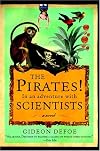
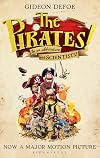
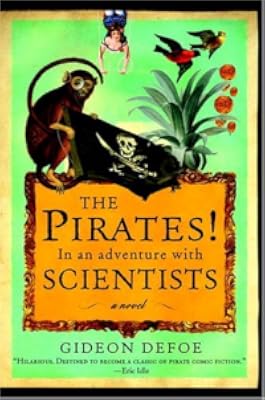
Not since Moby-Dick...No, not since Treasure Island...Actually, not since Jonah and the Whale has there been a sea saga to rival The Pirates! In an Adventure with Scientists, featuring the greatest sea-faring hero of all time, the immortal Pirate Captain, who, although he lives for months at a time at sea, somehow manages to keep his beard silky and in good condition.Worried that his pirates are growing bored with a life of winking at pretty native ladies and trying to stick enough show more jellyfish together to make a bouncy castle, the Pirate Captain decides it's high time to spearhead an adventure.
While searching for some major pirate booty, he mistakenly attacks the young Charles Darwin's Beagle and then leads his ragtag crew from the exotic Galapagos Islands to the fog-filled streets of Victorian London. There they encounter grisly murder, vanishing ladies, radioactive elephants, and the Holy Ghost himself. And that's not even the half of it.
. show less
Tags
Recommendations
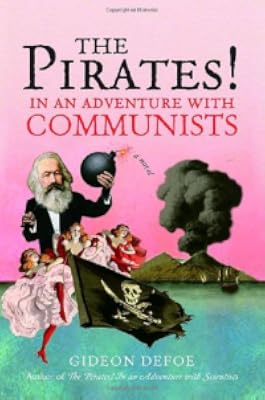
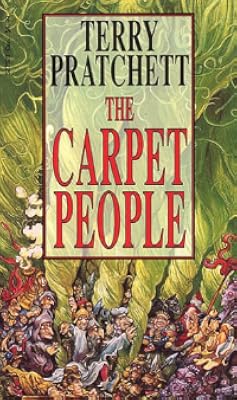
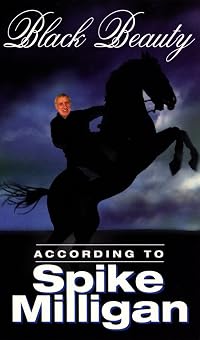


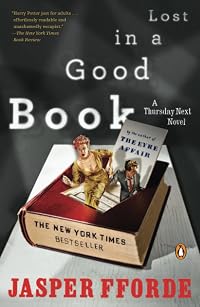
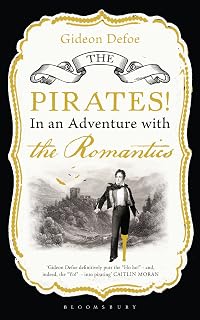

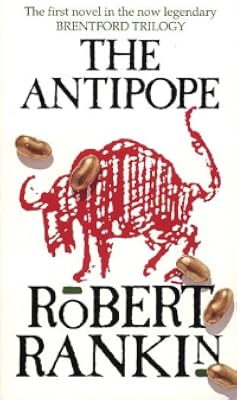
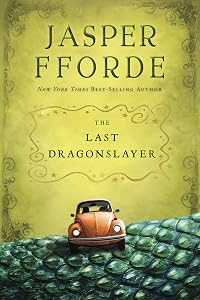
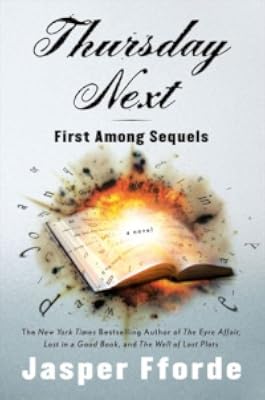

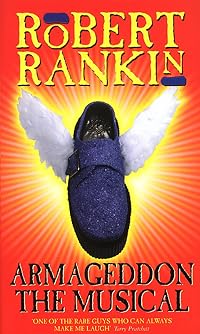
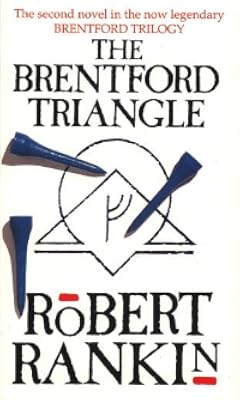
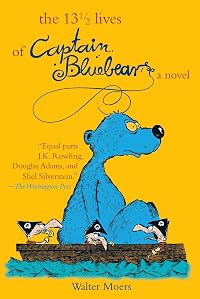

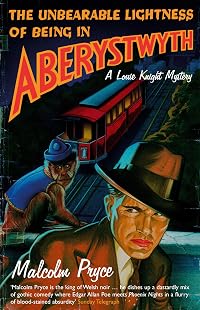
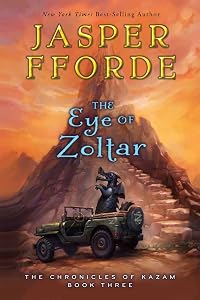



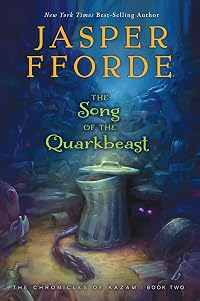
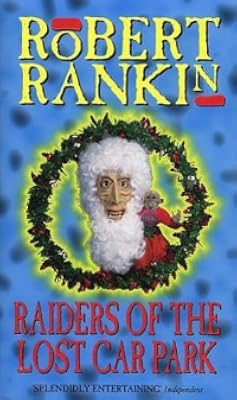
Member Recommendations
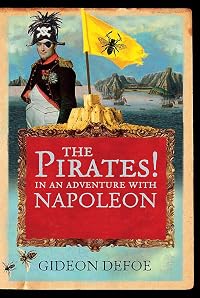
jordantaylor Both of these books have the same silly, adventurous feel to them.
gtown The plots aren't similar at all, but both authors write with a similarly twisted, absurd sense of humor.
Member Reviews
The Pirates! In an adventure with Scientists is incredibly familiar to me, like a book I've read many times or one that is part of the same reading categories as so many other books I've read so that I must have read it at least once - and yet, when I brought it home from the library with a touch of nostalgia to reread something after 15 years, I discovered that it was completely new to me.
That nostalgia feeling, the familiarity, is an integral part of the book. (Also, I'm pretty sure I checked it out from the library at least once and simply never got around to reading it before it had to be returned.) Written in 2004 when Pirates vs Ninjas was just starting to be a pop cultural thing, it takes the ideas of pirates and piratical show more behaviors/settings and throws historicity and logic out the window. This isn't to say it's completely anachronistic or silly, but actual facts about the 1830s and piracy are sparse on the ground, thanks to the book being a loving homage or parody of serial adventure stories from the early 20th century. "An adventure with Scientists" purports to be a mid-series book, with callbacks to other adventures and character establishing traits from earlier books, and it uses similar dangerous-and-scary-yet-somehow-cozy plot devices and adventurous settings.
There is a level of absurdity in the book that I love. While the HMS Beagle and Charles Darwin appear, they bear very little resemblance to actuality (Darwin's big scientific theory is that dressing a chimpanzee up as a gentleman will indeed make him a gentleman). The pirates are known only by descriptors rather than names, and they're obsessed with ham, in addition to traditional piratical things like shanties, grog, treasure, etc. At one point, the pirates are in two levels of disguise, wearing all three sets of clothing at once: pirate garb, scientists' lab coats, and ladies' clothing. Why? because they're a little bit silly and it makes an amusing picture.
This story is amusing and brief and really I love in equal measures its silliness and its parody of adventure series books. It's definitely 2004-ish feeling, though, with a sort of casual misogyny that I noticed start to fall away in the years following as more people became aware of it, as well as the way pirates were such a big thing back then. I'm really glad I don't encounter the objectification of women in quite the same way or nearly as often in more recent media. show less
That nostalgia feeling, the familiarity, is an integral part of the book. (Also, I'm pretty sure I checked it out from the library at least once and simply never got around to reading it before it had to be returned.) Written in 2004 when Pirates vs Ninjas was just starting to be a pop cultural thing, it takes the ideas of pirates and piratical show more behaviors/settings and throws historicity and logic out the window. This isn't to say it's completely anachronistic or silly, but actual facts about the 1830s and piracy are sparse on the ground, thanks to the book being a loving homage or parody of serial adventure stories from the early 20th century. "An adventure with Scientists" purports to be a mid-series book, with callbacks to other adventures and character establishing traits from earlier books, and it uses similar dangerous-and-scary-yet-somehow-cozy plot devices and adventurous settings.
There is a level of absurdity in the book that I love. While the HMS Beagle and Charles Darwin appear, they bear very little resemblance to actuality (Darwin's big scientific theory is that dressing a chimpanzee up as a gentleman will indeed make him a gentleman). The pirates are known only by descriptors rather than names, and they're obsessed with ham, in addition to traditional piratical things like shanties, grog, treasure, etc. At one point, the pirates are in two levels of disguise, wearing all three sets of clothing at once: pirate garb, scientists' lab coats, and ladies' clothing. Why? because they're a little bit silly and it makes an amusing picture.
This story is amusing and brief and really I love in equal measures its silliness and its parody of adventure series books. It's definitely 2004-ish feeling, though, with a sort of casual misogyny that I noticed start to fall away in the years following as more people became aware of it, as well as the way pirates were such a big thing back then. I'm really glad I don't encounter the objectification of women in quite the same way or nearly as often in more recent media. show less
If you have seen the Aardman Animations film featuring the Pirate Crew in this story and want to read the book, the book is very, very different. I was not aware of this and I wish I had been. Although I did like the book, I would have liked it a great deal more if I had not been constantly waiting for plot points from the movie to show up.
In the book, we are introduced to the Pirate Captain and his crew, most of whom do not have real names, but are referred to instead by descriptions ("the pirate with gout", "the albino pirate", "the pirate with a scarf"). The crew are getting restless after a prolonged vacation in the tropics -- after all, one can laze about on the beach, ogle the pretty locals and drink rum for only so long before it show more loses its allure. A false hot tip from the Pirate Captain's rival, Black Bellamy, leads the crew to chase after and plunder Charles Darwin's ship, the Beagle, only to become embroiled in scientific theory, a sinister murder plot, a kidnapping and much more.
The front cover of this book describes it as "Blackadder of the High Seas", and that was precisely the comparison I wanted to draw for the second book in this series, which I read first. (Blame the library; that's the order in which they arrived.) It's all very absurd, with plenty of clever jokes that require the reader to make the necessary inferences (e.g. the airship: "I love what you've done with this roaring log fire next to the spare hydrogen cylinders!"). The text is also sprinkled with footnotes that provide some interesting factual tidbits.
The book is also decidedly more in tune with the period (1837) than the movie is, which I would describe as "gleefully anachronistic". The book is also a bit less madcap. So if you want to check out this series and see the movie, read the book first, or at least be prepared for two very different stories that have essentially the same spirit. show less
In the book, we are introduced to the Pirate Captain and his crew, most of whom do not have real names, but are referred to instead by descriptions ("the pirate with gout", "the albino pirate", "the pirate with a scarf"). The crew are getting restless after a prolonged vacation in the tropics -- after all, one can laze about on the beach, ogle the pretty locals and drink rum for only so long before it show more loses its allure. A false hot tip from the Pirate Captain's rival, Black Bellamy, leads the crew to chase after and plunder Charles Darwin's ship, the Beagle, only to become embroiled in scientific theory, a sinister murder plot, a kidnapping and much more.
The front cover of this book describes it as "Blackadder of the High Seas", and that was precisely the comparison I wanted to draw for the second book in this series, which I read first. (Blame the library; that's the order in which they arrived.) It's all very absurd, with plenty of clever jokes that require the reader to make the necessary inferences (e.g. the airship: "I love what you've done with this roaring log fire next to the spare hydrogen cylinders!"). The text is also sprinkled with footnotes that provide some interesting factual tidbits.
The book is also decidedly more in tune with the period (1837) than the movie is, which I would describe as "gleefully anachronistic". The book is also a bit less madcap. So if you want to check out this series and see the movie, read the book first, or at least be prepared for two very different stories that have essentially the same spirit. show less
The Pirates! In An Adventure with Scientists (2004) by Gideon Defoe is a natural book for me to read. I like pirates! I like Charles Darwin! I like humor! This slim book brings them all together.
The gist of the story is that a ragtag bunch of pirates known only by their attributes (the Pirate Captain, the pirate with the scarf, the pirate with the accordion) join Charles Darwin in adventure to take on the Bishop of Oxford with his trained ape, the Man-Panzee. And from their it gets rather absurd. I enjoy the silly adventures and the even more ridiculous footnotes. I suspect it very easily can be seen by someone with different tastes as stupid, but to each their own.
A lot of reviews compare The Pirates! with Monty Python and Douglas show more Adams. That's because Gideon Defoe is British and writes funny things. I would say instead that this book is reminiscent of Tom Holt, who is yes, British and yes, writes funny things like The Portable Door. show less
The gist of the story is that a ragtag bunch of pirates known only by their attributes (the Pirate Captain, the pirate with the scarf, the pirate with the accordion) join Charles Darwin in adventure to take on the Bishop of Oxford with his trained ape, the Man-Panzee. And from their it gets rather absurd. I enjoy the silly adventures and the even more ridiculous footnotes. I suspect it very easily can be seen by someone with different tastes as stupid, but to each their own.
A lot of reviews compare The Pirates! with Monty Python and Douglas show more Adams. That's because Gideon Defoe is British and writes funny things. I would say instead that this book is reminiscent of Tom Holt, who is yes, British and yes, writes funny things like The Portable Door. show less
After enjoying the Adventure with Ahab, as well as the Pirates! movie, I collected a couple of Pirates! books and put them on the bedtime story shelf for Jefferson, a decision I was ultimately pretty disappointed with. Despite both this book and the movie involving The Pirates! running into Charles Darwin, that is almost entirely what they have in common And largely to the detriment of this book.
This book is decidedly not family friendly. It was rife with a casual misogyny that was both uncalled for and seemed to come out of the blue, given my previous experience with the brand. It's especially irritating as the author's entire backstory is that he started writing books to impress a woman. This one was his first book, so maybe he show more learned and grew and moved past it? I'm still giving the other book I bought some serious stink-eye. It's quite likely to disappear off of the bedtime story shelf before we finish the book we are currently reading.
The rare, rare case of a movie being SO MUCH BETTER. Not sure I'll give Defoe another chance. show less
This book is decidedly not family friendly. It was rife with a casual misogyny that was both uncalled for and seemed to come out of the blue, given my previous experience with the brand. It's especially irritating as the author's entire backstory is that he started writing books to impress a woman. This one was his first book, so maybe he show more learned and grew and moved past it? I'm still giving the other book I bought some serious stink-eye. It's quite likely to disappear off of the bedtime story shelf before we finish the book we are currently reading.
The rare, rare case of a movie being SO MUCH BETTER. Not sure I'll give Defoe another chance. show less
The Pirate Captain, a dashing man very fond of ham, attacks The Beagle-thanks to a false tip from Black Bellamy, the pirate with a knife between his teeth-and, finding no treasure, becomes involved in an adventure with the not-yet-famous Darwin. Darwin's brother, Erasmus, has been kidnapped by the "blackhearted Bishop of Oxford" to keep Darwin from exhibiting Mister Bobo, who he (Darwin) has trained to communicate with word cards. The Pirate Captain and his crew return to London to assist Darwin in rescuing Erasmus, a feat which forces all the pirates to pretend to be scientists, and some of them to pretend to be scientists pretending to be women.
What do you mean it doesn't make any sense? It's not supposed to! That's the beauty of this show more little gem: with one outrageous chapter after another, The Pirates! is full of puns, jokes and allusions. It's purposefully written with no sense of historical accuracy, adding an extra layer of fun, and uses every piratical cliché and stereotype to the fullest humorous advantage. Scurvy, a hot air balloon, ham, a grisly murder machine, swashbuckling, an exciting chase scene in the Museum of Natural History, talking primates, breakfast cereal and pirates! What's not to love?
The Pirates! is Defoe's first novel and, for me, is the best comic novel debut I have ever had to fortune to read. Not only was it hard to put down, but it demanded to be read aloud, first by me to my husband, and then by him back to me as he read it! The book cover says that he "wrote the Pirates! to convince a woman to leave her boyfriend for him. She didn't". I just hope that her failure to follow through won't stop him from writing another Pirate Adventure. show less
What do you mean it doesn't make any sense? It's not supposed to! That's the beauty of this show more little gem: with one outrageous chapter after another, The Pirates! is full of puns, jokes and allusions. It's purposefully written with no sense of historical accuracy, adding an extra layer of fun, and uses every piratical cliché and stereotype to the fullest humorous advantage. Scurvy, a hot air balloon, ham, a grisly murder machine, swashbuckling, an exciting chase scene in the Museum of Natural History, talking primates, breakfast cereal and pirates! What's not to love?
The Pirates! is Defoe's first novel and, for me, is the best comic novel debut I have ever had to fortune to read. Not only was it hard to put down, but it demanded to be read aloud, first by me to my husband, and then by him back to me as he read it! The book cover says that he "wrote the Pirates! to convince a woman to leave her boyfriend for him. She didn't". I just hope that her failure to follow through won't stop him from writing another Pirate Adventure. show less
First published on Booking in Heels.
So, the basic premise has the Pirate Captain and his crew going on adventures, shockingly. In this one, they are led to believe by their arch nemesis, Black Bellamy, that there's a ship from the Bank of England carrying tons of gold across the Ocean and they set off in search for it. Except perhaps Black Bellamy is not quite as reformed as they have been told, because the ship in question turns out to be the HMS on their second voyage to the Galapagos Islands!
It's got a very simple tone - verging on clunky at times, but never quite crossing over the border. It never seemed to take itself seriously - it's just a good, funny story told for a laugh. Very few people actually have names and there's hardly show more a great deal of time invested in character development, but it just adds to the whimsical nature of ...with Scientists.
'Living at sea tended to leave you with ratty, matted hair, but the Pirate Captain somehow kept his beard silky and in good condition, and though nobody knew his secret, they all respected him for it. They also respected him because it was said he was wedded to the sea. A lot of pirates claimed they were wedded to the sea, but usually this was an excuse because they couldn't get a girlfriend or they were a gay pirate, but in the Pirate Captain's case none of his crew doubted he was actually wedded to the sea for a minute.'
It's not laugh-out-loud funny, but there are a few paragraphs that made me smile. Gideon Defoe (I've looked and looked, and it really does seem to be his real name) has a knack for using a sardonic, conversational tone that reminds me a little of a simpler Terry Pratchett, which can only be a good thing. I love how he brings in historical characters like Charles Darwin and Robert Fitzroy, who I didn't know much about but was apparently the Captain of the HMS Beagle, and his work in the meteorology field is responsible for the accuracy of weather predictions today.
The author even uses footnotes in a similar way to Terry Pratchett, although to enlighten us with factual asides, not to amuse. For example, apparently the HMS Beagle was only ninety feet long and notoriously unseaworthy - in his notes Darwin described the voyage as 'one continual puke.' I've wandered off to check the accuracy of a few of these facts so I don't look like a complete moron believing made-up things meant only to entertain, but no, they're true. They aren't frequent enough to really be annoying but they do add a nice happy bonus to the book :)
I got my copy from Sheffield Library, but I have every intention of purchasing this book and the next four in the series the second I get paid next week. I need my own copy to nuzzle and smile at lovingly! It's just so, so good! show less
So, the basic premise has the Pirate Captain and his crew going on adventures, shockingly. In this one, they are led to believe by their arch nemesis, Black Bellamy, that there's a ship from the Bank of England carrying tons of gold across the Ocean and they set off in search for it. Except perhaps Black Bellamy is not quite as reformed as they have been told, because the ship in question turns out to be the HMS on their second voyage to the Galapagos Islands!
It's got a very simple tone - verging on clunky at times, but never quite crossing over the border. It never seemed to take itself seriously - it's just a good, funny story told for a laugh. Very few people actually have names and there's hardly show more a great deal of time invested in character development, but it just adds to the whimsical nature of ...with Scientists.
'Living at sea tended to leave you with ratty, matted hair, but the Pirate Captain somehow kept his beard silky and in good condition, and though nobody knew his secret, they all respected him for it. They also respected him because it was said he was wedded to the sea. A lot of pirates claimed they were wedded to the sea, but usually this was an excuse because they couldn't get a girlfriend or they were a gay pirate, but in the Pirate Captain's case none of his crew doubted he was actually wedded to the sea for a minute.'
It's not laugh-out-loud funny, but there are a few paragraphs that made me smile. Gideon Defoe (I've looked and looked, and it really does seem to be his real name) has a knack for using a sardonic, conversational tone that reminds me a little of a simpler Terry Pratchett, which can only be a good thing. I love how he brings in historical characters like Charles Darwin and Robert Fitzroy, who I didn't know much about but was apparently the Captain of the HMS Beagle, and his work in the meteorology field is responsible for the accuracy of weather predictions today.
The author even uses footnotes in a similar way to Terry Pratchett, although to enlighten us with factual asides, not to amuse. For example, apparently the HMS Beagle was only ninety feet long and notoriously unseaworthy - in his notes Darwin described the voyage as 'one continual puke.' I've wandered off to check the accuracy of a few of these facts so I don't look like a complete moron believing made-up things meant only to entertain, but no, they're true. They aren't frequent enough to really be annoying but they do add a nice happy bonus to the book :)
I got my copy from Sheffield Library, but I have every intention of purchasing this book and the next four in the series the second I get paid next week. I need my own copy to nuzzle and smile at lovingly! It's just so, so good! show less
Having finished watching Our Flag Means Death, I figured it was time to go for this slim little book promising amusingly anachronistic pirate adventures with Charles Darwin.
Unfortunately the book doesn't get much beyond amusing, and the reason why can be found in the Acknowledgements, where author Defoe names only one general book about pirates that he found helpful in the writing--and nothing about Darwin. Look, it's a funny, anachronistic book, I'm not expecting spectacular research, but I just feel like there are so many ways that pirates and Darwin and scientists in general can be funny, but Defoe kind of shrugged and gave up that comedic potential. So, while there are plenty of jokes, most of them don't actually depend on the show more pirates-and-scientists theme. You could swap them out for just about anything--it probably wouldn't take more than a day to revise the text--and most of the jokes would still work: cowboys and teachers, bandits and politicians, you get the idea.
So, the plot, to remind me later:
Our nameless Pirate Captain, who sports a luxurious beard, has been vacationing with his pirate crew, which includes the pirate with the scarf, the pirate with the accordion, and the first mate, the pirate who wears green. (I found this lack of names funnier than I should, given my own tendency to read books so quickly that I forget the names of characters.) They're bored, so it's time for a new Adventure. After stocking up on roasted ham, they attack the Beagle hoping for gold, but instead find a young Charles Darwin and Bobo, the monkey that he's trained to be a human in almost every way. As it turns out the evil Bishop of Oxford has kidnapped Darwin's brother in protest against Darwin's scientific ideas--and the Pirate Captain makes the best of a bad situation by diverting attention from the lack of gold toward the potential for more adventure.
The pirates sail to Victorian England and we're done with the ship for good, sadly. To Darwin's dismay, the pirates lack hustle, spending some time at arcades and shopping for the latest in pirate fashion instead of focusing on search-and-rescue. While disguised as scientists so that they can stay at the exclusive Royal Society Gentleman's Club, they learn that the Bishop of Oxford has been hosting a circus with a suspicious number of ladies' nights, so the Pirate Captain sends two of his crew disguised as ladies to investigate, while he goes to a pirate convention masquerading as a ham convention.
As it turns out, the Bishop is capturing ladies and turning them into soap that will keep him looking young, so our pirates find themselves in a predicament. Meanwhile, the Pirate Captain meets up with some old friends and plans what OFMD's Stede Bonnet would call a f***ery: Darwin will present the amazing Bobo to the public and a sheet-draped pirate disguised as the "Holy Ghost" will interrupt the proceedings. When Bobo defeats him, the crowds will see how science triumphs and this will somehow make the Bishop confess where he's got Darwin's brother. As it turns out, the Bishop would rather chase the Pirate Captain around the Royal Society museum until Bobo steps in to save the day, the Bishop reveals his dastardly plans, and the Pirate Captain and Darwin engage in some piracy, stealing another scientist's experiment in order to save the day. Darwin's going to take toast-of-the-town Bobo on the road to earn his keep, and the pirates will go back to sea and their piratey ways.
That's it. This isn't a long book, so I didn't mind reading through to the end. If you want a very light bit of fun, there's no need to worry about overcommitting to this. And if you do like it more than I did, it looks like there's a whole series you can enjoy. Sadly, it does not include the Adventure with Cowboys to which the pirates allude--I'm on a bit of a western kick right now. show less
Unfortunately the book doesn't get much beyond amusing, and the reason why can be found in the Acknowledgements, where author Defoe names only one general book about pirates that he found helpful in the writing--and nothing about Darwin. Look, it's a funny, anachronistic book, I'm not expecting spectacular research, but I just feel like there are so many ways that pirates and Darwin and scientists in general can be funny, but Defoe kind of shrugged and gave up that comedic potential. So, while there are plenty of jokes, most of them don't actually depend on the show more pirates-and-scientists theme. You could swap them out for just about anything--it probably wouldn't take more than a day to revise the text--and most of the jokes would still work: cowboys and teachers, bandits and politicians, you get the idea.
So, the plot, to remind me later:
Our nameless Pirate Captain, who sports a luxurious beard, has been vacationing with his pirate crew, which includes the pirate with the scarf, the pirate with the accordion, and the first mate, the pirate who wears green. (I found this lack of names funnier than I should, given my own tendency to read books so quickly that I forget the names of characters.) They're bored, so it's time for a new Adventure. After stocking up on roasted ham, they attack the Beagle hoping for gold, but instead find a young Charles Darwin and Bobo, the monkey that he's trained to be a human in almost every way. As it turns out the evil Bishop of Oxford has kidnapped Darwin's brother in protest against Darwin's scientific ideas--and the Pirate Captain makes the best of a bad situation by diverting attention from the lack of gold toward the potential for more adventure.
The pirates sail to Victorian England and we're done with the ship for good, sadly. To Darwin's dismay, the pirates lack hustle, spending some time at arcades and shopping for the latest in pirate fashion instead of focusing on search-and-rescue. While disguised as scientists so that they can stay at the exclusive Royal Society Gentleman's Club, they learn that the Bishop of Oxford has been hosting a circus with a suspicious number of ladies' nights, so the Pirate Captain sends two of his crew disguised as ladies to investigate, while he goes to a pirate convention masquerading as a ham convention.
That's it. This isn't a long book, so I didn't mind reading through to the end. If you want a very light bit of fun, there's no need to worry about overcommitting to this. And if you do like it more than I did, it looks like there's a whole series you can enjoy. Sadly, it does not include the Adventure with Cowboys to which the pirates allude--I'm on a bit of a western kick right now.
Members
- Recently Added By
Lists

Authors from uncertain country
14 works; 1 member
Author Information

12 Works 3,097 Members
Some Editions
Series

Work Relationships
Common Knowledge
- Canonical title
- The Pirates! In an Adventure with Scientists
- Original publication date
- 2004
- People/Characters
- The Pirate Captain; Charles Darwin [Charles Robert: 1809-1882]; The Pirate with a Scarf; The Pirate with Gout
- Important places
- London, England, UK
- Related movies
- The Pirates! Band of Misfits (2012 | IMDb)
- Dedication
- To Sophie,
who has a quarter of a million pounds - First words
- 'The best bit about being a pirate,' said the pirate with gout, 'is the looting.'
- Last words
- (Click to show. Warning: May contain spoilers.)And with that, the pirate boat sailed about for a bit.
- Publisher's editor
- Garnons-Williams, Helen
- Blurbers
- Idle, Eric; Schott, Ben
Classifications
Statistics
- Members
- 946
- Popularity
- 28,032
- Reviews
- 39
- Rating
- (3.76)
- Languages
- English, French, German, Italian
- Media
- Paper, Audiobook, Ebook
- ISBNs
- 23
- ASINs
- 5