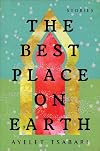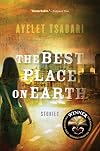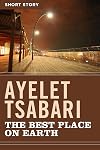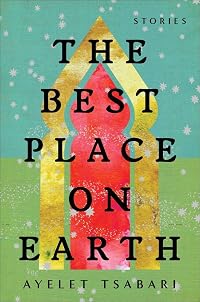
The Best Place on Earth: Stories
by Ayelet Tsabari
On This Page
Description
A collection of eleven stories follows characters at the crossroads of geography and faith who are all trying to find someone to believe in as they struggle with love, violence, faith, and the challenges of balancing traditions with modern times.Tags
Recommendations







Member Reviews
The Best Place on Earth is a fine collection. 'The Poets at the Kitchen Window' is about a teenage boy who learns the reality of wars that he'd only learned about at school, when Iraq fired Scud missiles at Israel during the Gulf War (in which Israel was not a combatant). 'Invisible' is a gentle story about a Filipina called Rosalynn working in aged care, who — though illegal — looked after a frail Holocaust survivor and now Savta, a lonely old woman who'd walked to Israel from Yemen as an orphan child. She finds herself also looking after the one of the old lady's visitors when he gets sick... 'Borders' reminds us that people like the Bedouin don't recognise the shifting borders of the Middle East: in the desert it makes no show more difference to them who rules from some capital far away. 'Warplanes' is a sensitive story that features a teenage girl whose father died, and she struggles to have her grief recognised when all the media attention is on war heroes. There is no Remembrance Day for people who died of a weak heart. There is no IDF pension either, or special benefits for IDF orphans.
A most interesting collection to stumble on, right on cue for the last day of #ShortStorySeptember!
To read the rest of my review please visit https://anzlitlovers.com/2025/09/30/the-best-place-on-earth-2016-by-ayelet-tsaba... show less
A most interesting collection to stumble on, right on cue for the last day of #ShortStorySeptember!
To read the rest of my review please visit https://anzlitlovers.com/2025/09/30/the-best-place-on-earth-2016-by-ayelet-tsaba... show less
Israeli fiction has had the effect on me of a loud, rambunctious, youthful group thoughtlessly jostling me aside as they enter a crowded bus. I look at it from under lowered eyes, trying without success not to judge. From my white middle-class American insulation I find the colorful opinions and actions of the Israeli diaspora “just too intense for me.” Gradually, I shuffle aside to accommodate the spirited group, listening without effort. When they eventually get off the bus before I do, there is a space where they were, and the silence feels empty.
I was looking forward to being seduced by this collection. The first story, “Tikkun,” threatened my resolve. It slapped me awake, moral nerve endings jangling. What people are show more these, I ask, reviving my indignity. I think now the story was put first to do just that: these stories are going to rock your world, it seems to be saying, so be prepared to realign your carpenter’s level.
All the stories seem to have a Yemeni connection, the characters descendants of Yemeni immigrants to Israel. Lili and Lana in “Say it Again, Say Something Else” are two bruised girls not really ready for the world but trying to act as though they are. In “Casualties” a young military officer plays at hardness, nonchalance, and devil-may-care until the reality in her life calls her cellphone.
Two stories in the middle of the collection seemed technically and tonally perfect, gathering the angst and confusion of the culture. “Invisible” features a Filipina caregiver overstaying her visa while caring for an aged grandmother not her own, her distant extended family, and a demobbed soldier who has seen action. In “A Sign of Harmony” a young Israeli in India tries to find a thread of a road that she wants to walk amidst the clamor of cultures.
“Below Sea Level” angles a selfish youth mentality to reflect into our eyes again, nearly blinding us to the whole human drama that comprises family. And “Borders” reminds us that family is what we make it, after all. These are stories about Israel’s youth, and as such, display youth’s tendencies toward self-absorption, lack of history or responsibility for the future. In each story Tsabari captures a moment in time that is so transitory the characters may never know how it changed them, or how it changed us.
If these stories accurately reflect a piece of Israeli experience and culture, they are a bombshell in the midst of more staid (placid?) values, religious or not. The pervasive atmosphere of “why worry about tomorrow” must be a release at the same time it cripples a wider understanding of a world building a future. What kind of future is never even hinted at in this collection, for these characters are not even part of the conversation. What kind of world is this, a place with as much history as the world has to offer, and a blank where future is meant to lie? It leaves us pondering the word “wonderful.” show less
I was looking forward to being seduced by this collection. The first story, “Tikkun,” threatened my resolve. It slapped me awake, moral nerve endings jangling. What people are show more these, I ask, reviving my indignity. I think now the story was put first to do just that: these stories are going to rock your world, it seems to be saying, so be prepared to realign your carpenter’s level.
All the stories seem to have a Yemeni connection, the characters descendants of Yemeni immigrants to Israel. Lili and Lana in “Say it Again, Say Something Else” are two bruised girls not really ready for the world but trying to act as though they are. In “Casualties” a young military officer plays at hardness, nonchalance, and devil-may-care until the reality in her life calls her cellphone.
Two stories in the middle of the collection seemed technically and tonally perfect, gathering the angst and confusion of the culture. “Invisible” features a Filipina caregiver overstaying her visa while caring for an aged grandmother not her own, her distant extended family, and a demobbed soldier who has seen action. In “A Sign of Harmony” a young Israeli in India tries to find a thread of a road that she wants to walk amidst the clamor of cultures.
“Below Sea Level” angles a selfish youth mentality to reflect into our eyes again, nearly blinding us to the whole human drama that comprises family. And “Borders” reminds us that family is what we make it, after all. These are stories about Israel’s youth, and as such, display youth’s tendencies toward self-absorption, lack of history or responsibility for the future. In each story Tsabari captures a moment in time that is so transitory the characters may never know how it changed them, or how it changed us.
If these stories accurately reflect a piece of Israeli experience and culture, they are a bombshell in the midst of more staid (placid?) values, religious or not. The pervasive atmosphere of “why worry about tomorrow” must be a release at the same time it cripples a wider understanding of a world building a future. What kind of future is never even hinted at in this collection, for these characters are not even part of the conversation. What kind of world is this, a place with as much history as the world has to offer, and a blank where future is meant to lie? It leaves us pondering the word “wonderful.” show less
Beautiful collection of short stories about being young and living in, being from, being defined by, relating to Israel. Many of the characters are from a Yemeni background and have a slightly alienated relationship with the country; all are trying to figure out how to be Israeli, whether or not they live there now. Tsabari's writing is beautiful throughout. I can't wait for her to publish a novel.
Another great grouping of short stories, the first story, Tikkan, absolutely blew me away and it kept going from there. Set in Israel these stories feature people coming from other countries in the Middle East and some from even farther away. In one story a group of caregivers have come from the Philippines and are in the country illegally. All are trying to adjust to new countries, new homes, trying to find their place many times among suicide bombers and a country at war. All these stories and their characters are interesting, I think there was only one story I did not care for, and the writing is top notch. Incredibly well done.
ARC from Netgalley.
ARC from Netgalley.
Thank you to Random House and the Goodreads Giveaway for the free copy of The Best Place on Earth by Ayelet Tsabari. This wonderful collection of short stories allows you to travel to Israel, India and Canada without leaving the comfort of your home! One of the things I liked best about the stories is the beautiful rich prose. The vivid imagery makes you feel the heat of the desert or smell the tantalizing scents of food or the salty sea air as if you are there. Many of the stories take place in Israel focusing on Israel's Mizrahi Jews. These well developed and varied characters are link the stories by sharing the common theme of searching for the place where they belong. I enjoyed all of the stories equally and feel as if I have gained show more some insight into what the lives of a culturally rich people, living in the shadows of wars past and present, may be like. Ms. Tsabari is a talented writer and I look forward to reading more of her work. Well worth the read! show less
Ratings
Members
- Recently Added By
Lists

Book Riot's 100 must-read works of Jewish Fiction
100 works; 8 members

Judaism & Israel
104 works; 2 members
Author Information

12 Works 310 Members
Awards and Honors
Common Knowledge
- Important places
- Israel
- Dedication
- For Sean
And for my mother, Yona
In memory of my father, Haim Tsabari - First words
- I'm just about to cross the street to Café Rimon when I see Natalie sitting on the shaded patio and my heart skips, trips and falls over itself. ("Tikkun")
- Last words
- (Click to show. Warning: May contain spoilers.)"I'll see what I can do."
Classifications
Statistics
- Members
- 127
- Popularity
- 256,877
- Reviews
- 5
- Rating
- (4.18)
- Languages
- English, Hebrew
- Media
- Paper, Ebook
- ISBNs
- 7
- ASINs
- 3