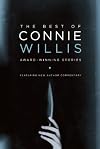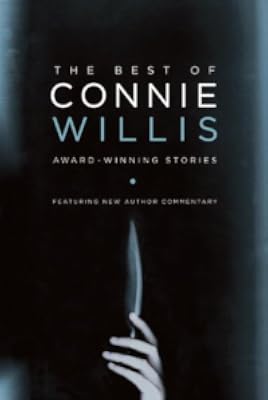
The Best of Connie Willis: Award-Winning Stories
by Connie Willis
On This Page
Description
Classic Literature. Fiction. Science Fiction. Short Stories. HTML:Few authors have had careers as successful as that of Connie Willis. Inducted into the Science Fiction Hall of Fame and recently awarded the title of Grand Master by the Science Fiction and Fantasy Writers of America, Willis is still going strong. Her smart, heartfelt fiction runs the gamut from screwball comedy to profound tragedy, combining dazzling plot twists, cutting-edge science, and unforgettable characters.From a show more near future mourning the extinction of dogs to an alternate history in which invading aliens were defeated by none other than Emily Dickinson; from a madcap convention of bumbling quantum physicists in Hollywood to a London whose Underground has become a storehouse of intangible memories both foul and fair—here are the greatest stories of one of the greatest writers working in any genre today.
All ten of the stories gathered here are Hugo or Nebula award winners—some even have the distinction of winning both. With a new Introduction by the author and personal afterwords to each story—plus a special look at three of Willis's unique public speeches—this is unquestionably the collection of the season, a book that every Connie Willis fan will treasure, and, to those unfamiliar with her work, the perfect introduction to one of the most accomplished and best-loved writers of our time.
Praise for The Best of Connie Willis
"Filled with warmth and sadness, great drama, witty dialogue, characters you will care about and moments that you will remember for a long time."—SFF World
"If anyone can be named 'best science fiction writer of the age,' it's Connie Willis, and these stories are the best of her best. Truly."—Analog
"Ranging from the hilarious to the profound, these stories show the full range of [Connie] Willis's talent for taut, dazzling plots, real science, memorable characters, penetrating dialogue and blistering drama."—Kirkus Reviews
"Thank goodness [for] Connie Willis, who says many things that desperately need saying in more than one delightful way."—Milwaukee Journal Sentinel
"The Best of Connie Willis? Isn't that like sorting through diamonds?"—Lytherus
From the Hardcover edition.. show less
Tags
Recommendations

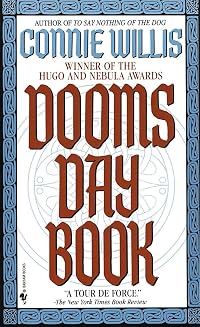







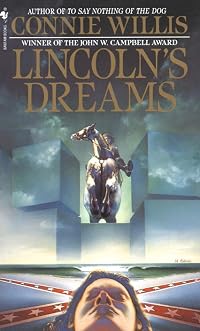
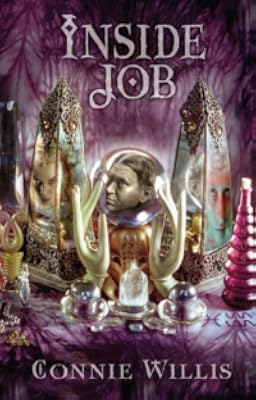
Member Reviews
Although Connie Willis has won three Hugos and two Nebulas for her novels, she has won eight Hugos and six Nebulas for her shorter works—not to mention a hatful of nominations. It is no surprise that she can fill more than 400 pages with nothing but award winners. Among my faves are “All Seated on the Ground,” “The Last of the Winnebagos,” and “Even the Queen.” The ancillary materials in this collection are also fun. Again, no surprise, Willis is a master of the Awards Dinner speech.
"At the Rialto"
Dr. Ruth Baringer, a quantum physicist, runs into obstacles everywhere she turns trying to attend a conference in America's playground, Hollywood, California. She can't even check into her room without it becoming a major event. Trying to attend different events at the conference become confused and convoluted. Even trying to connect with her roommate is impossible. Everything is insane. Meanwhile, a colleague wants her to go to the movies instead...after all, they are in Hollywood.
"Ado"
Imagine a world where everything you could possibly say or do offends someone on some level. We are approaching that world fast and furious but Willis suspected its arrival thirty-one years ago. "Ado" is a tongue in cheek look at political show more correctness gone way too far. She uses the example of teaching Shakespeare to a group of students as an example. To teach the Bard the main protagonist must run it by the principal, take the particular play out of a vault, allow for students to refuse to attend the class, and then wait for the special interest groups to protest loudly. There is a computer that reads the Shakespearean text line by line to look for offensive material so that for example, a play like 'As You Like It' can be subject to a restraining order by the group Mothers Against Transvestites. The only safe subject is the weather. It's such a ridiculous society you cannot help but laugh out loud while secretly shuddering over Willis's apropos vision. show less
Dr. Ruth Baringer, a quantum physicist, runs into obstacles everywhere she turns trying to attend a conference in America's playground, Hollywood, California. She can't even check into her room without it becoming a major event. Trying to attend different events at the conference become confused and convoluted. Even trying to connect with her roommate is impossible. Everything is insane. Meanwhile, a colleague wants her to go to the movies instead...after all, they are in Hollywood.
"Ado"
Imagine a world where everything you could possibly say or do offends someone on some level. We are approaching that world fast and furious but Willis suspected its arrival thirty-one years ago. "Ado" is a tongue in cheek look at political show more correctness gone way too far. She uses the example of teaching Shakespeare to a group of students as an example. To teach the Bard the main protagonist must run it by the principal, take the particular play out of a vault, allow for students to refuse to attend the class, and then wait for the special interest groups to protest loudly. There is a computer that reads the Shakespearean text line by line to look for offensive material so that for example, a play like 'As You Like It' can be subject to a restraining order by the group Mothers Against Transvestites. The only safe subject is the weather. It's such a ridiculous society you cannot help but laugh out loud while secretly shuddering over Willis's apropos vision. show less
Free review copy. Reading a bunch of Willis’s well-known stories together, including The Last of the Winnebagos and Even the Queen, the word I most want to use is “kind.” Standard characters are oblivious to other people—sometimes harmfully so, when they’re the antagonists, and one of them really takes mansplaining to a whole new level in a story about choirs and uncommunicative, disapproving aliens. But ultimately the antagonists are silly rather than evil; fundamental conflicts of values appear as, essentially, mistakes. (This is, I think, why Willis’s fascination with the London Blitz involves a portion of the war where bombs just drop from the sky, faceless; she doesn’t have to deal with the bombers when the enemy is show more Death.) Wouldn’t it be pretty if it were true? Also included are three speeches for awards ceremonies; Willis’s love for books and the hope they offer did make me tear up. show less
...The Best of Connie Willis: Award-winning Stories contains stories that tackle a variety of themes and approaches to story-telling and as such there are bound to be a few stories the reader will enjoy. In my mind Willis remains an author who'll get a story right and hit it out of the ballpark or delivers something completely unreadable though. I guess I am one of the lucky ones. For me, most of the stories are very good to excellent and I enjoyed the opportunity to discover some of the themes that carry over in her long fiction in this collection. It is easy to see why Willis has such a large number of fans. Her stories are well-crafted, often humorous, always well researched. Willis is an author you have to have read something of at show more the very least and this collection would not be a bad place to start.
Full Random Comments review show less
Full Random Comments review show less
I love Connie Willis' short stories. This collection is uniformly excellent, which isn't surprising when you consider that they're all award-winning stories. Even if you aren't a fan of science fiction, I highly recommend these. Willis' writing style is uncommonly clear and compelling. In addition, her introduction provides insight into the writers who influenced her. This would be a great compilation to use in an English class.
The Best of Connie Willis is, as the title suggests, a collection of Connie Willis's best short (and long) stories. I had previously only read Willis's time travelling historian books and one of the stories in this collection (although I have another of her novels on my TBR shelf).
Connie Willis is not an SF Grand Master for nothing and it should come as no surprise that her stories are very well written. The fact that they're all award-winning should also be a hint. I found that I could easily divide them into "stories I enjoyed rather a lot" and "stories that were well-written but didn't quite do it for me, mostly because of subject matter". It's a testament to Willis's skill that even the stories I disliked were still very good show more stories.
My favourites were most of them, really, except for the first and the last stories which just weren't my cup of tea. I've said a bit more than usual about each story (partly because they tend to be on the longer side) so I might leave the summarising part of the review here. On to individual comments!
~
Introduction — I very often skip or skim these, but I would say this one, written by the author, is worth a read. Good read about how she came to love and write science fiction.
"A Letter From The Clearys" — A look at a family surviving in a remote corner of a post-apocalyptic world.
"At the Rialto" — A story about a quantum physics conference that is itself a metaphor for quantum physics. Intentional ambiguity. A very enjoyable read. Took me back to my Masters classes (and made me smile a little at things moving on, not in a bad way). I see no reason for it not to appeal to non-physicists. It's not so much hard science fiction as about hard science. And unreliable hotel receptionists, and Hollywood.
"Death on the Nile" — Another great story about a group of friends who have been travelling Europe together and are now off to Egypt. Only something is not quite right and only the main character seems to be concerned. Or maybe it's that she's been reading too much Agatha Christie. An enjoyable read. I particularly liked the annoying friend quoting guidebooks and how the female characters were the more important ones with 2/3 male characters remaining nameless (when it could easily have been the other way around). Oh, and it's a bit of a horror tale.
"The Soul Selects Her Own Society: Invasion and Repulsion: A Chronological Reinterpretation of Two of Emily Dickinson's Poems: A Wellsian Perspective" — A humorous fictional dissertation arguing that two newly-found Emily Dickinson poems were written posthumously, after Wells's Martian invasion woke her from her grave. At first I expected I'd need to be more familiar with Dickinson to get all the jokes, but it turned out to be hilarious regardless. Also, this is the first time I've come across footnotes in an (ePub) ebook, and I have to say I was impressed with how well they worked, in terms of layout.
"Fire Watch" — I've read this story before, shortly after having read one of her time travel novels in the same universe. I remember back then thinking it was OK but not as good as the novels. This time around I enjoyed it more. The main character, Bartholomew is an Oxford historian who is sent to St Paul's Cathedral during the London Blitz for his final exam. I didn't realise before, but this story was actually written before any of the time travel novels, which makes the inclusion of Kivrin — the main character of The Doomsday Book — all the more impressive for it's consistency. It was interesting to read in the afterword that Willis was inspired to write the story after visiting St Paul's and seeing the crypt. It was originally going to be a poem. Good thing it became a story which then spawned a few books that I loved. Communist sentiments a little outdated, but you can't win them all.
"Inside Job" — A really great story (novella?) about a sceptic who runs a debunking magazine in Hollywood. When his assistant takes him to see a channeller whose act is just a little bit too strange, they're both instantly suspicious and the story gets interesting. I must admit, when I was reading I was worried that, since Willis writes speculative fiction, that the sceptic would be the one looking silly. But she pulled the story of masterfully. It was entirely satisfying and I won't say more because spoilers. Suffice to say it's one of my favourite stories so far.
"Even The Queen" — An amusing story set in an idyllic future in which women are no longer forced to menstruate. And a hippy movement that thinks they should.
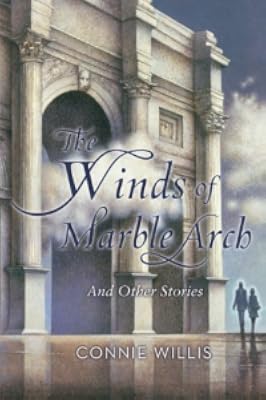
"The Winds of Marble Arch" — a story, more or less, about strange smells in the London Underground. Stylistically it reminded me a bit of the earlier story "At the Rialto", but less comedic. It stayed with me more than I expected it to while I was reading.
"All Seated on the Ground" — This is another weird things happen and the main characters must work it out type story. This time, aliens arrive on Earth and then don't do anything much, to everyone's bewilderment. I was amused by the resolution to this one and the mystery-solving along the way.
"The Last of the Winnebagos" — This wasn't a bad story but it didn't quite do it for me. At first I think because Winnebagos (the recreational vehicles that are sort of a cross between a bus and a caravan) and travelling in them are very much more an American past-time than an Australian one. It's hard to feel nostalgic about something you've only ever seen on foreign TV. The story was mainly about dogs being extinct and a photojournalist who misses his childhood friend. And retro-future photography tech which distractingly went to a place real-world photography never did in the same way. Like all the stories, it was well written but for me didn't evoke the emotion I think was intended.
4.5 / 5 stars
You can read more of my reviews on my blog. show less
Connie Willis is not an SF Grand Master for nothing and it should come as no surprise that her stories are very well written. The fact that they're all award-winning should also be a hint. I found that I could easily divide them into "stories I enjoyed rather a lot" and "stories that were well-written but didn't quite do it for me, mostly because of subject matter". It's a testament to Willis's skill that even the stories I disliked were still very good show more stories.
My favourites were most of them, really, except for the first and the last stories which just weren't my cup of tea. I've said a bit more than usual about each story (partly because they tend to be on the longer side) so I might leave the summarising part of the review here. On to individual comments!
~
Introduction — I very often skip or skim these, but I would say this one, written by the author, is worth a read. Good read about how she came to love and write science fiction.
"A Letter From The Clearys" — A look at a family surviving in a remote corner of a post-apocalyptic world.
"At the Rialto" — A story about a quantum physics conference that is itself a metaphor for quantum physics. Intentional ambiguity. A very enjoyable read. Took me back to my Masters classes (and made me smile a little at things moving on, not in a bad way). I see no reason for it not to appeal to non-physicists. It's not so much hard science fiction as about hard science. And unreliable hotel receptionists, and Hollywood.
"Death on the Nile" — Another great story about a group of friends who have been travelling Europe together and are now off to Egypt. Only something is not quite right and only the main character seems to be concerned. Or maybe it's that she's been reading too much Agatha Christie. An enjoyable read. I particularly liked the annoying friend quoting guidebooks and how the female characters were the more important ones with 2/3 male characters remaining nameless (when it could easily have been the other way around). Oh, and it's a bit of a horror tale.
"The Soul Selects Her Own Society: Invasion and Repulsion: A Chronological Reinterpretation of Two of Emily Dickinson's Poems: A Wellsian Perspective" — A humorous fictional dissertation arguing that two newly-found Emily Dickinson poems were written posthumously, after Wells's Martian invasion woke her from her grave. At first I expected I'd need to be more familiar with Dickinson to get all the jokes, but it turned out to be hilarious regardless. Also, this is the first time I've come across footnotes in an (ePub) ebook, and I have to say I was impressed with how well they worked, in terms of layout.
"Fire Watch" — I've read this story before, shortly after having read one of her time travel novels in the same universe. I remember back then thinking it was OK but not as good as the novels. This time around I enjoyed it more. The main character, Bartholomew is an Oxford historian who is sent to St Paul's Cathedral during the London Blitz for his final exam. I didn't realise before, but this story was actually written before any of the time travel novels, which makes the inclusion of Kivrin — the main character of The Doomsday Book — all the more impressive for it's consistency. It was interesting to read in the afterword that Willis was inspired to write the story after visiting St Paul's and seeing the crypt. It was originally going to be a poem. Good thing it became a story which then spawned a few books that I loved. Communist sentiments a little outdated, but you can't win them all.
"Inside Job" — A really great story (novella?) about a sceptic who runs a debunking magazine in Hollywood. When his assistant takes him to see a channeller whose act is just a little bit too strange, they're both instantly suspicious and the story gets interesting. I must admit, when I was reading I was worried that, since Willis writes speculative fiction, that the sceptic would be the one looking silly. But she pulled the story of masterfully. It was entirely satisfying and I won't say more because spoilers. Suffice to say it's one of my favourite stories so far.
"Even The Queen" — An amusing story set in an idyllic future in which women are no longer forced to menstruate. And a hippy movement that thinks they should.
"The Winds of Marble Arch" — a story, more or less, about strange smells in the London Underground. Stylistically it reminded me a bit of the earlier story "At the Rialto", but less comedic. It stayed with me more than I expected it to while I was reading.
"All Seated on the Ground" — This is another weird things happen and the main characters must work it out type story. This time, aliens arrive on Earth and then don't do anything much, to everyone's bewilderment. I was amused by the resolution to this one and the mystery-solving along the way.
"The Last of the Winnebagos" — This wasn't a bad story but it didn't quite do it for me. At first I think because Winnebagos (the recreational vehicles that are sort of a cross between a bus and a caravan) and travelling in them are very much more an American past-time than an Australian one. It's hard to feel nostalgic about something you've only ever seen on foreign TV. The story was mainly about dogs being extinct and a photojournalist who misses his childhood friend. And retro-future photography tech which distractingly went to a place real-world photography never did in the same way. Like all the stories, it was well written but for me didn't evoke the emotion I think was intended.
4.5 / 5 stars
You can read more of my reviews on my blog. show less
This it is a collection of some of the best science-fiction out there and each story is followed by an Afterword that gives us insight into why Willis chose to write them. The common factor? She wrote each of them out of love for the subjects, love for people, love for words.
My favorite story was Fire Watch, a time travel story from my favorite alternate history series (that of Blackout and All Clear) that I had been waiting a while to read ... until I read The Winds of Marble Arch and my mind was blown. It's the type of story that you can't really describe except to say that it is a complete fantasy that is also entirely believable. This will be a collection that I return to regularly.
show more target="_top">http://webereading.com/2014/06/new-release-best-of-connie-willis.html show less
My favorite story was Fire Watch, a time travel story from my favorite alternate history series (that of Blackout and All Clear) that I had been waiting a while to read ... until I read The Winds of Marble Arch and my mind was blown. It's the type of story that you can't really describe except to say that it is a complete fantasy that is also entirely believable. This will be a collection that I return to regularly.
show more target="_top">http://webereading.com/2014/06/new-release-best-of-connie-willis.html show less
Members
- Recently Added By
Lists

S.F. Masterworks (Complete)
229 works; 15 members

Favorite Short Fiction
228 works; 99 members

SF Masterworks
193 works; 8 members

Top Five Books of 2016
795 works; 228 members

Books Read in 2022
5,226 works; 115 members

Books Read in 2023
5,638 works; 147 members
Author Information

97+ Works 40,883 Members
Connie Willis lives in Greeley, Colorado, with her family. (Publisher Provided) Connie Willis was born on December 31, 1945. She graduated from Colorado State College in 1967. Her first story, The Secret of Santa Titicaca, was published in Worlds of Fantasy in 1971. After receiving an NEA grant in 1982, she left her teaching job to become a show more full-time writer. Her works include Doomsday Book, Lincoln's Dreams, Bellwether, To Say Nothing of the Dog, Fire Watch, Blackout, and All Clear. She has received 10 Hugo Awards, 11 Locus Poll Awards and 6 Nebula Awards. In 2009, she was inducted into the Science Fiction Hall of Fame. (Bowker Author Biography) show less
Some Editions
Awards and Honors
Awards
Distinctions
Series
Belongs to Publisher Series
SF Masterworks (New design)
Work Relationships
Common Knowledge
- Canonical title*
- Les veilleurs
- Original title
- The Best of Connie Willis: Award-Winning Stories
- Alternate titles
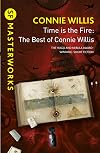
- Time Is the Fire: The Best of Connie Willis
- Original publication date
- 2013-07-09
- Dedication
- To the public library
- Original language
- English
*Some information comes from Common Knowledge in other languages. Click "Edit" for more information.
Classifications
Statistics
- Members
- 553
- Popularity
- 53,748
- Reviews
- 17
- Rating
- (4.01)
- Languages
- English, French, Spanish
- Media
- Paper, Audiobook, Ebook
- ISBNs
- 12
- ASINs
- 3