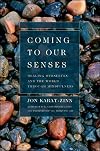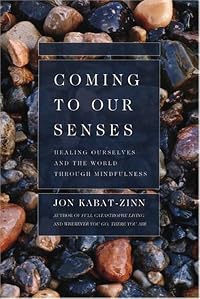
Coming to Our Senses: Healing Ourselves and the World Through Mindfulness
by Jon Kabat-Zinn
On This Page
Description
Come to your senses with the definitive guide to living a meaningful life from a world expert in the connection between mindfulness and physical and spiritual wellbeing. Jon Kabat-Zinn changed the way we thought about awareness in everyday life with his now-classic introduction to mindfulness, Wherever You Go, There You Are. Now, with Coming to Our Senses, he provides the definitive book for our time on the connection between mindfulness and our physical and spiritual wellbeing. With show more scientific rigor, poetic deftness, and compelling personal stories, Jon Kabat-Zinn examines the mysteries and marvels of our minds and bodies, describing simple, intuitive ways in which we can come to a deeper understanding, through our senses, of our beauty, our genius, and our life path in a complicated, fear-driven, and rapidly changing world. In each of the book's eight parts, Jon Kabat-Zinn explores another facet of the great adventure of healing ourselves -- and our world -- through mindful awareness, with a focus on the "sensescapes" of our lives and how a more intentional awareness of the senses, including the human mind itself, allows us to live more fully and more authentically. By "coming to our senses" -- both literally and metaphorically by opening to our innate connectedness with the world around us and within us -- we can become more compassionate, more embodied, more aware human beings, and in the process, contribute to the healing of the body politic as well as our own lives in ways both little and big. show lessTags
Recommendations



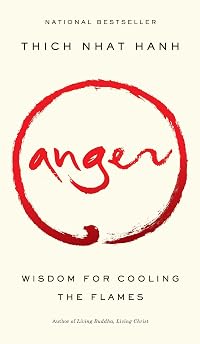
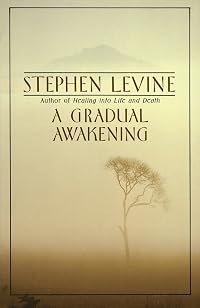
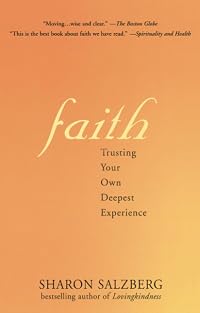
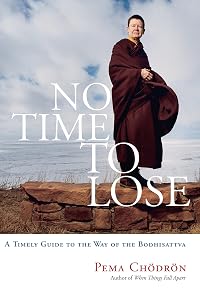







Member Reviews
I gave this one the old college try, but it's just not working for me. I actually think it's a fine book, with some really insightful gems, like the excellent and succinct description of Buddhism in the "Dharma" chapter and this passage about individual experience:
That passage in particular has caused a small but significant shift in how I look at the world. The trouble is that show more Kabat-Zinn uses an awful lot of words. There's a lot to read between the gems, and I find myself getting...bored. Perhaps part of this is because I've already read Full Catastrophe Living, and I've not found much that's particularly new in Coming to Our Senses. Or it could just be that I'm not in a nonfiction mood or that I really just want to "do" mindfulness rather than read about it right now. Whatever it is, I'm going to read the section on healing the body politic, and maybe jump here and there, but when I go to library day after tomorrow, I'm going to be taking this one back, no matter how much I've left unread. show less
"Since awareness at first blush seems to be a subjective experience, it is hard for us not to think that we are the subject, the thinker, the feeler, the seer, the doer and as such, the very center of the universe, the very center of the field of our awareness. Perceiving thus, we take everything in the universe, or at least our universe, quite personally." (169)
That passage in particular has caused a small but significant shift in how I look at the world. The trouble is that show more Kabat-Zinn uses an awful lot of words. There's a lot to read between the gems, and I find myself getting...bored. Perhaps part of this is because I've already read Full Catastrophe Living, and I've not found much that's particularly new in Coming to Our Senses. Or it could just be that I'm not in a nonfiction mood or that I really just want to "do" mindfulness rather than read about it right now. Whatever it is, I'm going to read the section on healing the body politic, and maybe jump here and there, but when I go to library day after tomorrow, I'm going to be taking this one back, no matter how much I've left unread. show less
Kabat-Zinn has been healing countless individuals with intractable chronic pain and depression, and his technique has been a modification of Buddhist meditation. Clearly he has helped many for whom the essence of life was suffering, and I appreciated reading how he put his beliefs to practice.
I am not a Buddhist, but I was once drawn to practices from Eastern religion and continue to have discussions with some who are trying to learn its lessons. I agree to this day that a fixation on lack and a demand for change can be destructive forces. Unfortunately this book took a turn in the middle that harmed the credibility of the author somewhat. Once the book turned from self-healing to world-healing, there was a move from mindfulness toward show more strong aversion. I'm not judging the righteousness of his anger, merely the fit of that anger within his belief system. I didn't get a consistency of philosophy from the beginning to the end of this book. It undercuts the credibility of the author in a serious way. For that, I recommend that others who wish to read his worthy insights begin with another of his works. show less
I am not a Buddhist, but I was once drawn to practices from Eastern religion and continue to have discussions with some who are trying to learn its lessons. I agree to this day that a fixation on lack and a demand for change can be destructive forces. Unfortunately this book took a turn in the middle that harmed the credibility of the author somewhat. Once the book turned from self-healing to world-healing, there was a move from mindfulness toward show more strong aversion. I'm not judging the righteousness of his anger, merely the fit of that anger within his belief system. I didn't get a consistency of philosophy from the beginning to the end of this book. It undercuts the credibility of the author in a serious way. For that, I recommend that others who wish to read his worthy insights begin with another of his works. show less
Ten years ago, Jon Kabat-Zinn changed the way we though about awareness in everyday life with his now-classic introduction to mindfulness, Wherever You Go, There You Are. Now, with Coming to Our Senses, he provides the definitive book for our time on the connection between mindfulness and our physical and spiritual well-being. With scientific rigor, poetic deftness, and compelling personal stories, Dr. Kabat-Zinn examines the mysteries and marvels of our minds and bodies, describing simple, intuitive ways in which we can come to a deeper understanding, through our senses, of our beauty, our genius, and our life path in a complicated, fear-driven, and rapidly changing world.
Very thoughtful book about the value and importance of mindfulness and awareness for individuals, society and global community.
But repetitive and whilst advocating being could have perhaps been more helpful with how to be.
But repetitive and whilst advocating being could have perhaps been more helpful with how to be.
Now in paperback, the guide to living a meaningful life from the world stress expert "[The] journey toward health and sanity is nothing less than an invitation to wake up to the fullness of our lives as if they actually mattered . . ." --Jon Kabat-Zinn, from the Introduction Ten years ago, Jon Kabat-Zinn changed the way we thought about awareness in everyday life with his now-classic introduction to mindfulness, Wherever You Go, There You Are. Now, with Coming to Our Senses, he provides the definitive book for our time on the connection between mindfulness and our physical and spiritual wellbeing. With scientific rigor, poetic deftness, and compelling personal stories, Jon Kabat-Zinn examines the mysteries and marvels of our minds and show more bodies, describing simple, intuitive ways in which we can come to a deeper understanding, through our senses, of our beauty, our genius, and our life path in a complicated, fear-driven, and rapidly changing world. In each of the book's eight parts, Jon Kabat-Zinn explores another facet of the great adventure of healing ourselves--and our world--through mindful awareness, with a focus on the "sensescapes" of our lives and how a more intentional awareness of the senses, including the human mind itself, allows us to live more fully and more authentically. By "coming to our senses"--both literally and metaphorically by opening to our innate connectedness with the world around us and within us--we can become more compassionate, more embodied, more aware human beings, and in the process, contribute to the healing of the body politic as well as our own lives in ways both little and big. show less
I enjoyed this book but found it difficult to finish reading. I seemed to have difficulty internalizing the messages.
As stress continues to exact a toll on everyday life, people are increasingly turning to meditative methods, tested by science, to relieve its ill effects and become more focused, healthy, and proactive. Kabat-Zinn is a leader of the mind/body revolution in medicine and health care, demystifying it and bringing it into the mainstream. This book offers insight into how to use the five senses -- touch, hearing, sight, taste, and smell, plus awareness itself -- as a path to a healthier, saner, and more meaningful life.
Members
- Recently Added By
Lists

End of Your Life Book Club
134 works; 4 members

spirituality and self growth
84 works; 1 member
Author Information

95+ Works 11,817 Members
Featured in Bill Moyer's PBS Special Healing and the Mind, Jon Kabat-Zinn, PhD. is executive director at the Center for Mindfulness in Medicine, Health Care and Society at the University of Massachusetts Medical Center. He is the founder and former director of the UMMC Stress Reduction Clinic and an associate professor of medicine in the division show more of preventive and behavioral medicine. Using mindfulness meditation, Kabat-Zinn works to help people reduce stress and deal with chronic pain, and a variety of illnesses, particularly breast cancer. He was a trainer for the 1984 U.S. Men's Olympic Rowing Team and is especially interested in reducing the stress-related problems in the inner city and in prison populations. Kabat-Zinn's books include: Full Catastrophe Living: Using the Wisdom of Your Body and Mind to Face Stress, Pain and Illness (1991); Wherever You Go, There You Are: Mindfulness Meditation in Everyday Life (1994), Everyday Blessings: The Inner Work of Mindful Parenting (1997), which was co-authored with his wife, Myla, and Meditation Is Not What You Think: Mindfulness and why it is so important. (Bowker Author Biography) show less
Series
Belongs to Publisher Series
Pratica [TEA ed.] (317)
Common Knowledge
- Original publication date
- 2005
- Blurbers
- Weil, Andrew; Goldstein, Joseph; Goleman, Daniel; Salzberg, Sharon; Remen, Rachel Naomi; Thich Nhat Hanh
Classifications
Statistics
- Members
- 931
- Popularity
- 28,605
- Reviews
- 10
- Rating
- (3.75)
- Languages
- 6 — English, Finnish, French, German, Italian, Spanish
- Media
- Paper, Audiobook, Ebook
- ISBNs
- 21
- ASINs
- 8