Mr. Tiger Goes Wild
by Peter Brown
On This Page
Description
Bored with city life and the proper behavior it requires, Mr. Tiger has a wild idea that leads him to discover his true nature.Tags
Recommendations

Member Reviews
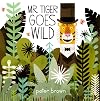
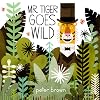
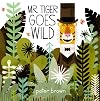
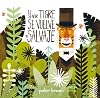
"Everyone was perfectly fine with the way things were. Everyone but Mr. Tiger." A monochromatic city scene shows prim and proper animals walking upright, with only Mr. Tiger - similarly dressed but with orange fur - looking straight at the reader. Mr. Tiger was "bored with always being so proper," so he starts to make changes: first, walking on four feet, then taking off his clothes and swimming in the fountain, and finally running off to the wilderness. But then he is lonely, and returns to the city and his friends, only to find that they have embraced a little wildness and color in his absence: "Now Mr. Tiger felt free to be himself. And so did everyone else."
Just lovely. Gently humorous, and doesn't pit City vs. Nature but encourages show more everyone to be themselves, with just the right blend of proper and wild. show less
Just lovely. Gently humorous, and doesn't pit City vs. Nature but encourages show more everyone to be themselves, with just the right blend of proper and wild. show less
Mr. Tiger begins to find the restrictions of polite society rather tiresome in this entertaining picture-book from Peter Brown, eventually going a little bit too wild to stay in the big city with all of his friends. Although his sojourn in the wild is liberating, eventually he finds the solitude too much to bear, returning to the city. Once there he sees signs of change: elements of the wild have begun to encroach on urban life...
As a companion to Brown's The Curious Garden, which looks at the creation of a marvelous green garden-city, Mr. Tiger Goes Wild has immense appeal, emphasizing the need for a more natural and less restrictive society, one in which animals (and people!) can be themselves. Read this way, I found it immensely show more appealing, enjoying both the story and the beautiful artwork, created using multiple media, from pencil to gouache. That said, an alternative reading, one with which I am far less comfortable, suggests the idea that in order to find self-fulfillment one must set aside all of society's restrictions. As always, I am leery of the ways we tie self-indulgence to self-fulfillment in our current society, and depict any form of restriction as a form of stifling of creativity and individuality. As someone decidedly not on board with the idea that we should be allowed to do whatever we want, regardless of the consequences - some restrictions are a good thing, in order to protect the welfare and rights of all! - I am always mindful of the ways in which children's books address issues of creativity and conformity, and the balance between individual rights and responsibilities. I am not sure that Brown's tale really crosses that line, between championing the individual's right to dissent from the group, and depicting all social restrictions as unjust and unjustified, but the issue was at the back of my mind as I read, and one I continue to ponder. show less
As a companion to Brown's The Curious Garden, which looks at the creation of a marvelous green garden-city, Mr. Tiger Goes Wild has immense appeal, emphasizing the need for a more natural and less restrictive society, one in which animals (and people!) can be themselves. Read this way, I found it immensely show more appealing, enjoying both the story and the beautiful artwork, created using multiple media, from pencil to gouache. That said, an alternative reading, one with which I am far less comfortable, suggests the idea that in order to find self-fulfillment one must set aside all of society's restrictions. As always, I am leery of the ways we tie self-indulgence to self-fulfillment in our current society, and depict any form of restriction as a form of stifling of creativity and individuality. As someone decidedly not on board with the idea that we should be allowed to do whatever we want, regardless of the consequences - some restrictions are a good thing, in order to protect the welfare and rights of all! - I am always mindful of the ways in which children's books address issues of creativity and conformity, and the balance between individual rights and responsibilities. I am not sure that Brown's tale really crosses that line, between championing the individual's right to dissent from the group, and depicting all social restrictions as unjust and unjustified, but the issue was at the back of my mind as I read, and one I continue to ponder. show less
Mr. Tiger lives a fairly miserable Victorian existence, all prim and proper, upright and restrained. He desperately wants to let loose, go a little wild. One day, he decides to walk on all fours. The next day, he decides to climb a building and romp and roar. But when he decides to shed his top hat and suit to skinny-dip in the fountain (gasp!) the other animals decide he's gone a little too far. After a joyous stint in the wilderness, Mr. Tiger gets a little lonely and decides to return to the city, where he finds that society has begun to loosen up in his absence and thanks to his influence.
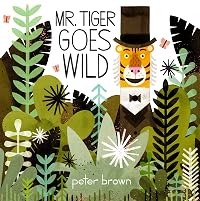
The illustrations are delicious enough to eat. The protagonist's bright orange fur, green eyes, and pink nose emphasize his isolation amid the show more straight lines and sepia tones of Victorian life. Even the speech balloons are color coded orange and gray. The wilderness beyond the city bursts with interesting new patterns in cool shades of green and blue (and pink, like his nose).
The effortless narration teams up with these pictures for some brilliant humor with perfect comic timing. Lots of crowd-pleasing elements here, with ample opportunities for audience participation (colors, sounds, animals, descriptions). show less
The illustrations are delicious enough to eat. The protagonist's bright orange fur, green eyes, and pink nose emphasize his isolation amid the show more straight lines and sepia tones of Victorian life. Even the speech balloons are color coded orange and gray. The wilderness beyond the city bursts with interesting new patterns in cool shades of green and blue (and pink, like his nose).
The effortless narration teams up with these pictures for some brilliant humor with perfect comic timing. Lots of crowd-pleasing elements here, with ample opportunities for audience participation (colors, sounds, animals, descriptions). show less
Mr. Tiger is a proper Edwardian gentleman. He and his fellow creatures live properly buttoned-down lives in a properly bland city of brownstones and fountains and very little color.
When Mr. Tiger decides to have some fun...to go a little wild...to find the color...the other animals tell him to head for the wilderness.
So he does, and it's wonderful. For a while. But it's lonely to be the only wild creature in the great big wilderness, so Mr. Tiger heads back to the city. There he finds that things have changed and everybody's, shall we say, loosened up a bit.
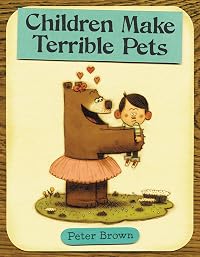
If you're at all familiar with Peter Brown's work (Chowder,Children Make Terrible Pets, The Curious Garden) you already know to expect two things: gorgeous illustrations--here show more cunningly rendered in India ink, watercolor, gouache, and pencil on paper, then put through the digital wringer for an extra bit of magic, and a little bit of subversion. As the author himself says on the dust jacket, "Hello. I am Peter Brown, and it is my professional opinion that everyone should find time to go a little wild."
Duly noted, Mr. Brown, duly noted. show less
When Mr. Tiger decides to have some fun...to go a little wild...to find the color...the other animals tell him to head for the wilderness.
So he does, and it's wonderful. For a while. But it's lonely to be the only wild creature in the great big wilderness, so Mr. Tiger heads back to the city. There he finds that things have changed and everybody's, shall we say, loosened up a bit.
If you're at all familiar with Peter Brown's work (Chowder,Children Make Terrible Pets, The Curious Garden) you already know to expect two things: gorgeous illustrations--here show more cunningly rendered in India ink, watercolor, gouache, and pencil on paper, then put through the digital wringer for an extra bit of magic, and a little bit of subversion. As the author himself says on the dust jacket, "Hello. I am Peter Brown, and it is my professional opinion that everyone should find time to go a little wild."
Duly noted, Mr. Brown, duly noted. show less
Love this! Hawaiian shirt that shows your chest hair = middle ground between Victorian repression and roaring at trees naked, and also this book gets that you're a tiger. Nice for rambunctious but sweethearted three-year-olds.
Super cute picture book about anthropomorphized animals beginning to return to their to their natural wild states. The author nicely integrated a message about being true to yourself as well. Illustrations are just lovely.
"...I see this as a fun story for kids about being yourself, even if that doesn't necessarily fit in with the social norms. Mr. Tiger was brave enough to step outside the box and take control of his individuality, and in the end it turned out that probably all his friends secretly wanted the same thing, but it took the courage of one person (or tiger) to show that he was comfortable enough with himself to give everyone else the courage to be more like themselves, too...
I got this book for my niece and nephew for Christmas, and I hope they both enjoy it. I think they will, and if they do, I'll certainly be on the lookout for more books written and/or illustrated by Brown in the future for the little ones in my family."
For full review, show more please visit me at Here Be Bookwyrms on Blogger:
http://herebebookwyrms.blogspot.com/2013/12/mr-tiger-goes-wild.html show less
I got this book for my niece and nephew for Christmas, and I hope they both enjoy it. I think they will, and if they do, I'll certainly be on the lookout for more books written and/or illustrated by Brown in the future for the little ones in my family."
For full review, show more please visit me at Here Be Bookwyrms on Blogger:
http://herebebookwyrms.blogspot.com/2013/12/mr-tiger-goes-wild.html show less
Members
- Recently Added By
Lists

Red Dot 2014-2015 - Early Years - Longlist
11 works; 6 members

27 Books Parents Should Read to Their Kids Before They Grow Up
27 works; 7 members

Youth: Zoology
128 works; 1 member
Author Information

15+ Works 13,276 Members
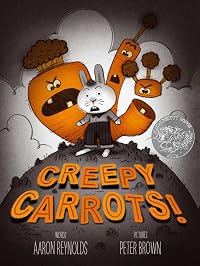
Peter Brown grew up in Hopewell, New Jersey. He received a B.F.A. in Illustration from Art Center College of Design in Pasadena, California. After college, he moved to Brooklyn, New York and spent several years painting backgrounds for animated TV shows. In 2003, he got a book deal to write and illustrate his first picture book Flight of the Dodo. show more His other works include The Curious Garden, which won the 2010 E.B. White Award and the Children's Choice Award, Children Make Terrible Pets, and You Will Be My Friend. He is the illustrator of Creepy Carrots! by author Aaron Reynolds. His title Mr. Tiger Goes Wild made The New York Times Best Seller List for 2013. (Bowker Author Biography) show less
Some Editions
Awards and Honors
Awards
Distinctions
Notable Lists
Common Knowledge
- Canonical title
- Mr. Tiger Goes Wild
Classifications
Statistics
- Members
- 958
- Popularity
- 27,769
- Reviews
- 80
- Rating
- (4.25)
- Languages
- 7 — Dutch, English, Finnish, French, German, Portuguese (Portugal), Spanish
- Media
- Paper, Ebook
- ISBNs
- 25
- ASINs
- 7