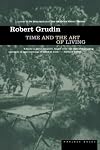
Time and the Art of Living
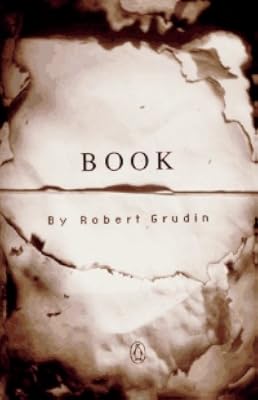
by Robert Grudin
On This Page
Description
This is a book about time--about one's own journey through it and, more important, about enlarging the pleasure one takes in that journey. It's about memory of the past, hope and fear for the future, and how they color, for better and for worse, one's experience of the present. Ultimately, it's a book about freedom--freedom from despair of the clock, of the aging body, of the seeming waste of one's daily routine, the freedom that comes with acceptance and appreciation of the human dimensions show more of time and of the place of each passing moment on life's bounteous continuum. For Robert Grudin, living is an art, and cultivating a creative partnership with time is one of the keys to mastering it. In a series of wise, witty, and playful meditations, he suggests that happiness lies not in the effort to conquer time but rather in learning "to bend to its curve," in hearing its music and learning to dance to it. Grudin offers practical advice and mental exercises designed to help the readeruse time more effectively, but this is no ordinary self-help book. It is instead a kind of wisdom literature, a guide to life, a feast for the mind and for the spirit. show lessTags
Recommendations
















Member Reviews
Grudin bemoans our inability to integrate past, future, and present. He isn’t just advocating what is usually called “living in the present” and in fact thinks the present can be something of a tyrant: “the present abhors precedents and is always trying to deny or obfuscate the existence of pattern. It claims to be a unique case, demanding special treatment and unusual indulgences” (37). What he seems to mean by integrating the past is keeping track of it and consulting often where one has been—late in the book he counsels keeping a journal. What he seems to mean by integrating the future is that we should build it up by regular adherence to a schedule for projects: “the future is the domain of sincere and persistent show more individuals” (136). Mostly he is commenting on the mistakes we make regarding time, but he has some specific suggestions or exercises, some of them interesting. He suggests trying to reconstruct a period or event with all its details of place, mood, clothing, state of health—and then going beyond this to a reconstruction “on a broader scale with the aid of old newspapers and magazines” (54). But his suggestions can also reveal a deplorable lack of human experience: “Insomniacs, for example, should regularly address their thoughts to some difficult problem; in so doing they are likely either to solve the problem or start sleeping longer” (54).
Late in the book Grudin begins a tirade against the inefficient and inconsistent ways we have of noting time’s passage: units composed of 60 seconds, 60 minutes, 24 hours, 7 days, 28, 29, 30 or 31 days, 12 months, 365 or 366 days. He provides a more rational approach in a time scheme that is partly decimal, and he reveals that he has structured this book on the calendar developed after the French Revolution by the Republicans, with twelve chapters and 30 numbered “daily” sections in each of these “months.” The effect is slighlty embarrassing, as if a traveler with whom one was sharing a train compartment revealed the details of his obsessive-compulsive disorder part way through the trip.
Grudin recommends keeping a journal in the last section of the book entitled “Memory,” and his advice is “use convenient physical media, keep them handy, and give yourself time to write” (180), but, most important, record the detail; the emotional reaction (“we had a wonderful time”) is not helpful to your later self in recreating the moment. show less
Late in the book Grudin begins a tirade against the inefficient and inconsistent ways we have of noting time’s passage: units composed of 60 seconds, 60 minutes, 24 hours, 7 days, 28, 29, 30 or 31 days, 12 months, 365 or 366 days. He provides a more rational approach in a time scheme that is partly decimal, and he reveals that he has structured this book on the calendar developed after the French Revolution by the Republicans, with twelve chapters and 30 numbered “daily” sections in each of these “months.” The effect is slighlty embarrassing, as if a traveler with whom one was sharing a train compartment revealed the details of his obsessive-compulsive disorder part way through the trip.
Grudin recommends keeping a journal in the last section of the book entitled “Memory,” and his advice is “use convenient physical media, keep them handy, and give yourself time to write” (180), but, most important, record the detail; the emotional reaction (“we had a wonderful time”) is not helpful to your later self in recreating the moment. show less
Ratings
Members
- Recently Added By
Lists

Mustich's 1000 Books to Read Before You Die: A Life Changing List
1,001 works; 19 members
Author Information

9 Works 870 Members
Robert Grudin a professor for many years at the University of Oregon, he now lives with his wife in Hawai'i
Awards and Honors
Notable Lists
Common Knowledge
- Original publication date
- 1982
Classifications
Statistics
- Members
- 322
- Popularity
- 98,592
- Reviews
- 1
- Rating
- (3.95)
- Languages
- English
- Media
- Paper
- ISBNs
- 3
- UPCs
- 1
- ASINs
- 2