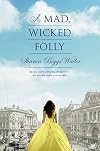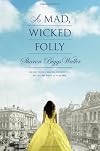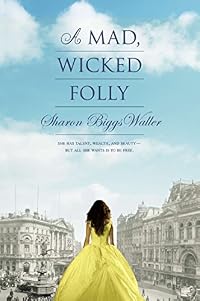
A Mad, Wicked Folly
by Sharon Biggs Waller 
On This Page
Description
In 1909 London, as the world of debutante balls and high society obligations closes in around her, seventeen-year-old Victoria must figure out just how much is she willing to sacrifice to pursue her dream of becoming an artist.Tags
Recommendations

Member Reviews
Victoria Darling loves art above all else, and is determined to be a painter. When she gets sent home from finishing school for posing nude in front of the other students at the little atelier she'd been sneaking away from school to work at, she's devastated -- but being back in London brings up new opportunities, if she can figure out how to grab hold of them. She dreams of attending the Royal College of Art, but her parents have taken away her sketchbook and drawing materials, and forbidden her to have anything to do with art. An engagement has been arranged for her with a young man of her social class, and she hopes that marriage will bring her the freedom she craves -- but in the meantime, she's befriended some suffragists fighting show more for women's rights, and a handsome police constable who knows what it is to have artistic ambition. Can Vicky find a way to live life on her own terms, or is the life her parents have planned her best hope for a future making art?
I liked this for the plot and the historical detail. Vicky, our main character, is very young, and it shows. She's set on having everything she wants, right now -- she can't wait a year to apply to art college, she's forever sneaking around doing things that will have big consequences if she is caught, she's goaded by a male student into posing for the art class that gets her expelled from finishing school. She tends to use people in a careless way that could be attributed to her privileged upbringing, but it does not make her very sympathetic. She does start to mature over the course of the novel. So, readers who enjoy historical fiction and can stomach an unsympathetic main character should certainly check this one out. show less
I liked this for the plot and the historical detail. Vicky, our main character, is very young, and it shows. She's set on having everything she wants, right now -- she can't wait a year to apply to art college, she's forever sneaking around doing things that will have big consequences if she is caught, she's goaded by a male student into posing for the art class that gets her expelled from finishing school. She tends to use people in a careless way that could be attributed to her privileged upbringing, but it does not make her very sympathetic. She does start to mature over the course of the novel. So, readers who enjoy historical fiction and can stomach an unsympathetic main character should certainly check this one out. show less
For some reason, the title of this book put me off of it for the longest time. I'm so glad I finally got around to reading it -- excellent historical fiction, with a stubborn young woman at the heart of it. There are things I found difficult to believe, given the social setting, but I found her journey into adulthood and personal responsibility to be excellently well depicted. These characters felt very real to me -- unlike in many teen books, when the main character fails to do what they know is right and the drama just grows and grows from there, in this book failures are acknowledged and (eventually or immediately forgiven). I was completely drawn into the suffrage movement and the artistic scene, and I loved the pre-raphaelite mentions.
Victoria Darling dreams of becoming a world-renowned artist. Sent to France by her parents to attend a fancy finishing school, she secretly paints with an all-male atelier. One day, their nude model doesn't show, and Vicky, despite her fears, decides to pose for her classmates. Word of this reaches her parents back in England, and she's whisked home amid the scandal. The only way to salvage her reputation, and that of her family, is a quick marriage to the son of a wealthy businessman. But Vicky's not worried about reputation; she concerns herself only with furthering her art career.
So, the first thing I have to mention? VICKY IS THE WORST.
Does she care that she might singlehandedly dismantle her father's career? Not really.
Does she see show more her future husband as anything more than a bank account? Nope.
Does she consider cheating on said future husband with her muse? Absolutely.
She falls into the company of some suffragettes, but does she think of them as anything more than a possible art school recommendation? What do you think?
There are flawed characters, there are charmingly imperfect characters, and then there is Vicky, who is the literal worst.
For a girl of her social class in this time period (1909), and with all the education she received, you may think that Vicky would understand societal pressures. She might understand that she's literally ruining her father's career with her shenanigans. But she doesn't seem to understand that. She rebels for the sake of rebelling. For the time period, she had a lot of freedom, but she's not satisfied. She won't take no for an answer, and ends up making stupid mistake after stupid mistake. Throughout most of the book, I just wanted to grab her by the shoulders and tell her how much worse she was making things for herself. You can be an artist, Vicky! Just stop being dumb about it!
Vicky finds herself intrigued by the women's suffrage movement, but, of course, not because she believes in it. Not really. No, it's because there are famous artists affiliated with the movement, and she thinks that if she can get her artwork in their promotional materials, if she can get her artwork up on the murals, if she can get one of those artists to write a recommendation for her... maybe she can get into art school. That's it. That's her motivation. Because Vicky is the literal worst.
Through the women's suffrage movement, she meets Will, a gorgeous policeman who agrees to pose for her art school portfolio. Will obviously falls for Vicky, who consistently fails to mention that she's engaged, and even brings Will to her future home because it has good light for painting, or something like that. Did I prefer Will over her actual fiance? Yes, of course. Her fiance spends most of the book drunk or gambling, or discussing being drunk or gambling. But did I think she was being fair to either one of them? No.
Vicky seems to find no issue with using people for whatever she needs. She uses the suffragettes to further her application to art school. She uses Will as inspiration for her paintings. She uses Edmund, her fiance, because his fortune will pay for her admission to art school. I can't think of one honest relationship Vicky has in this book. She even uses her brother, her best friend, and her lady's maid. It's awful.
The book is entertaining, and I read through it pretty quickly. But it's also infuriating, because I wanted so badly to find some redeeming quality in Victoria, and there was just nothing there.
I'll file this one under main characters I just didn't click with. show less
So, the first thing I have to mention? VICKY IS THE WORST.
Does she care that she might singlehandedly dismantle her father's career? Not really.
Does she see show more her future husband as anything more than a bank account? Nope.
Does she consider cheating on said future husband with her muse? Absolutely.
She falls into the company of some suffragettes, but does she think of them as anything more than a possible art school recommendation? What do you think?
There are flawed characters, there are charmingly imperfect characters, and then there is Vicky, who is the literal worst.
For a girl of her social class in this time period (1909), and with all the education she received, you may think that Vicky would understand societal pressures. She might understand that she's literally ruining her father's career with her shenanigans. But she doesn't seem to understand that. She rebels for the sake of rebelling. For the time period, she had a lot of freedom, but she's not satisfied. She won't take no for an answer, and ends up making stupid mistake after stupid mistake. Throughout most of the book, I just wanted to grab her by the shoulders and tell her how much worse she was making things for herself. You can be an artist, Vicky! Just stop being dumb about it!
Vicky finds herself intrigued by the women's suffrage movement, but, of course, not because she believes in it. Not really. No, it's because there are famous artists affiliated with the movement, and she thinks that if she can get her artwork in their promotional materials, if she can get her artwork up on the murals, if she can get one of those artists to write a recommendation for her... maybe she can get into art school. That's it. That's her motivation. Because Vicky is the literal worst.
Through the women's suffrage movement, she meets Will, a gorgeous policeman who agrees to pose for her art school portfolio. Will obviously falls for Vicky, who consistently fails to mention that she's engaged, and even brings Will to her future home because it has good light for painting, or something like that. Did I prefer Will over her actual fiance? Yes, of course. Her fiance spends most of the book drunk or gambling, or discussing being drunk or gambling. But did I think she was being fair to either one of them? No.
Vicky seems to find no issue with using people for whatever she needs. She uses the suffragettes to further her application to art school. She uses Will as inspiration for her paintings. She uses Edmund, her fiance, because his fortune will pay for her admission to art school. I can't think of one honest relationship Vicky has in this book. She even uses her brother, her best friend, and her lady's maid. It's awful.
The book is entertaining, and I read through it pretty quickly. But it's also infuriating, because I wanted so badly to find some redeeming quality in Victoria, and there was just nothing there.
I'll file this one under main characters I just didn't click with. show less
I received an ARC through Miss Literati in exchange for a review.
“Hello! Welcome,” I greet you, standing up from the couch and smoothing down my skirts. Our dresses are beautiful, but our corsets are a claustrophobic’s nightmare. I give you air kisses and offer to take your at-home card, which was your invitation to come and see me.
“Please, let’s eat,” I say, gesturing to where I've laid out Victoria’s Favorite Pickelets that I've made from a recipe in the back of A MAD, WICKED FOLLY. I choose to put a combination of butter, honey and apricot preserves on mine and grab a steaming mug of sugar cookie tea that I only wish I made in a kettle.
“I’m starved,” I tell you, as I nibble at my pickelet. They will undoubtedly show more sit not nearly finished next to our barely-touched cup of tea because there’s hardly enough room to breathe in our corsets. There is no room to add extra food and drinks to the mix.
We make polite chitchat, and, finally, I think you’re ready to hear about the book.
Victoria grew up in London in the very early years of the 1900s where social events just like this were practiced every day. They were strict and mandatory if you had any dignity at all. On the slightly glamorous side, they had people to dress them and do their hair. Balls were not at all uncommon; though when you hit the age to go to them it meant you’d soon be married to someone you possibly barely knew and certainly didn’t love. Marriages were to better the families involved and for nothing more. Women’s rights were non-existent. That meant no voting, no college, no career and virtually no say in anything. The job of a woman was to be a good wife and mother and that is all.
Victoria didn't want to be just a wife and a mother. She wanted to be an artist and she wanted to go to college. Victoria secretly took an art class where she was the only girl. When their model didn't show up, one of her classmates pointed out that Victoria was the only one that had never posed before. Victoria felt the need to prove she was their equal and that it didn't matter that she was a girl. Word spread like fire when Victoria stripped her clothes in front of a group of men. Her parents sentenced her to stay in her house. Victoria’s parents were worried her reputation was ruined. They found a man for her to marry, but she refused. That is, until she learned the marriage could be of benefit to her.
Victoria is stronger and braver than she thinks. She knows what she wants and she’ll stop at nothing to get it. Multiple times she braves the police, her parents, and anyone else who she thinks will get in her way. She gains the support of some unlikely people, including a powerful police constable. They benefit from each other in a business agreement, or so she tells both him and herself. If he wasn't more than just her business partner, though, why didn't she feel the same way when she was with her fiance?
I absolutely loved this book — the dresses, the language, the culture, and the setting. I laughed in delight when Victoria wittily silenced her challengers, much to their surprise, and thoroughly enjoyed when Victoria became victorious and found a way to not only get the thing she wanted the most, but also more than she asked for and things she didn't know she wanted.
A MAD, WICKED FOLLY made me thankful women like Victoria came before me and helped shape life into what it is today — a much more equal world for women. One where we can pursue the things we want and we don’t have to settle for anything less than what — or who — we love. show less
“Hello! Welcome,” I greet you, standing up from the couch and smoothing down my skirts. Our dresses are beautiful, but our corsets are a claustrophobic’s nightmare. I give you air kisses and offer to take your at-home card, which was your invitation to come and see me.
“Please, let’s eat,” I say, gesturing to where I've laid out Victoria’s Favorite Pickelets that I've made from a recipe in the back of A MAD, WICKED FOLLY. I choose to put a combination of butter, honey and apricot preserves on mine and grab a steaming mug of sugar cookie tea that I only wish I made in a kettle.
“I’m starved,” I tell you, as I nibble at my pickelet. They will undoubtedly show more sit not nearly finished next to our barely-touched cup of tea because there’s hardly enough room to breathe in our corsets. There is no room to add extra food and drinks to the mix.
We make polite chitchat, and, finally, I think you’re ready to hear about the book.
Victoria grew up in London in the very early years of the 1900s where social events just like this were practiced every day. They were strict and mandatory if you had any dignity at all. On the slightly glamorous side, they had people to dress them and do their hair. Balls were not at all uncommon; though when you hit the age to go to them it meant you’d soon be married to someone you possibly barely knew and certainly didn’t love. Marriages were to better the families involved and for nothing more. Women’s rights were non-existent. That meant no voting, no college, no career and virtually no say in anything. The job of a woman was to be a good wife and mother and that is all.
Victoria didn't want to be just a wife and a mother. She wanted to be an artist and she wanted to go to college. Victoria secretly took an art class where she was the only girl. When their model didn't show up, one of her classmates pointed out that Victoria was the only one that had never posed before. Victoria felt the need to prove she was their equal and that it didn't matter that she was a girl. Word spread like fire when Victoria stripped her clothes in front of a group of men. Her parents sentenced her to stay in her house. Victoria’s parents were worried her reputation was ruined. They found a man for her to marry, but she refused. That is, until she learned the marriage could be of benefit to her.
Victoria is stronger and braver than she thinks. She knows what she wants and she’ll stop at nothing to get it. Multiple times she braves the police, her parents, and anyone else who she thinks will get in her way. She gains the support of some unlikely people, including a powerful police constable. They benefit from each other in a business agreement, or so she tells both him and herself. If he wasn't more than just her business partner, though, why didn't she feel the same way when she was with her fiance?
I absolutely loved this book — the dresses, the language, the culture, and the setting. I laughed in delight when Victoria wittily silenced her challengers, much to their surprise, and thoroughly enjoyed when Victoria became victorious and found a way to not only get the thing she wanted the most, but also more than she asked for and things she didn't know she wanted.
A MAD, WICKED FOLLY made me thankful women like Victoria came before me and helped shape life into what it is today — a much more equal world for women. One where we can pursue the things we want and we don’t have to settle for anything less than what — or who — we love. show less
I can't even tell you how much I enjoyed this book, it was down right good. We go back to a time where woman have no rights and at times, not even a choice of who they will marry. Victoria is an artist and has to sneak around to draw, her parents strongly forbid her to draw or attend art school. She meets Will who helps her pursue her dreams of going to college. Will is just the sweetest and the chemistry between them is so sweet. I actually lost my breath a little while reading a romantic part of the book.
I did have one problem though, the ending. It just ended so quickly, I just like when they give us something more at the end. I would of loved an epilouge! I wish this was a series, even though it was really feminist, I thoroughly show more enjoyed the story. show less
I did have one problem though, the ending. It just ended so quickly, I just like when they give us something more at the end. I would of loved an epilouge! I wish this was a series, even though it was really feminist, I thoroughly show more enjoyed the story. show less
There’s a special place in my heart for the books that leave me with a huge, goofy grin on my face. Seriously, you should see me right now, because I look like a fool. And I am one hundred percent okay with that, because this book was so fluffy and feminist and wonderful. A Mad, Wicked Folly exceeded all of my expectations, managing to be both hilarious, romantic and to make more serious points all at once.
Read the full review at A Reader of Fictions.
Read the full review at A Reader of Fictions.
First off: I had a hard time putting this book down and found it very very engaging.
It's fun, too, to see a story for young people about the suffrage movement and sexism. The main drawback: historical background information is inserted in sooooooo many places with a heavy-handed clunkiness that kept pulling me out of the narrative (I do get why the author and/or an editor could feel the target audience needs help getting their bearings, but still).
It's fun, too, to see a story for young people about the suffrage movement and sexism. The main drawback: historical background information is inserted in sooooooo many places with a heavy-handed clunkiness that kept pulling me out of the narrative (I do get why the author and/or an editor could feel the target audience needs help getting their bearings, but still).
Members
- Recently Added By
Author Information

4 Works 521 Members
Sharon Biggs Waller worked as a riding instructor at the Royal Mews in Buckingham Palace and as a freelance magazine writer. She is currently a dressage rider and trainer on a ten-acre sustainable farm in Northwest Indiana. She is the author of three non-fiction books as well as the young adult novels A Mad, Wicked Folly and The Forbidden Orchid. show more (Bowker Author Biography) show less
Sharon Biggs Waller is a LibraryThing Author, an author who lists their personal library on LibraryThing.
SharonBiggsWaller is also the author Sharon Biggs Waller.
Awards and Honors
Awards
Distinctions
Common Knowledge
- Original publication date
- 2014-01-23
Classifications
Statistics
- Members
- 275
- Popularity
- 116,887
- Reviews
- 24
- Rating
- (3.80)
- Languages
- English
- Media
- Paper, Audiobook, Ebook
- ISBNs
- 9
- ASINs
- 3