On This Page
Description
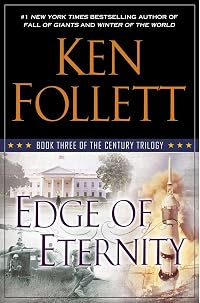
East German teacher Rebecca Hoffmann discovers she's been spied on by the Stasi for years and commits an impulsive act that will affect her family for the rest of their lives. George Jakes, the child of a mixed-race couple, bypasses a corporate law career to join Robert F. Kennedy's Justice Department, and finds himself in the middle not only of the seminal events of the civil rights battle, but a much more personal battle of his own. Cameron Dewar, the grandson of a senator, jumps at the show more chance to do some official and unofficial espionage for a cause he believes in, only to discover that the world is a much more dangerous place than he'd imagined. Dimka Dvorkin, a young aide to Nikita Khrushchev, becomes a prime agent both for good and for ill as the United States and the Soviet Union race to the brink of nuclear war, while his twin sister, Tanya, carves out a role that will take her from Moscow to Cuba to Prague to Warsaw and into history. show lessTags
Recommendations





Member Recommendations

Member Reviews
This is the final volume of the author's trilogy dealing with the lives and interactions with great events of a number of families in the US, the USSR, Germany and Britain (though scenes set in this country are few and far between and easily the least dramatic episodes in the narrative). The first half of the book is full of dramatic and tense events and passages: the struggle in the US for civil rights for African Americans against the forces of brutal authoritarianism and society's prejudices; the Cuban missile crisis where the world came closer than before or since to nuclear armageddon; and daring escapes over the Berlin wall, facing the merciless ruthlessness of the border guards who shot escapees on sight. The second half of the show more book, or at least the passages after about the early to mid 1970s, lacked the impact of the early parts for me, though the final chapters on the dramatic events of 1989 in Eastern Europe were gripping. There is also a strong thread of music making throughout the narrative. As it covered the period 1961 to 1989, the novel might almost have been called "Wall to Wall" - Edge of Eternity seems a rather vacuous title. A great read, and I think this Century trilogy is Follett's best work, surpassing Pillars of the Earth. show less
My favorite book in the trilogy, probably because this one is such an interesting mixed-bag of world events and captures late 20th century events that I have memories of watching on TV or reading about in the newspaper. I like how Follett’s characters get close to the events to provide a credible, fictionalized first person point of view. The author has a knack for writing suspenseful stories and skillfully provides the reader with a history lesson that isn’t a dry, fact filled snoozer. Not quite as hip, snappy and rock and rollish as Billy Joel’s song, We Didn’t Start the Fire, but still a highly entertaining read for me. Yes, Follett does capture the rock and roll era through his fictional British band, Plum Nelly. Hard to do show more a sweeping 20th century novel with out capturing the music scene, but the focus is also on the politics and impact of the Cold War. Given the myriad of events that occurred between 1960 through to the late 1980’s (the time period captured here), it is not surprising that Follett had to pick and choose which events to focus on and which ones to gloss over. Yes, even at over 1,000 pages, he still couldn't cram in EVERYTHING. Even so, he managed to bring some interesting perspectives. For example, while President Kennedy is in the story, he takes a bit of a back seat to his brother, Senator Bobby Kennedy. Follett barely touches on either JFK or Martin Luther King's assassinations - probably makes sense given the number of books already published on those topics. For the Vietnam War, Follett takes another unique approach by drafting a British born, U.S. landed immigrant into the US Army, presenting an “outsider on the inside” perspective of the war. Yes, one has to accept the fact that Follett’s characters always seem to be ‘opportunely’ placed to witness or be involved with various events, but hey, this is fiction, even if it is anchored by historical events. When Follett decides to “go big,” he does so with without restraint.
Overall a wonderful conclusion to a truly epic saga and one I can highly recommend if you like your historical fiction reads to be entertaining and engaging. show less
Overall a wonderful conclusion to a truly epic saga and one I can highly recommend if you like your historical fiction reads to be entertaining and engaging. show less
I'm glad I completed the trilogy by reading this book, although I found it was getting a bit predictable and, at times, repetitive. Overall, a great story running through all three volumes. I must say that this third book was the first time my feelings about the Berlin Wall went beyond intellectual, even beyond a general sympathy for those separated by it. The story of Walli's family hit my empathy button really hard!
I am including this review nearly 5 years after having read the book. I found my notes and a half-written review in a pile of papers so I am going to include these to the best of my ability.
I was actually disappointed in this book. The first two of this Trilogy (The Century Trilogy) were actually some of my favorite books to read and seemed to have been much better written. I even questioned within my own mind whether Follett had out-sourced the writing to someone else. One charm of the previous two books was how he inter-wove the stories of everyday fictional characters into the larger narrative of real major historical events, including rubbing elbows with major power-brokers of the era. That authorial device is at play in this novel show more as well, yet is horribly executed. Some, of the serendipitous encounters are so implausible that it takes more than a casual suspension of belief from the reader. The book was always quite unbalanced in the coverage of the time period it seeks to include. A large portion of the book centers around the 1960's which leaves little space for some of the major events such as the Vietnam War, Cold War, and the fall of the Berlin Wall. The dialogue between the characters was at times less inspired and more clearly just a way to include and explain historical facts that Follett wanted to get in. Lastly, there was an obviously heavy-handed one-side political agenda found within the narrative. Perhaps, this was evidenced in the last two books as well and only noticed by me since this book wended its way into decades that I actually lived through. It may require a second look at the first two books to see if this is true. Though I feel like it actually leaned a certain way and was trying to impose an agenda rather than offering an unbiased and critical look at multiple sides of issues. If you read the first two in this series, I would say it is worth following through to the end to see the outcomes of the five sets of families that the book has followed throughout the series. Yet, I would caution one to expect to be as enamored and able to lose yourself in this one in the same manner as the first two of the series. show less
I was actually disappointed in this book. The first two of this Trilogy (The Century Trilogy) were actually some of my favorite books to read and seemed to have been much better written. I even questioned within my own mind whether Follett had out-sourced the writing to someone else. One charm of the previous two books was how he inter-wove the stories of everyday fictional characters into the larger narrative of real major historical events, including rubbing elbows with major power-brokers of the era. That authorial device is at play in this novel show more as well, yet is horribly executed. Some, of the serendipitous encounters are so implausible that it takes more than a casual suspension of belief from the reader. The book was always quite unbalanced in the coverage of the time period it seeks to include. A large portion of the book centers around the 1960's which leaves little space for some of the major events such as the Vietnam War, Cold War, and the fall of the Berlin Wall. The dialogue between the characters was at times less inspired and more clearly just a way to include and explain historical facts that Follett wanted to get in. Lastly, there was an obviously heavy-handed one-side political agenda found within the narrative. Perhaps, this was evidenced in the last two books as well and only noticed by me since this book wended its way into decades that I actually lived through. It may require a second look at the first two books to see if this is true. Though I feel like it actually leaned a certain way and was trying to impose an agenda rather than offering an unbiased and critical look at multiple sides of issues. If you read the first two in this series, I would say it is worth following through to the end to see the outcomes of the five sets of families that the book has followed throughout the series. Yet, I would caution one to expect to be as enamored and able to lose yourself in this one in the same manner as the first two of the series. show less
1961 and the Berlin Wall appears overnight, 1989 and the Berlin Wall falls. Between these two events families across the globe go about their everyday lives, lives that revolve around politics. Encompassing the fight for civil rights in America and the struggle for a less hardline on communism in the East, the stories are both personal and also illustrate huge world events, putting them into perspective.
This is the third instalment of the century trilogy and covers the longest span of years. The original five families are intermarried and some characters play a bigger part than others in the story. What makes this book so good however is the clever way in which Follett educates about world politics - the Cuban missile crisis, US show more politics, life in the Eastern bloc - but at its heart this is a book about people. The book is huge, but it needs to be to do justice to its material. The conclusion of the century trilogy is a sad event. show less
This is the third instalment of the century trilogy and covers the longest span of years. The original five families are intermarried and some characters play a bigger part than others in the story. What makes this book so good however is the clever way in which Follett educates about world politics - the Cuban missile crisis, US show more politics, life in the Eastern bloc - but at its heart this is a book about people. The book is huge, but it needs to be to do justice to its material. The conclusion of the century trilogy is a sad event. show less
Ken Follett's sprawling historical fiction will never be mistaken for Tolstoy; and the expository nature of the narrative sometimes makes it look like a gimmicky high school history textbook--especially this volume where the Russian characters, conveniently placed to be advisors to Khrushchev, Brezhnev, Andropov, and finally Gorbachev, exist to explain changes in Communist policy. The shift in focus to the contemporary US makes it the least interesting in my view--I preferred the focus on Europe in the 1910s-1940s in the previous two books. But having said that, it is probably the better written of the three books, but maybe I am just happy that his awkward sex scenes were minimal here. The Century trilogy has been a long journey, and show more as flawed and as simplistic as the novels are, I do not regret reading it. show less
A VÉRES ÉS GYÖNYÖRŰ HUSZADIK SZÁZAD TÖRTÉNETE ÚGY, AHOGY AZT CSAK KEN FOLLETT TUDJA ELMESÉLNI Az Évszázad-trilógia öt család - egy amerikai, egy angol, egy walesi, egy német és egy orosz - történetét mutatja be a 20. században. A harmadik kötet a hidegháború, az 1960-as és az 1980-as évek közötti időszak hatalmas szociális, politikai és gazdasági változásait mutatja be: a polgárjogi mozgalmakat az USA-ban, a politikai gyilkosságokat, a vietnami háború elleni tiltakozásokat, a berlini fal felhúzását és lebontását, az atomcsendegyezményt, a gorbacsovi peresztrojkát és természetesen a rock and roll és a beat nemzedékét. Rebecca Hoffmann, a Kelet-Berlinben élő Von Ulrich család show more adoptált gyermeke rájön, hogy egy Stasi-ügynökhöz ment feleségül. A férfinak az volt a feladata, hogy a nagypolgári családot figyelje. Csodával határos módon az asszonynak sikerül átszöknie a falon, és Hamburgban kezd új életet... George Jakes, a félvér jogász Robert F. Kennedy csapatához kerül az Igazságügyi Minisztériumba, és belecsöppen a polgárjogi mozgalmak kellős közepébe... Cameron Dewar, a szenátor unokája a republikánusok oldalán a Watergate-ügy egyik ötletadója és kivitelezője lesz... Gyimka Dvorkin Moszkvában Nyikita Hruscsov személyi titkáraként kezdi politikusi karrierjét, így a leszerelési tárgyalások, a csehszlovákiai bevonulás aktív résztvevője. Újságíró ikertestvére, Tánya révén kapcsolatba kerül a másként gondolkodókkal... A fantasztikusan eleven történeti háttér előtt a szereplők rengeteg izgalmas világesemény résztvevői, nagyszerű karriert futnak be, magánéletükben azonban sokkal kevésbé sikeresek: gyakran több évtized múltán ismerik fel, hogy ki is az igazi társuk. Ken Follett sodró lendületű cselekményeken keresztül egy olyan világba vezet bennünket, amelyről azt gondoljuk, hogy ismerjük, hiszen átéltük, s most mégis másképpen látjuk. show less
Members
- Recently Added By
Published Reviews
En este último tomo de la trilogía «The Century», los protagonistas principales son los nietos de las cinco familias que conocimos por primera vez en La caída de los gigantes. Ken Follett narra las luchas, tragedias y alegrías de sus vidas personales entrelazadas con los acontecimientos principales ocurridos durante estos años. La novela arranca en 1961 y, a través de los dramas show more personales de los protagonistas, nos ofrece un recorrido histórico de estos años en Europa y Estados Unidos.
A través de los protagonistas de El umbral de la eternidad viviremos el asesinato de John F. Kennedy y de suhermano Bobby, el levantamiento del muro de Berlín, el encarcelamiento de los disidentes soviéticos en los gulags de Siberia, la guerra de Vietnam, el escándalo de Watergate, la invasión de la bahía de Cochinos en Cuba, la invasión de Checoslovaquia por los rusos y mucho más. show less
A través de los protagonistas de El umbral de la eternidad viviremos el asesinato de John F. Kennedy y de suhermano Bobby, el levantamiento del muro de Berlín, el encarcelamiento de los disidentes soviéticos en los gulags de Siberia, la guerra de Vietnam, el escándalo de Watergate, la invasión de la bahía de Cochinos en Cuba, la invasión de Checoslovaquia por los rusos y mucho más. show less
added by Pakoniet
Lists

Best Historical Fiction
620 works; 258 members

Historical Fiction
889 works; 91 members

Top Five Books of 2014
1,064 works; 398 members
Top Five Books of 2016
795 works; 229 members

Top Five Books of 2015
811 works; 241 members

Books Read in 2015
3,299 works; 129 members

Books Read in 2017
4,249 works; 130 members
Books Read in 2016
4,666 works; 199 members
Author Information

189+ Works 129,766 Members
Ken Follett was born in Wales, United Kingdom on June 5, 1949. He received an Honours degree in philosophy from University College, London. He began his career as a newspaper reporter for the South Wales Echo and later with the London Evening News. He decided to switch to publishing and worked for a small London publishing house, Everest Books, show more eventually becoming Deputy Managing Director. His first bestselling novel, Eye of the Needle, was published in 1978 and won the Edgar Award. His other works include Triple, The Key to Rebecca, The Man from St. Petersburg, Lay Down with Lions, The Pillars of the Earth, The Third Twin, The Hammer of Eden, Code to Zero, Whiteout, World Without End, The Century Trilogy, and A Column of Fire. Many of his novels have been adapted into films and television miniseries. He has won numerous awards including the Corine Prize in 2003 for Jackdaws. His nonfiction works include On Wings of Eagles. (Bowker Author Biography) show less
Some Editions
Awards and Honors
Distinctions
Series

Belongs to Publisher Series
Work Relationships
Common Knowledge
- Canonical title
- Edge of Eternity
- Original title
- Edge of Eternity
- Original publication date
- 2014-09-16
- People/Characters
- George Jakes; Maria Summers; Rebecca Hoffmann; Maud von Ulrich; Hans Hoffmann; Walli Franck (show all 25); Lili Franck; Tanja Dvorkin; Dmitri Dvorkin; Grigori Peshkov; Daniil Antonov; Piotr Opotkin; Joseph Hugo; Verena Marquand; Percy Marquand; Babe Lee; Jacky Jakes; Lev Peshkov; Greg Peshkov; John F. Kennedy; Robert F. Kennedy; Nikita Khrushchev; Martin Luther King, Jr.; Jasper Murray; Beep Dewar
- Important places
- East Berlin, German Democratic Republic; Berlin, Germany; Harvard University, Cambridge, Massachusetts, USA; Moscow, USSR; Havana, Cuba; London, England, UK (show all 7); Washington, D.C., USA
- Important events
- Cold War; Freedom Ride; Cuban Missile Crisis
- Dedication
- To all the freedom fighters, especially Barbara
- First words
- Rebecca Hoffmann was summoned by the secret police on a rainy Monday in 1961.
- Last words
- (Click to show. Warning: May contain spoilers.)"Honey," said Maria, "it's a long story."
- Original language
- English
Classifications
Statistics
- Members
- 4,010
- Popularity
- 3,921
- Reviews
- 119
- Rating
- (3.86)
- Languages
- 19 — Catalan, Chinese, Czech, Danish, Dutch, English, Finnish, French, German, Hebrew, Hungarian, Italian, Korean, Norwegian (Bokmål), Polish, Slovenian, Spanish, Swedish, Portuguese (Portugal)
- Media
- Paper, Audiobook, Ebook
- ISBNs
- 111
- ASINs
- 29