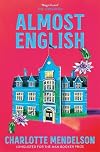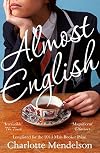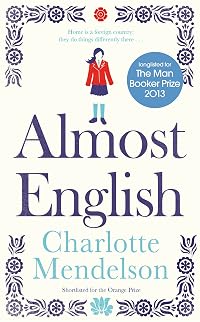
Almost English
by Charlotte Mendelson
On This Page
Description
This is the extraordinary new novel from the Orange Prize shortlisted author of When We Were Bad. Home is a foreign country: they do things differently there. In a tiny flat in West London, sixteen-year-old Marina lives with her emotionally delicate mother, Laura, and three ancient Hungarian relatives. Imprisoned by her family's crushing expectations and their fierce unEnglish pride, by their strange traditions and stranger foods, she knows she must escape. But the place she runs to makes show more her feel even more of an outsider. At Combe Abbey, a traditional English public school for which her family have sacrificed everything, she realises she has made a terrible mistake. She is the awkward half-foreign girl who doesn't know how to fit in, flirt or even be. And as a semi-Hungarian Londoner, who is she? In the meantime, her mother Laura, an alien in this strange universe, has her own painful secrets to deal with, especially the return of the last man she'd expect back in her life. She isn't noticing that, at Combe Abbey, things are starting to go terribly wrong. show lessTags
Recommendations


















Member Reviews
Marina is a 16 year old girl who lives with her English mother, Laura, in the basement flat of her paternal grandmother, an immigrant from Hungaria, and her two great-aunts, in the central London district of Bayswater. The older women love Marina dearly and desire that she read medicine at Cambridge, but they are insufferably opinionated and overbearing, which makes it difficult for her to express her own thoughts. Her mother, who separated from Marina's father 13 years before, has never remarried, and she works in a GP's office, where she has an intermittent affair with him.
The older women pool their limited resources in order to provide Marina with the best education possible, and the girl decides to transfer to Combe Alley, an show more English boarding school in Dorset that is notable more for its quirky traditions than its academic quality. Soon after her arrival Marina realizes that she does not fit in, due to her unfamiliarity with English manners and her lower middle class upbringing, and she is ignored by nearly everyone. However, she is emotionally paralyzed due to her suffocating home environment and inability to communicate with her mother, and she is unable to share her feelings of unhappiness and regret with her mother, her Hungarian relatives, or the few girls she is remotely friendly with.
At the same time Laura, who is even more emotionally stilted than her daughter, struggles with her own feelings of inadequacy and dissatisfaction, as she misses Marina terribly but is unable to share her feelings with her, and she is unable to establish an independent identity for herself in a household where silence is frowned upon.
Almost English for me was a painful and unrewarding read, with two of the most spineless and emotionally repressed women I've ever had the displeasure to read about. The story lines were trivial, and although the book was well written, I couldn't develop any interest in the main or the secondary characters. The repeated use of accented Hungarian words such as von-darefool (wonderful), tair-ible (terrible) and nair-vairmind (never mind) was highly irritating, and the the novel's denouement was unsatisfying and overly convenient for my taste. This was a curious and disappointing selection for this year's Booker Prize longlist, and I can only hope that the judges put down whatever it was they were smoking when they chose this book and realize that it has no place on the shortlist. show less
The older women pool their limited resources in order to provide Marina with the best education possible, and the girl decides to transfer to Combe Alley, an show more English boarding school in Dorset that is notable more for its quirky traditions than its academic quality. Soon after her arrival Marina realizes that she does not fit in, due to her unfamiliarity with English manners and her lower middle class upbringing, and she is ignored by nearly everyone. However, she is emotionally paralyzed due to her suffocating home environment and inability to communicate with her mother, and she is unable to share her feelings of unhappiness and regret with her mother, her Hungarian relatives, or the few girls she is remotely friendly with.
At the same time Laura, who is even more emotionally stilted than her daughter, struggles with her own feelings of inadequacy and dissatisfaction, as she misses Marina terribly but is unable to share her feelings with her, and she is unable to establish an independent identity for herself in a household where silence is frowned upon.
Almost English for me was a painful and unrewarding read, with two of the most spineless and emotionally repressed women I've ever had the displeasure to read about. The story lines were trivial, and although the book was well written, I couldn't develop any interest in the main or the secondary characters. The repeated use of accented Hungarian words such as von-darefool (wonderful), tair-ible (terrible) and nair-vairmind (never mind) was highly irritating, and the the novel's denouement was unsatisfying and overly convenient for my taste. This was a curious and disappointing selection for this year's Booker Prize longlist, and I can only hope that the judges put down whatever it was they were smoking when they chose this book and realize that it has no place on the shortlist. show less
There are a lot of pleasures in this book. Awkward Marina's forays from cosy Hungarian exile community and family life in London, to boarding school and country house life with the reprehensible Vineys evoke both the warmth of the emigre community with its furs and nostalgia, and the coldness of the English boarding school with its strange rituals and peculiar games. Marina's mother Laura fumbles towards reconciliation with her feckless and hopeless husband. Comedy and pathos abound. The problem is, however, the mystery within the book - the hidden grudges and betrayals of the past - that is just not a strong enough peg. Both predictable and implausible, the book gropes to a foreseeable resolution that reflects poorly on the incidental show more delights of the book. show less
Shortlisted this novel may have been for the Orange prize, but it has been a warning to me as a writer. A warning that characters must be people readers like, empathise with, and so are willing to suspend disbelief and read on, wanting to know what happens to them.
I did my best to finish the book but gave up. Oh nothing wrong with the writing, Ms Mendelson is a skillful writer, she has a way with words and creates vivid settings. BUT her two MC women characters drove me nuts! I could not believe in a 17 year old student, Marina, aiming for Cambridge, so must have some brains, who is so bloody stupid that she believes a boy, a senior student at her school, who does not know her from Eve, but she has a crush on, will turn up at her home show more in London. He doesn't even live in London!
As for her wet, vacillating drip of a mother! Oh dear! Laura I found weak and just plain pathetic. The kind of person it is kindly said of that 'they do not know when to come in out of the rain.'
The London home, a flat belonging to the in-laws, is a vivid setting. Those Hungarian in-laws are larger than life characters and nicely 3D and comic, but the main characters...! Ah me! How can I empathsise with a woman who has remained living squeezed in to her in-laws' flat on a sofa bed because her husband disappeared some years ago. Her poor daughter she neglects and the pair of them droop and drip whilst their Hungarian in-laws stampede through life.
I am sure there will be lots of readers who roar with laughter as they read the novel and regard it as a literary 'Bridget Jone's Diary', another book I found unreadable. But I am sorry, I cannot feel for those MCs and the book is wasted on me. show less
I did my best to finish the book but gave up. Oh nothing wrong with the writing, Ms Mendelson is a skillful writer, she has a way with words and creates vivid settings. BUT her two MC women characters drove me nuts! I could not believe in a 17 year old student, Marina, aiming for Cambridge, so must have some brains, who is so bloody stupid that she believes a boy, a senior student at her school, who does not know her from Eve, but she has a crush on, will turn up at her home show more in London. He doesn't even live in London!
As for her wet, vacillating drip of a mother! Oh dear! Laura I found weak and just plain pathetic. The kind of person it is kindly said of that 'they do not know when to come in out of the rain.'
The London home, a flat belonging to the in-laws, is a vivid setting. Those Hungarian in-laws are larger than life characters and nicely 3D and comic, but the main characters...! Ah me! How can I empathsise with a woman who has remained living squeezed in to her in-laws' flat on a sofa bed because her husband disappeared some years ago. Her poor daughter she neglects and the pair of them droop and drip whilst their Hungarian in-laws stampede through life.
I am sure there will be lots of readers who roar with laughter as they read the novel and regard it as a literary 'Bridget Jone's Diary', another book I found unreadable. But I am sorry, I cannot feel for those MCs and the book is wasted on me. show less
perhaps not 'VON-darefool, September 22, 2014
This review is from: Almost English (Kindle Edition)
I quite liked the first half, following Marina - a half Hungarian girl - who has chosen to go to boarding school, but now feels utterly homesick and yet unable to tell her family. Simultaneously the novel follows her rather ineffectual mother, Laura, who, since her husband left her, has had to live with his elderly Hungarian mother and her sisters, her life no longer her own. She too is pining - for Marina - but dare not say so... And then further characters enter the story...
But as the book progressed, I found myself getting bored with the story, the wretched Hungarian women ("DAR-link!) and drippy Laura. And the culminating events were show more just unutterably silly. show less
This review is from: Almost English (Kindle Edition)
I quite liked the first half, following Marina - a half Hungarian girl - who has chosen to go to boarding school, but now feels utterly homesick and yet unable to tell her family. Simultaneously the novel follows her rather ineffectual mother, Laura, who, since her husband left her, has had to live with his elderly Hungarian mother and her sisters, her life no longer her own. She too is pining - for Marina - but dare not say so... And then further characters enter the story...
But as the book progressed, I found myself getting bored with the story, the wretched Hungarian women ("DAR-link!) and drippy Laura. And the culminating events were show more just unutterably silly. show less
For me, this was a book that outstayed its welcome. I enjoyed the first half but then found that the writer's skill at communicating skilfully the acute embarrassments of a teenage girl became repetitive and the final dramatically embarrassing incident was out of character and unbelievable.
I think this is a book to just sit back and enjoy as someone else previously said. The depictions of the Hungarian sisters are just beautiful. This is a family who are fragmented but very much together.
Good read but was expecting more from this book
Members
- Recently Added By
Published Reviews
ThingScore 75
This is a very funny novel, dancing close to farce without ever mistreating its characters. Even Laura, who has hit her forties while avoiding adulthood, is drawn with great tenderness. It is Laura and Marina’s story, but the Hungarian sisters have several scene-stealing turns.
Reading Mendelson’s easy, assured prose is like sinking into something soft and velvety. You almost sigh with show more pleasure. Occasionally, her lightness of touch works against her: shocking revelations are made in such a serene tone that the horror doesn’t quite hit home. Some might also find fault with the male characters, most of whom are really just ciphers. But this is such a warm book, my advice is simply to sit back and enjoy it. show less
Reading Mendelson’s easy, assured prose is like sinking into something soft and velvety. You almost sigh with show more pleasure. Occasionally, her lightness of touch works against her: shocking revelations are made in such a serene tone that the horror doesn’t quite hit home. Some might also find fault with the male characters, most of whom are really just ciphers. But this is such a warm book, my advice is simply to sit back and enjoy it. show less
added by kidzdoc
Almost English, her fourth novel, has just been longlisted for the Man Booker prize and it isn't difficult to see why: it is a little masterpiece of characterisation and milieu. Set in 1988, it tells the story of Marina Farkas, a 16-year-old who has recently swapped Bayswater for Dorset, and Ealing Girls' for Combe Abbey, a boarding school replete with every single ancient ritual and socially show more aspirational accoutrement that its paying customers might demand.
Especially those who are paying for Marina. These are the three elderly Hungarian relatives she has left behind in west London: her formidable lingerie-selling grandmother Rozsi and two great-aunts, the glamorous Zsuzsi and comforting Ildi.
There is plenty of plot and movement in Almost English, many changes of scene and points of view. It all adds to the book's considerable energy, but is not its main achievement – indeed, there are some particularly madcap developments that it might have been better to rein in. It doesn't matter. Mendelson is wonderful on the fraught mother-daughter bond and on both the claustrophobia and delights of domestic family life, which are rendered in sentences crammed with telling incidentals. (This is perhaps my favourite pair: "Zsuzsi, watching through her gills, unwraps another marron glace. She has been waiting all day for Laura to paint her toenails Havana Moon." It's the "gills" that does it. Or maybe the Havana Moon.) But where Mendelson succeeds is in the way she shows us how hard we will fight to escape what we love most; how we jeopardise it even when we want to protect it more than anything. show less
Especially those who are paying for Marina. These are the three elderly Hungarian relatives she has left behind in west London: her formidable lingerie-selling grandmother Rozsi and two great-aunts, the glamorous Zsuzsi and comforting Ildi.
There is plenty of plot and movement in Almost English, many changes of scene and points of view. It all adds to the book's considerable energy, but is not its main achievement – indeed, there are some particularly madcap developments that it might have been better to rein in. It doesn't matter. Mendelson is wonderful on the fraught mother-daughter bond and on both the claustrophobia and delights of domestic family life, which are rendered in sentences crammed with telling incidentals. (This is perhaps my favourite pair: "Zsuzsi, watching through her gills, unwraps another marron glace. She has been waiting all day for Laura to paint her toenails Havana Moon." It's the "gills" that does it. Or maybe the Havana Moon.) But where Mendelson succeeds is in the way she shows us how hard we will fight to escape what we love most; how we jeopardise it even when we want to protect it more than anything. show less
added by kidzdoc
The novel is also a tragi-comedy but not in the usual sense. Its tone and plot wavers dramatically between a cartoonish, Posy Simmons kind of social comedy...None of these moments manifest into fullblown tragedy - in fact, there is something dissatisfying in the way every disaster is so conveniently averted – but they sit at odds with the comic tone in the book.
The greater failing though, is show more the characterisation of mother and daughter, and the lack of distinction between their voices....That there are flaws in the narrative does not necessarily make the novel a wholly unsatisfactory read. The comedy works at times and Mendelson gives her reader reasons to turn the page. show less
The greater failing though, is show more the characterisation of mother and daughter, and the lack of distinction between their voices....That there are flaws in the narrative does not necessarily make the novel a wholly unsatisfactory read. The comedy works at times and Mendelson gives her reader reasons to turn the page. show less
added by vancouverdeb
Lists

Your favorite books from the 2014 Baileys Women's Prize for Fiction
20 works; 23 members

Favourite Women's Prize for Fiction, Orange & Bailey's Prize contenders
132 works; 52 members

Booker Prize
491 works; 62 members

Man Booker Prize Longlist 2013
13 works; 3 members

Books by Jewish Authors
68 works; 5 members
Talk Discussions
Past Discussions
2013 Booker longlist: Almost English by Charlotte Mendelson in Booker Prize (December 2013)
Author Information

9+ Works 1,092 Members
Awards and Honors
Awards
Common Knowledge
- Original publication date
- 2013-08-01
- People/Characters
- Marina Farkas; Laura Farkas; Rozsi; Ildi; Zsuzi; Peter Farkas (show all 7); Alexander Viney
- Important places
- Bayswater, London, England, UK; Combe Abbey School, Dorset, England, UK
- Epigraph
- 'We are in Transylvania and Transylvania is not England. Our ways are not your ways, and there shall be to you many strange things'
Bram Stoker, Dracula
'It is a most miserable thing to be ashamed of home'
Charles Dickens, Great Expectations - Dedication
- To my grandparents
And for my children - First words
- They do not know it, but the wolf is already at the gate.
- Last words
- (Click to show. Warning: May contain spoilers.)"You're having a visitor."
Classifications
Statistics
- Members
- 230
- Popularity
- 141,640
- Reviews
- 7
- Rating
- (3.08)
- Languages
- English
- Media
- Paper, Audiobook, Ebook
- ISBNs
- 8
- ASINs
- 2