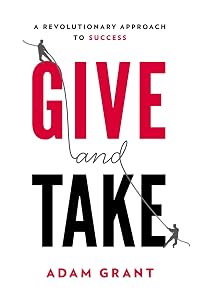
Give and Take: Why Helping Others Drives Our Success
by Adam M. Grant
On This Page
Description
A groundbreaking look at why our interactions with others hold the key to success, from the bestselling author of Think Again and OriginalsFor generations, we have focused on the individual drivers of success: passion, hard work, talent, and luck. But in today’s dramatically reconfigured world, success is increasingly dependent on how we interact with others. In Give and Take, Adam Grant, an award-winning researcher and Wharton’s highest-rated professor, examines the surprising show more forces that shape why some people rise to the top of the success ladder while others sink to the bottom. Praised by social scientists, business theorists, and corporate leaders, Give and Take opens up an approach to work, interactions, and productivity that is nothing short of revolutionary. show less
Tags
Recommendations




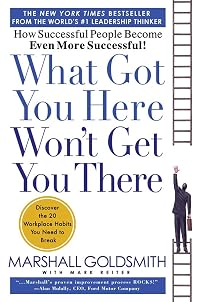
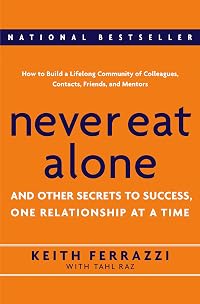
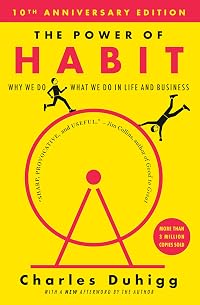
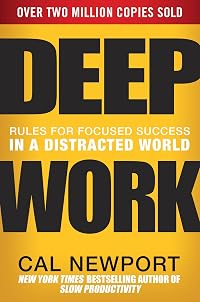








Member Reviews
Summary: Proposes that many of the most successful people are givers who have learned how to give without being doormats and without expectation of return and explores why such giving is so powerful.
It is common to think that robust success in any field requires a "winner take all and devil take the hindmost" approach that zealously pursues one's own interests. Psychologist Adam Grant's research has led him to a very different conclusion. For one thing, he identifies three styles of relationship styles: givers whose predominant approach is giving without expectation of return, takers who tend to get far more than they give, and matchers, who balance giving and taking. Not surprisingly, he found out that the givers were the least show more successful. The surprise was that those who were most successful, most productive, were also givers. Takers and matchers fell in between.
This book explores why some givers are so successful, and what distinguishes them from the givers who are not. He begins by distinguishing between givers and takers who are good at looking like givers. The contrast he offers is between Ken Lay, who presided over the demise of Enron, who seemed to do favors for the rich and powerful but built a company that served his interests and was focused around him, and Adam Rifkin, a shy Silicon Valley entrepreneur with over 3000 LinkedIn connections, and the most connections of anyone to those on Forbes' most powerful people list. Both were networkers, but the difference was that Rifkin gave far more than he received, and without expectation of return. It is from Rifkin that we learn about the 5-minute rule that he zealously pursued: “You should be willing to do something that will take you five minutes or less for anybody.” Rifkin also teaches us the practice of not writing off our "dormant" networks, the people we once knew.
Givers are good collaborators. Grant profiles George Meyer, a comedy writer whose impact far exceeded the number of credits he received on The Simpsons. Meyer would often generate ideas and give them to others, and elevated the whole team of writers, contributing to the long-running success of the show. Perhaps his most famous contribution is "meh"--a new word for boredom or apathy, a contribution he didn't even remember until other writers jogged his memory! Again, Grant offers a contrast, this time with Frank Lloyd Wright, the architect, whose least successful period was when he worked alone, and yet who hogged credit from his apprentices.
Givers look for potential in people and create self-fulfilling prophecies, often recognizing diamonds in the rough. At the same time, when things don't work out, their identity is not tied up in the decisions in the same way it is for matchers or takers. They more quickly help people move on when they need to.
Givers learn the power of powerless communication. Instead of trying to win their way by wowing others, they take more modest approaches that give others the space to come to the conclusion one hopes they will come to, often by questions or more tentative approaches.
The last part of the book focuses on the distinction between unsuccessful and successful givers. Successful givers figure out how not to burn out. They learn to be "otherish" givers rather than selfless. They find ways to give to causes they care about, and then end up giving more. Grant talks about the chunking principle--that giving works best when done in chunks rather than sprinkled through one's schedule. Givers who devote at least 100 hours over a year to their cause find more satisfaction. Effective givers also learn to identify and focus their giving efforts on other givers. As they lead organizations, they foster cultures of giving by their own active giving, by encouraging a "pay it forward" attitude. In these situations, even matchers and takers learn how to act like givers, further enriching the organization. He features organizations that set up "reciprocity rings" like Freecycle. Grant concludes the book with a list of "actions for impact."
This was a fascinating and challenging book for me to read from my faith perspective as a Christian. My faith is grounded in the extravagant love of a giving God who even gives his Son for humanity's redemption. It leads to an ethic of grace, of generous giving without expectation of return, of forgiveness without payback. Grant's book, without referencing faith, raises the question: am I a giver, taker, or matcher? Also without referencing faith, he offers evidence that giving is the ground of healthy and flourishing relationships and organizational cultures, defying the apparent common sense of a cutthroat ethic. Most of all, his diverse selection of examples suggest that this is not exclusive to the non-profit world, but rather touches on something that is fundamental to the better angels of our nature.
I also like the challenge to actively give. I think I'm going to start with Adam Rifkin's five minute rule. It actually sounds kind of fun to see where that will lead! show less
It is common to think that robust success in any field requires a "winner take all and devil take the hindmost" approach that zealously pursues one's own interests. Psychologist Adam Grant's research has led him to a very different conclusion. For one thing, he identifies three styles of relationship styles: givers whose predominant approach is giving without expectation of return, takers who tend to get far more than they give, and matchers, who balance giving and taking. Not surprisingly, he found out that the givers were the least show more successful. The surprise was that those who were most successful, most productive, were also givers. Takers and matchers fell in between.
This book explores why some givers are so successful, and what distinguishes them from the givers who are not. He begins by distinguishing between givers and takers who are good at looking like givers. The contrast he offers is between Ken Lay, who presided over the demise of Enron, who seemed to do favors for the rich and powerful but built a company that served his interests and was focused around him, and Adam Rifkin, a shy Silicon Valley entrepreneur with over 3000 LinkedIn connections, and the most connections of anyone to those on Forbes' most powerful people list. Both were networkers, but the difference was that Rifkin gave far more than he received, and without expectation of return. It is from Rifkin that we learn about the 5-minute rule that he zealously pursued: “You should be willing to do something that will take you five minutes or less for anybody.” Rifkin also teaches us the practice of not writing off our "dormant" networks, the people we once knew.
Givers are good collaborators. Grant profiles George Meyer, a comedy writer whose impact far exceeded the number of credits he received on The Simpsons. Meyer would often generate ideas and give them to others, and elevated the whole team of writers, contributing to the long-running success of the show. Perhaps his most famous contribution is "meh"--a new word for boredom or apathy, a contribution he didn't even remember until other writers jogged his memory! Again, Grant offers a contrast, this time with Frank Lloyd Wright, the architect, whose least successful period was when he worked alone, and yet who hogged credit from his apprentices.
Givers look for potential in people and create self-fulfilling prophecies, often recognizing diamonds in the rough. At the same time, when things don't work out, their identity is not tied up in the decisions in the same way it is for matchers or takers. They more quickly help people move on when they need to.
Givers learn the power of powerless communication. Instead of trying to win their way by wowing others, they take more modest approaches that give others the space to come to the conclusion one hopes they will come to, often by questions or more tentative approaches.
The last part of the book focuses on the distinction between unsuccessful and successful givers. Successful givers figure out how not to burn out. They learn to be "otherish" givers rather than selfless. They find ways to give to causes they care about, and then end up giving more. Grant talks about the chunking principle--that giving works best when done in chunks rather than sprinkled through one's schedule. Givers who devote at least 100 hours over a year to their cause find more satisfaction. Effective givers also learn to identify and focus their giving efforts on other givers. As they lead organizations, they foster cultures of giving by their own active giving, by encouraging a "pay it forward" attitude. In these situations, even matchers and takers learn how to act like givers, further enriching the organization. He features organizations that set up "reciprocity rings" like Freecycle. Grant concludes the book with a list of "actions for impact."
This was a fascinating and challenging book for me to read from my faith perspective as a Christian. My faith is grounded in the extravagant love of a giving God who even gives his Son for humanity's redemption. It leads to an ethic of grace, of generous giving without expectation of return, of forgiveness without payback. Grant's book, without referencing faith, raises the question: am I a giver, taker, or matcher? Also without referencing faith, he offers evidence that giving is the ground of healthy and flourishing relationships and organizational cultures, defying the apparent common sense of a cutthroat ethic. Most of all, his diverse selection of examples suggest that this is not exclusive to the non-profit world, but rather touches on something that is fundamental to the better angels of our nature.
I also like the challenge to actively give. I think I'm going to start with Adam Rifkin's five minute rule. It actually sounds kind of fun to see where that will lead! show less
I hope you don't get too sick of me posting reviews of books I had to complete for my course. I really did enjoy this one a lot. It had a lot of interesting facts and data/examples to show why helping others leads to win/win. It's hard out there if you are a manager and you have employees or bosses that are set to win and they want to make sure that you lose. Heck, I have to deal with agency officials at times that don't want to concede a point since that will be saying (to them at least) that they lost.
"Give and Take" starts off with Grant laying out a story about an investor and a man who had a great idea for a company (the investor's name was Hornik and the man who pitched an idea to him was named Shader). What I thought was show more interesting was that Shader felt uneasy since he thought that Hornik in a word was too nice. Hornik suggested he seek out other people and take his time. And Shader was worried that Hornik would spend too much time encouraging him instead of challenging him. Yes in the business world this is apparently bad.
From there, Grant breaks the rest of the book down into "takers" and "givers." I found out through my course work and feedback survey and other surveys I took am a giver. I am also a border crosser (means I go back and forth between groups and am a go to person to do that) and surprise surprise I am also more likely to hit burnout. And in fact my one instructor read through all of my surveys and gave me feedback that I am close now. This book really was eye opening to me that you can be a "giver" and not be taken advantage of and not be seen as weak. That you want to approach ever negotiation as a win-win and not do your level best to wreck your opponent. You do have to be protective of yourself though and not "give" too much of yourself away to others.
I loved reading that yes "givers" are more likely to land at the bottom of the success leaders, but also they are more likely to land at the top as well. I think it's all about how people perceive givers as the story above shows. In the end I loved that Shader went back to Hornik after realizing the other guy who was a "taker" was ultimately not who he wanted to work with.
Grant also provides examples of one of the biggest takers out there: Kenneth Lay. What's shocking is how many people knew what Lay was doing, but were talked down to and were not allowed to speak up. Lay was a classic taker and Grant shows numerous ways that he was first and foremost thinking only of himself.
One of my favorite facts in this book though is Grant showcases a famous lawyer named Dave Walton who used to stutter And he points out other famous people who used to stutter as well such as GE CEO Jack Welch, VP Joe Biden, singer Carly Simon, 20/20 anchor John Stossel and actor James Earl Jones. I used to stutter as a child and had a great speech therapist. I eventually learned to speak without a stutter, and now all of my colleagues don't believe me when I mention that I used to have one. I think that they just see the person before them, not the one who had to jump a lot of hurdles to get to where she is now.
So all in all, a great book that I think would enhance any class on leadership. show less
"Give and Take" starts off with Grant laying out a story about an investor and a man who had a great idea for a company (the investor's name was Hornik and the man who pitched an idea to him was named Shader). What I thought was show more interesting was that Shader felt uneasy since he thought that Hornik in a word was too nice. Hornik suggested he seek out other people and take his time. And Shader was worried that Hornik would spend too much time encouraging him instead of challenging him. Yes in the business world this is apparently bad.
From there, Grant breaks the rest of the book down into "takers" and "givers." I found out through my course work and feedback survey and other surveys I took am a giver. I am also a border crosser (means I go back and forth between groups and am a go to person to do that) and surprise surprise I am also more likely to hit burnout. And in fact my one instructor read through all of my surveys and gave me feedback that I am close now. This book really was eye opening to me that you can be a "giver" and not be taken advantage of and not be seen as weak. That you want to approach ever negotiation as a win-win and not do your level best to wreck your opponent. You do have to be protective of yourself though and not "give" too much of yourself away to others.
I loved reading that yes "givers" are more likely to land at the bottom of the success leaders, but also they are more likely to land at the top as well. I think it's all about how people perceive givers as the story above shows. In the end I loved that Shader went back to Hornik after realizing the other guy who was a "taker" was ultimately not who he wanted to work with.
Grant also provides examples of one of the biggest takers out there: Kenneth Lay. What's shocking is how many people knew what Lay was doing, but were talked down to and were not allowed to speak up. Lay was a classic taker and Grant shows numerous ways that he was first and foremost thinking only of himself.
One of my favorite facts in this book though is Grant showcases a famous lawyer named Dave Walton who used to stutter And he points out other famous people who used to stutter as well such as GE CEO Jack Welch, VP Joe Biden, singer Carly Simon, 20/20 anchor John Stossel and actor James Earl Jones. I used to stutter as a child and had a great speech therapist. I eventually learned to speak without a stutter, and now all of my colleagues don't believe me when I mention that I used to have one. I think that they just see the person before them, not the one who had to jump a lot of hurdles to get to where she is now.
So all in all, a great book that I think would enhance any class on leadership. show less
I loved this book. You might wonder why a former business person turned full time writer picked it up. It came recommended by an old friend, and a cursory glance told me I'd like the message. The recommendation was right; I was right. "Business" these days is not all about buying, selling, and making a buck. It encompasses all of our interactions with the rest of the world. I expected the book to tell me that givers are destined to occupy the bottom rung of the food chain. I was delighted to learn that was not true. This book helped me feel better about wanting to support others by giving back, but also opened my eyes to the fact that some people give, some people take, and success isn't necessarily earned through reciprocity. I have a show more new outlook on networking (it's not about what someone else can do for you, it's about what you can do for someone else), and also on knowing when to say yes and when to say no. Highly recommended. (Thanks, Ted!) show less
Don't ignore this book, because even though it seems like it follows a lot of business/management book clichés, it's actually insightful and seems like it could be very useful in your career or personal life. It's structured like every other "improve your business performance in ten easy steps!!!" clone, but stick with it.
Danger signs:
- An extremely broad subject ("giver" personalities" vs "matchers" or "takers", who aren't as generous to other people or are downright parasitical)
- Cutesy chapter titles (goofy animal analogies like "The Peacock and the Panda", pseudo-paradoxes like "The Power of Powerless Communication", or bad puns like "Chump Change", which is about not being a doormat)
- Seemingly superficial rapid-fire transitions show more between evidence for the author's position (for example, chapter 3, which is about the power of collaboration, jumps from comedy to architecture to coronary bypass surgery to equity analysts to the polio vaccine to temperature perception experiments to spinal taps to wedding registries)
- Inclusion of possibly irrelevant historical analogies (is the trajectory of Abraham Lincoln's political career really a useful analogy for modern workplace interactions?)
And yet, Grant makes it all work. The book is one long paean to how important it is to be helpful to other people, and how even though it's easy to get trapped in thinking of life as an endless series of zero-sum games where someone else's gain is your loss, you should keep on trying to invest in your fellow coworkers/clients/human beings. Because even though sometimes you'll get burned by enabling people who consume more emotional/financial/temporal resources than they give you, in the long run you'll probably be a happier and more successful person as long as you can successfully balance your own needs with the well-being of the larger groups you're embedded within. Grant has lots of good case studies showing that while being helpful can sometimes backfire on you, such as if you're pathologically ignoring your own needs , helping people generates such positive mutual returns that, much like the evolutionary strategy of Generous Tit-for-Tat, as long as you look on the bright side of human nature you'll be surprised at how far you can go.
It's completely fair to be skeptical of such Pollyanna-ish positivity, yet I feel like Grant is correct to advocate for trusting in other people. While I would love to have seen some more longitudinal evidence (i.e., if givers come to dominate a company, are they vulnerable to an eventual influx of takers in the same way that an ecosystem is vulnerable to an influx of predators?), my experience in my personal and professional career has convinced me that successful groups are the ones that have built up interpersonal trust through exactly the mechanisms that he discusses here. E.O. Wilson, who is quoted here, once had a good line that "Within a group, selfish individuals always win. But in contests between groups, groups of altruists always beat groups of selfish individuals." Yet that actually understates the importance of altruism, because though givers can be exploited, the most successful people in groups tend to be the ones that have built up strong relationships through their assistance and advice. Context is everything when it comes to talking about human behavior, but even though it seems facile to link Teach For America and venture capital firms, Grant is very persuasive when he talks about the inspirational effects of helping people.
No business book would be complete without action items. Here are his end-of-the-book bullet points:
- Test your giver quotient by visiting his website to figure out if you're a giver, matcher, or taker
- Run a reciprocity ring that encourages helpful interactions
- Help other people craft their jobs
- Start a love machine (meaning try to institutionalize helpful feedback mechanisms in your organizations)
- Embrace the five-minute favor, because they cost you very little time but can be very helpful to the recipients
- Practice powerless communication, and take advantage of the psychological loophole that makes people more likely to listen to you when they think you're not trying to lawyer them into something
- Join a community of givers, and get inspired by them
- Launch a personal generosity experiment
- Seek help more often, because people enjoy doing favors for others more than they enjoy having favors done for them show less
Danger signs:
- An extremely broad subject ("giver" personalities" vs "matchers" or "takers", who aren't as generous to other people or are downright parasitical)
- Cutesy chapter titles (goofy animal analogies like "The Peacock and the Panda", pseudo-paradoxes like "The Power of Powerless Communication", or bad puns like "Chump Change", which is about not being a doormat)
- Seemingly superficial rapid-fire transitions show more between evidence for the author's position (for example, chapter 3, which is about the power of collaboration, jumps from comedy to architecture to coronary bypass surgery to equity analysts to the polio vaccine to temperature perception experiments to spinal taps to wedding registries)
- Inclusion of possibly irrelevant historical analogies (is the trajectory of Abraham Lincoln's political career really a useful analogy for modern workplace interactions?)
And yet, Grant makes it all work. The book is one long paean to how important it is to be helpful to other people, and how even though it's easy to get trapped in thinking of life as an endless series of zero-sum games where someone else's gain is your loss, you should keep on trying to invest in your fellow coworkers/clients/human beings. Because even though sometimes you'll get burned by enabling people who consume more emotional/financial/temporal resources than they give you, in the long run you'll probably be a happier and more successful person as long as you can successfully balance your own needs with the well-being of the larger groups you're embedded within. Grant has lots of good case studies showing that while being helpful can sometimes backfire on you, such as if you're pathologically ignoring your own needs , helping people generates such positive mutual returns that, much like the evolutionary strategy of Generous Tit-for-Tat, as long as you look on the bright side of human nature you'll be surprised at how far you can go.
It's completely fair to be skeptical of such Pollyanna-ish positivity, yet I feel like Grant is correct to advocate for trusting in other people. While I would love to have seen some more longitudinal evidence (i.e., if givers come to dominate a company, are they vulnerable to an eventual influx of takers in the same way that an ecosystem is vulnerable to an influx of predators?), my experience in my personal and professional career has convinced me that successful groups are the ones that have built up interpersonal trust through exactly the mechanisms that he discusses here. E.O. Wilson, who is quoted here, once had a good line that "Within a group, selfish individuals always win. But in contests between groups, groups of altruists always beat groups of selfish individuals." Yet that actually understates the importance of altruism, because though givers can be exploited, the most successful people in groups tend to be the ones that have built up strong relationships through their assistance and advice. Context is everything when it comes to talking about human behavior, but even though it seems facile to link Teach For America and venture capital firms, Grant is very persuasive when he talks about the inspirational effects of helping people.
No business book would be complete without action items. Here are his end-of-the-book bullet points:
- Test your giver quotient by visiting his website to figure out if you're a giver, matcher, or taker
- Run a reciprocity ring that encourages helpful interactions
- Help other people craft their jobs
- Start a love machine (meaning try to institutionalize helpful feedback mechanisms in your organizations)
- Embrace the five-minute favor, because they cost you very little time but can be very helpful to the recipients
- Practice powerless communication, and take advantage of the psychological loophole that makes people more likely to listen to you when they think you're not trying to lawyer them into something
- Join a community of givers, and get inspired by them
- Launch a personal generosity experiment
- Seek help more often, because people enjoy doing favors for others more than they enjoy having favors done for them show less
A lovely antidote to any cynicism you may have about who succeeds in business and life, and maybe a gentle nudge for anyone most concerned with getting what they can to give a little, too.
Grant is a business professor who has studied the career and life trajectories of people he labels givers, takers, matchers and fakers. (Fakers being those people who have taker values, but try to seem like givers to higher-ups and powerful people to create good impressions and get the rewards of being generous without the costs.) I was surprised to learn that while givers did indeed congregate at the bottom of the career and salary ladders, they also congregated at the top, basically forming a sandwich around the takers and matchers in the middle. show more What explains this counter-intuitive result?
Givers, when they manage to give a lot without letting themselves get burned out or taken advantage of, create large networks of friends and allies and excellent reputations that work to their long-term advantage, whereas takers--even when they manage to create short-term giver reputations--end up with their selfish actions coming back later to ruin their reputations and destroy their networks and relationships.
Give and Take is another black eye for the Greed Is Good philosophy, and the more the better in my opinion. Grant solidly establishes that not only is Greed bad for society, greedy workers are bad for the companies they work for, greedy leaders lead their teams to disaster, and greedy people end up shooting themselves in the foot over the long term. It's better to give, in every way that can be measured, so long as you don't let yourself be taken advantage of--and he's got plenty of research establishing how successful givers manage to do just that.
Regardless of whether or not you personally care about who is more successful (givers vs. takers vs. matchers), I highly recommend this book to help restore your faith in human nature and potential and the futures we are capable of creating. show less
Grant is a business professor who has studied the career and life trajectories of people he labels givers, takers, matchers and fakers. (Fakers being those people who have taker values, but try to seem like givers to higher-ups and powerful people to create good impressions and get the rewards of being generous without the costs.) I was surprised to learn that while givers did indeed congregate at the bottom of the career and salary ladders, they also congregated at the top, basically forming a sandwich around the takers and matchers in the middle. show more What explains this counter-intuitive result?
Givers, when they manage to give a lot without letting themselves get burned out or taken advantage of, create large networks of friends and allies and excellent reputations that work to their long-term advantage, whereas takers--even when they manage to create short-term giver reputations--end up with their selfish actions coming back later to ruin their reputations and destroy their networks and relationships.
Give and Take is another black eye for the Greed Is Good philosophy, and the more the better in my opinion. Grant solidly establishes that not only is Greed bad for society, greedy workers are bad for the companies they work for, greedy leaders lead their teams to disaster, and greedy people end up shooting themselves in the foot over the long term. It's better to give, in every way that can be measured, so long as you don't let yourself be taken advantage of--and he's got plenty of research establishing how successful givers manage to do just that.
Regardless of whether or not you personally care about who is more successful (givers vs. takers vs. matchers), I highly recommend this book to help restore your faith in human nature and potential and the futures we are capable of creating. show less
I hope you don't get too sick of me posting reviews of books I had to complete for my course. I really did enjoy this one a lot. It had a lot of interesting facts and data/examples to show why helping others leads to win/win. It's hard out there if you are a manager and you have employees or bosses that are set to win and they want to make sure that you lose. Heck, I have to deal with agency officials at times that don't want to concede a point since that will be saying (to them at least) that they lost.
"Give and Take" starts off with Grant laying out a story about an investor and a man who had a great idea for a company (the investor's name was Hornik and the man who pitched an idea to him was named Shader). What I thought was show more interesting was that Shader felt uneasy since he thought that Hornik in a word was too nice. Hornik suggested he seek out other people and take his time. And Shader was worried that Hornik would spend too much time encouraging him instead of challenging him. Yes in the business world this is apparently bad.
From there, Grant breaks the rest of the book down into "takers" and "givers." I found out through my course work and feedback survey and other surveys I took am a giver. I am also a border crosser (means I go back and forth between groups and am a go to person to do that) and surprise surprise I am also more likely to hit burnout. And in fact my one instructor read through all of my surveys and gave me feedback that I am close now. This book really was eye opening to me that you can be a "giver" and not be taken advantage of and not be seen as weak. That you want to approach ever negotiation as a win-win and not do your level best to wreck your opponent. You do have to be protective of yourself though and not "give" too much of yourself away to others.
I loved reading that yes "givers" are more likely to land at the bottom of the success leaders, but also they are more likely to land at the top as well. I think it's all about how people perceive givers as the story above shows. In the end I loved that Shader went back to Hornik after realizing the other guy who was a "taker" was ultimately not who he wanted to work with.
Grant also provides examples of one of the biggest takers out there: Kenneth Lay. What's shocking is how many people knew what Lay was doing, but were talked down to and were not allowed to speak up. Lay was a classic taker and Grant shows numerous ways that he was first and foremost thinking only of himself.
One of my favorite facts in this book though is Grant showcases a famous lawyer named Dave Walton who used to stutter And he points out other famous people who used to stutter as well such as GE CEO Jack Welch, VP Joe Biden, singer Carly Simon, 20/20 anchor John Stossel and actor James Earl Jones. I used to stutter as a child and had a great speech therapist. I eventually learned to speak without a stutter, and now all of my colleagues don't believe me when I mention that I used to have one. I think that they just see the person before them, not the one who had to jump a lot of hurdles to get to where she is now.
So all in all, a great book that I think would enhance any class on leadership. show less
"Give and Take" starts off with Grant laying out a story about an investor and a man who had a great idea for a company (the investor's name was Hornik and the man who pitched an idea to him was named Shader). What I thought was show more interesting was that Shader felt uneasy since he thought that Hornik in a word was too nice. Hornik suggested he seek out other people and take his time. And Shader was worried that Hornik would spend too much time encouraging him instead of challenging him. Yes in the business world this is apparently bad.
From there, Grant breaks the rest of the book down into "takers" and "givers." I found out through my course work and feedback survey and other surveys I took am a giver. I am also a border crosser (means I go back and forth between groups and am a go to person to do that) and surprise surprise I am also more likely to hit burnout. And in fact my one instructor read through all of my surveys and gave me feedback that I am close now. This book really was eye opening to me that you can be a "giver" and not be taken advantage of and not be seen as weak. That you want to approach ever negotiation as a win-win and not do your level best to wreck your opponent. You do have to be protective of yourself though and not "give" too much of yourself away to others.
I loved reading that yes "givers" are more likely to land at the bottom of the success leaders, but also they are more likely to land at the top as well. I think it's all about how people perceive givers as the story above shows. In the end I loved that Shader went back to Hornik after realizing the other guy who was a "taker" was ultimately not who he wanted to work with.
Grant also provides examples of one of the biggest takers out there: Kenneth Lay. What's shocking is how many people knew what Lay was doing, but were talked down to and were not allowed to speak up. Lay was a classic taker and Grant shows numerous ways that he was first and foremost thinking only of himself.
One of my favorite facts in this book though is Grant showcases a famous lawyer named Dave Walton who used to stutter And he points out other famous people who used to stutter as well such as GE CEO Jack Welch, VP Joe Biden, singer Carly Simon, 20/20 anchor John Stossel and actor James Earl Jones. I used to stutter as a child and had a great speech therapist. I eventually learned to speak without a stutter, and now all of my colleagues don't believe me when I mention that I used to have one. I think that they just see the person before them, not the one who had to jump a lot of hurdles to get to where she is now.
So all in all, a great book that I think would enhance any class on leadership. show less
American business is supposed to be a tough, ultra-competitive arena where only the strong survive, and nice guys get trampled, right? According to this book, that is not totally true.
This book looks at three different kinds of people. Takers claim as much value for themselves as possible. If, for instance, they are the CEO, they are the sort of person who has a full page picture of themselves in the company's annual report, where most other CEO's will have a much smaller picture in their annual report. Takers are very deferential to superiors, and very mean and inconsiderate to subordinates. They use words like I, me and mine, as if they single-handedly caused their company to have a profitable year.
Matchers aim to trade value evenly, show more as if they want to keep their spiritual inbox and outbox equal. Givers contribute to others without expecting anything in return.
The giving could involve something like arranging a business introduction, or mentoring a younger employee. There is a fine line between being a giver and a doormat; a giver must also make sure that their business duties are not being ignored. In the short term, takers may do better than givers, but, in the long term, a giver's networking, collaboration and leadership skills will come to the forefront. A giver uses words like we, us and ours.
How can a person increase their giving capacity? Take a test to see just how much of a giver you really are. Start a reciprocity ring at work. A group of employees meet weekly to make requests of each other. The intention is that everyone do what they can to fulfill those requests. It may seem a bit silly, but someone in your circle may know someone who knows someone who can fulfill your request. Publicly recognize givers at work. If you would rather give on your own, start a Personal Generosity Experiment.
This is a very thought-provoking book, which shows that nice people can finish first. The average CEO, or division head, could do a lot worse than read this book, and start to implement its recommendations. show less
This book looks at three different kinds of people. Takers claim as much value for themselves as possible. If, for instance, they are the CEO, they are the sort of person who has a full page picture of themselves in the company's annual report, where most other CEO's will have a much smaller picture in their annual report. Takers are very deferential to superiors, and very mean and inconsiderate to subordinates. They use words like I, me and mine, as if they single-handedly caused their company to have a profitable year.
Matchers aim to trade value evenly, show more as if they want to keep their spiritual inbox and outbox equal. Givers contribute to others without expecting anything in return.
The giving could involve something like arranging a business introduction, or mentoring a younger employee. There is a fine line between being a giver and a doormat; a giver must also make sure that their business duties are not being ignored. In the short term, takers may do better than givers, but, in the long term, a giver's networking, collaboration and leadership skills will come to the forefront. A giver uses words like we, us and ours.
How can a person increase their giving capacity? Take a test to see just how much of a giver you really are. Start a reciprocity ring at work. A group of employees meet weekly to make requests of each other. The intention is that everyone do what they can to fulfill those requests. It may seem a bit silly, but someone in your circle may know someone who knows someone who can fulfill your request. Publicly recognize givers at work. If you would rather give on your own, start a Personal Generosity Experiment.
This is a very thought-provoking book, which shows that nice people can finish first. The average CEO, or division head, could do a lot worse than read this book, and start to implement its recommendations. show less
Members
- Recently Added By
Lists

Top Five Books of 2014
1,064 works; 397 members

Non-Fiction Worth Reading
1,016 works; 258 members

Book Club List
8 works; 1 member

Five star books
1,767 works; 110 members

Books & Films Referenced by Cal Newport's Deep Work
43 works; 1 member
Author Information

10 Works 7,880 Members
Awards and Honors
Common Knowledge
- Canonical title*
- Geben und Nehmen: Erfolgreich sein zum Vorteil aller
- Original title
- Give and Take
- Dedication
- In memory of my friend
JEFF ZASLOW
who lived his life as a role model for the principles in this book. - First words
- On a sunny Saturday afternoon in Silicon Valley, two proud fathers stood on the sidelines of a soccer field.
- Last words
- (Click to show. Warning: May contain spoilers.)'...Help generously and without thought of return; but also ask often for what you need."
*Some information comes from Common Knowledge in other languages. Click "Edit" for more information.
Classifications
Statistics
- Members
- 1,555
- Popularity
- 14,742
- Reviews
- 29
- Rating
- (4.00)
- Languages
- 14 — Chinese, Czech, Dutch, English, French, German, Hungarian, Italian, Korean, Polish, Russian, Spanish, Swedish, Portuguese (Brazil)
- Media
- Paper, Audiobook, Ebook
- ISBNs
- 30
- UPCs
- 1
- ASINs
- 10