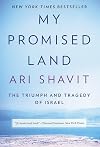
My Promised Land: The Triumph and Tragedy of Israel
by Ari Shavit
On This Page
Description
NEW YORK TIMES BESTSELLER • NAMED ONE OF THE BEST BOOKS OF THE YEAR BY THE NEW YORK TIMES BOOK REVIEW AND THE ECONOMISTWinner of the Natan Book Award, the National Jewish Book Award, and the Anisfield-Wolf Book Award
An authoritative and deeply personal narrative history of the State of Israel, by one of the most influential journalists writing about the Middle East today
Not since Thomas L. Friedman’s groundbreaking From Beirut to Jerusalem has a book captured the essence and the show more beating heart of the Middle East as keenly and dynamically as My Promised Land. Facing unprecedented internal and external pressures, Israel today is at a moment of existential crisis. Ari Shavit draws on interviews, historical documents, private diaries, and letters, as well as his own family’s story, illuminating the pivotal moments of the Zionist century to tell a riveting narrative that is larger than the sum of its parts: both personal and national, both deeply human and of profound historical dimension.
We meet Shavit’s great-grandfather, a British Zionist who in 1897 visited the Holy Land on a Thomas Cook tour and understood that it was the way of the future for his people; the idealist young farmer who bought land from his Arab neighbor in the 1920s to grow the Jaffa oranges that would create Palestine’s booming economy; the visionary youth group leader who, in the 1940s, transformed Masada from the neglected ruins of an extremist sect into a powerful symbol for Zionism; the Palestinian who as a young man in 1948 was driven with his family from his home during the expulsion from Lydda; the immigrant orphans of Europe’s Holocaust, who took on menial work and focused on raising their children to become the leaders of the new state; the pragmatic engineer who was instrumental in developing Israel’s nuclear program in the 1960s, in the only interview he ever gave; the zealous religious Zionists who started the settler movement in the 1970s; the dot-com entrepreneurs and young men and women behind Tel-Aviv’s booming club scene; and today’s architects of Israel’s foreign policy with Iran, whose nuclear threat looms ominously over the tiny country.
As it examines the complexities and contradictions of the Israeli condition, My Promised Land asks difficult but important questions: Why did Israel come to be? How did it come to be? Can Israel survive? Culminating with an analysis of the issues and threats that Israel is currently facing, My Promised Land uses the defining events of the past to shed new light on the present. The result is a landmark portrait of a small, vibrant country living on the edge, whose identity and presence play a crucial role in today’s global political landscape.
Praise for My Promised Land
“This book will sweep you up in its narrative force and not let go of you until it is done. [Shavit’s] accomplishment is so unlikely, so total . . . that it makes you believe anything is possible, even, God help us, peace in the Middle East.”—Simon Schama, Financial Times
“[A] must-read book.”—Thomas L. Friedman, The New York Times
“Important and powerful . . . the least tendentious book about Israel I have ever read.”—Leon Wieseltier, The New York Times Book Review
“Spellbinding . . . Shavit’s prophetic voice carries lessons that all sides need to hear.”—The.... show less
Tags
Recommendations
















































Member Recommendations

Member Reviews
Israeli journalist Ari Shavit's My Promised Land is not an academic work of history but a deeply personal portrait spanning the country's history from its roots in the late 19th century until the book's publication date in 2013. It is based upon hundreds of interviews, the author's life experience, and research. Each chapter is dedicated, quite literally, to a different "chapter" or aspect of Israeli history. Taken together the reader really does learn a lot about the country's history, character, struggles, victories, defeats, successes, and failures. Shavit is often critical of Israel and yet he deeply loves the country too. A decade ago he acknowledged Israel's fragile position and threats and portended an event like October 7, 2023. show more For me the chapters that worked the best were those that focused on a particular year and place such as the early chapters "At First Sight, 1897", "Into the Valley, 1921", and "Orange Grove, 1936". Each of these portraits attempts to use a specific example to paint a broader picture of the nation. Some chapters, like "Gaza Beach, 1991" and "Sex, Drugs, and the Israel Condition, 2000" are fine in their own right, but are earlier articles written for Haaretz and repurposed for this book and feel a bit more amorphous. The final chapter, "By the Sea" attempts to pull the many threads together as Shavit retraces the path of his great-grandfather, Herbert Bentich, who visited Israel from England in 1897 and later emigrated there. Shavit's criticisms of the policies, positions, and shortcomings of some of his interviewees strengthened his thesis of some of Israel's political and social failings but also came across as somewhat cocky and all-knowing, or at least Monday morning quarterbacking. But as much as he criticizes Israel, he is deeply in love with his home country and sees it as a historical necessity, no matter its failings. He describes Israelis admirably with words such as vitality, creativity, sexiness, entrepreneurship, warmth, directness, openness, passion, and frenzied. His book is both a scathing critique and a love poem. show less
Shavit begins what he hopes is an international dialogue with this book. Such a dialogue has been long in coming. Perhaps the time is ripe. He can see that the Israeli position in the Middle East is dangerous and endangered. He uses interviews to illustrate various events that have shaped the nation and its now shifting worldview.
Shavit shows us how both the right and the left in Israel today have flaws in their grasp of where Israel is in relation to the Palestinians, the Arab world, indeed, even America. He is blunt, bruising, argumentative but illuminating as he cuts away at justifications of former and would-be leaders. The underpinnings of their stance are revealed in this way.
We know where Shavit stands:
The following passage was one of the most revealing and enlightening to me for it gave me a perspective I had not considered:
Shavit seems to mourn, to regret, that the folks who were instrumental in setting up and continuing the success of the Israeli state seemed not to know what they were doing in terms of outcomes. The folks he is talking about were big, big in every way: in society, in influence, in action, and that they should have taken more care to think how their actions would affect the present and the future of Israel (and I would add, the world). But they were only men. Only human. They did the best they could at what they were best at. Most of us would be proud to have that written on our gravestones. But we now have to ask ourselves, “is this the best we can do?” The legacy of these folks is unacceptable.
Shavit begins with the historical underpinnings of the state of Israel, but by the end he admits the “binding historical narrative has fallen apart.” One almost wishes it were possible to begin again, starting back when land was actually purchased rather than stolen. Shavit acknowledges it is difficult to ignore the truth of displaced Palestinians. “What I see and hear here is an entire population of ours…imprisoning am entire population of theirs. This is a phenomenon without parallel in the West. This is systematic brutality no democracy can endure.” Whatever else Israel has succeeded in accomplishing must be paired with this bald fact.
But many in Israel are willing to live with this. Even Shavit claims it gives his people the edge (“quick, vital, creative”) that living under the “looming shadow of a smoking volcano” brings. Some “harbor in their heart a great belief in a great war, which will be their only salvation.” Well. (pause) Do I need to add that this does not seem much of a solution?
It was difficult for me to finish reading this book. My emotions roiled as I read the bulk of Shavit’s narrative, and at some point I exclaimed, “thank god for Shavit,” for he is willing to struggle with hard truths and face them like a leader. But I felt I was finished before I got to Shavit’s concluding chapter.
This exhaustive (and exhausting) catalog of personal histories, slights and wrongs, achievements and successes, thoughts and second thoughts about who really deserves to be in Israel and Palestine culminated in me wanting to say “just do it.” Now that everyone has had their say and we understand all…just fix it.
The contrast between Israel’s self-congratulation on one hand (we have so much talent, wealth, ambition, vision) and despair on the other (we have no friends, and so many enemies, we must actually bomb sovereign states to feel safe) is stark. But the state of Israel may be facing what every nation appears to be facing these days: a more divided electorate that hews to less moderate viewpoints, growing ever more radical and less tolerant by the year. While it is possible for me to feel empathy for individuals, it is difficult for me to feel sorry for a nation.
I did read the end of Shavit’s book. He is not optimistic. We all have reason for despair, but real leadership refuses to acknowledge the same boundaries that constrain the rest of us. It seems clear that we all want someone else to do the hard work of compromise and “leading” for us, and we wait for someone else to appear…when we really should all be thinking now, in this age of global warning and divided nations: What have we wrought? show less
Shavit shows us how both the right and the left in Israel today have flaws in their grasp of where Israel is in relation to the Palestinians, the Arab world, indeed, even America. He is blunt, bruising, argumentative but illuminating as he cuts away at justifications of former and would-be leaders. The underpinnings of their stance are revealed in this way.
We know where Shavit stands:
”…the choice is clear:show more
either reject Zionism because of (the expulsion of Palestinians from) Lydda, or accept Zionism along with Lydda. One thing is clear to me: the brigade commander and the military governor were right to get angry at the bleeding-heart Israeli liberals of later years who condemn what they did in Lydda but enjoy the fruits of their deed. I condemn Bulldozer. I reject the sniper. But I will not damn the brigade commander and the military governor and the training group boys. On the contrary. If need be, I’ll stand by the damned. Because I know that if it wasn’t for them, the State of Israel would not have been born. If it wasn’t for them, I would not have been born. They did the dirty, filthy work that enables my people, myself, my daughter, and my sons to live.” (p. 131)
The following passage was one of the most revealing and enlightening to me for it gave me a perspective I had not considered:
”Israel of the 1950s was a state on steroids: more and more people, more and more cities, more and more villages, more and more of everything. But although development was rampant, social gaps were narrow. The government was committed to full employment. There was a genuine effort to provide every person with housing, work, education, and health care. The newborn state was one of the most egalitarian democracies in the world. The Israel of the 1950s was a just social democracy. But it was also a nation of practicality that combined modernity, nationalism, and development in an aggressive manner. There was no time, and there was no peace of mind, and therefore there was no human sensitivity. As the state became everything, the individual was marginalized. As it marched toward the future, Israel erased the past. There was no place for the previous landscape, no place for previous identities. Everything was done en masse. Everything was imposed from above. There was an artificial quality to everything. Zionism was not an organic process anymore but a futuristic coup. For its outstanding economic, social, and engineering achievements, the new Israel paid a dear moral price. There was no notion of human rights, civil rights, due process, or laissez-faire. There was no equality for the Palestinian minority and no compassion for the Palestinian refugees. There was little respect for the Jewish Diaspora and little empathy for the survivors of the Holocaust. Ben Gurion’s statism and monolithic rule compelled the nation forward.”(p. 151)
Shavit seems to mourn, to regret, that the folks who were instrumental in setting up and continuing the success of the Israeli state seemed not to know what they were doing in terms of outcomes. The folks he is talking about were big, big in every way: in society, in influence, in action, and that they should have taken more care to think how their actions would affect the present and the future of Israel (and I would add, the world). But they were only men. Only human. They did the best they could at what they were best at. Most of us would be proud to have that written on our gravestones. But we now have to ask ourselves, “is this the best we can do?” The legacy of these folks is unacceptable.
Shavit begins with the historical underpinnings of the state of Israel, but by the end he admits the “binding historical narrative has fallen apart.” One almost wishes it were possible to begin again, starting back when land was actually purchased rather than stolen. Shavit acknowledges it is difficult to ignore the truth of displaced Palestinians. “What I see and hear here is an entire population of ours…imprisoning am entire population of theirs. This is a phenomenon without parallel in the West. This is systematic brutality no democracy can endure.” Whatever else Israel has succeeded in accomplishing must be paired with this bald fact.
But many in Israel are willing to live with this. Even Shavit claims it gives his people the edge (“quick, vital, creative”) that living under the “looming shadow of a smoking volcano” brings. Some “harbor in their heart a great belief in a great war, which will be their only salvation.” Well. (pause) Do I need to add that this does not seem much of a solution?
It was difficult for me to finish reading this book. My emotions roiled as I read the bulk of Shavit’s narrative, and at some point I exclaimed, “thank god for Shavit,” for he is willing to struggle with hard truths and face them like a leader. But I felt I was finished before I got to Shavit’s concluding chapter.
This exhaustive (and exhausting) catalog of personal histories, slights and wrongs, achievements and successes, thoughts and second thoughts about who really deserves to be in Israel and Palestine culminated in me wanting to say “just do it.” Now that everyone has had their say and we understand all…just fix it.
The contrast between Israel’s self-congratulation on one hand (we have so much talent, wealth, ambition, vision) and despair on the other (we have no friends, and so many enemies, we must actually bomb sovereign states to feel safe) is stark. But the state of Israel may be facing what every nation appears to be facing these days: a more divided electorate that hews to less moderate viewpoints, growing ever more radical and less tolerant by the year. While it is possible for me to feel empathy for individuals, it is difficult for me to feel sorry for a nation.
I did read the end of Shavit’s book. He is not optimistic. We all have reason for despair, but real leadership refuses to acknowledge the same boundaries that constrain the rest of us. It seems clear that we all want someone else to do the hard work of compromise and “leading” for us, and we wait for someone else to appear…when we really should all be thinking now, in this age of global warning and divided nations: What have we wrought? show less
An outstanding collection of essays and reflections that start with Shavit's great-grandfather arriving in 1897 and end with the aftermath of the 2013 elections.
Tremendously readable and unblinking look at the triumphs and disasters of Zionism's first century. Shavit is as sharp on the failures of the Left as he is on the excesses of the Right. Hard to imagine this changing anyone's mind, but it's bloody good all the same.
Tremendously readable and unblinking look at the triumphs and disasters of Zionism's first century. Shavit is as sharp on the failures of the Left as he is on the excesses of the Right. Hard to imagine this changing anyone's mind, but it's bloody good all the same.
For most Americans without personal ties to the Middle East, the events surrounding the Arab-Israeli conflict are as baffling as they are distant. Ari Shavit, Israeli public television commentator and columnist for the left-leaning publication Haaretz, brings these events into focus. He takes the reader on a historical tour of the founding of modern Israel and tries to predict the future of Israel by examining its past. Part travelogue, part personal history (Shavit's great-grandfather, Herbert Bentwich, was a British Zionist leader and early Jewish settler of Palestine; his story, which opens the book, is fascinating by itself), part collection of interviews with Israelis and Arabs both well-known (within Israel, anyway: no one here is show more a headline-maker in the West) and unknown, this book is as lucidly written an examination of the major issues shaping Israel's present and future as one is likely to find. Shavit does not shy away from asking tough questions but finds no easy answers. Shavit is an outspoken leftist and peace advocate, and his own political stance is never far from the surface; indeed, his opinions are often front and center. Nevertheless, he finds much to admire in those with whom he radically disagrees, and he presents their positions with respect; one of the strengths of the book is that Shavit lets his subjects talk at length, occasionally asking laser-sharp questions that keep the discussion and debate flowing. Recommended for anyone with even a passing interest in modern Israel and Middle East history and the Arab-Israeli conflict. show less
 This review was written for LibraryThing Early Reviewers.
Ari Shavit is an Israeli journalist whose ancestors were among the founders of the Zionist enterprise that eventually brought about the creation of the State of Israel. He describes his early childhood, in the 1960's, as prosperous, exuberant, orderly, yet overshadowed by an existential fear that some terrible catastrophe of mythic proportions waited to sweep his beloved homeland away. As he grew older, watched history unfold during the Six Day War and those that followed, and became a soldier himself, he came to understand that the source of this fear was the realization that his Israel, founded as a haven for a people long oppressed and cast out, existed only by occupying, dispossessing and oppressing another people.
My Promised Land show more is Shavit's personalized history of the State of Israel, based on interviews with hundreds of Israelis--Jews and Arabs, men and women, descendants of early immigrants, Holocaust survivors, displaced Palestinians, prosperous business leaders, authors, orange growers, fighter pilots. It is also a rational, frank and honest look at how that country came into being, what it cost and continues to cost both Israelis and Palestinians, and what it means to the larger world in the 21st century. It reads like a generational saga destined to become a sweeping mini-series of the caliber of "John Adams" or "Shogun". Not once is the narrative flow blocked by a chunk of dry facts, and yet this book is loaded with facts. My ARC is dog-eared and page-pointed as though I expected to be comprehensively tested on its contents. The things I learned...they could fill a book. They do fill a book, a very fine book that is important, beautiful and profound. Shavit's love of his native land is not blind, but rather extremely insightful, accepting and forgiving her sins, but never trying to conceal them. He is eloquent in describing the seemingly insoluble problem, the tragedy of a clash between one very powerful, very convincing claim over this land, and another no less powerful, no less convincing claim. "I am haunted by the notion that we hold them by the balls and they hold us by the throat. We squeeze and they squeeze back. We are trapped by them and they are trapped by us. And every few years the conflict takes on a new form, ever more gruesome...The tragedy ends one chapter and begins another, but the tragedy never ends."
All history should be written this well. Highly recommended. show less
My Promised Land show more is Shavit's personalized history of the State of Israel, based on interviews with hundreds of Israelis--Jews and Arabs, men and women, descendants of early immigrants, Holocaust survivors, displaced Palestinians, prosperous business leaders, authors, orange growers, fighter pilots. It is also a rational, frank and honest look at how that country came into being, what it cost and continues to cost both Israelis and Palestinians, and what it means to the larger world in the 21st century. It reads like a generational saga destined to become a sweeping mini-series of the caliber of "John Adams" or "Shogun". Not once is the narrative flow blocked by a chunk of dry facts, and yet this book is loaded with facts. My ARC is dog-eared and page-pointed as though I expected to be comprehensively tested on its contents. The things I learned...they could fill a book. They do fill a book, a very fine book that is important, beautiful and profound. Shavit's love of his native land is not blind, but rather extremely insightful, accepting and forgiving her sins, but never trying to conceal them. He is eloquent in describing the seemingly insoluble problem, the tragedy of a clash between one very powerful, very convincing claim over this land, and another no less powerful, no less convincing claim. "I am haunted by the notion that we hold them by the balls and they hold us by the throat. We squeeze and they squeeze back. We are trapped by them and they are trapped by us. And every few years the conflict takes on a new form, ever more gruesome...The tragedy ends one chapter and begins another, but the tragedy never ends."
All history should be written this well. Highly recommended. show less
This review was written for LibraryThing Early Reviewers.****.5
The book opens with Shavit retroactively imposing his 21st century worldview onto his 19th century great-grandfather, with the benefit and baggage of 120 years of hindsight. The language is poetic and prophetic, idealized and ideological. Anyone looking for an objective overview or history will be disappointed, frustrated, or angered, depending on the degree to which the reader agrees with the author's politics.
Equally frustrating is his refusal or inability to propose any sort of tangible solutions to the seven existential crises that he describes. Again aided by hindsight, he excoriates the people he interviews for the mistakes they made decades earlier. While this may be an effective journalistic technique to elicit a spirited show more response, it's a pretty shitty way to deal with sensitive issues. Especially when many of them are the very people he worked with side-by-side during that period without ever raising the concerns he now accuses them of ignoring.
My biggest problem with the book is that ultimately he doesn't manage to articulate a consistent or coherent vision. Despite bitching for hundreds of pages about how awful things are in Israel and how tainted the history, he remains a staunch Zionist, completely rejecting the validity of American Jewry (or Diasporic Jewry in general) which he views as a dead end. He rails at the West Bank settler movement for being obstacles to peace, but also concedes that the real problem is 1948 and not 1967. He lashes out at the left and the right, the secular and the religious, lamenting the lack of social cohesion while praising the absorption of millions of immigrants from vastly different backgrounds. Basically, anyone who strays one iota from his current opinion is making things worse, never mind the cynicism and contradictions.
However, despite these deep problems (and many others, such as the choppy nature of the book being comprised of essays written over many years and hastily stitched together), I think it's still worth a read for anyone interested in Israel. He does provide a good deal of insight and context for various elements of Israeli society, and provides vital context in understanding why certain things are the way they are. show less
The book opens with Shavit retroactively imposing his 21st century worldview onto his 19th century great-grandfather, with the benefit and baggage of 120 years of hindsight. The language is poetic and prophetic, idealized and ideological. Anyone looking for an objective overview or history will be disappointed, frustrated, or angered, depending on the degree to which the reader agrees with the author's politics.
Equally frustrating is his refusal or inability to propose any sort of tangible solutions to the seven existential crises that he describes. Again aided by hindsight, he excoriates the people he interviews for the mistakes they made decades earlier. While this may be an effective journalistic technique to elicit a spirited show more response, it's a pretty shitty way to deal with sensitive issues. Especially when many of them are the very people he worked with side-by-side during that period without ever raising the concerns he now accuses them of ignoring.
My biggest problem with the book is that ultimately he doesn't manage to articulate a consistent or coherent vision. Despite bitching for hundreds of pages about how awful things are in Israel and how tainted the history, he remains a staunch Zionist, completely rejecting the validity of American Jewry (or Diasporic Jewry in general) which he views as a dead end. He rails at the West Bank settler movement for being obstacles to peace, but also concedes that the real problem is 1948 and not 1967. He lashes out at the left and the right, the secular and the religious, lamenting the lack of social cohesion while praising the absorption of millions of immigrants from vastly different backgrounds. Basically, anyone who strays one iota from his current opinion is making things worse, never mind the cynicism and contradictions.
However, despite these deep problems (and many others, such as the choppy nature of the book being comprised of essays written over many years and hastily stitched together), I think it's still worth a read for anyone interested in Israel. He does provide a good deal of insight and context for various elements of Israeli society, and provides vital context in understanding why certain things are the way they are. show less
Ari Shavit is a well known, left-leaning Israeli journalist and a columnist for Haaretz (Israel's oldest daily newspaper). This book is an apologia for his home land, but also an unsparing cri de coeur addressed to his fellow Israelis to make it better. Shavit relates the history of Israel from early Zionist days in the late 19th century to the present through examples of archetypical individuals. Although he personalizes the narrative, he also discusses the gnarly political and philosophical issues raised by the actions of, and even the very existence of, the Jewish state.
Shavit is torn between his love of his native land and the immense difficulty (as he sees it) of solving the problem of what to do about the millions of Muslim Arabs show more who live within or near its boundaries and who will not recognize its legitimacy. The problem is truly intractable: the Jews need a safe refuge from the persecution they have suffered since the Roman conquest in the first century C.E.; and the Arabs have a pretty legitimate claim to the land they inhabited almost exclusively for about 1300 years.
The early Zionists are typified by the author’s great-grandfather, the Right Honorable Herbert Bentwich, a prosperous English Jew. In 1897, Bentwich perceived that Judaism in Europe was in trouble in two ways. First, in Eastern Europe, Jews were the object of vicious pogroms that threatened their physical safety. Second, in Western Europe, Jews were assimilating with the rest of society and were attenuating, if not actually losing, their Jewish faith. In any event, Bentwich was wealthy enough to pull up stakes and establish his family in Palestine.
Shavit describes Bentwich as arriving in Palestine and seeing an empty country. In Shavit’s words, the Arabs living there “are hardly noticeable to a Victorian gentleman,” who as a “white man of the Victorian era, cannot see nonwhites as equals.” Shavit’s great-grandfather “does not see because he is motivated by the need not to see.” And in this respect, he was typical of the early Zionists. [Cf. also Genesis: Truman, American Jews, and the Origins of the Arab/Israeli Conflict, by John B. Judis.] Shavit says that among the early Zionists only Israel Zangwill had a clear view of the Arab population of Palestine, and Zangwill asserted that the Zionists must “drive out by sword the tribes in possession, as our forefathers did.”
Prior to 1948, few Zionists would have admitted to agreeing with Zangwill. At the same time, few of them would have looked on their Arab neighbors as equals. Shavit describes the early Zionists as living in a state of denial about the Arabs. He states:
"An obstinate disregard [of the Arabs] was crucial for the success of Zionism in the first decades of the twentieth century, and a lack of awareness was crucial for the success of Israel in its first decade of existence. If Israel had acknowledged what had happened [to the Arabs] it would not have survived. If Israel had been kindly and compassionate, it would have collapsed. Denial was a life-or-death imperative for the… nation into which I was born.”
Many of Israel’s current problems can be traced to the after-effects of its overwhelming victory in the 1967 War. Shavit says, “The Israeli nation was drunk with victory, filled with euphoria, hubris, and messianic delusions of grandeur.” Accordingly, it undertook a “futile, anachronistic colonialist project,” i.e., the settlement of the Arab-occupied West Bank [Judea and Samaria, to many Israelis]. The settlements have entangled Israel in a predicament that cannot be untangled:
"The settlements have placed Israel’s neck in a noose. They created an untenable demographic, political, moral, and judicial reality.”
Shavit himself is very troubled by some of the tactics employed by his countrymen in controlling the Arabs, or as he says, “imprisoning an entire population.” Nevertheless, he cannot bring himself to protest too vigorously because of his belief in the necessity of a Jewish homeland. He observes:
"This is a phenomenon without parallel in the West. This is systematic brutality no democracy can endure. And I am a part of it all. I comply.”
Shavit is deeply pessimistic. He fervently desires peace and justice, but his Arab neighbors are some of the most xenophobic and religiously intolerant people on the planet. To Shavit, the fundamental flaw of the Israeli Left was that:
"…it had never distinguished between the issue of occupation and the issue of peace. Regarding the occupation, the Left was absolutely right. It realized that occupation was a moral, demographic, and political disaster. But regarding peace, the Left was somewhat naïve. It counted on a peace partner that was not really there. It assumed that because peace was needed, peace was feasible. But the history of the conflict and the geostrategy of the region implied that peace was not feasible. The correct moral position of the Left was compromised by an incorrect empirical assumption.”
Moreover, he sees the problem for Israel is even deeper and thornier than a resolution of the settlements in the West Bank. The problem goes back to the founding of the country in 1948:
"What is needed to make peace between the two peoples of this land is probably more than humans can summon. They [the Arabs] will not give up their demand for what they see as justice. We shall not give up our life. [Arabs and Jews] cannot really see each other and recognize each other and make peace.”
Uncomfortable as he is with the justice of the situation, Shavit quotes Moshe Dayan’s assessment in 1956 as “the most sincere words ever spoken about the conflict”:
"…without the steel helmet and the gun’s muzzle we will not be able to plant a tree and build a house. Let us not fear to look squarely at the hatred that consumes and fills the lives of hundreds of Arabs who live around us. Let us not drop our gaze, lest our arms weaken. That is the fate of our generation. This is our choice—to be ready and armed, tough and hard—or else the sword shall fall from our hands and our lives will be cut short.”
Shavit rightfully lauds the energy and achievements of his countrymen. He contrasts the thriving Israeli society and economy with its torpid and resentful Arab neighbors. He notes that for the past 40 years Israel’s possession of atomic weapons has helped make it safe from invasion by hostile Arab regimes, but he fears that nuclear monopoly may not be permanent.
Shavit is not always consistent in his assessment of the possibility of peace with the Arabs. Although early in the book he sees no real possibility of a solution, he is highly critical of the current Israeli government for not attempting more creative approaches out of its predicament. He fears that Israel’s secular Jewish majority will become a minority vis-à-vis Arabs and ultra-Orthodox Jews, who do not serve in the military and who tend not to be economically productive. He says:
"Secular Israelis are the ones working, producing, and paying taxes. Once they are outnumbered, Israel will be a backward nation that will not be able to meet the challenges of the third millennium….Fewer and fewer Israelis run faster and faster to carry along the Israelis who don’t run at all. A flawed political system guarantees the special interests of the ultra-Orthodox, the settlers, and the mega-rich. But the productive middle class has been abandoned by the state. That’s why this exhausted middle class is growing bitter. It feels the nation has betrayed it. It sees the Israel it loves disintegrating.”
Shavit is consistent, however, in describing his country’s treatment of the Arabs:
"The State of Israel . . . has not yet found a way to integrate properly one-fifth of its population. The Arabs who were not driven away in 1948 have been oppressed by Zionism for decades. The Jewish state confiscated much of their land, trampled many of their rights, and did not accord them real equality….To this day there is no definition of the commitments of the Jewish democratic state to its Arab minority.”
Shavit’s concluding paragraphs are wonderfully written. They summarize the tensions inherent in Israel’s precarious position in the world. They express his affection for his country, which he embraces enthusiastically, warts and all. A few of his pithier observations follow:
"We probably had to come. And when we came here, we performed wonders. For better or worse, we did the unimaginable….There will be no utopia here. Israel will never be the ideal nation it set out to be, nor will it be Europe-away-from-Europe….This free society is creative and passionate and frenzied….We respect no past and no future and no authority. We are irreverent. We are deeply anarchic.”
"There was hope for peace, but there will be no peace here. Not soon. There was hope for quiet, but there will be no quiet here. Not in this generation….So what we really have in this land is an ongoing adventure. An odyssey. The Jewish state does not resemble any other nation. What this nation has to offer is not security or well-being or peace of mind. What it has to offer is the intensity of life on the edge.”
Evaluation: I have quoted the author more extensively than is usual in book reviews. This is because he writes so passionately and so well. I greatly appreciated his analysis and his candor. This book has a message that is important for Americans, particularly American policymakers. By better understanding its history and current situation, we can be a loyal friend to Israel even though we recognize its shortcomings. And as a true friend, we should not simply rubber stamp the policies of a government that has [in Shavit’s words] “turned Israel into a semi-pariah state.” But we must also recognize the temperament of the Israeli people, who will not tolerate being dictated to by a country with its own interests, not Israel’s, at heart. Accordingly, we would do well to find common ground with the westernized secular middle class to which Shavit belongs, and gently prod their government in directions that serve our mutual interests. show less
Shavit is torn between his love of his native land and the immense difficulty (as he sees it) of solving the problem of what to do about the millions of Muslim Arabs show more who live within or near its boundaries and who will not recognize its legitimacy. The problem is truly intractable: the Jews need a safe refuge from the persecution they have suffered since the Roman conquest in the first century C.E.; and the Arabs have a pretty legitimate claim to the land they inhabited almost exclusively for about 1300 years.
The early Zionists are typified by the author’s great-grandfather, the Right Honorable Herbert Bentwich, a prosperous English Jew. In 1897, Bentwich perceived that Judaism in Europe was in trouble in two ways. First, in Eastern Europe, Jews were the object of vicious pogroms that threatened their physical safety. Second, in Western Europe, Jews were assimilating with the rest of society and were attenuating, if not actually losing, their Jewish faith. In any event, Bentwich was wealthy enough to pull up stakes and establish his family in Palestine.
Shavit describes Bentwich as arriving in Palestine and seeing an empty country. In Shavit’s words, the Arabs living there “are hardly noticeable to a Victorian gentleman,” who as a “white man of the Victorian era, cannot see nonwhites as equals.” Shavit’s great-grandfather “does not see because he is motivated by the need not to see.” And in this respect, he was typical of the early Zionists. [Cf. also Genesis: Truman, American Jews, and the Origins of the Arab/Israeli Conflict, by John B. Judis.] Shavit says that among the early Zionists only Israel Zangwill had a clear view of the Arab population of Palestine, and Zangwill asserted that the Zionists must “drive out by sword the tribes in possession, as our forefathers did.”
Prior to 1948, few Zionists would have admitted to agreeing with Zangwill. At the same time, few of them would have looked on their Arab neighbors as equals. Shavit describes the early Zionists as living in a state of denial about the Arabs. He states:
"An obstinate disregard [of the Arabs] was crucial for the success of Zionism in the first decades of the twentieth century, and a lack of awareness was crucial for the success of Israel in its first decade of existence. If Israel had acknowledged what had happened [to the Arabs] it would not have survived. If Israel had been kindly and compassionate, it would have collapsed. Denial was a life-or-death imperative for the… nation into which I was born.”
Many of Israel’s current problems can be traced to the after-effects of its overwhelming victory in the 1967 War. Shavit says, “The Israeli nation was drunk with victory, filled with euphoria, hubris, and messianic delusions of grandeur.” Accordingly, it undertook a “futile, anachronistic colonialist project,” i.e., the settlement of the Arab-occupied West Bank [Judea and Samaria, to many Israelis]. The settlements have entangled Israel in a predicament that cannot be untangled:
"The settlements have placed Israel’s neck in a noose. They created an untenable demographic, political, moral, and judicial reality.”
Shavit himself is very troubled by some of the tactics employed by his countrymen in controlling the Arabs, or as he says, “imprisoning an entire population.” Nevertheless, he cannot bring himself to protest too vigorously because of his belief in the necessity of a Jewish homeland. He observes:
"This is a phenomenon without parallel in the West. This is systematic brutality no democracy can endure. And I am a part of it all. I comply.”
Shavit is deeply pessimistic. He fervently desires peace and justice, but his Arab neighbors are some of the most xenophobic and religiously intolerant people on the planet. To Shavit, the fundamental flaw of the Israeli Left was that:
"…it had never distinguished between the issue of occupation and the issue of peace. Regarding the occupation, the Left was absolutely right. It realized that occupation was a moral, demographic, and political disaster. But regarding peace, the Left was somewhat naïve. It counted on a peace partner that was not really there. It assumed that because peace was needed, peace was feasible. But the history of the conflict and the geostrategy of the region implied that peace was not feasible. The correct moral position of the Left was compromised by an incorrect empirical assumption.”
Moreover, he sees the problem for Israel is even deeper and thornier than a resolution of the settlements in the West Bank. The problem goes back to the founding of the country in 1948:
"What is needed to make peace between the two peoples of this land is probably more than humans can summon. They [the Arabs] will not give up their demand for what they see as justice. We shall not give up our life. [Arabs and Jews] cannot really see each other and recognize each other and make peace.”
Uncomfortable as he is with the justice of the situation, Shavit quotes Moshe Dayan’s assessment in 1956 as “the most sincere words ever spoken about the conflict”:
"…without the steel helmet and the gun’s muzzle we will not be able to plant a tree and build a house. Let us not fear to look squarely at the hatred that consumes and fills the lives of hundreds of Arabs who live around us. Let us not drop our gaze, lest our arms weaken. That is the fate of our generation. This is our choice—to be ready and armed, tough and hard—or else the sword shall fall from our hands and our lives will be cut short.”
Shavit rightfully lauds the energy and achievements of his countrymen. He contrasts the thriving Israeli society and economy with its torpid and resentful Arab neighbors. He notes that for the past 40 years Israel’s possession of atomic weapons has helped make it safe from invasion by hostile Arab regimes, but he fears that nuclear monopoly may not be permanent.
Shavit is not always consistent in his assessment of the possibility of peace with the Arabs. Although early in the book he sees no real possibility of a solution, he is highly critical of the current Israeli government for not attempting more creative approaches out of its predicament. He fears that Israel’s secular Jewish majority will become a minority vis-à-vis Arabs and ultra-Orthodox Jews, who do not serve in the military and who tend not to be economically productive. He says:
"Secular Israelis are the ones working, producing, and paying taxes. Once they are outnumbered, Israel will be a backward nation that will not be able to meet the challenges of the third millennium….Fewer and fewer Israelis run faster and faster to carry along the Israelis who don’t run at all. A flawed political system guarantees the special interests of the ultra-Orthodox, the settlers, and the mega-rich. But the productive middle class has been abandoned by the state. That’s why this exhausted middle class is growing bitter. It feels the nation has betrayed it. It sees the Israel it loves disintegrating.”
Shavit is consistent, however, in describing his country’s treatment of the Arabs:
"The State of Israel . . . has not yet found a way to integrate properly one-fifth of its population. The Arabs who were not driven away in 1948 have been oppressed by Zionism for decades. The Jewish state confiscated much of their land, trampled many of their rights, and did not accord them real equality….To this day there is no definition of the commitments of the Jewish democratic state to its Arab minority.”
Shavit’s concluding paragraphs are wonderfully written. They summarize the tensions inherent in Israel’s precarious position in the world. They express his affection for his country, which he embraces enthusiastically, warts and all. A few of his pithier observations follow:
"We probably had to come. And when we came here, we performed wonders. For better or worse, we did the unimaginable….There will be no utopia here. Israel will never be the ideal nation it set out to be, nor will it be Europe-away-from-Europe….This free society is creative and passionate and frenzied….We respect no past and no future and no authority. We are irreverent. We are deeply anarchic.”
"There was hope for peace, but there will be no peace here. Not soon. There was hope for quiet, but there will be no quiet here. Not in this generation….So what we really have in this land is an ongoing adventure. An odyssey. The Jewish state does not resemble any other nation. What this nation has to offer is not security or well-being or peace of mind. What it has to offer is the intensity of life on the edge.”
Evaluation: I have quoted the author more extensively than is usual in book reviews. This is because he writes so passionately and so well. I greatly appreciated his analysis and his candor. This book has a message that is important for Americans, particularly American policymakers. By better understanding its history and current situation, we can be a loyal friend to Israel even though we recognize its shortcomings. And as a true friend, we should not simply rubber stamp the policies of a government that has [in Shavit’s words] “turned Israel into a semi-pariah state.” But we must also recognize the temperament of the Israeli people, who will not tolerate being dictated to by a country with its own interests, not Israel’s, at heart. Accordingly, we would do well to find common ground with the westernized secular middle class to which Shavit belongs, and gently prod their government in directions that serve our mutual interests. show less
Members
- Recently Added By
Published Reviews
ThingScore 100
added by laytonwoman3rd
Lists

The Emergence of the Modern Middle East
289 works; 13 members

Jewish Books
367 works; 24 members

Recommended histories of Israel/Palestine.
10 works; 1 member

Books Read in 2014
2,343 works; 89 members

2024-2025 Ezra Klein Guest Recommendations
213 works; 6 members
Author Information

2 Works 972 Members
Ari Shavit is a journalist in Israel. He is a columnist for Haaretz and a commentator on Israeli public television. (Bowker Author Biography)
Awards and Honors
Awards
Common Knowledge
- Canonical title*
- Mijn beloofde land
- Original title
- My promised land
- Original publication date
- 2013-11-19
- Important places
- Israel; Middle East; Palestine
- Important events
- Arab-Israeli Conflict
- Dedication
- To my love, Timna
- First words
- Introduction: FOR AS LONG AS I CAN REMEMBER, I REMEMBER FEAR. EXISISTENTIAL FEAR.
Chapter One: On the night of April 15, 1897, a small, elegant steamer is en route from Egypt's Port Said to Jaffa. - Last words
- (Click to show. Warning: May contain spoilers.)Come what may.
- Blurbers
- Meacham, Jon; Foer, Franklin; Goldberg, Jeffrey; Gordis, Daniel; Merkin, Daphne
*Some information comes from Common Knowledge in other languages. Click "Edit" for more information.
Classifications
- Genres
- History, General Nonfiction, Nonfiction, Biography & Memoir, Religion & Spirituality
- DDC/MDS
- 956.05 — History & geography History of Asia Middle East Asia: Turkey, Iraq, Syria, Lebanon, Israel, Jordan Middle East 1980–
- LCC
- DS119.7 .S381877 — History of Europe, Asia, Africa and Oceania Asia History of Asia Israel (Palestine). The Jews
- BISAC
Statistics
- Members
- 969
- Popularity
- 27,237
- Reviews
- 58
- Rating
- (4.24)
- Languages
- 8 — Chinese, Danish, Dutch, English, French, German, Italian, Spanish
- Media
- Paper, Audiobook, Ebook
- ISBNs
- 25
- UPCs
- 1
- ASINs
- 13