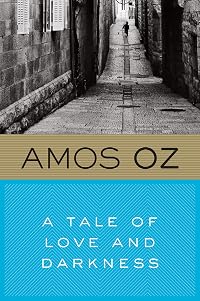
A Tale of Love and Darkness
by Amos Oz 
On This Page
Description
Tragic, comic, and utterly honest, this extraordinary memoir is at once a great family saga and a magical self-portrait of a writer who witnessed the birth of a nation and lived through its turbulent history. It is the story of a boy growing up in the war-torn Jerusalem of the forties and fifties in a small apartment crowded with books in twelve languages and relatives speaking nearly as many. His mother and father, both wonderful people, were ill-suited to each other. When Oz was twelve and show more a half years old, his mother committed suicide-a tragedy that was to change his life. He leaves the constraints of the family and the community of dreamers, scholars, and failed businessmen to join a kibbutz, changes his name, marries, has children, and finally becomes a writer as well as an active participant in the political life of Israel. A story of clashing cultures and lives, of suffering and perseverance, of love and darkness. show lessTags
Recommendations
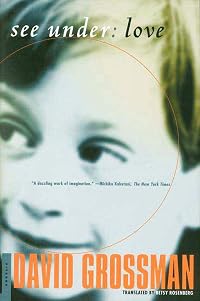
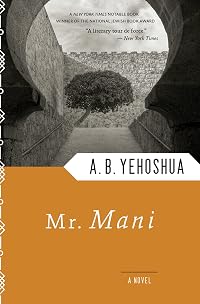
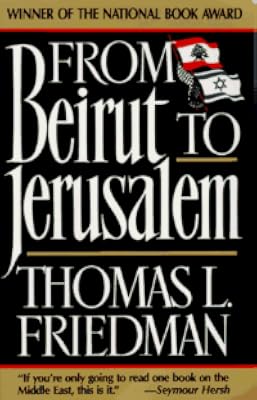
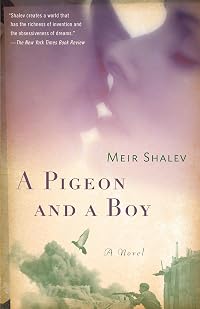









Member Recommendations

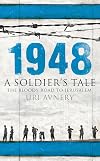
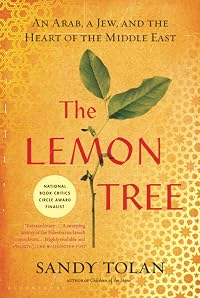
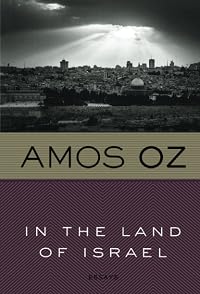
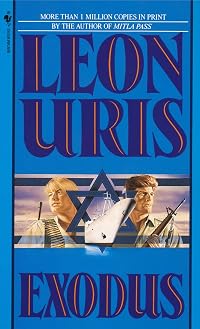
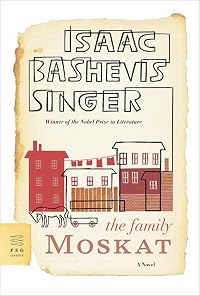
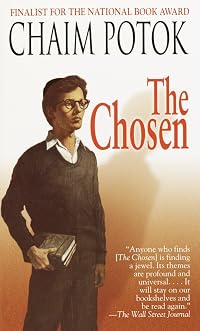
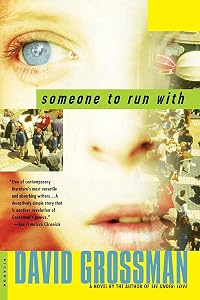
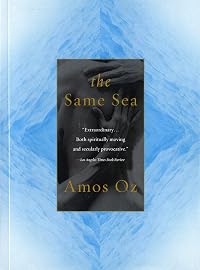
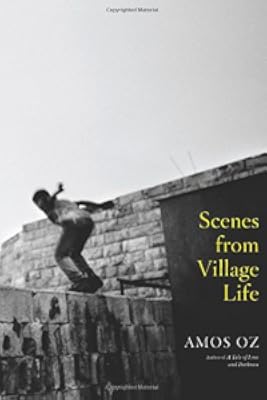
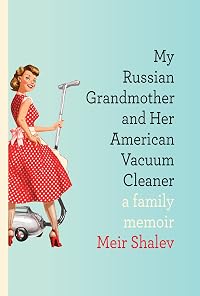
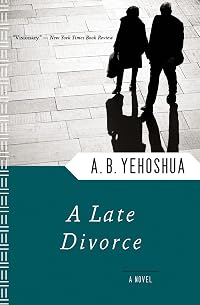
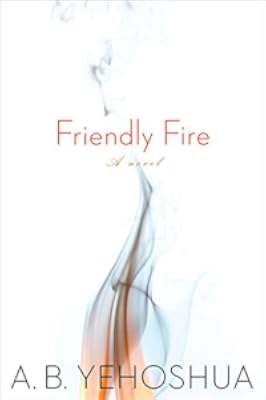
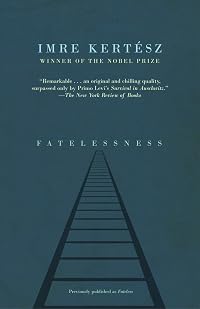
Polaris- Both books cover different aspects of experiencing the lengthy siege of Jerusalem during the Israeli War of Independence. One of a child experiencing the siege, the other of a frontline soldier attempting to break it.
Member Reviews
Oz writes about his parents, their background in Russia and how they came to Palestine in the thirties; about his childhood in a suburb of Jerusalem, the creation of the state of Israel and the war of 1948; about his mother's illness and death, and his decision to leave home in his early teens and move to a kibbutz, and - indirectly - about how all that shaped the kind of writer he became.
This is already a fascinating story from the purely historical point of view - I knew very little about Israel, and most of what I've read about the Jewish experience in the 20th century has been by people who either experienced the Nazi terror at first hand or who emigrated to Britain or the US. So it was very interesting to read about the Zionist show more movement in the early 20th century, Tarbut schools, the politics surrounding the creation of the new state, and all the rest. And particularly about the role played by the reinvention of Hebrew as a modern language. It's not many writers who get to work in a language on which the ink is still wet - Oz records that his father's uncle, Joseph Klausner, was responsible for devising the Hebrew words for such basic concepts as "shirt", "pencil" and "rhinoceros". Oz himself was brought up speaking only Hebrew, but his parents and most of their neighbours still used Russian, Yiddish, and various other European languages between themselves, especially when something had to be said that wasn't for the boy's ears.
The way emigration to Palestine worked also meant that Oz grew up in a very odd social environment in which almost every adult in the very poor neighbourhood where they lived seemed to be a poet, scholar, physician or politician of some kind. His father was a literary scholar, working as an academic librarian since there weren't enough students to provide employment for more than a small fraction of the teachers. One of young Amos's early memories is of being told off very firmly for arranging his little collection of picture books on the shelf by size. We don't do that sort of thing in this house!
Then there's the whole theme of the cultures that are competing to define the new nation - all the different permutations of secular humanism versus orthodox Judaism, suits and ties vs. suntans and shorts, Tel Aviv vs. Jerusalem, shtetl vs. kibbutz, left vs. right, peaceful coexistence vs. permanent war, one state vs. two, and so on - none of them a straightforward choice.
But even if you start reading this book for its subject-matter, you will probably go on because of Oz's extraordinary skill as a storyteller. Every little anecdote is a joy in itself, but it also draws you in further along the carefully constructed path of the story, bringing you towards the narrative crux, the key event in his childhood, his mother's death. But not actually reaching it until the very end of the book - each time the story approaches this key moment, it swerves off in a different direction, and these moments of not telling turn out to be some of the most expressive in the book. Very moving.
I was also struck by the ease with which Oz switches between the narrative voice of the observant child and that of the analytical adult, which is often something that gives memoirs an awkwardly disjointed feel - most writers are much better at one than the other. Here we hardly notice the joins, as he tells us about what he remembers seeing and hearing, then moves on seamlessly to reflect with hindsight on the wider context. He even manages to do this convincingly in the secondhand account of his mother's childhood in Rovno, as told him many years afterwards by her sister. show less
This is already a fascinating story from the purely historical point of view - I knew very little about Israel, and most of what I've read about the Jewish experience in the 20th century has been by people who either experienced the Nazi terror at first hand or who emigrated to Britain or the US. So it was very interesting to read about the Zionist show more movement in the early 20th century, Tarbut schools, the politics surrounding the creation of the new state, and all the rest. And particularly about the role played by the reinvention of Hebrew as a modern language. It's not many writers who get to work in a language on which the ink is still wet - Oz records that his father's uncle, Joseph Klausner, was responsible for devising the Hebrew words for such basic concepts as "shirt", "pencil" and "rhinoceros". Oz himself was brought up speaking only Hebrew, but his parents and most of their neighbours still used Russian, Yiddish, and various other European languages between themselves, especially when something had to be said that wasn't for the boy's ears.
The way emigration to Palestine worked also meant that Oz grew up in a very odd social environment in which almost every adult in the very poor neighbourhood where they lived seemed to be a poet, scholar, physician or politician of some kind. His father was a literary scholar, working as an academic librarian since there weren't enough students to provide employment for more than a small fraction of the teachers. One of young Amos's early memories is of being told off very firmly for arranging his little collection of picture books on the shelf by size. We don't do that sort of thing in this house!
Then there's the whole theme of the cultures that are competing to define the new nation - all the different permutations of secular humanism versus orthodox Judaism, suits and ties vs. suntans and shorts, Tel Aviv vs. Jerusalem, shtetl vs. kibbutz, left vs. right, peaceful coexistence vs. permanent war, one state vs. two, and so on - none of them a straightforward choice.
But even if you start reading this book for its subject-matter, you will probably go on because of Oz's extraordinary skill as a storyteller. Every little anecdote is a joy in itself, but it also draws you in further along the carefully constructed path of the story, bringing you towards the narrative crux, the key event in his childhood, his mother's death. But not actually reaching it until the very end of the book - each time the story approaches this key moment, it swerves off in a different direction, and these moments of not telling turn out to be some of the most expressive in the book. Very moving.
I was also struck by the ease with which Oz switches between the narrative voice of the observant child and that of the analytical adult, which is often something that gives memoirs an awkwardly disjointed feel - most writers are much better at one than the other. Here we hardly notice the joins, as he tells us about what he remembers seeing and hearing, then moves on seamlessly to reflect with hindsight on the wider context. He even manages to do this convincingly in the secondhand account of his mother's childhood in Rovno, as told him many years afterwards by her sister. show less
If you can call your autobiography "A Tale of Love and Darkness" and make it seem halfway appropriate, you've probably done something right. Despite its dramatic -- if well-earned -- title, Amos Oz's memoir moves along at a leisurely pace over over five-hundred plain-spoken yet wonderfully precise pages. For what's purported to be an autobiography, its narrative isn't particularly linear, is hardly tightly plotted, and, at times, it seems pretty uninterested in its own subject. One gets to know the author, but often get the feeling that he doesn't consider himself the most important element in it. It's a refreshing and unexpectedly effective way to relate a life story.
Instead, we get a fond recollection of pre-partition Jerusalem, show more which comes off, as sleepy, crumbling town whose myriad ethnicities looked anxiously toward an uncertain future. We hear about some of his famous relatives, which include noted historian Joseph Klausner and various other luminaries on the Israeli right wing. We hear about the author's neighbors who shared space with him in a crowded, slightly shoddy lower-middle class neighborhood. And, perhaps most importantly, we hear about the author's parents. Indeed, "A Tale of Love and Darkness" sometimes seems as much about the author's life and successes and about their difficult and often frustrated lives -- the author's father was an emotionally awkward, rather pedantic academic, while his mother seemed his opposite in every way, a beautiful, charismatic, intellectually sharp and melancholic beauty. What's most remarkable about all this is how faithfully Oz seems to have recreated all of this: he takes his readers on walks around old Jerusalem and reconstructs the social, intellectual, and political circles that his parents ran in with a surprising degree of accuracy. It's not surprising, then, that there's a lot here about the formative years of the Israeli state, and about the conflicting intellectual and religious currents that drove it. For the record, the author's parents and grandparents seemed to favor a conservative model that had a lot in common with nineteenth-century European nationalism, while the author himself ended up in the Kibbutz movement. While his family emigrated before the Second World War, one also gets a real sense of what a touch-and-go, improvised affair state-building could be: Oz describes both an agrarian industry and a stat bureaucracy being built, more or less, from the ground up.
When it comes to the author himself, he seems most enthusiastic when talking about his literary and sexual development, and his passion for both books and women fairly blasts through the pages. His description of life at Kibbutz Hulda is also interesting, as it follows his transformation from a shy, pale, and nervous city boy to a much stronger and more confident farmer. While he mentions that he left the Kibbutz in 1985, the author seems to avoid expressing opinions about contemporary Israeli politics, though he takes care to emphasize that some of the most important moments of his lives were those when he realized -- or was taught -- that the Arab residents of the Levant on the other side of the fence were, in fact, human. To sum up, "A Tale of Love and Darkness" is well worth reading. I'm planning to read Anthony Shadid's "House of Stone" to see if it might contain a similar story from a very different perspective. show less
Instead, we get a fond recollection of pre-partition Jerusalem, show more which comes off, as sleepy, crumbling town whose myriad ethnicities looked anxiously toward an uncertain future. We hear about some of his famous relatives, which include noted historian Joseph Klausner and various other luminaries on the Israeli right wing. We hear about the author's neighbors who shared space with him in a crowded, slightly shoddy lower-middle class neighborhood. And, perhaps most importantly, we hear about the author's parents. Indeed, "A Tale of Love and Darkness" sometimes seems as much about the author's life and successes and about their difficult and often frustrated lives -- the author's father was an emotionally awkward, rather pedantic academic, while his mother seemed his opposite in every way, a beautiful, charismatic, intellectually sharp and melancholic beauty. What's most remarkable about all this is how faithfully Oz seems to have recreated all of this: he takes his readers on walks around old Jerusalem and reconstructs the social, intellectual, and political circles that his parents ran in with a surprising degree of accuracy. It's not surprising, then, that there's a lot here about the formative years of the Israeli state, and about the conflicting intellectual and religious currents that drove it. For the record, the author's parents and grandparents seemed to favor a conservative model that had a lot in common with nineteenth-century European nationalism, while the author himself ended up in the Kibbutz movement. While his family emigrated before the Second World War, one also gets a real sense of what a touch-and-go, improvised affair state-building could be: Oz describes both an agrarian industry and a stat bureaucracy being built, more or less, from the ground up.
When it comes to the author himself, he seems most enthusiastic when talking about his literary and sexual development, and his passion for both books and women fairly blasts through the pages. His description of life at Kibbutz Hulda is also interesting, as it follows his transformation from a shy, pale, and nervous city boy to a much stronger and more confident farmer. While he mentions that he left the Kibbutz in 1985, the author seems to avoid expressing opinions about contemporary Israeli politics, though he takes care to emphasize that some of the most important moments of his lives were those when he realized -- or was taught -- that the Arab residents of the Levant on the other side of the fence were, in fact, human. To sum up, "A Tale of Love and Darkness" is well worth reading. I'm planning to read Anthony Shadid's "House of Stone" to see if it might contain a similar story from a very different perspective. show less
This is a slow, rich read. A meandering of vignettes that explore a life within a family within a community within the birth of Israel and the loss of Europe. It explores universal truths manifested in ordinary lives. Oz’s life was one of an insatiable reader and lover of words. He grew up in a community of readers, writers, thinkers, debaters, scholars, and immigrants in Jerusalem. Yet, the book is about what was never spoken inside all the speaking. It’s about how he turned his back on all this and chose to the live the life of a farmer on a kibbutz, yet finds himself still to be a writer. He writes of the immense struggle to bring the seeds of life to fruition, whether in the concrete-hard dirt of his tiny backyard or in his show more heart. He writes of family scattered, of homes lost, of rebuilding, of dreams and deep disappointments, of love and darkness.
There is an excellent BookTV author event available on YouTube, where Oz talks about his book. He talks of dreams, saying that the surest way of losing the beauty of a dream is to fulfill it. http://www.c-span.org/video/?178612...
In our fast-paced, scrambling, packed-to-the-rafters, always-engaging lives,
I wonder…if we have any chance of laying for hours on a concrete slab as a child
and feeling so deeply as Amos did in his childhood,
or to dredge up such memories in adulthood,
much less to endure the hunt of that which bites into our flesh. show less
There is an excellent BookTV author event available on YouTube, where Oz talks about his book. He talks of dreams, saying that the surest way of losing the beauty of a dream is to fulfill it. http://www.c-span.org/video/?178612...
In our fast-paced, scrambling, packed-to-the-rafters, always-engaging lives,
I wonder…if we have any chance of laying for hours on a concrete slab as a child
and feeling so deeply as Amos did in his childhood,
or to dredge up such memories in adulthood,
much less to endure the hunt of that which bites into our flesh. show less
This book is intelligent, witty, heartfelt, appealing, and troubling. The author touches on many simple things of everyday life that make his life story unique and have affected his writing. With his superb prose, he puts readers in his own situation thereby giving a sense of what it must have felt like to live the life of Amos Oz. There are precious reminiscences, my favorite being his parents and himself on the one phone line from Jerusalem to Tel Aviv simply giving a weekly hello to relatives. He relates what it was like to celebrate the night of Israel’s Independence, what it was like to be ushered out of an auditorium after he had laughed at Menachem Begin’s use of the word “to arm”, how in awe he felt to be in the presence show more of David Ben Gurion, his deep shame at having caused harm to a young Arab boy, and how he became aware of his own political leanings. He also opened his soul in revealing the pain of his mother’s illness and then his loss of her.
I love Oz’s writing. It’s very passionate, but often in a very understated way. This is a truly special book. Enjoy it. show less
I love Oz’s writing. It’s very passionate, but often in a very understated way. This is a truly special book. Enjoy it. show less
I've had this book since soon after it was published, but I avoided reading it. My uncle gave me the book, having read half of it already, and told me it was "wonderful." This is the same uncle who once thought that a pumpkin pie was "wonderful," even though my grandmother had omitted all sweetener from the filling and the rest of us thought it tasted pretty horrible. This is all to say, the book was recommended to me by someone with highly suspect taste.
In any event, the book is wonderful. It's beautifully written. It's interesting. It's the kind of book that you can't wait to finish but don't want to end.
I don't read much non-fiction. I also don't gravitate toward books on "stressful" topics, like the Arab-Israeli conflict. This book show more is, as much as any memoir can be, non-fiction. Oz does write factually about Israeli independence, European antisemitism, and his family's history. But, it's ultimately a very personal and intimate book, and that's what made it a pleasure to read.
I thought the book seemed like a very honest account. He shows us what an annoying little child he sometimes was. You see his regrets. You cringe at his misplaced confidence, which seems to have derived from a very active fantasy life. show less
In any event, the book is wonderful. It's beautifully written. It's interesting. It's the kind of book that you can't wait to finish but don't want to end.
I don't read much non-fiction. I also don't gravitate toward books on "stressful" topics, like the Arab-Israeli conflict. This book show more is, as much as any memoir can be, non-fiction. Oz does write factually about Israeli independence, European antisemitism, and his family's history. But, it's ultimately a very personal and intimate book, and that's what made it a pleasure to read.
I thought the book seemed like a very honest account. He shows us what an annoying little child he sometimes was. You see his regrets. You cringe at his misplaced confidence, which seems to have derived from a very active fantasy life. show less
Until now, I have never read anything by Amos Oz. After reading his memoir, I intend to read whatever I can find. This book is complex and works on many levels: as family history, as a history of the foundation of the state of Israel through a child's eyes, and as an exploration of that family history and especially his parents' marriage and his mother's suicide when Oz was 12 years old. I could not put this book down, no matter how dark the events he relates. At times comic, at times analytic, at times poetic and at times tragic, this is a book for everyone.
Bits of this book have made me think about how tough a translator's job is. At one point, Oz says he remembers what a teacher had said "about poems and sounds . . . about the different sounds that various words make: 'rustling,' for example, is a whispering word, 'strident' is a screeching word, 'growl' has a deep, thick sound, while 'tone' has a delicate sound and the word 'noise' is itself noisy."
But, of course, Oz wrote in Hebrew. So the non-Hebrew reader does not know exactly what words the teacher spoke of, and the translator has to find words in English that will convey the essence of her meaning.
But, of course, Oz wrote in Hebrew. So the non-Hebrew reader does not know exactly what words the teacher spoke of, and the translator has to find words in English that will convey the essence of her meaning.
Members
- Recently Added By
Lists

Best Autobiographies and Memoirs
370 works; 67 members

1001 Books You Must Read Before You Die
1,448 works; 1,136 members

Jewish Books
367 works; 24 members

Top Five Books of 2019
387 works; 107 members

Libros que todos deberíamos leer al menos una vez en la vida (Librotea)
14 works; 1 member

Best Israeli Reading
55 works; 12 members

2000s (the decade, not the century)
184 works; 11 members

The Emergence of the Modern Middle East
289 works; 13 members
Tablet Magazine's List of 101 Great Jewish Books
103 works; 9 members

Books Read in 2014
2,344 works; 89 members

Five star books
1,767 works; 110 members

Recommend the 20 best books you've read in the last five years
2,168 works; 608 members

Dim Sum Lunch Reading
43 works; 2 members

Favorite Books in Translation
320 works; 133 members

.
184 works; 1 member

A wishlist of books I will read in 2026
53 works; 1 member
Author Information

119+ Works 12,335 Members
Amos Oz was born Amos Klausner in Jerusalem on May 4, 1939. As a young teenager, he moved to Kibbutz Hulda, where he completed his secondary education and worked on a farm. After he completed mandatory military service in 1961, the kibbutz assembly sent him to study at the Hebrew University of Jerusalem, where he received a B.A. in philosophy and show more literature. After graduation, he moved back to Hulda, where he wrote, did farm work, did guard and dining-room duty, and taught in the kibbutz high school. He fought in the 1967 and 1973 wars and spent a year as a visiting fellow at Oxford University. He wrote novels, collections of short fiction, works of nonfiction, and essays. His novels included My Michael, Black Box, and The Gospel According to Judas. His memoir, A Tale of Love and Darkness, was adapted into a movie in 2016. His last book, Dear Zealot, was made up of three essays on the theme of fanaticism. He was an advocate for peace and believed in a two-state solution, meaning the establishment of a Palestinian state alongside Israel. In the late 1970s, he helped found Peace Now. He received several awards including the Goethe Prize, the French Knight's Cross of the Légion D'Honneur, and the Israel Prize. He died after a short battle with cancer on December 28, 2018 at the age of 79. (Bowker Author Biography) show less
Amos Oz is a LibraryThing Author, an author who lists their personal library on LibraryThing.
Some Editions
Awards and Honors
Awards
Distinctions
Notable Lists
Series
Belongs to Publisher Series
Work Relationships
Is contained in
Is abridged in
Has as a commentary on the text
Common Knowledge
- Canonical title
- A Tale of Love and Darkness
- Original title
- סיפור על אהבה וחושך; Sipur al ahava ve-chosech
- Original publication date
- 2002
- People/Characters
- Amos Oz; Fania Mussman; Haïa Mussman; Sonia Mussman; Naftali Herz Mussman; Yosef Klausner
- Important places
- Jerusalem; Israel
- First words
- I was born and bred in a tiny, low-ceilinged ground-floor flat.
- Last words
- (Click to show. Warning: May contain spoilers.)My mother fell asleep and this time she slept with no nightmares, she had no insomnia, in the early hours she threw up and fell asleep again, still fully dressed, and because Tsvi and Hayta were beginning to suspect something they sent for an ambulance a little before sunrise and two stretcher-bearers carried her carefully, so as not to disturb her sleep, and at the hospital she would not listen to them either and although they tried various means to disturb her good sleep she paid no attention to them, or to the specialist from whom she had heard that the psyche is the worst enemy of the body, and she did not wake up in the morning either, or even when the day grew brighter, and from the branches of the ficus tree in the garden of the hospital the bird Elise called to her in wonderment and called to her again and again in vain and yet it went on trying over and over again and it still tries sometimes.
- Original language
- Hebrew
Classifications
Statistics
- Members
- 2,626
- Popularity
- 7,216
- Reviews
- 70
- Rating
- (4.19)
- Languages
- 22 — Bosnian, Catalan, Chinese, Czech, Danish, Dutch, English, Finnish, French, German, Greek, Hebrew, Hungarian, Italian, Norwegian (Bokmål), Polish, Portuguese, Romanian, Russian, Slovenian, Spanish, Swedish
- Media
- Paper, Audiobook, Ebook
- ISBNs
- 85
- ASINs
- 25