
Amos Oz (1939–2018)
Author of A Tale of Love and Darkness
About the Author
Amos Oz was born Amos Klausner in Jerusalem on May 4, 1939. As a young teenager, he moved to Kibbutz Hulda, where he completed his secondary education and worked on a farm. After he completed mandatory military service in 1961, the kibbutz assembly sent him to study at the Hebrew University of show more Jerusalem, where he received a B.A. in philosophy and literature. After graduation, he moved back to Hulda, where he wrote, did farm work, did guard and dining-room duty, and taught in the kibbutz high school. He fought in the 1967 and 1973 wars and spent a year as a visiting fellow at Oxford University. He wrote novels, collections of short fiction, works of nonfiction, and essays. His novels included My Michael, Black Box, and The Gospel According to Judas. His memoir, A Tale of Love and Darkness, was adapted into a movie in 2016. His last book, Dear Zealot, was made up of three essays on the theme of fanaticism. He was an advocate for peace and believed in a two-state solution, meaning the establishment of a Palestinian state alongside Israel. In the late 1970s, he helped found Peace Now. He received several awards including the Goethe Prize, the French Knight's Cross of the Légion D'Honneur, and the Israel Prize. He died after a short battle with cancer on December 28, 2018 at the age of 79. (Bowker Author Biography) show less
Image credit: Amos Oz, 1939- (born as Amos Klausner), at Literaturhaus, Munich, Germany, Nov. 7, 2004. Photo by Shannon
Works by Amos Oz
Where the Jackals Howl [short story] 4 copies
RRËFIM PËR DASHURINË DHE ERRËSIRËN 2 copies
אנשים אחרים 2 copies
Gender Medicine: The Groundbreaking New Science of Gender and Sex-Based Diagnosis and Treatment (2017) 2 copies
Nota autobiograficzna 2 copies
הבשורה על פי יהודה 1 copy
JETA RIMON ME VDEKJEN 1 copy
Mi querido Mijael 1968 1 copy
Czarownik swojego plemienia 1 copy
הר העצה הרעה: שלושה סיפורים 1 copy
לגעת במים, לגעת ברוח 1 copy
יהודים ומילים 1 copy
בין חברים 1 copy
אותו היום 1 copy
Non dire notte 1 copy
A Hollow Stone [short story] 1 copy
Do que é feita a maçã: Seis conversas sobre amor, culpa e outros prazeres (Portuguese Edition) (2019) 1 copy
Mister Levi 1 copy
Strange Fire [short story] 1 copy
ארצות התן : סיפורים 1 copy
Μεταξύ φίλων 1 copy
Shalom la-ḳanaʼim: shalosh maḥshavot = Dear zealot : three pleas = שלום לקנאים : שלוש מחשבות 1 copy
Η τρίτη κατάσταση 1 copy
Ο Μιχαέλ μου 1 copy
o monte do mau conselho 1 copy
Associated Works
For the Love of Books: 115 Celebrated Writers on the Books They Love Most (1999) — Contributor — 479 copies, 4 reviews
The Art of the Story: An International Anthology of Contemporary Short Stories (1999) — Contributor — 394 copies, 5 reviews
The Art of the Tale: An International Anthology of Short Stories (1986) — Contributor — 381 copies, 3 reviews
Over X-jes, de zandloper en de herenbobbel. Een handleiding tot de kunsten voor Maarten Asscher (1998) — Contributor — 1 copy
Tagged
Common Knowledge
- Canonical name
- Oz, Amos
- Legal name
- Klausner, Amos
- Other names
- Оз, Амос
עמוס עוז
Klausner, Amos (birth name) - Birthdate
- 1939-05-04
- Date of death
- 2018-12-28
- Gender
- male
- Education
- Community Religious School Tachkemoni
Hebrew High School Rehavia
Hebrew University of Jerusalem (Philosophy ∙ Hebrew Literature) - Occupations
- novelist
short story writer
essayist
journalist
teacher
advocate for peace (show all 7)
professor - Organizations
- Ben-Gurion University
Israeli Defense Forces
Peace Now (co-founder)
Meretz political party member - Awards and honors
- Israel Prize (1998)
Goethe Prize (2005)
Premio Príncipe de Asturias (2007)
Friedenspreis (1992)
Bialik Prize (1986)
Man Booker International Prize Finalist (2007) (show all 27)
Brenner Prize for Literature (1976)
Ze'ev Award for Children's Literature (1978)
Hans Christian Andersen Medal (1978)
Bernstein Prize (1983)
Officer of the Order of Arts and Letters of the French Republic (1984)
Prix Femina (1988)
Wingate Prize (1988)
Primo Levi Prize (2008)
International Medal of Tolerance (2002)
Peace Prize at Frankfurt International Book Fair (1992)
Knight's Cross of the Legion D'Honneur of the Republic of France (1997)
Prix Europa (2006)
Giuseppe Tomasi di Lampedusa literary prize (2012)
Ovid Prize (2004)
Franz Kafka Prize (2013)
Gran Cruz de la Orden del Mérito Civil (2014)
Siegfried-Lenz-Preis (2014)
Internationaler Literaturpreis (2015)
Park Kyong-ni Prize (2015)
Stig Dagerman Prize (2018)
American Academy of Arts and Sciences (2007) - Relationships
- Halkin, Simon (uncle)
Schneurson Mishkovsky, Zelda (teacher) - Short biography
- Changed his surname from Klausner to Oz after the death of his mother
- Cause of death
- cancer
- Nationality
- Israel
- Birthplace
- Jerusalem, Palestine
- Places of residence
- Jerusalem, Israel
Kibbutz Hulda, Israel
Arad, Israel
Tel Aviv, Israel - Place of death
- Tel Aviv, Israel
- Burial location
- Kibbbtz Hulda, Israel
- Map Location
- Israel
Members
Reviews

A slightly quirky, tentative sort of novel in which not very much happens, but Oz spends his time digging into the life of a rather disparate couple living in a small new town in the desert and into what it might tell us about how Israel works as a young country. A big part of Oz’s technique here is switching back and forth between the viewpoints of Theo and Noa, and often showing us the same incidents from two different perspectives, or even giving us bits of narrative that we are show more explicitly told to question.
Theo and Noa belong to different generations of Israelis: he is a semi-retired architect and planner, literally one of the people who built the new state, whilst she is a school teacher who grew up after independence and is suspicious of Theo’s networks of authority-figures who fought the British together back in the day. After the tragic death of one of her pupils, she has been made responsible for running a project to build a rehabilitation centre for young addicts, something she is very committed to, but it soon becomes clear that there is far too little support in the community for it to get anywhere. show less
Theo and Noa belong to different generations of Israelis: he is a semi-retired architect and planner, literally one of the people who built the new state, whilst she is a school teacher who grew up after independence and is suspicious of Theo’s networks of authority-figures who fought the British together back in the day. After the tragic death of one of her pupils, she has been made responsible for running a project to build a rehabilitation centre for young addicts, something she is very committed to, but it soon becomes clear that there is far too little support in the community for it to get anywhere. show less
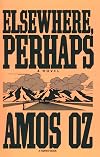
Oz's writing always manages to suck me in, and this book was no different. The way he made 'gossip' and the larger identity of the kibbutz community characters in and of themselves was fascinating, right from the beginning. As the book went on, I did find it more difficult to stay engaged with the characters, compared to Oz's other works--something about the larger focus here took away some of the intimacy I normally so love in his novels. But as a departure from that, this was a fantastic show more story to delve into, and written masterfully.
I'd absolutely recommend it, though for readers new to Oz's writing, I'd probably suggest they start with some of his other novels rather than this one. show less
I'd absolutely recommend it, though for readers new to Oz's writing, I'd probably suggest they start with some of his other novels rather than this one. show less
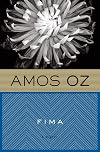
Amos Oz's most frustrating, inane, gross, boring, and conceited novel may also be his most brilliant, erudite, funny, and deeply profound work.
Let me be frank: this book is absolutely tortuous to get through at times, actually, for most of its length it seems to be everything a book shouldn't be. The protagonist is almost completely unsympathetic sometimes being so self-obsessed and condescending to those around him that you want spit on the page just to spite him. And the few spots of show more potential evolution and even personal redemption planted throughout the text serve only to cause more frustration as he, inevitably and (kind of spoiler I guess) falls right back into the same annoying character patterns that the reader has come to know and scream at.
The eponymous protagonist Ephraim "Fima" is surrounded by characters equally unappealing as each, in turn, serve only to enable and exacerbate Fima's issues while simultaneously using him as a distraction in their own misguided and frustrated lives. Fima to them is basically the dumb ass clown who, they do admit, is smarter than most if not all of them with the potential to be 'better' but is kept from being so by his numerous failings, namely his lack of direction and near pathological apathy.
On the surface the story drags and drags. Similar to Joyce's "Portrait of the Artist as a Young Man" Fima, for thirty chapters, alternates between rising and falling actions. Fima fails, usually because of himself and even despite his infinitesimal and occasional efforts, but unlike Joyce's book the victories and defeats depicted in the story are almost all universally mundane and apparently meaningless. From the trials of a filthy apartment with dead bugs, spoiled food, and dirty laundry, all the way up to the biggest issues regarding the state of Israel's involvement with the 'territories' and how these issues affect the way people act, dress, and even speak, down to the most minute changes in the language used to describe both it and simple everyday life, Fima lives as a slug, observing and commenting but doing nothing otherwise despite his stated (and well described) boundless potential.
The intellectual analyses running throughout the story serve as commentary both for the main character and the various situations he finds himself in, but are all crushed under the inherent apathy and disappointment of not only the inaction and frustrated confusion of the aging 'modern' generation of Israelis but of the condescending and sanctimonious attitude of the previous generation of 'founders' who seem to now exist only to be disappointed.
Now, the story is clearly more than just the basic story. The metaphor between Fima and his friends and family as both characters and concepts is well shown, and Oz navigates the cast admirably.
But where this book not only shines but eventually explodes in literary incandescence (and I only really felt this way after finishing the last page though there were pangs and tremors of this feeling brewing from a little after the first quarter or so of the book) is in its depiction of the liberation of a tired intellect from the atrophied confines of disinterest, disappointment, and frustration. Fima's mind goes from being mired and listless in a purgatorial swamp to (after repeated attempts both half hearted and otherwise) being forcefully pulled out of the sludge and the quicksand (I can't help but think of a bright and glorious star somehow being magnificently pulled by a man barehanded from the deepest foulest most filthy and disgusting pit and being placed in the heavens) not only finally accepting responsibility for the future of both the individual (Fima) and the nation (Israel) but also to acceptance of both man's limitless potential seemingly counterbalanced by some ineffable negative truths about the human condition, namely the before mentioned pit falls of apathy and ennui along with a shattering evaluation of both what the achieving of the Zionist dream accomplished along with not only what it failed to do but what it was doomed to failing at before the whole enterprise even started.
At first I thought this book was just an established author trying something 'a little different' and would be just a quiet and enjoyable bit of literature from a man who, I feel, is a "writer's writer". But, whether intentionally or not, Amos Oz has produced a work that through the struggle of not only the mind of the reader but of the main character himself, has successfully navigated the pitfalls of the most popular understanding of nihilism and emerged from that pit, wearied, near dead from exhaustion, but infinitely brighter in every sense of the word. Think of a man battling the world of Camus' "The Stranger" with Dylan Thomas' 'Do Not Go Gently into that Good Night'as an, at first, quiet refrain, but eventual warriors call to victory.
A mammoth frustration but a brilliant and mandatory read for all lovers of fine literature. show less
Let me be frank: this book is absolutely tortuous to get through at times, actually, for most of its length it seems to be everything a book shouldn't be. The protagonist is almost completely unsympathetic sometimes being so self-obsessed and condescending to those around him that you want spit on the page just to spite him. And the few spots of show more potential evolution and even personal redemption planted throughout the text serve only to cause more frustration as he, inevitably and (kind of spoiler I guess) falls right back into the same annoying character patterns that the reader has come to know and scream at.
The eponymous protagonist Ephraim "Fima" is surrounded by characters equally unappealing as each, in turn, serve only to enable and exacerbate Fima's issues while simultaneously using him as a distraction in their own misguided and frustrated lives. Fima to them is basically the dumb ass clown who, they do admit, is smarter than most if not all of them with the potential to be 'better' but is kept from being so by his numerous failings, namely his lack of direction and near pathological apathy.
On the surface the story drags and drags. Similar to Joyce's "Portrait of the Artist as a Young Man" Fima, for thirty chapters, alternates between rising and falling actions. Fima fails, usually because of himself and even despite his infinitesimal and occasional efforts, but unlike Joyce's book the victories and defeats depicted in the story are almost all universally mundane and apparently meaningless. From the trials of a filthy apartment with dead bugs, spoiled food, and dirty laundry, all the way up to the biggest issues regarding the state of Israel's involvement with the 'territories' and how these issues affect the way people act, dress, and even speak, down to the most minute changes in the language used to describe both it and simple everyday life, Fima lives as a slug, observing and commenting but doing nothing otherwise despite his stated (and well described) boundless potential.
The intellectual analyses running throughout the story serve as commentary both for the main character and the various situations he finds himself in, but are all crushed under the inherent apathy and disappointment of not only the inaction and frustrated confusion of the aging 'modern' generation of Israelis but of the condescending and sanctimonious attitude of the previous generation of 'founders' who seem to now exist only to be disappointed.
Now, the story is clearly more than just the basic story. The metaphor between Fima and his friends and family as both characters and concepts is well shown, and Oz navigates the cast admirably.
But where this book not only shines but eventually explodes in literary incandescence (and I only really felt this way after finishing the last page though there were pangs and tremors of this feeling brewing from a little after the first quarter or so of the book) is in its depiction of the liberation of a tired intellect from the atrophied confines of disinterest, disappointment, and frustration. Fima's mind goes from being mired and listless in a purgatorial swamp to (after repeated attempts both half hearted and otherwise) being forcefully pulled out of the sludge and the quicksand (I can't help but think of a bright and glorious star somehow being magnificently pulled by a man barehanded from the deepest foulest most filthy and disgusting pit and being placed in the heavens) not only finally accepting responsibility for the future of both the individual (Fima) and the nation (Israel) but also to acceptance of both man's limitless potential seemingly counterbalanced by some ineffable negative truths about the human condition, namely the before mentioned pit falls of apathy and ennui along with a shattering evaluation of both what the achieving of the Zionist dream accomplished along with not only what it failed to do but what it was doomed to failing at before the whole enterprise even started.
At first I thought this book was just an established author trying something 'a little different' and would be just a quiet and enjoyable bit of literature from a man who, I feel, is a "writer's writer". But, whether intentionally or not, Amos Oz has produced a work that through the struggle of not only the mind of the reader but of the main character himself, has successfully navigated the pitfalls of the most popular understanding of nihilism and emerged from that pit, wearied, near dead from exhaustion, but infinitely brighter in every sense of the word. Think of a man battling the world of Camus' "The Stranger" with Dylan Thomas' 'Do Not Go Gently into that Good Night'as an, at first, quiet refrain, but eventual warriors call to victory.
A mammoth frustration but a brilliant and mandatory read for all lovers of fine literature. show less

In the Jerusalem winter of 1959-60, at the height of the duffel-coat era, the life of the hairy postgraduate Shmuel Ash seems to be falling apart. His girlfriend has decided to marry a hydrologist, his parents can't afford to support him any more, his research has run into the sand, and to cap it all, the socialist discussion group has broken up after an ideological dispute ("Among the four who split off were the two girls in the group, without whom there was no longer any point.").
The show more scene seems to be set for an old man to have a good time whimsically making fun of his younger self, but of course there is a lot more to it than that. Through Shmuel's research into "Jewish representations of Jesus" and his discussions with the old history teacher Gershom Wald, Oz draws us into thinking about the figure of Judas and the idea of the "betrayer", and sets up parallels with the father of Shmuel's landlady, a member of the Jewish Agency council who was ostracised for opposing Ben-Gurion's partition policy in 1947 and 1948, believing that the only secure future for the Jewish people was in seeking peaceful cohabitation with the Arabs. Where is the line between an act of betrayal and an act of conscience? Does it make a difference whether history proves you right or wrong?
A lovely, very literary novel, with a quotable phrase on every page, a wealth of learning and cross-references deployed not to impress but to make you question what you thought you knew, and a lot of very enjoyable historical colour about Israel as it was sixty years ago. show less
The show more scene seems to be set for an old man to have a good time whimsically making fun of his younger self, but of course there is a lot more to it than that. Through Shmuel's research into "Jewish representations of Jesus" and his discussions with the old history teacher Gershom Wald, Oz draws us into thinking about the figure of Judas and the idea of the "betrayer", and sets up parallels with the father of Shmuel's landlady, a member of the Jewish Agency council who was ostracised for opposing Ben-Gurion's partition policy in 1947 and 1948, believing that the only secure future for the Jewish people was in seeking peaceful cohabitation with the Arabs. Where is the line between an act of betrayal and an act of conscience? Does it make a difference whether history proves you right or wrong?
A lovely, very literary novel, with a quotable phrase on every page, a wealth of learning and cross-references deployed not to impress but to make you question what you thought you knew, and a lot of very enjoyable historical colour about Israel as it was sixty years ago. show less
Lists
Jewish Books (17)
1980s (1)
Judaism & Israel (1)
A Novel Cure (1)
Reading list (1)
Awards


You May Also Like


Associated Authors
Statistics
- Works
- 119
- Also by
- 16
- Members
- 12,306
- Popularity
- #1,902
- Rating
- 3.9
- Reviews
- 336
- ISBNs
- 968
- Languages
- 32
- Favorited
- 47


