
Batya Gur (1947–2005)
Author of Saturday Morning Murder
About the Author
Batya Gur teaches literature at a Jerusalem high school and is a book critic for the Israeli newspaper Ha-Aretz. She has written several murder mysteries, only one of which has been translated into English. (Bowker Author Biography)
Image credit: Photo by user Casaresricardo / Wikimedia Commons
Series
Works by Batya Gur
Tagged
Common Knowledge
- Legal name
- בתיה גור
- Birthdate
- 1947-01-20
- Date of death
- 2005-05-19
- Gender
- female
- Education
- Hebrew University of Jerusalem (MA - Comparative Literature)
- Occupations
- essayist
novelist
teacher
literary critic - Organizations
- Haaretz
- Relationships
- Hirschfeld, Ariel (husband)
- Short biography
- Batya Gur, whom The New York Times said was almost single-handedly responsible for making the detective novel a flourishing genre in Israeli letters, wrote her first crime novel at the age of 39. She had been a literary critic for Ha'aretz newspaper. She studied Hebrew Literature and History at the Hebrew University and completed her MA in Comparative Literature. She taught literature in high school before moving to live in the United States for many years.
- Cause of death
- lung cancer
- Nationality
- Israel
- Birthplace
- Tel Aviv, Israel
- Place of death
- Jerusalem, Israel
- Burial location
- Givat Shaul, Jerusalem, Israel
- Associated Place (for map)
- Jerusalem, Israel
Members
Reviews
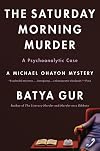
This is the first in a short series of detective novels featuring Chief Inspector Michael Ohayon of Jerusalem's Major Crime Unit. Ohayon is a policeman by default, as he was on course to earn a PhD in Medieval history when he found himself "trapped" into marrying his pregnant girlfriend. We meet him years later, when his marriage has dissolved, and he is again feeling somewhat trapped in a career he is not terribly enthusiastic about. He is, nevertheless, a good investigator, and when he is show more faced with the particularly puzzling murder of a prominent psychoanalyst, he brings his unique thought processes to bear on the few clues he has to work with. This is not a fast-paced, high suspense, thrill-a-minute police procedural, but rather, as the subtitle tells us, "A psychoanalytic case". I enjoyed it very much and will carry on with the next in the series, Literary Murder. Translated from the original Hebrew. show less
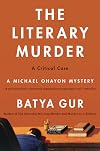
The subtitles of Gur's detective series featuring Israeli detective Superintendent Michael Ohayon give the reader a hint of what's in store....this one is "A Critical Case". (It's more than just word play although I love them for that alone; the first was The Saturday Morning Murder: A Psychoanalytical Case, and next up is Murder on the Kibbutz: A Communal Case.) One does not approach these expecting thrill-a-minute action or Holmesian deduction. They are intellectual exercises above and show more beyond simply figuring out whodunit. In this one, the key to solving two murders within the Hebrew Literature department of Hebrew University in Jerusalem lies in philosophical debate over artistic ethics. Despite his superior's repeated declarations that the police department "is NOT a university", it is Ohayon's academic background and growing understanding of politics within that community which allows him to finally parse out how a nationally recognized poet and one of his most fervent disciples ended up dead by violence within days of one another. Lots of fairly dense discussion among the characters about the value of poetry, what constitutes "good" poetry, what can and should be sacrificed to Art, as well as some true literary criticism and interpretation of Biblical references in the work of poets Natan Zach and Solomon ibn Gabirol made this a challenging, yet rewarding read. If I have a quibble it is that occasionally I felt I might be missing something due to the translation. show less

This is a really interesting insight into the political and ethnical varieties in the Israel and specifically Jerusalem. It also examines some less than glorious moments in the country's history. Gur places her murder in an ethnically mixed neighborhood of Jerusalem and brings to the surface the suspicion and antagonism this "melting pot" causes in its inhabitants. Some of the recurring secondary characters gets a deeper involvement in this installment of the series and get to represent some show more of the political viewpoints, from the Arab-hating extreme to the overly liberal. As in other books in the series, the killer and the motive are pretty easy to guess, but it's still a nice mystery because of the high stakes. In earlier books, Gur has concentrated on very limited groups (psychoanalysts, kibbutzniks, musicians, etc.) and has stayed away from overt politics, but this story, set during the Second Intifada, relays the fear that an unstable society will cause its citizens - you just never know who and where the enemy is. show less

This book is as much about the insular society of an Israeli kibbutz as it is about Inspector Michael Ohayon solving a murder. While I didn't find the murder mystery terribly absorbing, I was fascinated by the details of kibbutz society. At its best, Gur's prose is a lucid description of the "egalitarian elitism" that prevails in such enclosed communities, where the details of everyday life are given immense, overt ideological weight. The ending was a rather disappointing show more anticlimax—there's too much of the deus ex machina to it—but I found Ohayon to be a much more fully realised character than I did in the previous book I read in the series, Saturday Morning Murder, and I would recommend the book as a diverting and informative read. show less
Lists
Awards


You May Also Like


Associated Authors
Statistics
- Works
- 14
- Members
- 2,042
- Popularity
- #12,591
- Rating
- 3.6
- Reviews
- 58
- ISBNs
- 125
- Languages
- 10
- Favorited
- 7