

Meir Shalev (1948–2023)
Author of A Pigeon and a Boy
About the Author
Works by Meir Shalev
משכב לצים — Author — 4 copies
גמות החן של זהר 2 copies
Afpersing in Karmel 1 copy
ככה זה שאוהבים 1 copy
ככה זה כשאוהבים 1 copy
מבול, נחש ושתי תבות 1 copy
Eśaṿ 1 copy
קרמר החתול ישן כל הזמן 1 1 copy
השן שהתנדנד לה הילד 1 copy
אל תספר לאחיך 1 copy
גמות החן של זהר 1 copy
וניל על המצח ותות על האף 1 copy
ראשית -פעמים ראשונות בתנ"ך 1 copy
פנדה יוצאת למרעה 1 copy
סוד אחיזת העיניים 1 copy
Es mejor ser un delfin 1999 1 copy
Associated Works
Tagged
Common Knowledge
- Canonical name
- Shalev, Meir
- Legal name
- מאיר שלו
- Other names
- Шалев, Меир
- Birthdate
- 1948-07-29
- Date of death
- 2023-04-11
- Gender
- male
- Education
- Hebrew University of Jerusalem
- Occupations
- columnist
producer (radio/TV programs)
moderator (radio/TV programs)
fiction writer
children's book writer - Organizations
- Yedioth Ahronoth (columnist)
- Awards and honors
- Bernstein Prize (1989)
Juliet Club Prize (Italy, 1999)
Brenner Prize (2006) - Relationships
- Shalev, Zeruya (cousin)
- Nationality
- Israel
- Birthplace
- Nahalal, Israel
- Places of residence
- Nahalal, Israel (birth)
Jerusalem, Israel - Place of death
- Alonei Abba, Israel
- Associated Place (for map)
- Israel
Members
Discussions
A Pigeon and a Boy by Meir Shalev in Book talk (May 2020)
Reviews
“I know enough about farming to know that the best fictions of all grow from the earth of reality.”
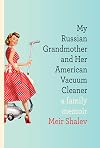
This is a memoir by Israeli author Meir Shalev who was born in 1948 on Nahalal, Israel’s first moshav. The book is translated from Hebrew by Evan Fallenberg. The moshav movement was a cooperative agricultural community of individual farms started by the Zionists as part of the Second Aliyah (1904-1914 Jewish emigration to Palestine, largely from Russia). The moshavim were more show more family-based than kibbutz. The first moshav was established in Nahalal in Jezreel valley where this story takes place. Grandma Tonia, the central character in the story, arrived in 1923, as part of the Third Aliyah. She was born in Rokitno, Ukraine in the 1900s and married Grandpa Aharon after she arrived in Palestine.
The story revolves around the feisty and dirt-obsessed Grandma Tonia and later her mysterious American vacuum cleaner. Tonia has a difficult life, declaring war as she does on the dirt in Palestine. She refuses anyone admittance through her front door, makes them sit on the porch and only the favoured few gain admittance through the back door. The family are made to shower out by the cows’ barn and conduct as much of their daily lives outside as possible. Tonia seems ill-matched with Grandpa Aharon, who seems far more socialist and zionist than she is, and he is clearly unsuited for the farming life he has chosen. Grandpa Aharon and the moshavniks eschew all things frivolous. In particular he disapproves of his brother Uncle Yeshayahu, the traitor who has committed the unpardonable crime of moving to America, the land of temptation and hedonism. Uncle Yeshayahu eventually sends Grandma Tonia a monstrous shiny new vacuum cleaner as a grandiose statement of superiority and possibly revenge. Initially Grandma is captivated by the “svieeperrr,” her new ally in the war against dirt, and her grandson Meir is determined to discover the fate of the mythical appliance that has become the stuff of family legends, rumoured to be imprisoned in Grandma’s spare room. This is a humorous look at family life, and sheds light into the hardship of moshavnik life and the culture in Palestine at the time. The disappointing thing to me was that despite Grandma Tonia being “a character” I was unable to really warm to her. Other than her fanatical approach to cleaning, hard work, and the tyranny with which she enforced her regimen on the family, the only supposedly endearing traits mentioned were her few favourite phrases and mispronunciations. She seemed to have a soft spot for Meir’s girlfriends but this was the only chink revealed in her armour. I also found the very conscious narration with the author’s constant worries about misrepresenting another family member’s version of events distracted me from enjoying the story more. show less
This is a memoir by Israeli author Meir Shalev who was born in 1948 on Nahalal, Israel’s first moshav. The book is translated from Hebrew by Evan Fallenberg. The moshav movement was a cooperative agricultural community of individual farms started by the Zionists as part of the Second Aliyah (1904-1914 Jewish emigration to Palestine, largely from Russia). The moshavim were more show more family-based than kibbutz. The first moshav was established in Nahalal in Jezreel valley where this story takes place. Grandma Tonia, the central character in the story, arrived in 1923, as part of the Third Aliyah. She was born in Rokitno, Ukraine in the 1900s and married Grandpa Aharon after she arrived in Palestine.
The story revolves around the feisty and dirt-obsessed Grandma Tonia and later her mysterious American vacuum cleaner. Tonia has a difficult life, declaring war as she does on the dirt in Palestine. She refuses anyone admittance through her front door, makes them sit on the porch and only the favoured few gain admittance through the back door. The family are made to shower out by the cows’ barn and conduct as much of their daily lives outside as possible. Tonia seems ill-matched with Grandpa Aharon, who seems far more socialist and zionist than she is, and he is clearly unsuited for the farming life he has chosen. Grandpa Aharon and the moshavniks eschew all things frivolous. In particular he disapproves of his brother Uncle Yeshayahu, the traitor who has committed the unpardonable crime of moving to America, the land of temptation and hedonism. Uncle Yeshayahu eventually sends Grandma Tonia a monstrous shiny new vacuum cleaner as a grandiose statement of superiority and possibly revenge. Initially Grandma is captivated by the “svieeperrr,” her new ally in the war against dirt, and her grandson Meir is determined to discover the fate of the mythical appliance that has become the stuff of family legends, rumoured to be imprisoned in Grandma’s spare room. This is a humorous look at family life, and sheds light into the hardship of moshavnik life and the culture in Palestine at the time. The disappointing thing to me was that despite Grandma Tonia being “a character” I was unable to really warm to her. Other than her fanatical approach to cleaning, hard work, and the tyranny with which she enforced her regimen on the family, the only supposedly endearing traits mentioned were her few favourite phrases and mispronunciations. She seemed to have a soft spot for Meir’s girlfriends but this was the only chink revealed in her armour. I also found the very conscious narration with the author’s constant worries about misrepresenting another family member’s version of events distracted me from enjoying the story more. show less

The writer is good with words and is witty. However, I "assume" the story is supposed to be cute and nostalgic. I found it sad. A grandmother is so consumed by cleanliness that her family has to eat on the porch instead of the dining room, so they don't dirty it. There are rooms in the house, such as the library and the bathroom, they are not permitted to enter. On the door knob of each door is a rag, in case somebody needs to enter, they need to clean the door knob when they leave the room. show more Her daughter can not get married in the backyard because her mother is afraid family will dirty the house. I'd say the grandmother has a mental illness; and that is not cute. I did get to see snippets of life in a kibbutz. 224 pages 3 stars show less

A cute story for kids about an old tractor, but the real target audience is the mature adult.
I listened to the audiobook version so missed the illustrations, but the descriptive language was plenty sufficient to evoke deep nostalgia for playing on the retired farm equipment on my uncle's kibbutz on my first visit to Israel as a small child.
Even more poignant is the question of seeking meaning in life as an elderly tractor (or person), who has been rejected in favour of the new model. Can one show more still be a productive member of society once no longer competitive in the workplace? Do we surrender to being put out to pasture, seek an alternate form of contribution, or content ourselves with reminiscence of a glorious past.
That's a LOT to pack into 7 minutes. show less
I listened to the audiobook version so missed the illustrations, but the descriptive language was plenty sufficient to evoke deep nostalgia for playing on the retired farm equipment on my uncle's kibbutz on my first visit to Israel as a small child.
Even more poignant is the question of seeking meaning in life as an elderly tractor (or person), who has been rejected in favour of the new model. Can one show more still be a productive member of society once no longer competitive in the workplace? Do we surrender to being put out to pasture, seek an alternate form of contribution, or content ourselves with reminiscence of a glorious past.
That's a LOT to pack into 7 minutes. show less
Captivating memoir - sometimes I just can't get into someone else's life, but that is not the case here. Shalev is a welcoming storyteller and wants to let his reader in on the tale. I almost felt like I met Grandma Tonia, with her cleaning rag on her shoulder and her strict arbitrary rules about house usage. I can't say I share her same passion for eliminating dirt, but I certainly respect it! Grandma Tonia commands respect in all things - do not mess on so many levels. Of Ukrainian Jewish show more heritage, she moved with her husband to settle Palestine in 1923. I learned a decent amount about that aspect of history too - enough to know how much I don't know. But the story is about her vacuum cleaner, her 'sviepper' - an allegory for all sorts of things - family dynamics and ulterior motives, women's roles and strength and personal obsessions and inconsistencies that we accept in the people we love. Her vacuum cleaner was supposed to help her clean, but instead it opens Grandma Tonia's eyes to the futility of waging war on dirt, and she locks it up, never to be used again. How and why this all comes about is a circuitous story, but one you are willing to ride along for - Shalev is a master of build-up and also follow-through. show less
Lists
Put a Bird On It (1)
Judaism & Israel (1)
Awards


You May Also Like


Associated Authors
Statistics
- Works
- 60
- Also by
- 2
- Members
- 2,645
- Popularity
- #9,707
- Rating
- 4.0
- Reviews
- 102
- ISBNs
- 214
- Languages
- 15
- Favorited
- 17

