

Nir Baram
Author of Good People
About the Author
Works by Nir Baram
A Land Without Borders: My Journey Around East Jerusalem and the West Bank (2016) 53 copies, 3 reviews
ספרי לי סיפור אהבה סגול 2 copies
Dobri ljudi 1 copy
צל העולם 1 copy
אנשים טובים 1 copy
העולם הוא שמועה 1 copy
Associated Works
Tagged
Common Knowledge
- Canonical name
- Baram, Nir
- Legal name
- ברעם, ניר
- Other names
- BARAM, Nir
ברעם, ניר - Birthdate
- 1976-06-02
- Gender
- male
- Education
- Tel Aviv University (BA|Hebrew literature)
- Occupations
- journalist
author - Nationality
- Israel
- Birthplace
- Jerusalem, Israel
- Places of residence
- Jerusalem, Israel
- Associated Place (for map)
- Jerusalem, Israel
Members
Reviews
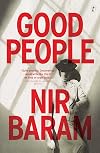
Yesterday at the Melbourne Jewish Writers Festival, I asked Nir Baram the wrong question about his stunning novel Good People. I asked him if he meant us to be wary of contemporary commercial entities who are complicit in marketing government messages, but I should have asked him, did he mean for us to be wary of ourselves.
That’s because, in the course of teasing out the reasons why authors should be writing fiction about the Holocaust, Baram shared a shaming statistic. He said that some show more people are interested in asking themselves the question, what would I have done in that situation. But the answer is already known: 89% of people collaborated. Fiction is a useful way of exploring the motivations of characters who represent that overwhelming majority, if we wish to understand why.
The title of the novel is not entirely ironic. The novel follows the hopes and ambitions of two ordinary people confronting the apparatus of totalitarian regimes, and the author makes the reader confront the reality of ‘goodness’ when it’s tested. Thomas Heiselberg is in Nazi Berlin and Sasha Weissberg is in Stalin’s Leningrad. The story begins in 1938 when the world is on the cusp of war and the German-Soviet Nonaggression Pact is yet to be signed. Both characters start out in naïveté, thinking that they can outwit the State, neither understanding that they are out of their depth.
To read the rest of my review please visit https://anzlitlovers.com/2016/05/23/good-people-by-nir-baram-translated-by-jeffr... show less
That’s because, in the course of teasing out the reasons why authors should be writing fiction about the Holocaust, Baram shared a shaming statistic. He said that some show more people are interested in asking themselves the question, what would I have done in that situation. But the answer is already known: 89% of people collaborated. Fiction is a useful way of exploring the motivations of characters who represent that overwhelming majority, if we wish to understand why.
The title of the novel is not entirely ironic. The novel follows the hopes and ambitions of two ordinary people confronting the apparatus of totalitarian regimes, and the author makes the reader confront the reality of ‘goodness’ when it’s tested. Thomas Heiselberg is in Nazi Berlin and Sasha Weissberg is in Stalin’s Leningrad. The story begins in 1938 when the world is on the cusp of war and the German-Soviet Nonaggression Pact is yet to be signed. Both characters start out in naïveté, thinking that they can outwit the State, neither understanding that they are out of their depth.
To read the rest of my review please visit https://anzlitlovers.com/2016/05/23/good-people-by-nir-baram-translated-by-jeffr... show less
Ci sono persone molto piccole, molto convinte di fare del loro meglio, che con le loro piccole scelte, le loro piccinerie, forniscono la struttura, anche morale, alla tragedia.
Così è per i due protagonisti del libro, uno tedesco e l'altra sovietica, che vedono solo i loro piccoli trionfi e le piccole offese che vengono fatte loro, e non si rendono conto che si mnuovono sulla trama della storia come mosche sulla ragnatela.
Un libro durissimo, come tutti quelli che scavano in fondo all'animo show more umano. show less
Così è per i due protagonisti del libro, uno tedesco e l'altra sovietica, che vedono solo i loro piccoli trionfi e le piccole offese che vengono fatte loro, e non si rendono conto che si mnuovono sulla trama della storia come mosche sulla ragnatela.
Un libro durissimo, come tutti quelli che scavano in fondo all'animo show more umano. show less

Despite the title, there are only a few good people in this book. But it is still a fascinating and dramatic story set in Germany, Poland and Russia in the years before World War II (from the Kristallnacht) and the first years of the war (until the German invasion of Russia).
The focus of the book is on two people, the German Thomas and the Russian Jew Sasha, who try to survive while two totalitarian systems overwhelm their country, their families and their lives. They both try to survive in show more their own way and the choices they make help them, but harm the people who are dear to them. They are blinded by ambition and the desire to save their family. And not only that: they are ultimately part of the system that wants to destroy them, and they thus contribute to the death of many more others. Thomas, because the results of his work is used by the Nazis to murder large groups in the German and Polish society and Sasha because she serves the purges of Stalin.
The book shows in a dramatic way how powerless Thomas and Sasha are to oppose the events around them. Each step they take brings damage in their surroundings, while they are desperately trying to rationalize the events and escape from the disaster. But the world around them collapses. The atrocities follow one another. Baram does not explicitly describe the horrors of these years, but shows flashes. The very absence of explicit descriptions is powerful. The panic among the Jews in Poland after the German occupation, displayed in an image of Jewish women in faded clothes and bare boots, trying to get visa. A spotlight that shines briefly on naked prisoners. And Thomas who sees but denies everything, and continues to justify his deeds, wallowing in his own suffering. Even so Sasha, who is willing to send hundreds to Siberian camps while trying to save her brother - something that is obviously impossible.
The book is very well written and compelling. Alternately there is a chapter which focuses on Sasha and Thomas. Eventually they meet in a final impossible plan to survive. And when you finish it, the characters stay with you for some time. Highly recommended! show less
The focus of the book is on two people, the German Thomas and the Russian Jew Sasha, who try to survive while two totalitarian systems overwhelm their country, their families and their lives. They both try to survive in show more their own way and the choices they make help them, but harm the people who are dear to them. They are blinded by ambition and the desire to save their family. And not only that: they are ultimately part of the system that wants to destroy them, and they thus contribute to the death of many more others. Thomas, because the results of his work is used by the Nazis to murder large groups in the German and Polish society and Sasha because she serves the purges of Stalin.
The book shows in a dramatic way how powerless Thomas and Sasha are to oppose the events around them. Each step they take brings damage in their surroundings, while they are desperately trying to rationalize the events and escape from the disaster. But the world around them collapses. The atrocities follow one another. Baram does not explicitly describe the horrors of these years, but shows flashes. The very absence of explicit descriptions is powerful. The panic among the Jews in Poland after the German occupation, displayed in an image of Jewish women in faded clothes and bare boots, trying to get visa. A spotlight that shines briefly on naked prisoners. And Thomas who sees but denies everything, and continues to justify his deeds, wallowing in his own suffering. Even so Sasha, who is willing to send hundreds to Siberian camps while trying to save her brother - something that is obviously impossible.
The book is very well written and compelling. Alternately there is a chapter which focuses on Sasha and Thomas. Eventually they meet in a final impossible plan to survive. And when you finish it, the characters stay with you for some time. Highly recommended! show less
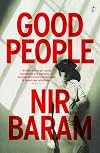
Good People is an early novel by Israeli author Nir Baram, who also wrote A Land Without Borders: My Journey Around East Jerusalem and the West Bank a memoir that I've seen reviewed well more than once here on LT. This is a novel about the ways in which people who think of themselves as "good" can easily get tripped up by their own illusions and entangled in compromises within evil systems. The book begins in 1938 and follows two characters. Thomas Heiselberg is a young businessman in show more Berlin. He a market researcher and rising quickly within an American-owned company. He has devised the company's business strategies for their branch offices in Berlin, Warsaw and Paris. He is not antiSemitic, and though he mostly goes along to get along, he does try to help his Jewish therapist escape Germany and makes other such gestures. He sees himself as a master persuader, able to put any face forward that he needs to accomplish any given agenda, and to get people to act accordingly, and to manage any situation. Sasha Weissberg is a young woman in Leningrad, the daughter of intellectuals, who begins reporting on the conversations of her parents circle of poets and philosophers to the NKVD, Stalin's secret police, imagining she is thereby somehow protecting her parents. Both characters become ever more firmly ensnared in the trap of their own self-regard and their confidence in their abilities to turn the power of the evil worlds they are navigating to their own ends.
We see the world very tightly through the perspectives of these two characters, and so the narrative takes on a somewhat hallucinatory character, and yet also maintains (or at least maintain for me) a certain thinness of scope that left me wanting a touch more, somehow. Also, I thought the book could have used some editing, shedding perhaps 20% of the 421 pages of my Australian edition. Nevertheless, Good People is an impressive achievement, I think, and overall I very much enjoyed the reading experience. Whether or not we're meant to experience the novel as any sort of allegory for contemporary (the book was first published in Hebrew in 2010) is unclear to me, though we know that Baram has been a voice for the left in Israel. show less
We see the world very tightly through the perspectives of these two characters, and so the narrative takes on a somewhat hallucinatory character, and yet also maintains (or at least maintain for me) a certain thinness of scope that left me wanting a touch more, somehow. Also, I thought the book could have used some editing, shedding perhaps 20% of the 421 pages of my Australian edition. Nevertheless, Good People is an impressive achievement, I think, and overall I very much enjoyed the reading experience. Whether or not we're meant to experience the novel as any sort of allegory for contemporary (the book was first published in Hebrew in 2010) is unclear to me, though we know that Baram has been a voice for the left in Israel. show less
Lists
Awards


You May Also Like


Associated Authors
Statistics
- Works
- 16
- Also by
- 1
- Members
- 330
- Popularity
- #71,936
- Rating
- 3.3
- Reviews
- 15
- ISBNs
- 50
- Languages
- 9
- Favorited
- 1