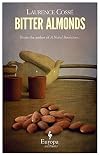
Bitter Almonds
by Laurence Cossé
On This Page
Description
From the pen of Laurence Cossé, author of A Novel Bookstore, comes this delightful story about friendship across racial and economic barriers set in contemporary paris. Édith can hardly believe it when she learns that Fadila, her sixty-year-old housemaid, is completely illiterate. How can a person living in Paris in the third millennium possibly survive without knowing how to read or write? How does she catch a bus, or pay a bill, or withdraw money from the bank? Why, it's unacceptable! show more She thus decides to become Fadila’s French teacher. But teaching something as complex as reading and writing to an adult is rather more challenging that she thought. Their lessons are short, difficult, and tiring. Yet, during these lessons, the oh-so-Parisian Édith and Fadila, an immigrant from Morocco, begin to understand one other as never before, and from this understanding will blossom a surprising and delightful friendship. Édith will enter into contact with a way of life utterly unfamiliar to her, one that is unforgiving at times, but joyful and dignified. show lessTags
Recommendations
































Member Reviews
Fadila Amrani is someone whom it's easy to overlook, or perhaps, look through. She is one of the numerous immigrant women making their living as housekeepers, laundresses, and cooks in middle class households around the world. It is usually only when there is a problem--a misunderstanding due to "broken" language, being late due to a difference in the conception and importance of being prompt, or the inability to read instructions, a receipt, a phone number--that the employer sees the worker, usually to fire them. Like so many of these women, Fadila is illiterate, not only in her new language (Parisian French), but in her old (Berber Arabic) as well.
Fadilla's new employer, Édith, is more attuned to language and literacy than most show more because she is a translator. She also taught her precocious son to read. Surely it wouldn't be too difficult or time-consuming to teach Fadila? But from the beginning, things do not go as Édith expects. Despite her earnest desire to help Fadila learn to read, all her research, and her attempts to cajole Fadila into a regular habit of lessons and homework, Fadila doesn't make progress. Why?
The story of Édith and Fadila is one of unlikely friendship, the day to day realities of cultural differences, and the struggles of students trying to learn a new language and their teachers. There is no sweeping plot line, rather the slow character development that comes from the accumulation of the intimate details of life. I enjoyed Bitter Almonds, not least because I, like Édith, have experienced the breakthroughs and disappointments of teaching an older woman my language. In the end, it's the relationship, not the progress, that defines the experience. show less
Fadilla's new employer, Édith, is more attuned to language and literacy than most show more because she is a translator. She also taught her precocious son to read. Surely it wouldn't be too difficult or time-consuming to teach Fadila? But from the beginning, things do not go as Édith expects. Despite her earnest desire to help Fadila learn to read, all her research, and her attempts to cajole Fadila into a regular habit of lessons and homework, Fadila doesn't make progress. Why?
The story of Édith and Fadila is one of unlikely friendship, the day to day realities of cultural differences, and the struggles of students trying to learn a new language and their teachers. There is no sweeping plot line, rather the slow character development that comes from the accumulation of the intimate details of life. I enjoyed Bitter Almonds, not least because I, like Édith, have experienced the breakthroughs and disappointments of teaching an older woman my language. In the end, it's the relationship, not the progress, that defines the experience. show less
I suspect that this will be a book that you either enjoy quite a bit or find rather boring; the middle ground doesn't seem particularly likely.
Édith is astonished that her immigrant housekeeper, Fadila, is illiterate — or analphabetic, the difference being important to some in the book — and decides to try teaching her to read. And tries. And tries. And tries. And then the book, rather suddenly, ends.
So, if it's plot that you're after, it's rather meager and I think this book will not suit you very well. You might want to pass this one by.
The meat in this story is to be found by realizing that the plot is simply a vehicle to let us meet Fadila. The advice to Édith about teaching is that it works best when you really know and show more understand your student. And, so, she acts as our proxy, allowing us to peer over her shoulder, as it were, catching glimpses of a life that is quite different from that of an ordinary Parisian...or, really, any Western...woman.
It's a life that has been hard, even devastating, at times. It is one where pleasures and triumphs arrive from things so simple that they could seem mundane to us. Yet, it's a life where dignity and worth have been found, and intrinsically rather than through circumstance.
I enjoyed that view and, so, I'm in the first category: enjoying the book that presented it, despite the rather sudden ending. show less
Édith is astonished that her immigrant housekeeper, Fadila, is illiterate — or analphabetic, the difference being important to some in the book — and decides to try teaching her to read. And tries. And tries. And tries. And then the book, rather suddenly, ends.
So, if it's plot that you're after, it's rather meager and I think this book will not suit you very well. You might want to pass this one by.
The meat in this story is to be found by realizing that the plot is simply a vehicle to let us meet Fadila. The advice to Édith about teaching is that it works best when you really know and show more understand your student. And, so, she acts as our proxy, allowing us to peer over her shoulder, as it were, catching glimpses of a life that is quite different from that of an ordinary Parisian...or, really, any Western...woman.
It's a life that has been hard, even devastating, at times. It is one where pleasures and triumphs arrive from things so simple that they could seem mundane to us. Yet, it's a life where dignity and worth have been found, and intrinsically rather than through circumstance.
I enjoyed that view and, so, I'm in the first category: enjoying the book that presented it, despite the rather sudden ending. show less
A sobering look at how challenging it is to learn--or try to teach someone--to read late in life. The situation is complicated further when the learner is an immigrant.
A sobering look at how challenging it is to learn--or try to teach someone--to read late in life. The situation is complicated further when the learner is an immigrant.
A sobering look at how challenging it is to learn--or try to teach someone--to read late in life. The situation is complicated further when the learner is an immigrant.
Si j’avais voulu lire un traité de pédagogie sur l’analphabétisme, je l’aurais fait. Mais là, je voulais lire un livre, un roman, un roman dont la quatrième de couverture faisait miroiter qu’il était plein de sensibilité et d’humanité. Mais je n’ai rien trouvé de tout cela. Avec des phrases sèches, sujet-verbe-complément et pas beaucoup plus, j’ai vu se nouer une relation que j’ai trouvée très artificielle entre deux femmes que tout devrait séparer, et bien sûr surtout leur rapport à l’écrit.
Pourtant l’idée était intéressante, une femme analphabète (et oui, analphabète et illettré ne sont pas synonymes, et ce n’est pas qu’une coquetterie) d’une soixantaine d’années se décide à show more apprendre à lire quand une de ses patronnes, chez qui elle fait le ménage, le lui propose. Et en miroir, une femme cultivée et pleine de bonne volonté qui s’improvise prof, s’aperçoit des difficultés et se remet en question tout au long du chemin.
Mais cette histoire m’a semblé désincarnée, et les considérations sur les difficultés à vivre dans un monde de signes pour un analphabète ou un illettré, tout comme celles sur les difficultés de l’apprentissage m’ont parues très superficielles. Je suis assez déçue de ce livre qui ne m’a pas vraiment appris quoi que ce soit et qui n’a suscité en moi aucune empathie avec les personnages. show less
Pourtant l’idée était intéressante, une femme analphabète (et oui, analphabète et illettré ne sont pas synonymes, et ce n’est pas qu’une coquetterie) d’une soixantaine d’années se décide à show more apprendre à lire quand une de ses patronnes, chez qui elle fait le ménage, le lui propose. Et en miroir, une femme cultivée et pleine de bonne volonté qui s’improvise prof, s’aperçoit des difficultés et se remet en question tout au long du chemin.
Mais cette histoire m’a semblé désincarnée, et les considérations sur les difficultés à vivre dans un monde de signes pour un analphabète ou un illettré, tout comme celles sur les difficultés de l’apprentissage m’ont parues très superficielles. Je suis assez déçue de ce livre qui ne m’a pas vraiment appris quoi que ce soit et qui n’a suscité en moi aucune empathie avec les personnages. show less
Mar 18, 2022French
Une amitié particulière entre Edith et Fadila venue faire le ménage chez Edith - Celle-ci entreprend de lui apprendre à lire. Apprentissage difficile qui montre les limites de pédagogies diverses tentées par Edith. La difficulté est aussi liée à la motivation diverse de Fadila et par son approche intelligible de l'alphabet, de l'écriture..
Le récit amène à dévoiler la vie des uns et des autres et de ses diffcultés qui bousculent tout apprentissage
Un peu répétitif dans les scènes
Le récit amène à dévoiler la vie des uns et des autres et de ses diffcultés qui bousculent tout apprentissage
Un peu répétitif dans les scènes
Sep 11, 2012French
Members
- Recently Added By
Lists

Novels featuring language professionals
98 works; 12 members
Author Information

16 Works 1,603 Members
Series
Belongs to Publisher Series
Gallimard, Folio (5535)
Common Knowledge
- Canonical title
- Bitter Almonds
- Original title
- Les amandes amères
- Original publication date
- 2011
- People/Characters
- Fadila Amrani; Édith
- Important places
- Paris, France
- First words
- There's a ring at the door.
- Last words
- (Click to show. Warning: May contain spoilers.)She was not able to make her understand how to use writing to combine letters in order to make words that are legible; surely that would have given Fadila access to the language of the locked-in, a language that is neither oral nor written, a language born of the worst imaginable solitude, and the only way out of it.
- Original language
- French
Classifications
Statistics
- Members
- 57
- Popularity
- 520,690
- Reviews
- 7
- Rating
- (4.00)
- Languages
- English, French, Italian
- Media
- Paper, Ebook
- ISBNs
- 6
- ASINs
- 4